

When a robot arm can't figure out how to pack a tricky box or assemble an oddly shaped product, most systems would simply fail. InLoop Robotics has built its entire business around a different outcome: the robot stops, calls a human, and learns from the intervention.
It's an unusual proposition in an industry that sells clients on promises of full autonomy. But the startup emerging from Y Combinator—one that lists four team members in its YC directory though LinkedIn shows a broader range of 2-10 employees—thinks admitting weakness might be strength. Every fumble becomes a lesson. Every teleoperator rescue gets logged. The AI gets smarter. Or that's the theory, anyway.
"Every failure becomes training data," co-founder Zakariea Sharfeddine noted in early April when the company announced its YC backing and official launch. Whether that translates to a sustainable advantage is another question entirely.
Controlled Chaos as a Feature
The system InLoop calls Loop V1 doesn't attempt to hide its limitations. At the core sits what the company has dubbed a "Safety Module," which monitors the robot's confidence in real time as it performs warehouse tasks—boxing, kitting orders, inspecting products, prepping shipments. When uncertainty spikes past a preset threshold, the module halts operations and pings a remote operator.
The human steps in, resolves the problem, and the module validates the fix before feeding it back into the learning pipeline. It's a deliberately imperfect loop, one the company argues generates richer training data than systems designed never to ask for help.
Sharfeddine, who previously worked on machine learning projects at Bosch and BMW, leads the technical side. Stepan Feduniak handles robot learning research. Pasha Rizali, who co-founded RoboTUM—reportedly Germany's largest student robotics group—oversees operations. It's a small team tackling a problem that has bedeviled much larger competitors: how to get robots to adapt quickly in messy, variable real-world environments.
The broader industry seems to be converging on similar conclusions, if reluctantly. A January analysis noted that most physical automation in warehouses still isn't genuinely autonomous, with 2026 gains coming more from connectivity and flexible deployment than from pure algorithmic breakthroughs. Perhaps asking humans for help isn't a bug. Perhaps it's just honest.
What the Robot Actually Does
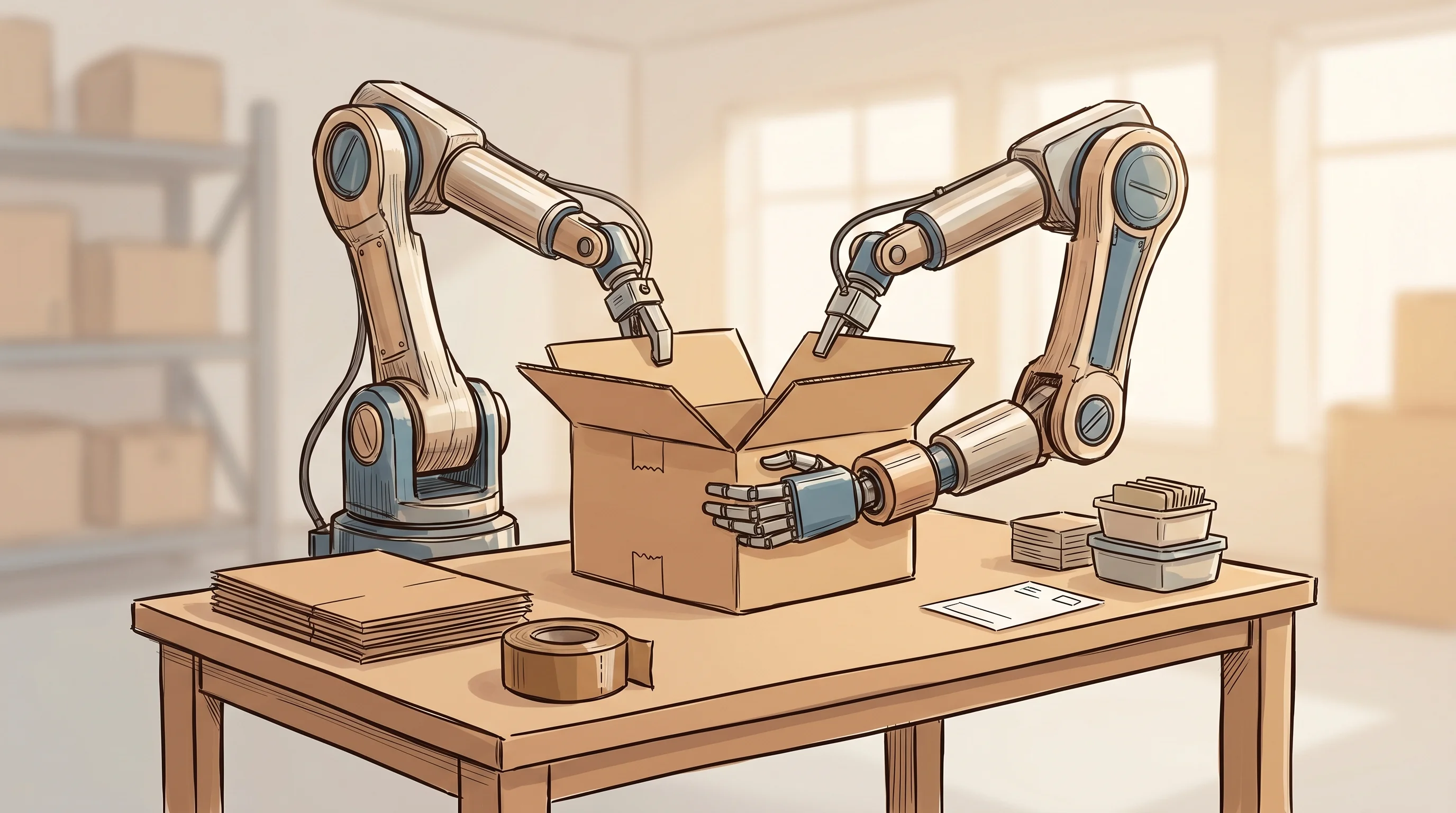
Loop V1 tackles the unglamorous essentials of e-commerce fulfillment: assembling boxes, kitting multi-item orders, visual inspections, labeling, wrapping, unpackaging. The bimanual workcells are stationary units meant to integrate into existing facilities without requiring floor redesigns—a pitch aimed at operations managers wary of lengthy implementations.
InLoop markets the hardware under a robotics-as-a-service model with a flat monthly fee, though the company hasn't disclosed specific pricing. The promise is speed: "deployed in hours, not months," according to the website. The teleoperator safety net doubles as both a reliability backstop and a continuous data harvest.
And InLoop is hiring accordingly, with roles spanning robotics engineering, robot learning research, and teleoperation. Job postings for "Robot Operators" describe roles that involve teleoperating both humanoid systems and robotic arms while labeling datasets. The company also runs what it calls a "Data Explorer" program, offering high-variety datasets—from lab tests, live deployments, and recovery interventions—to organizations building foundation models. It's unclear how much demand exists for that particular product line.
The MODEX Moment
In April 2026, at MODEX—the logistics industry's marquee trade show in Atlanta—InLoop set up at booth B7428 and demonstrated a picking system they claimed was trained overnight using roughly one hour of demonstration data. Team members and observers posted about the demo on LinkedIn, mentioning "400+ conversations" and scheduled warehouse visits, though those figures come from the company itself.
The timing put InLoop amid a wave of new automation launches. Locus Robotics rolled out Locus Array, a fully autonomous fulfillment system marrying mobile robots to integrated arms. Brightpick debuted Gridpicker, an AI-driven grid-based platform. Geek+ showed off RoboShuttle V5 with embedded arm picking stations. The event made clear that integrated manipulation and flexible deployment have become baseline expectations, not differentiators.
Not Exactly Alone
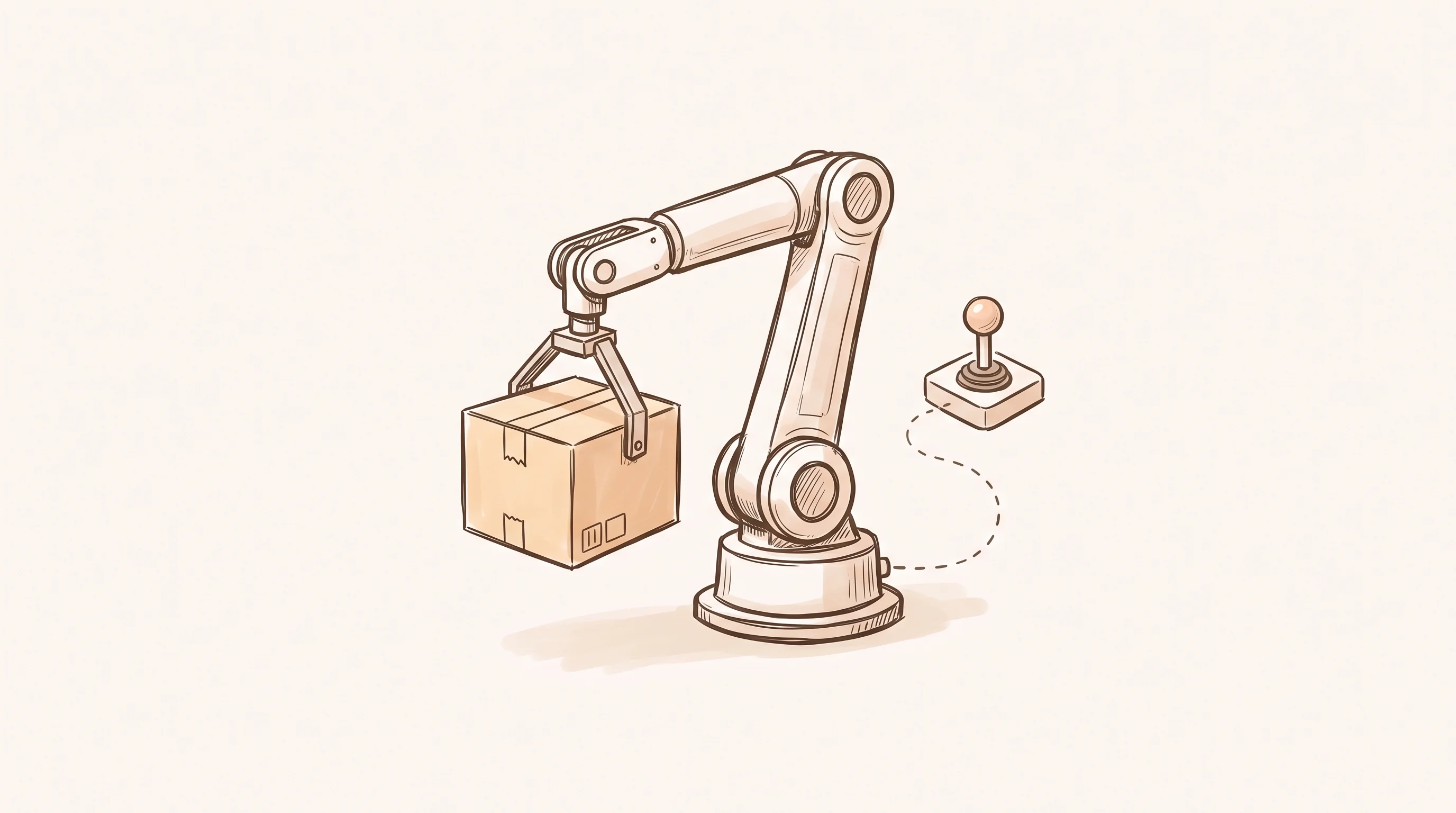
InLoop's human-in-the-loop pitch isn't novel. A startup called Deploy offers a strikingly similar model: teleoperation fallbacks, guaranteed throughput, learning from every intervention. Dexterity, a more established player, announced world-model AI components for complex tasks like truck loading. In mid-April, Skild AI acquired Zebra Technologies' robotics automation business, including the Symmetry Fulfillment orchestration platform—a deal that shifted the competitive landscape considerably.
The strategic question, then, isn't whether blending human oversight with AI autonomy makes sense. Multiple well-funded companies are betting it does. What matters is execution—who converts intervention data into performance gains fastest. InLoop's explicit focus on recruiting teleoperation talent and structuring every human fix as training data might give it an edge. Or it might just be doing out loud what others do quietly.
The company has joined NVIDIA's Inception program, which provides access to compute resources and technical support. That's standard for early-stage robotics startups chasing credibility, not necessarily evidence of traction.
The Unanswered Questions

InLoop hasn't named customers. It hasn't disclosed pilot sites, revenue figures, or detailed information about the scale or number of robots it has deployed. The company's FAQ includes one carefully worded line: "None of our deployed robots have broken." The phrasing is suggestive but reveals nothing about deployment scale or duration.
With a small team and funding limited to Y Combinator's standard check, the company is clearly in its earliest phase—hiring across robotics engineering, robot learning research, and teleoperation roles. Whether Loop V1 can turn managed imperfection into a sustainable business depends on milestones the company hasn't yet demonstrated publicly.
The technology itself appears sound in concept. The MODEX demo and broader research on uncertainty-aware planning systems confirm that much. What's less certain is whether asking for help at scale generates better robots faster than competitors can build systems that rarely need to ask at all.
That tension—between learning from failure and avoiding it altogether—will likely define which approach wins out. InLoop is betting transparency pays off. The warehouse floors will decide if they're right.


