

The pitch was audacious, even by Silicon Valley standards. Two plasma physicists, each with decades logged at the country's premier national laboratories, stood before Y Combinator's Demo Day crowd last December and made their case: fusion reactors don't just work better in space—they might only be practical there.
Most of their fellow presenters that day were peddling AI agents and enterprise software. Edward Hinson and Galen Burke wanted to talk about magnetic-dipole confinement and orbital deployment. In a batch increasingly defined by code and APIs, they represented something rarer: a bet on physics itself.
Their company, Zephyr Fusion, emerged from YC's Fall 2025 cohort billing itself as an enabler of "tomorrow's industrial revolution in space." Which is a tidy way of saying they need to solve both advanced plasma dynamics and the economics of orbital infrastructure. No small ask for a two-person team.
Credentials Matter When You're Selling Fusion
Hinson's resume reads like a greatest hits of American plasma research. Over 20 years in mathematical modeling and experimental work. A PhD in Nuclear Engineering and Engineering Physics from UW-Madison. Time at Oak Ridge National Laboratory, where the experimental grind tends to separate theory from reality. His published work includes studies on helium exhaust in tokamaks—the kind of unglamorous but essential research that underpins any credible fusion approach.
Burke spent 15 years at Lawrence Livermore, focused on plasma diagnostics and fusion science. Same PhD program as Hinson. In fusion, diagnostics means you know how to measure what's actually happening when superheated plasma inevitably misbehaves. And it always misbehaves.
These credentials aren't window dressing. In deep tech, particularly fusion, the pedigree often determines whether investors will return your emails. Hinson and Burke have it.
The Pitch: Let Space Do the Heavy Lifting
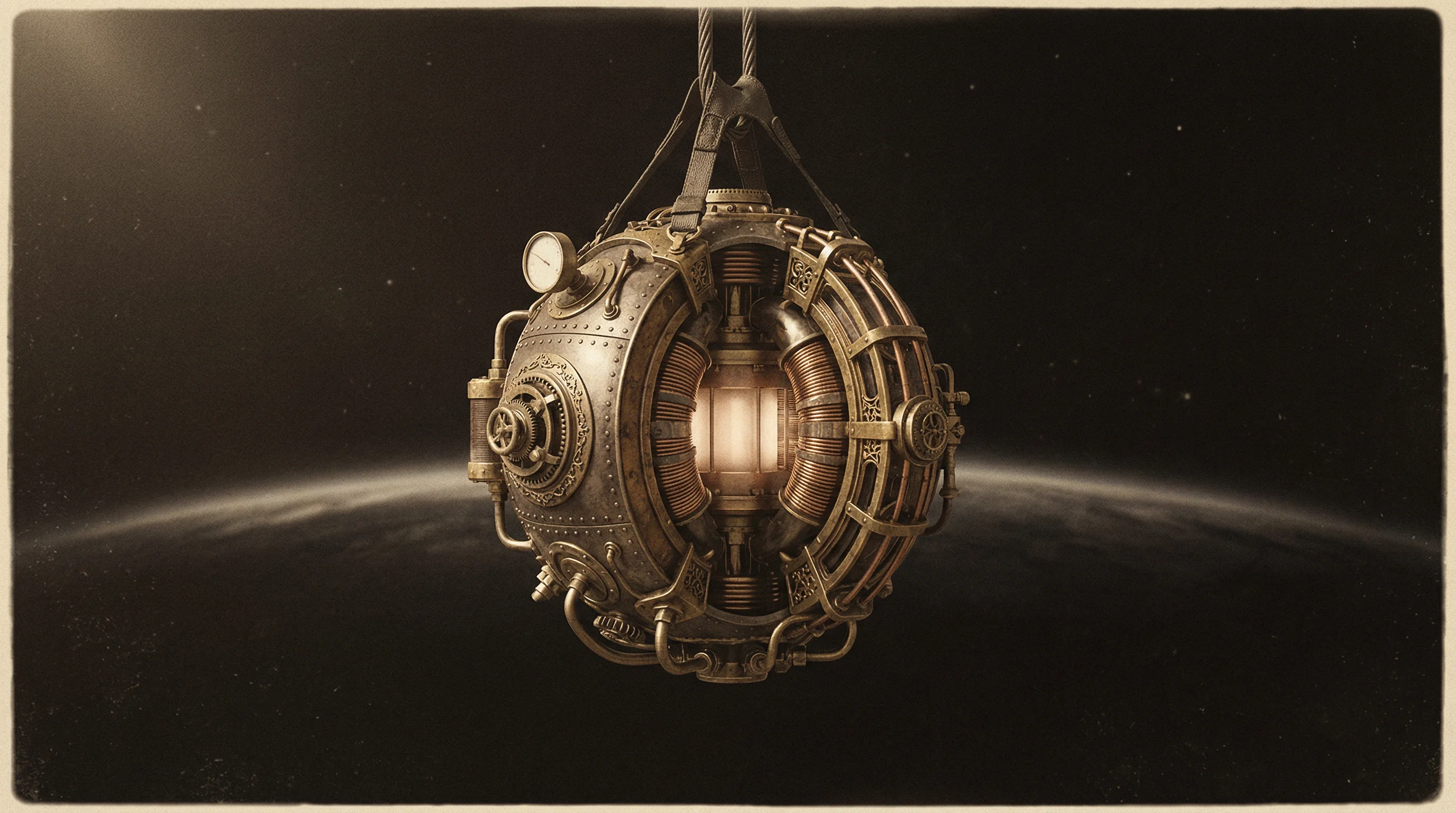
Here's what makes their thesis compelling, if you're willing to suspend disbelief: take a compact magnetic-dipole confinement reactor and launch it into orbit. The vacuum of space provides for free what terrestrial fusion projects burn billions trying to replicate.
No vacuum chambers. No elaborate containment systems. Just... space.
Zephyr outlined the economics in their November 2025 Launch YC post. High-temperature superconducting tape has gotten cheaper—dramatically so. Launch costs have plummeted, courtesy of SpaceX and its competitors driving down orbital access. And dipole configurations, which MIT's Levitated Dipole Experiment validated in the early 2000s, offer a path to megawatt-class power with relatively minimal hardware mass.
"Fusion gets easier in space," the founders wrote. They're banking on the ability to create large effective magnetized volumes around a dipole field without the oppressive constraints Earth imposes. The physics trace back further than you might think—scientists including Edward Teller explored magnetic-dipole fusion for space propulsion in the early 1990s. What seemed theoretical then might, with better superconductors and routine orbital access, become practical now.
That's the bet, anyway.
It requires everything to work at once: the reactor achieving net energy gain, the deployment infrastructure materializing, the economics of beaming power or refueling orbital assets making sense. But the constraints that bedevil Earth-based fusion—those vacuum chambers, that radiation shielding, the sheer mass of confinement hardware—do disappear once you're already in the vacuum.
Standing Out in a Sea of SaaS

Demo Day, held December 3rd before roughly 1,500 investors and media, marked Y Combinator's continued return to in-person events after years of Zoom fatigue. The Fall batch was part of YC's expansion to four annual cohorts—Winter, Spring, Summer, and Fall—announced the prior year to accelerate deal flow.
By several accounts, Zephyr made an impression. VC Natalie Fratto called them out in a LinkedIn video shortly after, highlighting both Zephyr and Maritime Fusion as notable departures from the AI-heavy cohort. YC CEO Garry Tan amplified their pitch to his network in early 2026, reiterating the orbital fusion thesis with apparent conviction.
The company's investor roster now includes Pioneer Fund, Buckley Ventures, Unpopular Ventures, Nova Threshold, and ZAKA VC—all in addition to YC's standard $500,000 check. None have disclosed specific amounts. CB Insights lists Zephyr's total raise at $500,000, which likely reflects only the accelerator's investment and not whatever subsequent commitments materialized.
The Harder Question: Who Needs This?
Zephyr isn't operating in a vacuum, so to speak. Maritime Fusion, from YC's Winter 2025 batch, raised $4.5 million last November to build reactors for ships. Different environment, different engineering nightmares, same fundamental belief that fusion's time has arrived.
The Fall cohort itself ran the typical gamut—healthcare platforms, AI infrastructure, robotics plays. That Zephyr got in suggests Y Combinator remains willing to fund hardware at the frontier, even when the path to revenue stretches well beyond the usual startup timeline.
Whether orbital fusion pencils out depends on questions the company is only beginning to grapple with. Can a compact dipole reactor achieve net energy gain in the conditions of space? What does the deployment infrastructure actually look like, and who builds it? Most critically: who pays for megawatt-class power in orbit before there's enough demand to justify the investment?
These aren't rhetorical questions. They're the difference between a compelling technical thesis and a functioning business.
Betting on Physics
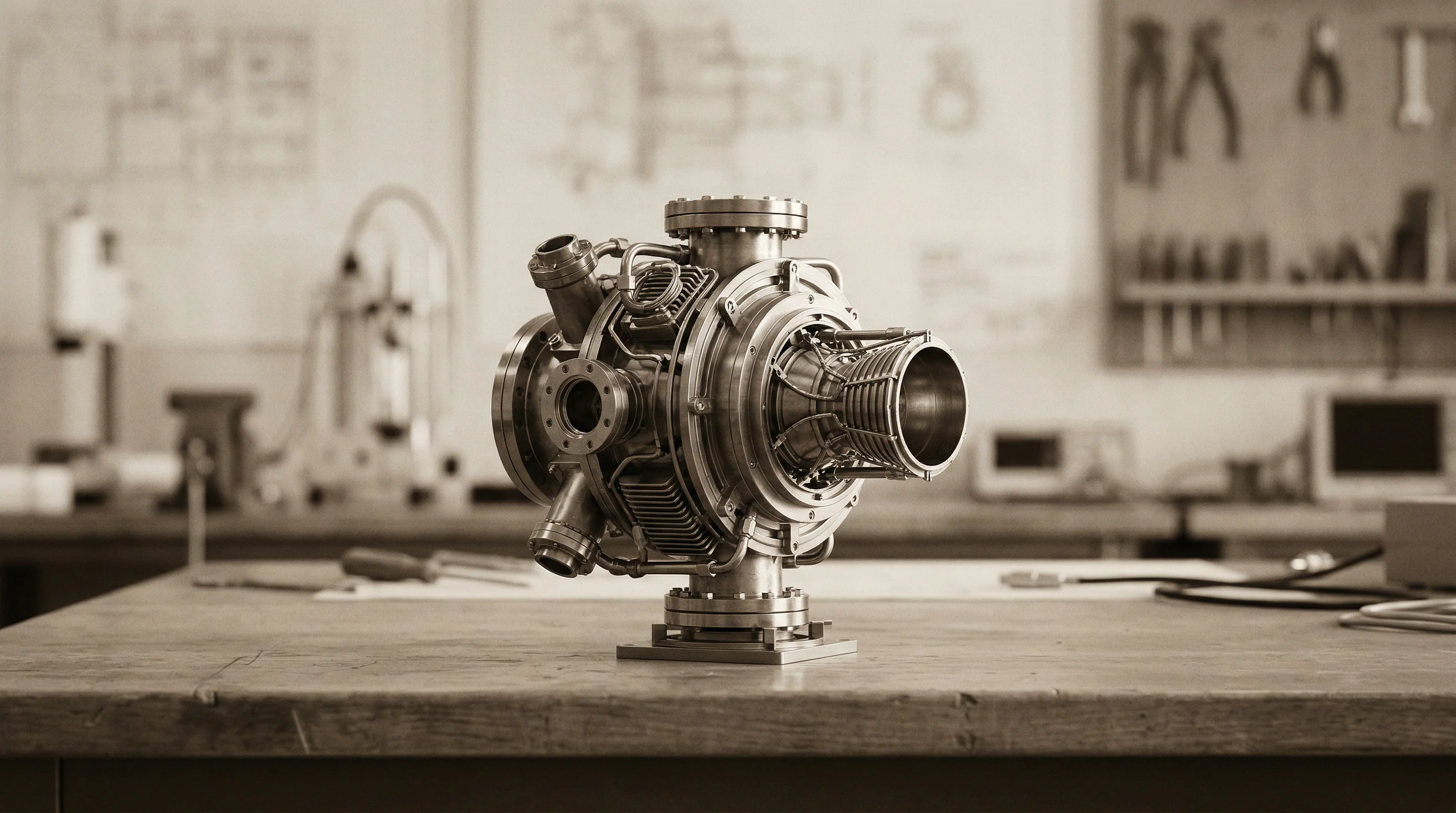
For now, Zephyr has the backing of Silicon Valley's most prominent accelerator and a technical foundation rooted in decades of plasma research. The team is hiring satellite engineers in San Diego, building toward demonstrations that will either validate their approach or expose which assumptions don't survive orbital reality.
In fusion startups—perhaps more than any other species of deep tech—the gap between theory and deployment is littered with cautionary tales. Hinson and Burke are betting their PhDs, and YC's credibility, that space makes the physics easier.
Easier enough to matter, anyway. Whether that proves true is a question for orbital tests, not pitch decks. The physics community will be watching. So will the investors who wrote those checks, wondering if they've backed a breakthrough or just another expensive thought experiment.
The founders, at least, seem convinced. In fusion, conviction and credentials will get you in the room. What happens next depends on whether the plasma cooperates.


