

The problem with methane is that you can't see it—until recently, you couldn't, anyway. The invisible greenhouse gas seeps from oil wells, gas pipelines, and coal mines by the ton, warming the atmosphere far faster than carbon dioxide yet slipping past regulators and company balance sheets alike. AIRMO, a climate-tech startup splitting its time between Berlin and Luxembourg, thinks it has found a business in making the invisible visible.
On March 12, 2026, the company announced it had closed a €5 million seed round, money it plans to pour into launching its first dedicated satellite by early 2027. If all goes according to plan, that spacecraft will begin tracking methane leaks across some 12 million energy assets worldwide—a scale of ambition that reflects both the scope of the problem and the tightening regulatory vise in Europe.
Strategic Backers, From Impact Funds to Industry Veterans
Ananda Impact Ventures led the round. Joining them: Unconventional Ventures, Kopa Ventures, Desai Ventures, Hypernova, and New Venture Securities. Perhaps more telling, the deal attracted strategic investments from a pair of EQT partners—Matthias Fackler and Francesco Starace, the former Enel chief executive who shifted to EQT Infrastructure in 2023. It's the kind of investor roster that signals credibility, particularly in a capital-intensive sector where hardware and regulatory timelines can swallow cash quickly.
AIRMO's earlier backers—Antler, FINDUS Venture, E2MC, and Pi Labs—rolled their stakes forward from the company's €5.2 million pre-seed (which included a €3.7 million ESA InCubed contract) raised in June 2023. For a startup barely three years old, the momentum is notable, if not yet proven.
The Satellite: A Technical Gamble With High Stakes
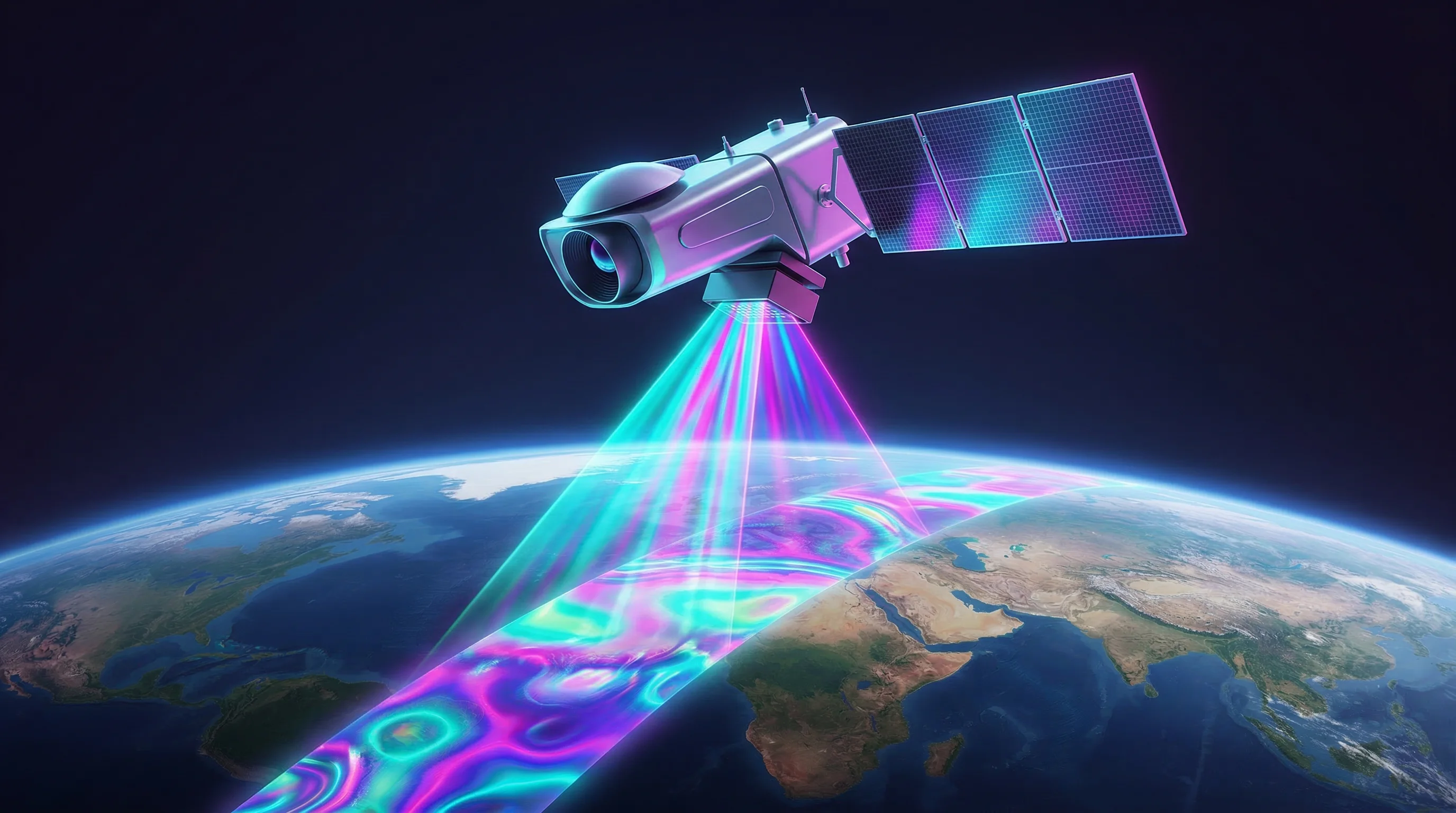
The new capital will bankroll completion of AIRMO's greenhouse-gas monitoring satellite, being built in partnership with EnduroSat, a deal announced in February. The technical setup pairs a short-wave infrared pushbroom spectrometer—capable of roughly 50-meter ground resolution from an orbit 500 kilometers up—with micro-LiDAR. That combination, AIRMO argues, delivers sensitivity beyond what spectrometer-only systems can manage.
CEO Daria Stepanova claims the configuration is "twice as accurate as anything on the market." Independent benchmarks, however, remain unpublished. In an industry where credibility hinges on data, that's a detail competitors and potential customers will scrutinize closely.
Beyond the satellite, AIRMO is expanding its airborne services—drone and aircraft surveys across Europe, the Middle East, and Central Asia. The company has partnered with Beagle Systems on drone-mounted TDLAS sensors, targeting workflows aligned with OGMP 2.0 Level 4 and 5 standards. It's a hedge, of sorts. Satellites provide sweeping coverage; drones offer granular precision. Together, they might answer the industry's dual demand for breadth and detail.
Brussels Tightens the Screws
AIRMO's timing is hardly accidental. The EU Methane Regulation, which entered into force on August 4, 2024, has begun reshaping how oil, gas, and coal operators manage leaks. By May 5, 2025, companies must submit leak detection and repair programs. Rapid repairs—within five to 30 days, depending on severity—are now mandatory. And starting in January 2027, import monitoring requirements kick in, extending the regulation's reach beyond member states.
For a startup selling detection tools, the regulatory shift amounts to a tailwind. Whether it's strong enough to lift AIRMO above a crowded and competitive field is another question entirely.
A Crowded Sky, and a High Bar

AIRMO enters a market already thick with players. GHGSat operates a commercial constellation detecting facility-scale methane emissions; the company published global data in a Science paper on December 11, 2025. Carbon Mapper's Tanager-1 satellite, launched in 2024, delivers public methane plume detections through a coalition that includes NASA's Jet Propulsion Laboratory and Planet. MethaneSAT, backed by the Environmental Defense Fund, launched the same year but lost contact in June 2025 and is now presumed gone for good.
The scientific case for better monitoring is clear. The International Energy Agency estimates methane has driven roughly 30 percent of warming since pre-industrial times. Energy-sector emissions, the IEA found, run about 70 percent higher than official figures suggest. Recent peer-reviewed research points to a messier reality: around 70 percent of U.S. oil and gas methane emissions come from numerous smaller sources, the kind that often escape detection altogether. That makes the case for higher-sensitivity tools. It also raises the stakes for AIRMO's claim of superior accuracy.
The Founders, and the Long Game
Stepanova previously led missions at German Orbital Systems. Her co-founder, Dr. Errico Armandillo, spent years at the European Space Agency specializing in optoelectronics. The two launched AIRMO in 2022, and the company now lists between 11 and 50 employees, with offices in Berlin, Munich, and Luxembourg. It's a lean operation for a business targeting global asset coverage, which may be intentional. Startups that grow too fast often stumble; ones that move too slowly get overtaken.
The question for AIRMO, as for any early-stage climate-tech venture, is whether the market will reward precision or scale—or some blend of both. The company is betting that European regulations, rising stakeholder pressure, and the physics of methane's warming potential will converge in its favor. By early 2027, when that first satellite reaches orbit, the answer should start coming into focus.


