

There's a bottleneck in the coffee industry, and it's measured in decades.
By the time a breeder crosses two coffee plants, waits for seeds, grows thousands of seedlings, and evaluates which might withstand a warmer, drier future, twenty years can slip by. For a crop racing against climate projections that show roughly half of today's prime growing land becoming unsuitable by 2050, that timeline is—to put it mildly—a problem.
Enter Amatera, a Paris-based biotech that thinks it has found a way around the wait. On March 4, 2026, the startup announced it had closed a €6 million seed round to scale what it describes as a fundamentally different approach: isolating single plant cells, screening them for desirable traits before they ever become full plants, and using machine learning to decide which lines are worth regenerating. The result, the company claims, is new perennial crop varieties delivered twice as fast and at a tenth the cost of conventional methods—no genetic modification required.
Whether that promise holds up in the field remains to be seen. But the investor appetite is real.
Who's Backing the Bet
The round was co-led by Demea Sustainable Investment (the firm formerly known as Demeter) and Oyster Bay Venture Capital, with returning backers PINC—the venture arm of Finnish coffee conglomerate Paulig—alongside Mudcake and Exceptional Ventures. Add in the €1.5 million pre-seed Amatera closed in October 2023, and the company has now pulled in €7.5 million total.
Oyster Bay, which closed its second fund north of €100 million in November 2025, has been doubling down on food and beverage technology. PINC led that earlier round with Exceptional Ventures, Mudcake, Joyance Partners, AgFunder, and a handful of angels including Nicolas Morin-Forest from cultivated meat outfit Gourmey.
It's a group that clearly sees climate adaptation as both urgent and investable—though the path from lab-stage cells to commercially viable coffee trees is anything but short.
Inside the Cell Lab

Here's how Amatera's platform works, at least in theory: take a plant cell, grow it in culture, genotype it while it's still a single cell, then regenerate only the ones that show genetic markers for drought tolerance, disease resistance, or other traits breeders covet. Robotics handle the high-throughput processing; AI models help predict which genetic markers actually matter.
Dr. Lucie Kriegshauser, the company's co-founder and CTO, calls the traditional approach a "screening bottleneck"—you plant thousands of seeds, wait years for them to mature, then discover most aren't what you need. Repeat for two decades. Her answer is to move that selection upstream, to the cellular stage, before investing time and greenhouse space.
The method isn't gene editing in the CRISPR sense, though it can work alongside gene editing, mutation breeding, or doubled haploid techniques. It's non-GMO, which matters in markets wary of transgenic crops.
Amatera's initial focus? A variety it's calling "Robustica," engineered to marry Arabica's prized flavor profile with Robusta's hardiness and yield. There's also a naturally caffeine-free Arabica in the pipeline—catnip for the decaf market, assuming it tastes like something people want to drink.
What the Money Will Do
The fresh capital is earmarked for automation, team expansion, and pushing beyond coffee and wine grapes into additional perennial crops. Amatera operates an R&D lab at Genopole in Évry-Courcouronnes and keeps its headquarters in Boulogne-Billancourt. LinkedIn lists the team size somewhere between 11 and 50 employees—a range that suggests either rapid hiring or a startup still defining its headcount.
Founded in 2022 by CEO Omar Dekkiche and Kriegshauser, the company has forged partnerships with the University of Costa Rica, France's CIRAD research institute, and INRAE's IPS2 lab. Academic collaborations like these can accelerate validation, though they also add layers of coordination.
The Climate Math That Won't Wait
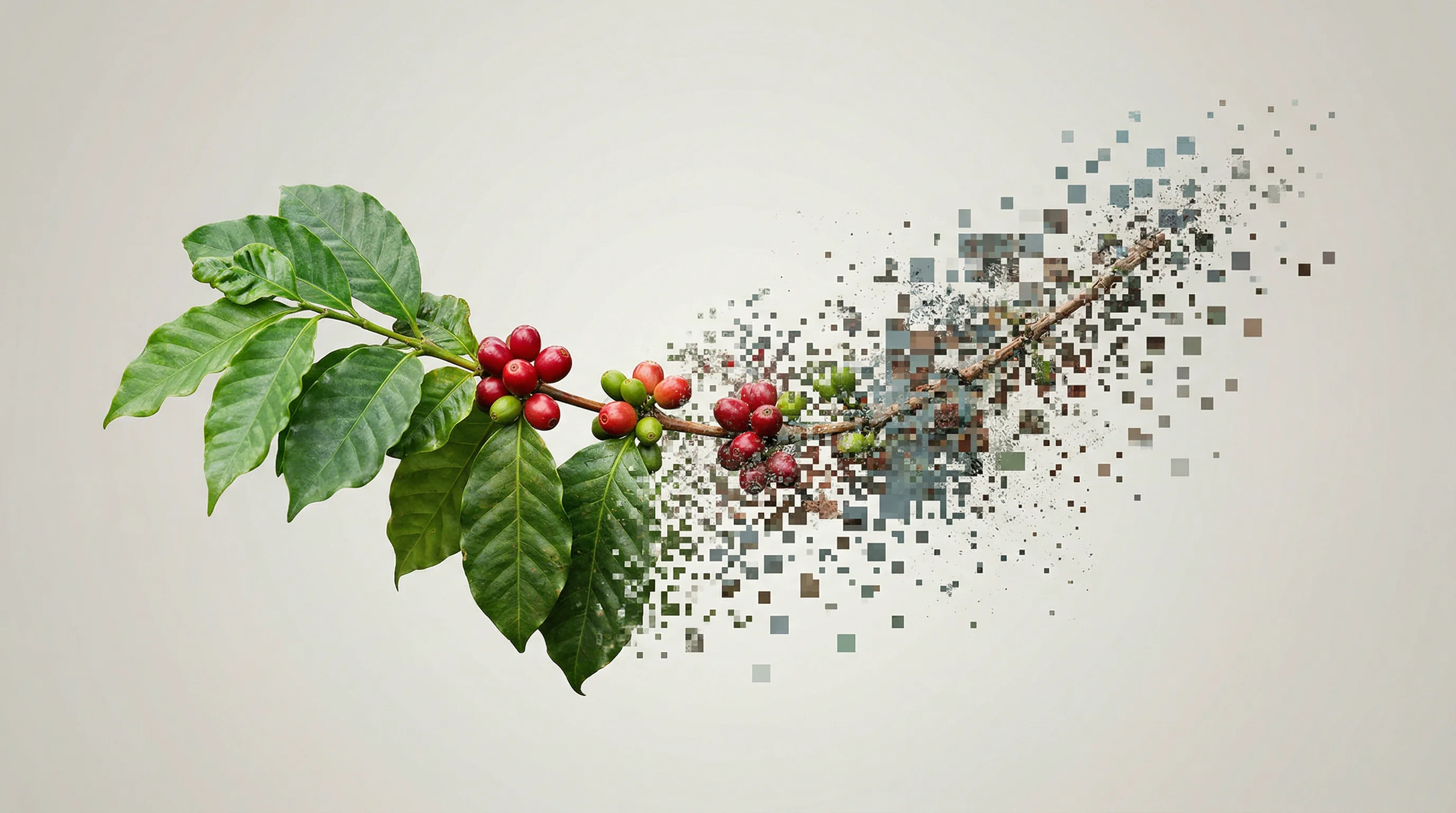
Coffee is in trouble. Multiple studies project that half of today's highly suitable coffee land could vanish by mid-century, with some Latin American regions staring down losses as severe as 73% to 88% under certain climate scenarios. Meanwhile, global consumption hit a record 169.4 million 60-kilogram bags in the 2025/26 season, according to USDA data from July 2025, and demand forecasts—depending on which analyst you ask—range from doubling to tripling by 2050.
Traditional breeding can't keep pace. World Coffee Research's Innovea network, launched in 2022 and later named a TIME Best Invention in 2025, has distributed over 5,000 novel seeds across eleven countries. But even those accelerated programs face development cycles spanning a decade or more. Perennials simply don't hurry.
That's the crux of Amatera's pitch: speed matters when the climate is shifting faster than your breeding program.
Beyond the Coffee Belt
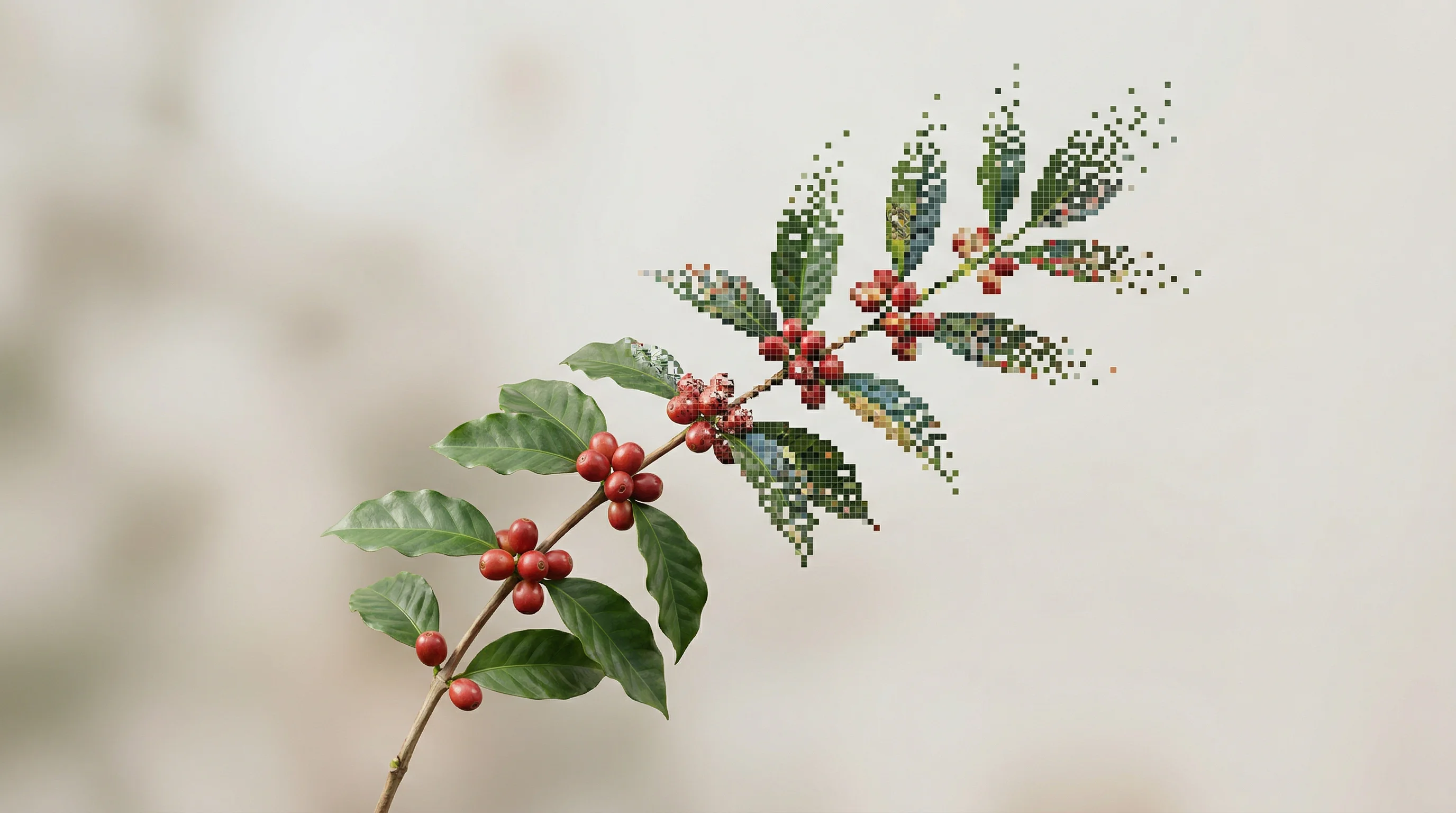
Amatera's business model hinges on licensing varieties to trading houses and co-developing genetics with large food companies—a strategy that could bypass some of the adoption friction smaller startups face when trying to sell directly to fragmented farmer networks.
The company says it plans to expand beyond coffee and grapes into other high-value perennials, though it hasn't named which crops are next. Cocoa? Citrus? Nuts? The logic is sound—any perennial with a long breeding cycle and climate exposure is theoretically a candidate.
Whether Amatera can deliver on its 2x speed and 10x cost claims at commercial scale is the question investors are now betting €7.5 million to answer. If the science translates, the company could be sitting on a platform with reach far beyond a single crop. If not, well—coffee's climate clock keeps ticking either way.


