

The pitch sounds almost too good to be true: cut satellite mission timelines in half, slash lifetime costs by 90 percent, and treat spacecraft like commodity servers instead of bespoke hardware. But Antaris, a Los Altos startup founded by Planet Labs veterans, has convinced a group of investors—including defense giant Lockheed Martin—that the satellite industry is ripe for exactly this kind of disruption.
The company announced the first close of a $28 million Series A round on March 31, 2026, with WestWave Capital, a defense-focused investor, leading the investment. Lockheed Martin Ventures, which has backed Antaris since its seed stage, participated alongside other new and existing investors. The "first close" designation suggests additional capital may still be on the table.
This latest infusion brings Antaris's total capital raised to roughly $35.7 million since its 2021 founding. Not a splashy sum by Silicon Valley standards, perhaps, but the trajectory tells a story of patient capital deployed in a sector where hardware and software are finally starting to converge.
From Planet Labs to Platform Play
CEO Tom Barton and CTO Karthik Govindhasamy bring the kind of résumés that get investors' attention. Both cut their teeth at Planet Labs during its early constellation scaling—Barton as COO, Govindhasamy as EVP of Engineering building telemetry, tracking, command, and mission control automation. They emerged with a conviction: the satellite industry had remained stubbornly artisanal when it should have been moving toward something more like cloud computing.
Their flagship product, TrueTwin, uses digital twinning to simulate entire satellite missions before a single piece of hardware exists. Think of it as a flight simulator, but for spacecraft—running actual flight software and drivers to create what Antaris calls "Full Mission Virtualization." The system spans mission design through constellation operations, paired with SatOS, the company's flight software stack that integrates across the satellite lifecycle.
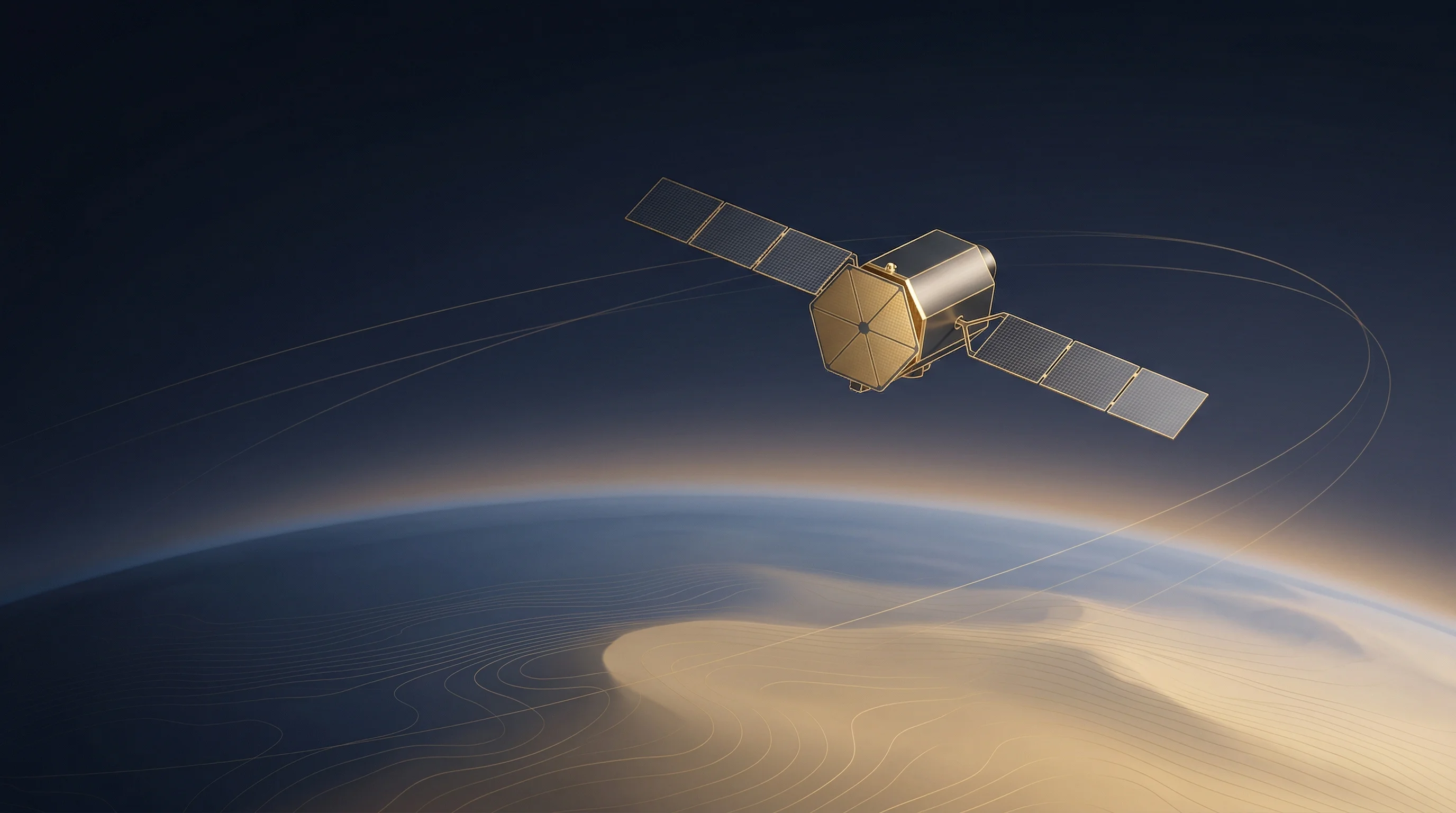
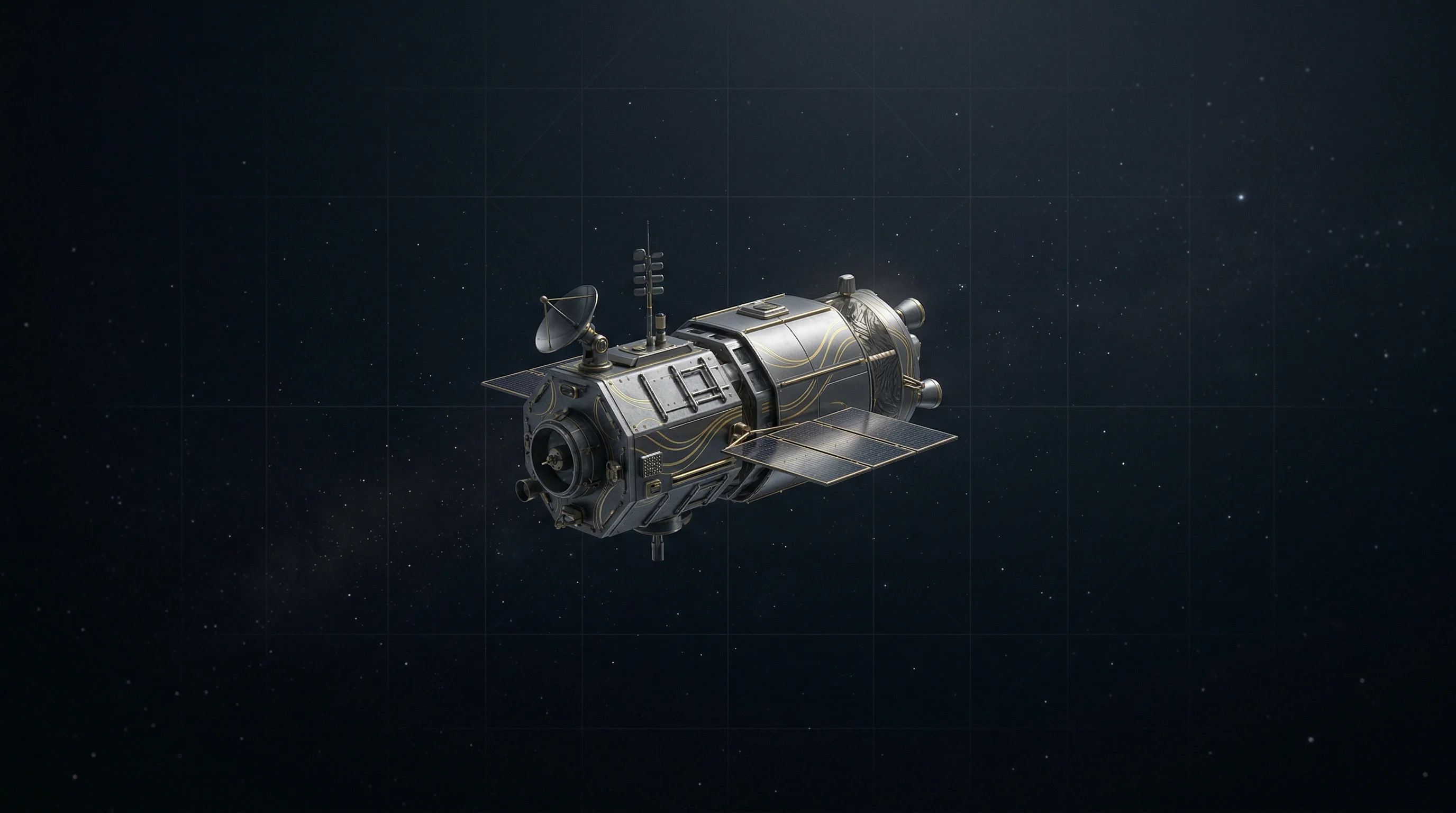
It's not just PowerPoint and promises. Antaris has flown two orbital missions to prove the concept. JANUS-1, launched in February 2023, carried the marketing tagline of being the world's first "cloud-built" satellite. More recently, the Almagest ELEVATION-1 satellite—launched on January 16, 2025—operates on the Antaris Cloud Platform, providing what the company views as validation for production-scale use.
Following the Defense Dollars
The choice of WestWave Capital as lead investor is telling. The firm specializes in defense technology and had already worked with Antaris on Space Development Agency contracts. The overlap between commercial satellite ambitions and defense priorities has become impossible to ignore, especially as the Pentagon accelerates its push toward proliferated low-Earth orbit constellations.
Antaris has been methodically stacking wins on the government side. On August 6, 2025, the Space Development Agency awarded the company a contract for digital FlatSats development. On January 21, 2026, it secured a spot on the Missile Defense Agency's SHIELD IDIQ vehicle—a multi-year, multi-vendor framework that could open doors to classified work. Around the same time, Antaris announced an integration with Infostellar for software-defined ground operations, another nod to the Pentagon's preference for flexible, rapidly reconfigurable systems.
Then there's the international dimension. In February, the company signed a memorandum of agreement with SARsatX to deliver a 16-satellite synthetic aperture radar constellation for Saudi Arabia—a reminder that defense-grade satellite technology has become a global marketplace, complete with all the geopolitical complications that entails.
Antaris also won selection for the 2025 Hyperspace Challenge, a U.S. Space Force and Air Force Research Laboratory program focused on digital twins and scalable space operations. The award carries relatively modest funding, but it's the kind of credential that matters when courting prime contractors and government program offices.
What the Money Buys
The Series A capital will fund expansion of the Antaris Intelligence platform and Full Mission Virtualization capabilities, with a particular eye toward autonomous, software-defined missions for intelligence, surveillance, reconnaissance, and communications applications. Translation: the company is chasing the most lucrative and technically demanding corners of the satellite market.
Antaris plans to grow engineering and go-to-market teams—a balancing act that has tripped up more than a few hardware-adjacent startups. Hiring salespeople who can navigate both commercial procurement and the defense bureaucracy is notoriously difficult. So is recruiting engineers willing to work on software that might end up classified.
The company has assembled a network of partnerships that span the satellite stack: AWS for cloud infrastructure, Ananth Technologies, Morpheus Space, Atlas Space Operations, and others. XDLINX Space Labs serves as its India manufacturing and solutions partner, a relationship that underscores how globally distributed the satellite supply chain has become—even for a company selling "cloud-built" systems.
The Broader Bet
Barton and Govindhasamy are wagering that the satellite industry is approaching an inflection point similar to what enterprise IT experienced two decades ago. Back then, companies stopped building bespoke data centers and started renting compute from Amazon and Microsoft. The Antaris thesis holds that satellite operators will eventually do the same—offloading the messy complexity of mission design, simulation, and operations to a platform layer.
Whether that vision plays out remains an open question. The satellite business has always been conservative, shaped by mission-critical stakes and hardware that can't be patched after launch. But the economics are shifting. Launch costs have collapsed, constellations are scaling, and the Pentagon is explicitly demanding software-defined architectures.
With $38 million in the bank and a growing list of government contracts, Antaris has bought itself runway to find out if the industry is ready to make the leap. Or whether, despite all the cloud metaphors and digital twins, satellites will remain a little too bespoke for commodity thinking.


