

The anti-amyloid drugs arrived last year with the kind of regulatory momentum the Alzheimer's field hadn't seen in decades. Donanemab got its FDA green light in early July 2024. Medicare broadened coverage for Leqembi after full approval in July 2023. But the celebration has been muted—not just because of the $26,600 to $32,000 annual price tags or the infusion-center logistics, but because of what the drugs revealed as much as what they promised. Clearing misfolded proteins matters. It slows decline. But it doesn't stop it.
Which raises an uncomfortable question: what if the real bottleneck isn't the plaques themselves, but the brain's capacity to flush them out in the first place?
That hypothesis is driving a quiet but accelerating shift in how neuroscience entrepreneurs are thinking about neurodegeneration. Instead of antibodies and small molecules, they're placing bets on bioelectronics—wearable headsets, implantable stimulators, ultrasound arrays—designed to tune the brain's own waste-disposal machinery. The target is a network most physicians had never heard of until recently: the glymphatic system, a lattice of cerebrospinal fluid channels discovered barely more than a decade ago.
The science has moved faster than you might expect. In October 2024, NIH-funded researchers published the first direct visualization of these perivascular inflow channels in living humans, not just rodents. By this past May, a University of Washington team reported developing a wireless, skin-interfaced device that tracks glymphatic function in real time during sleep, using electrical impedance spectroscopy and EEG to correlate overnight brain resistance changes with deep-sleep stages and MRI-based clearance metrics. And just this year, a Nature Communications paper confirmed that this sleep-active glymphatic process drives measurable overnight clearance of amyloid-β and tau into the bloodstream in human subjects.
The plumbing, in other words, is real. Whether it can be fixed—especially in aging brains where the system has already started to falter—remains the multibillion-dollar question.
Mechanism as Market Opportunity
The glymphatic system's job is deceptively simple: cerebrospinal fluid circulates through perivascular spaces around arteries, exchanges with the interstitial fluid bathing neurons to collect metabolic waste (including the amyloid and tau proteins implicated in Alzheimer's), then drains via meningeal lymphatics to cervical lymph nodes and ultimately the bloodstream. It happens mostly during sleep, when the brain's extracellular space expands by roughly 60 percent to make room for the nightly rinse cycle.
The problem in aging and disease? The system slows. Water channels called AQP4 become mispolarized. Arterial pulsatility weakens. Meningeal lymphatics lose their elasticity. Sleep fragments. Waste accumulates. Another study published earlier this year linked respiration patterns to net CSF flow even during wakefulness—suggesting the clearance mechanism is more dynamic, and perhaps more tunable, than previously understood.
If that's the core pathology, then the therapeutic lever isn't just blocking amyloid production or yanking plaques out with monoclonal antibodies. It's restoring flow.
"It's a fundamentally different intervention point," said one venture investor tracking the space, who requested anonymity to speak candidly about portfolio strategy. "You're not asking the immune system to clean up a mess. You're asking the brain to do what it was already designed to do—just better."
Whether that translates to slowing cognitive decline in randomized trials is another matter entirely.
The Founders Placing Bets
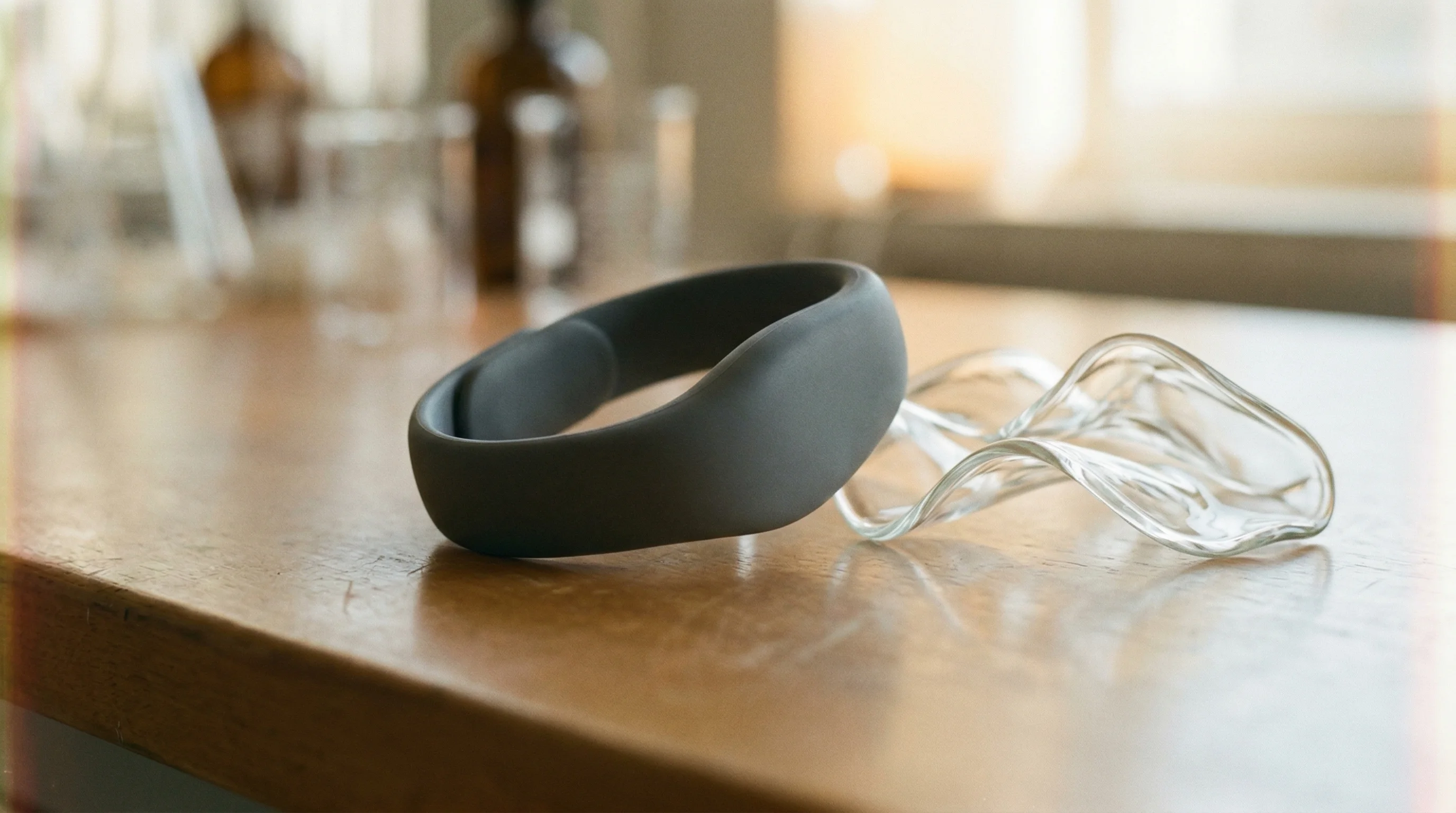
NeuraWorx Medical Technologies, a seed-stage company spun out of the University of Wisconsin–Madison, is building what it describes as "Intelligent Cerebrovascular Pacing"—a wearable bioelectronic device intended to enhance vasomotion, CSF flow, and glymphatic clearance. The scientific lineage traces back to work by co-founders Kip Ludwig (formerly at CVRx and involved in the NIH's SPARC initiative) and Justin C. Williams, who demonstrated in a 2020 Brain Stimulation paper that cervical vagus nerve stimulation increased CSF dye penetration into rodent brains.
The company closed an oversubscribed seed round in December 2024, led by Nexus NeuroTech Ventures, with participation from Foothill Ventures, Verge HealthTech Fund, and the Wisconsin Alumni Research Foundation. Total capital raised hasn't been disclosed; regulatory filings from mid-2024 reference a modest $25,000 tranche, likely an early friends-and-family increment. The device itself isn't FDA-cleared. NeuraWorx has said it will be available "after clinical study and clearance"—standard startup language, but a reminder that the product is still pre-market. Recent job postings emphasize clinical and regulatory expertise for neuromodulation in traumatic brain injury and CNS disorders, signaling where the company may be aiming its initial development work.
The timing reflects both scientific maturation and some adjacent validation. Last June, researchers at South Korea's Institute for Basic Science reported that non-invasive mechanical stimulation of superficial cervical and facial lymphatics—essentially, gentle vibration and massage-like pressure—doubled CSF outflow and restored impaired drainage in aged mice. Published in Nature, the work underscored a point many in the field are now circling: the drainage system is tunable, even from the outside. Translation to humans is pending, naturally. But the hypothesis has legs.
NeuraWorx isn't working in isolation. Cognito Therapeutics earned FDA Breakthrough Device designation back in 2021 for its Spectris AD system, which delivers 40 Hz audiovisual gamma stimulation—flickering lights and pulsed tones synchronized at gamma frequencies. The approach emerged from MIT studies showing that such synchronized sensory input increased CSF influx, promoted amyloid clearance, and dilated meningeal lymphatics in Alzheimer's mouse models, mediated by adenosine A2A receptor signaling.
Cognito's Phase 2 OVERTURE trial, which wrapped in 2023 after running for several years, reported reduced corpus callosum atrophy and slower functional decline over six months. The pivotal HOPE trial has been enrolling since 2024, with completion anticipated in 2026; results from that study will determine whether the gamma-stimulation thesis holds in a larger, longer, more definitive patient cohort.
Then there's Sinaptica Therapeutics, pursuing precision transcranial magnetic stimulation guided by EEG and machine learning, targeting the precuneus and default mode network. It secured its own Breakthrough Device designation in October 2022, presented 52-week Phase 2 data at the Clinical Trials on Alzheimer's Disease conference in 2024, and has indicated plans to launch Phase 3 sometime this year. Meanwhile, focused ultrasound with microbubbles—already in early human trials combining blood-brain barrier opening with monoclonal antibodies—has demonstrated feasibility for enhancing glymphatic clearance in animals, though clinical efficacy signals remain preliminary at best.
The ecosystem also extends to diagnostics. Applied Cognition supplied the investigational wearable used in the University of Washington's glymphatic-monitoring study. That device could become a translational endpoint, offering sponsors a way to measure therapeutic impact on sleep-linked waste clearance without relying solely on MRI or invasive CSF sampling—a prospect that would meaningfully de-risk development timelines if it holds up.
Market Momentum and Regulatory Tailwinds

The global neuromodulation devices market was valued somewhere north of $6 billion in 2025, according to Grand View Research, with projections approaching $14 billion by 2033—a compound annual growth rate above 10 percent. DelveInsight's analysts peg sector growth at roughly 9 percent CAGR through the early 2030s, citing recent FDA approvals as momentum indicators: Neuspera's integrated sacral neuromodulation system received premarket approval in June of last year; Neurolief's Proliv Rx for major depressive disorder got its PMA this past January, marking the first prescription at-home brain neuromodulation therapy.
SetPoint Medical's August approval for implantable vagus nerve stimulation in rheumatoid arthritis validated device-based systemic disease modulation beyond neurology and established payer pathways for bioelectronic medicine in chronic inflammatory conditions. Medtronic's BrainSense Adaptive DBS, which adjusts deep brain stimulation in real time based on neural signatures, was named a TIME Best Invention in 2025—illustrating the broader shift toward closed-loop, responsive systems.
For Alzheimer's specifically, though, the competitive landscape is bifurcating in interesting ways. Anti-amyloid therapies carry monitoring burdens: serial MRIs to watch for ARIA (amyloid-related imaging abnormalities), infusion infrastructure, specialist oversight. Medicare covers 80 percent under Part B when registry criteria are met, leaving patients with coinsurance estimated around $5,300 annually for Leqembi at current list pricing—excluding imaging costs, which add up. Devices claiming disease modification will need robust, adequately powered randomized controlled trials with functional and cognitive co-primary endpoints, no shortcuts there.
But if they can demonstrate acceptable safety, practical at-home usability, and objective mechanistic validation via emerging "neurofluid" endpoints—wearable electrical impedance spectroscopy, MRI diffusion-tensor imaging along perivascular spaces (DTI-ALPS indices), contrast-enhanced glymphatic imaging—payer interest may rise, especially for populations where anti-amyloid therapy is contraindicated or declined by patients weary of infusions.
CMS's Transitional Coverage for Emerging Technologies pathway, which went into effect in August 2024, offers a national route to accelerated Medicare coverage for select FDA Breakthrough Devices via national coverage determinations paired with coverage with evidence development. It's a limited-slot program with stringent reporting requirements. But for startups seeking to close the chasm between marketing authorization and actual reimbursement, it's material.
The Pivots Ahead

The decisive moments for this thesis are approaching. Cognito's HOPE trial and Sinaptica's Phase 3 will determine whether noninvasive neuromodulation can credibly claim disease modification in Alzheimer's. If either shows statistically significant and clinically meaningful slowing of cognitive decline with acceptable safety over 12 to 18 months, the field will accelerate. Capital will flow. Acquirers will circle. If results are equivocal—or worse, negative—the thesis fragments, and founders will pivot to adjacent indications or retreat to academic feasibility studies.
What's undeniable is that brain waste clearance has moved from niche physiology to therapeutic target in record time. The Nature Biomedical Engineering paper on wireless glymphatic monitoring, published last year, provided the first at-home, scalable measurement tool—a technical milestone that matters for anyone trying to run a multicenter trial. The Nature Communications work linking sleep, respiration, and overnight amyloid/tau clearance in humans closed the loop between mechanism and pathology. The mechanical lymphatic stimulation study demonstrated that drainage bottlenecks are reversible, at least in aged mice. That's three high-impact publications in under two years, all pointing in the same direction.
For medtech founders, the opportunity lies in execution risk, not scientific risk. The glymphatic system exists; the question is whether electrical, acoustic, mechanical, or ultrasound modulation can move the needle on human cognition in a way that scales beyond academic proof-of-concept. For investors, the bet is on platform durability—whether today's gamma-stimulation headset or tomorrow's cerebrovascular pacer can serve multiple indications (Parkinson's, traumatic brain injury, vascular dementia) and support iterative reimbursement expansion as evidence matures. And for researchers, the challenge is standardization: consensus biomarkers, harmonized imaging protocols, longitudinal cohorts capable of validating or refuting the clearance hypothesis before billion-dollar pivotal trials lock in.
The brain's drainage system was invisible to medicine until 2012, when a team at the University of Rochester first described it in mice. Just over a decade later, it's the center of a medtech arms race. The question isn't whether waste clearance matters anymore—the biology is settled enough. It's who builds the first device proven to make it matter clinically, at scale, in patients who have run out of options. That answer, one suspects, is still a few pivotal trials away.


