

The numbers sound almost absurd. GPU clusters worth billions of dollars, the crown jewels of the AI era, sitting idle 30 to 60 percent of the time. Charles Ding remembers the frustration from his years at Meta and Amazon—infrastructure teams hoarding capacity, engineers waiting days for jobs to start, executives hemorrhaging money on chips that spend half their lives doing nothing.
Now Ding and three fellow infrastructure veterans have built what they believe is the answer: an autonomous platform that promises to squeeze 50 percent more work out of existing hardware. No new chips required.
Chamber, a San Francisco startup that emerged from Y Combinator's Winter 2026 batch in January, is betting that the AI infrastructure bottleneck isn't chip scarcity—it's spectacular mismanagement of the GPUs companies already own. Their pitch lands somewhere between audacious and obvious: Why spend millions on new H100s when you're barely using the ones gathering dust in your data center?
"We call it the $240 billion problem," Ding says, citing the company's estimate of wasted enterprise GPU capacity. "Companies treat GPUs like real estate—they hoard it, even when they're not using it."
Autopilot for the AI Factory
Chamber positions itself less as software and more as an "autonomous infrastructure team" that never sleeps. The platform sits atop any Kubernetes cluster—whether on-premises, AWS, Google Cloud, Azure, or some hybrid monstrosity—and works with NVIDIA GPUs across the major architectures: H100s, A100s, the new B200s.
What it does sounds straightforward enough in theory. Real-time monitoring shows GPU utilization, idle capacity, queue depth. An intelligent scheduler juggles workloads using priority-based queuing with preemption—automatically suspending and resuming jobs based on team needs and available capacity. Teams can borrow idle capacity from each other's allocations; when the original owner needs resources back, workloads get shuffled without manual intervention.
The more intriguing piece, though, is what Chamber calls fault pre-detection. The system continuously monitors GPU health and isolates bad nodes before they corrupt training runs—the kind of failure that can cost days of compute time and tens of thousands of dollars. It's a problem anyone who's run large-scale ML training knows intimately.
Chamber claims jobs start three times faster with its scheduling versus manual approaches. The company runs within customer infrastructure and collects only anonymized telemetry, leaving models, datasets, and proprietary code inside the customer's walls—a necessary design choice for selling to enterprises paranoid about AI IP.
The Free Tier Gambit
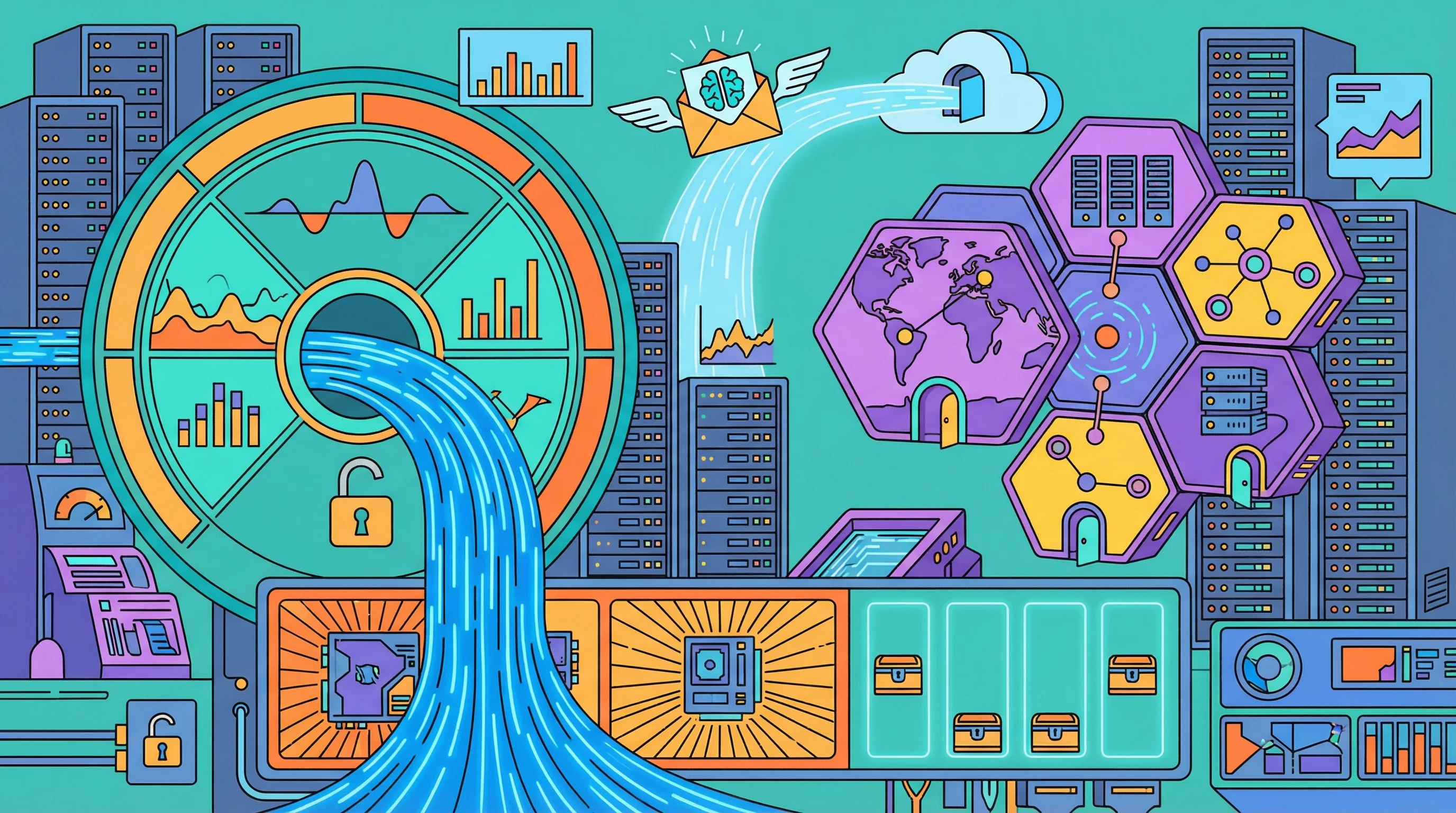
Here's where Chamber's strategy gets interesting, or perhaps desperate depending on your perspective. The company offers a complete GPU monitoring dashboard at zero cost. Real-time tracking, automatic resource discovery, idle capacity alerts, AI metric insights delivered via email. No credit card required.
It's classic land-and-expand, the kind of freemium play that's become gospel in enterprise SaaS. Get infrastructure teams addicted to visibility, then upsell them to the full orchestration suite once they see how much capacity they're wasting. The free tier installs via a single Helm command and delivers monitoring "in three minutes," according to the homepage—though that timeframe might be optimistic for organizations with complex compliance requirements.
The paid Enterprise tier adds team management, automated allocations, intelligent scheduling, and integrations with Slack, PagerDuty, and custom webhooks. Pricing is custom, naturally. This is enterprise infrastructure software; nobody expects a price list.
Early access opened in the first quarter, and the company launched on Product Hunt in February. The response from the developer community was... measured.
Veterans Taking Another Swing
Ding, the founder and CEO, brings credentials from Meta, Amazon, and Microsoft, describing himself as a second-time founder with one exit already behind him. Co-founder Andreas Bloomquist came from Amazon's product organization, focused on observability and GPU efficiency. Jason Ong and Shaocheng Wang round out the quartet, both with backgrounds in large-scale distributed systems from Amazon, Flexport, and various fintech companies.
In a January blog post, Bloomquist articulated the team's core thesis: GPU scheduling will become as critical to AI infrastructure as container orchestration became to cloud-native applications a decade ago. They're wagering that companies will pay handsomely for software that extracts more value from hardware they've already purchased—especially when that hardware costs as much as a small office building.
Entering a Market That's Already Consolidating
Timing in venture-backed startups is everything, and Chamber's timing looks... complicated.
In December 2024, NVIDIA completed its acquisition of Run:ai, the Israeli pioneer in Kubernetes-based GPU pooling and utilization optimization. Run:ai's technology is now part of NVIDIA's stack, giving the chip giant a direct orchestration play and a formidable competitor with distribution advantages Chamber can only dream about.
The open-source world hasn't been idle either. Kueue, the Kubernetes-native job queueing system, now supports quotas, cohorts, and resource borrowing. In late 2024, Red Hat and IBM reported sustained 90 percent utilization using Kueue combined with MLBatch and failure recovery on IBM's Vela cluster—metrics that match or exceed what Chamber is promising.
Volcano, another Kubernetes batch scheduler, offers gang scheduling and resource reclamation with explicit support for LLM training and inference workloads. Google continues improving GKE Autopilot with features like in-place pod resizing. Traditional HPC schedulers like Slurm remain entrenched in many AI clusters, with managed variants from Lambda and BUZZ HPC.
Academic research backs up the utilization gains everyone's chasing. A 2025 paper by Mamirov found GPU clusters averaging around 50 percent utilization, with dynamic schedulers pushing that to 75–78 percent in simulations. Real-world deployments have gone further. MuxFlow improved utilization from 26 percent to 76 percent at a 20,000-GPU deployment. Alibaba's Aegaeon claimed an 82 percent GPU reduction through token-level virtualization—though those numbers come with the usual grain of salt reserved for vendor benchmarks.
Chamber differentiates itself on three fronts: the "agentic" framing (positioning the platform as an autonomous agent rather than configuration software), the free monitoring tier (removing friction for adoption), and the focus on fault pre-detection alongside orchestration.
Whether those differences matter to customers already invested in Run:ai, Kueue, or managed Slurm is an open question.
The company hasn't disclosed independent benchmarks for its "50 percent more workloads" and "3× faster job starts" claims. Third-party product directories echo these numbers without verification. For a four-person startup competing against NVIDIA's orchestration play and mature open-source alternatives, proving those gains in head-to-head comparisons will be critical.
The Race Against the Window
Chamber is targeting AI and ML teams at companies managing multi-team GPU clusters—organizations where siloed allocations create waste and engineering leaders need visibility into spending. The free dashboard provides a wedge into infrastructure organizations. The bet: once CTOs and ML leaders see their idle capacity laid bare, they'll pay to reclaim it.
The company is onboarding early customers and iterating rapidly. Interested teams can sign up at usechamber.io or request access to the free monitoring tier.
But the clock is ticking. In a market where NVIDIA and Google are making aggressive moves, where open-source alternatives are maturing, and where enterprises have already standardized on competing solutions, Chamber faces the classic startup challenge: sign customers before the window closes.
For Ding and his team, it's a familiar position. They've built infrastructure at scale before. They understand the pain points intimately. They have a product that, at least on paper, solves a real problem costing enterprises billions.
Now they just need to convince enough customers to bet on them before the giants finish building their own versions—or before companies realize the open-source tools might be good enough.
The GPU utilization problem is real. Whether a four-person Y Combinator startup with a free monitoring tier is the solution remains very much to be seen.


