

The small room in Shoreditch buzzed with a different sort of anticipation last summer. No tattoo gun whirred in the background. No ink-stained artist hunched over stretched skin. Instead, attendees at a July product launch pressed what looked like a high-tech Band-Aid to their wrists, waited fifteen minutes, peeled it off—and walked away with permanent body art.
Welcome to the future, maybe. Or at least to what CipherX Technologies hopes becomes the future.
The London biotech startup officially unveiled its microdot tattoo system in late July 2026, charging £40 for discounted launch tickets that included a tattoo from the inaugural collection. It's a modest debut for what the company bills as the world's first commercially available microneedle tattoo product—a claim that appears accurate, if only because no one else has tried to sell one before now. Academic labs have tinkered with the concept for years. Georgia Tech published microneedle tattoo patch research back in 2022, though that work remained a prototype rather than a commercial product. But turning dissolvable polymer arrays into a consumer product? That's new territory.
The proposition sounds almost too simple: permanent ink, barely any pain, about fifteen minutes of your time. Of course, the actual mechanics are considerably more complicated.
Polymer Needles and Petroleum Jelly
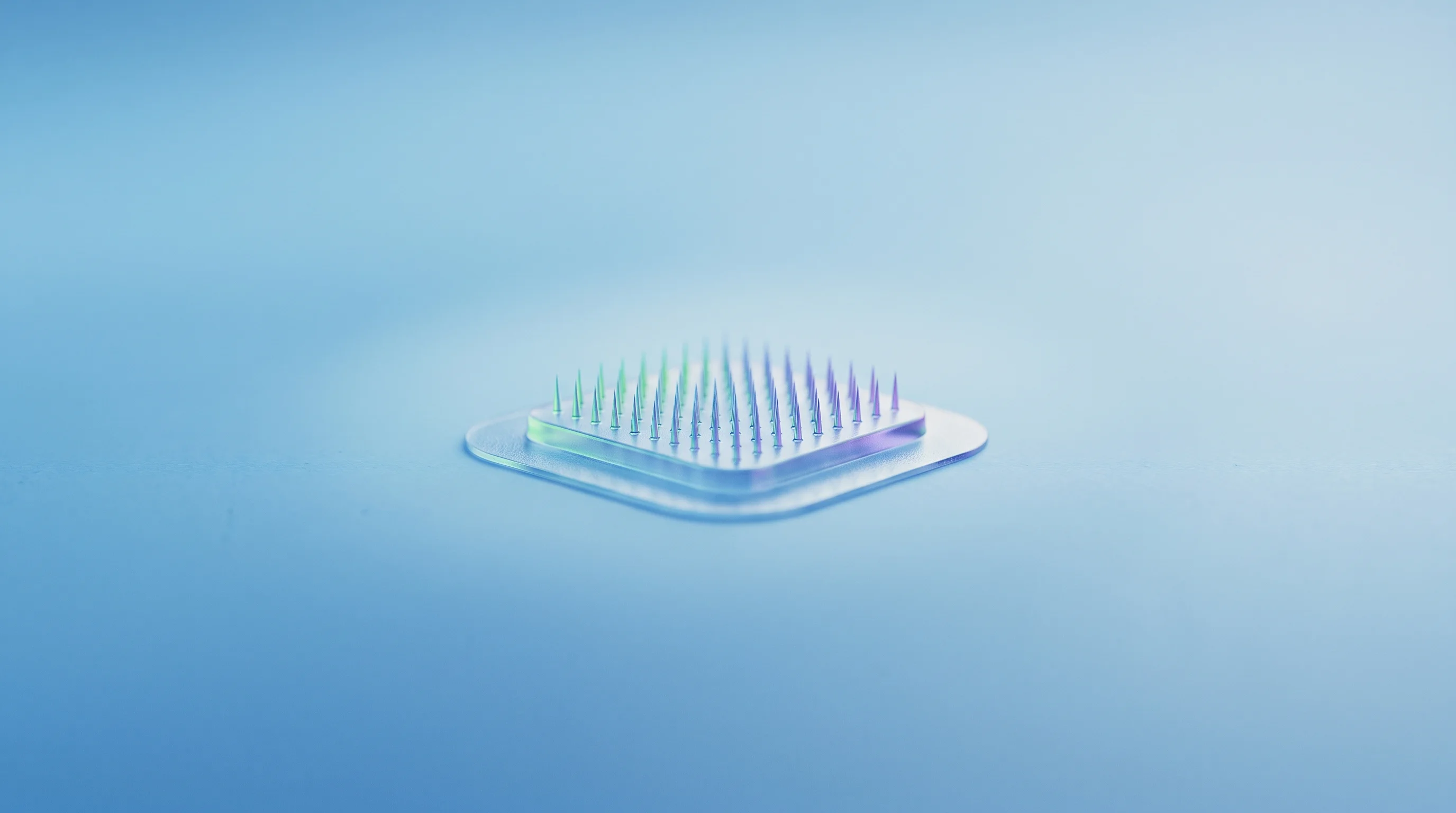
Each single-use patch houses hundreds of tiny dissolvable microneedles—think microscopic spikes fashioned from biocompatible polymers including polyvinyl alcohol, trehalose, and cellulose gum, all laced with carbon black tattoo pigment. The needles penetrate only the skin's upper layers. A handheld applicator, developed in partnership with Dutch microneedle specialist uPATCH, presses the patch into place with controlled force. The full guided process takes twenty-five to thirty minutes, with the patch left adhered for roughly fifteen while the needles dissolve and deposit their payload.
The tattoos themselves are decidedly small. We're talking a 15mm diameter circle. Maybe 1.5 by 1.5 centimeters at most. Black ink exclusively for now, though the company says additional colors are coming. Designs darken over the following day or two and demand light aftercare: petroleum jelly, no extended soaking, minimal sun for forty-eight hours.
"The applicator claims to do away with the worst part of getting tattoos," Fast Company noted in its July coverage, quoting CEO Ferdinand Kohle on the reusable device paired with disposable capsules. That applicator reportedly earned Red Dot's Best of the Best designation for 2026, according to company materials and design press—though independent verification of this award remains pending, as the entry had not yet appeared in Red Dot's public winners directory by late July.
Bookings Only, London Only

For now, getting one of these tattoos requires booking a session at CipherX's flagship in London's Scale Space Building. Tuesday through Thursday evenings only. Customers purchase designs online—the current catalogue shows small motifs at £50—and receive a QR code to redeem in person with trained staff supervising the application. No home kits yet. No mail order. The company reports more than 500 tattoos applied since launch, with a pilot manufacturing facility now operational in the city.
The startup traces its lineage to the Royal College of Art, where it emerged in 2021. Founder Dr. Ferdinand Friedrich Erich Kohle, an Innovation Design Engineering graduate from RCA's class of 2021, heads a team that LinkedIn pegs at somewhere between two and ten employees—perhaps not the most precise headcount, but typical for an early-stage venture still finding its footing. Co-developer Dr. Karl-Anton Harms rejoined the board in December 2024 after an earlier stint from 2022 to 2023, a revolving-door pattern not unusual in resource-constrained startups juggling priorities.
Early capital came from Antler, which contributed to a $0.44 million seed round in July 2023. More recently, CipherX secured two Innovate UK grants totaling just under £460,000—one for microneedle vaccine delivery research, another for a female reproductive health project. Neither grant has concluded yet, based on their stated timelines running into 2025 and 2026 respectively.
The Real Prize Might Not Be Body Art
Here's where things get interesting, or at least potentially more lucrative. The tattoo business is consumer-facing and generates immediate revenue, but the underlying microneedle platform points toward applications that could matter more. CipherX's grant work explores vaccine delivery and dose confirmation—territory where painless, self-administered patches might genuinely disrupt existing medical device markets. A review published in the Journal of Controlled Release around the same time as CipherX's launch noted that microneedle array patches for drug delivery had yet to receive regulatory approval for commercial use. Translation: the tattoo product may be less a destination than a stepping stone, a way to commercialize the technology while the higher-stakes healthcare applications wind through approval processes.
The body art sector has seen its share of would-be disruptors. Blackdot's robotic tattooing device in Austin employs computer vision but still relies on traditional needles. Prinker offers temporary inkjet prints that wash off. Ephemeral bet on bio-engineered fading inks before shuttering its U.S. studios in 2024. None quite occupy CipherX's particular niche: permanent, patch-applied, genuinely needle-free from the customer's perspective.
Eligibility restrictions apply, naturally. You must be eighteen or older. Certain body areas are off-limits, as are individuals with particular health conditions. Removal options mirror conventional tattoos—laser treatment or cover-up work. The company logs each application with forensic precision: design, body site, patch batch number, applicator serial number, staff member on duty. It's the kind of traceability you'd expect from a company eyeing eventual medical device pathways.
Questions Without Answers
Whether microdot tattoos evolve beyond early adopters and design-forward enthusiasts remains an open question. Production capacity is one variable. Geographic expansion another—can the model work outside London, or does it require in-person supervision that limits scale? The color palette needs expansion; black-only offerings won't satisfy a market accustomed to vibrant, multi-hued work. And then there's the regulatory gauntlet for medical applications, where the real money might eventually live but where approval timelines stretch and success is never guaranteed.
For now, CipherX operates in a space it essentially invented. A commercial microneedle tattoo market, serving customers willing to trade canvas size for convenience and a bit less discomfort. It's a narrow wedge. But sometimes narrow wedges, driven hard enough, crack open doors.


