

The Pasig River winds through Manila like a working artery, choked with refuse. For six months last year, a fleet of electric-powered vessels—unmanned, solar-charged, and roughly the size of a golf cart—prowled its surface, scooping up floating trash and thick mats of water hyacinth. The boats belonged to Clear Robotics, a Hong Kong startup that secured $1.75 million in a Pre-Series A round announced on June 8, 2026, to expand its autonomous cleanup fleet across Southeast Asia and beyond.
The Pre-Series A round, which closed in June, was led by Shipsfocus Ventures, a maritime and logistics investor, with backing from Katapult Ocean, SGInnovate, M7 Holdings, and MGS Ventures. It's the latest injection of capital into a company that now operates 26 all-electric unmanned surface vessels—marketed under the Clearbot brand—across a region where polluted waterways remain a stubborn fact of life.
Clear Robotics is positioning itself at the intersection of two trends: rising demand for autonomous maritime technology and mounting pressure on port authorities and municipalities to clean up rivers and harbors without deploying crews of workers into often hazardous conditions. Whether the economics can scale remains an open question, but the company's founders—University of Hong Kong engineering grads Sidhant Gupta and Utkarsh Goel—seem determined to find out.
Following the money
The funding follows a 2022 seed round led by Alibaba Hong Kong Entrepreneurs Fund, with Gobi Partners GBA and CarbonX participating. The company declined to disclose valuation, which is standard for companies at this stage, though it leaves outside observers guessing at how investors are pricing the venture. Shipsfocus Ventures, which focuses narrowly on maritime and logistics plays, took the lead this time around.
Clear Robotics plans to use the capital to expand its fleet, develop larger vessel classes, and fund research into automated port surveying technology. The company also aims to push deeper into Southeast Asia, India, and the Middle East—markets where infrastructure for waste management often lags behind urbanization. It operates legal entities in Hong Kong (under the name Open Ocean Engineering Limited) and Singapore, incorporated in May 2023, with additional contacts in Bangalore.
The fleet itself tackles a range of jobs. Floating trash and oil spills, obviously. But also invasive vegetation—water hyacinth, in particular, which chokes waterways across tropical regions—and tasks like bathymetric surveys, draft measurements, and marine monitoring. All the vessels run on electric and solar propulsion, equipped with AI-enabled perception systems that allow them to navigate autonomously and classify debris as they go.
The hardware
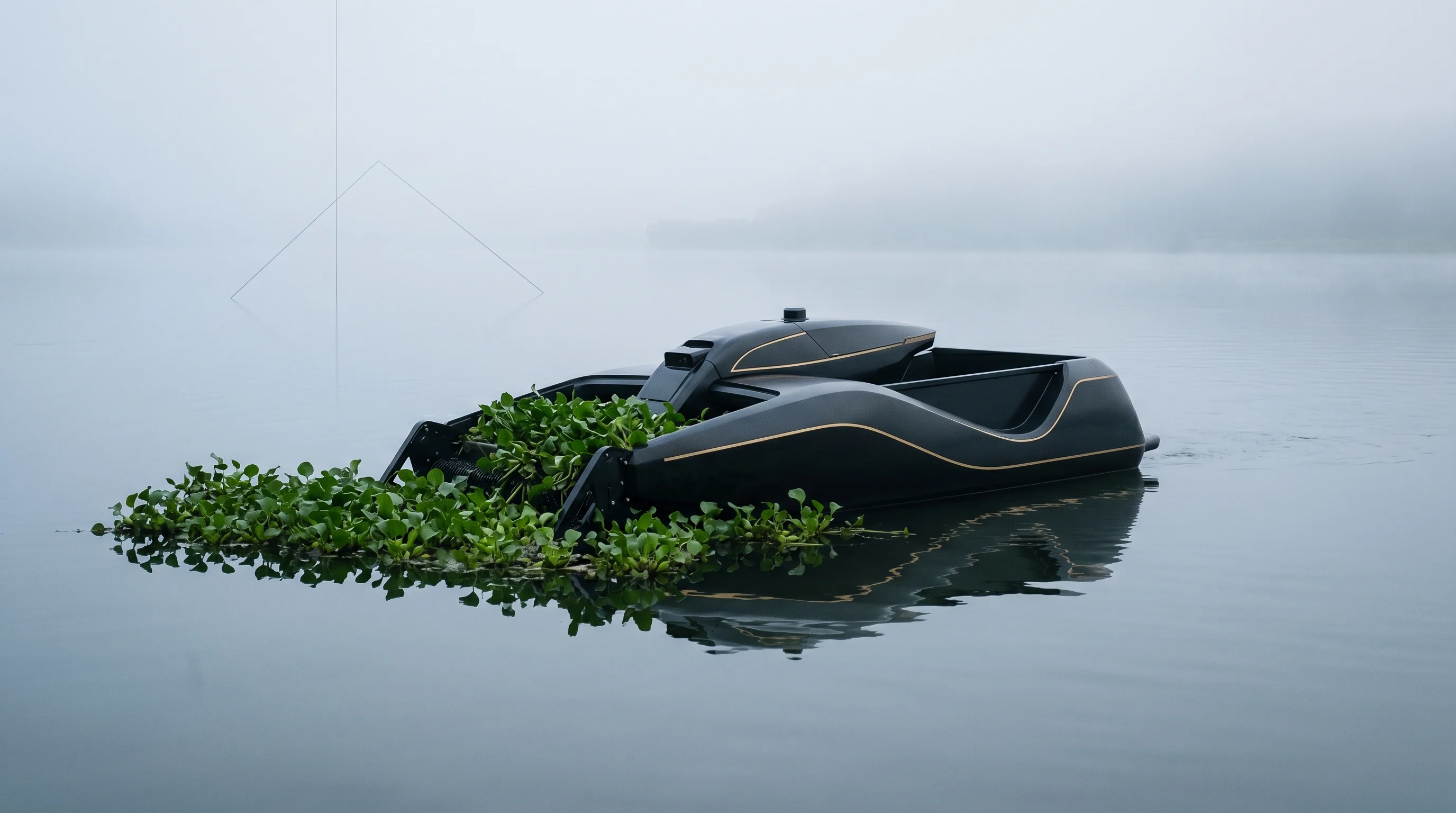
The flagship models include the Clearbot Class 3 and the Clearbot Alligator. The Alligator, designed specifically for hyacinth removal, carries what the company reports as a 500-kilogram payload and can reportedly tow up to two tons. The Class 3, which was introduced in 2024, measures about four meters long and comes outfitted with a 1080p camera, LiDAR, and anti-collision autonomy. It's a modest-sized piece of equipment—compact enough to deploy in tight harbor spaces but large enough to handle substantial loads.
Deployments have spread across Hong Kong, Singapore, Malaysia, the Philippines, and India. The Pasig River pilot, which wrapped up in January, was supported by the Asian Development Bank, the Metropolitan Manila Development Authority, and local government units. Media sources such as GMA Network reported that the company removed roughly 20,400 kilograms of hyacinth from the Ilugin River alone, though Clear Robotics has not independently verified all figures cited in local press.
In Kerala, the company claims to have cleared 44 tons of vegetation over 44 days in a project that ran from February to March of last year. In Mumbai, it has worked with Jawaharlal Nehru Port Authority. In Malaysia, demonstrations have been conducted through a distributor, DUROMAC. Hong Kong deployments continue in harbor sites, focused on waste recovery and infrastructure monitoring.
A crowded harbor
Clear Robotics is not alone in this space. RanMarine, a Dutch company, had delivered 102 units of its WasteShark model by April 2024. France's IADYS markets the Jellyfishbot, another autonomous cleanup vessel. Both companies have secured contracts in Europe and beyond, suggesting that demand exists—though whether it's sufficient to support multiple competitors at scale is less certain.
The company picked up accolades along the way. It won first prize at Singapore's PIER71 Smart Port Challenge in 2024, a competition run by the Maritime and Port Authority and NUS Enterprise. In 2022, it took the public vote at The Captain's Table, an ecosystem competition organized by Lloyd's Register and HFW. Recognition from industry bodies can open doors, though it doesn't guarantee contracts.
Gupta and Goel, who placed at the 2019 Global Grand Challenges Summit, now lead a team estimated at somewhere between 11 and 20 employees as of June 2026. Exact headcount is unclear—startups at this stage rarely publish org charts—but the company remains lean. Scaling from here will require not just more vessels but also local partnerships, regulatory approvals, and the ability to service equipment across widely dispersed geographies.
What comes next

The broader question is whether autonomous vessels can carve out a sustainable niche in waterway management. Municipalities and port authorities face real pressure to clean up pollution, but budgets are tight and procurement processes slow. Clear Robotics will need to prove that its technology can deliver consistent results at a cost that competes with traditional methods—crews, barges, manual labor.
The company's push into port surveying and marine monitoring could offer a steadier revenue stream than one-off cleanup contracts. Ports need regular bathymetric data, and automating that process could appeal to operators looking to cut costs. But competition is stiffening, and larger maritime technology firms may eventually decide this market is worth entering.
For now, Clear Robotics is placing its bet on Southeast Asia and India, where the combination of rapid urbanization, limited waste infrastructure, and polluted waterways creates both a problem and an opportunity. Whether the startup can turn that opportunity into a viable business—and fend off competitors in the process—will likely become clearer over the next 18 months. The vessels are in the water. Now it's a question of whether they can stay afloat.


