

A $72 million bet on automating design reviews reflects growing confidence—and lingering anxiety—around artificial intelligence in manufacturing
There's a waiting list 47,000 engineers long for software that promises to do something both mundane and critical: catch design flaws in CAD drawings before they become expensive manufacturing headaches.
That metric alone helps explain why CoLab Software, a relatively obscure startup based in St. John's, Newfoundland, just closed a $72 million Series C funding round. The November 10 investment, led by Intrepid Growth Partners with backing from Insight Partners, Y Combinator, and a clutch of other investors, brings the seven-year-old company's total venture haul to north of $110 million.
The money will fund what chief executive Adam Keating describes as an "AI operating system for modern product development." Whether that's visionary or merely well-timed buzzword deployment remains to be seen. But CoLab's recent traction with household names—Ford, Lockheed Martin, Schneider Electric—suggests the company has identified a genuine pain point in how large manufacturers collaborate on complex designs.
The Problem Hiding in Plain Sight
CoLab's pitch rests on a familiar complaint: legacy product lifecycle management systems are powerful but clunky, designed for data storage rather than human collaboration. Engineers at companies like Ford or Komatsu often find themselves juggling multiple file versions, emailing CAD attachments, and manually tracking feedback across suppliers and internal teams.
Enter CoLab's browser-based platform, which sits atop traditional PLM tools from giants like Siemens and Dassault Systèmes. Think of it as a layer of conversational software wrapped around industrial-strength databases. Teams can review 3D models, annotate issues, and loop in suppliers without downloading specialized CAD software or navigating the arcane interfaces that have long defined this corner of enterprise tech.
Ford Pro, the automaker's commercial vehicle division, reported cutting time to market by 40 percent using CoLab's system. IMI Critical Engineering, a British manufacturer of flow control equipment, is targeting similar reductions in lead times. Schaeffler, the German automotive supplier, expanded from 50 users to 300 across the Americas in short order, with European rollout planned next.
Those aren't gaudy consumer app numbers. But in manufacturing—where purchasing decisions move slowly and seven-figure software contracts aren't unusual—they represent meaningful validation.
The AI Gambit
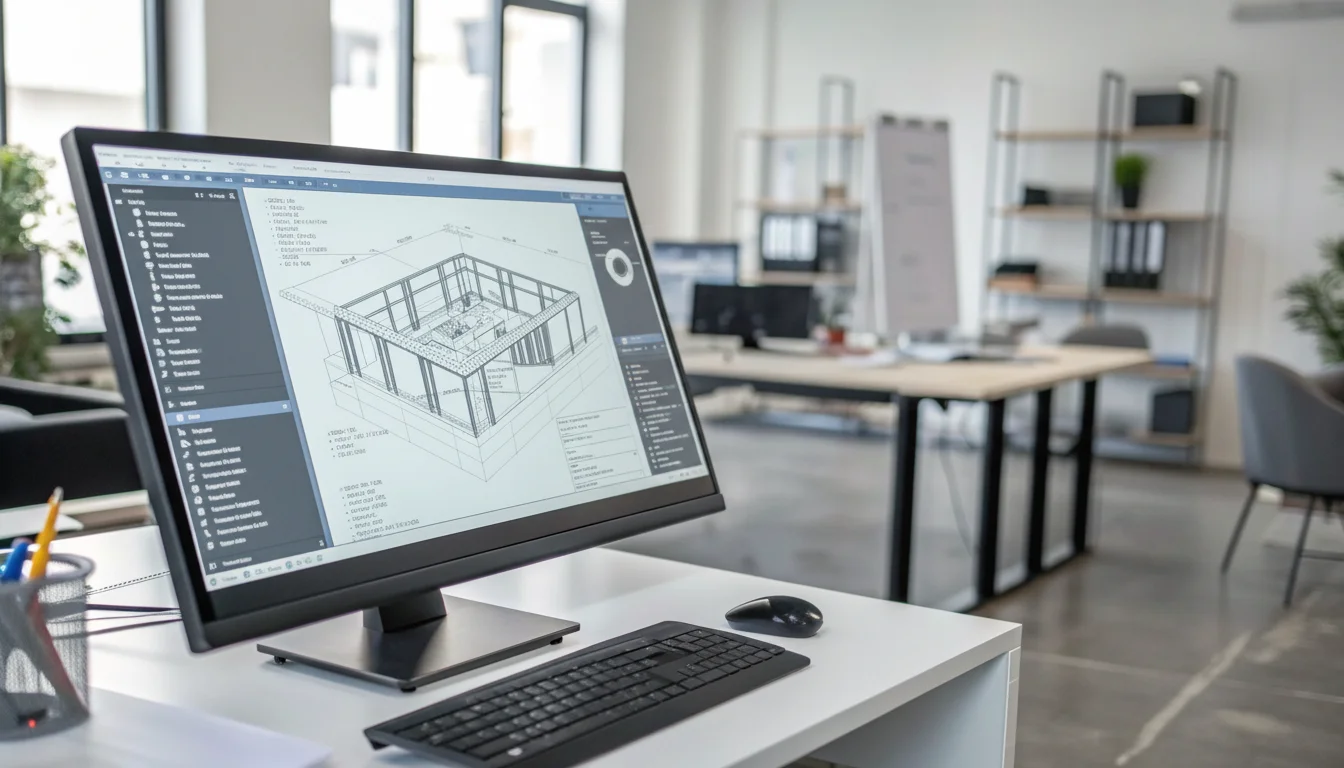
What seems to have captured investor attention, though, isn't just workflow software. It's AutoReview, CoLab's AI-powered "peer checker" that automatically flags potential design problems in engineering drawings and 3D models.
Launched in June, the tool ingests a company's historical design standards, internal checklists, and past reviewer feedback to build a model of what passes muster and what doesn't. The idea: catch issues during the design phase, when changes are cheap, rather than after tooling has been cut and parts are being manufactured.
That 47,000-engineer waitlist—a number the company disclosed with evident pride—suggests considerable curiosity. Whether curiosity converts to paying customers is another question.
Jeremy Andrews, CoLab's co-founder and chief technology officer, comes to the problem with direct experience. A mechanical engineer who did stints at Tesla and General Dynamics, Andrews recalls enduring weeks-long design-for-manufacturing reviews that could have benefited from faster feedback loops. He and Keating, a software engineer, founded CoLab in 2017 after a Y Combinator application—they were accepted into the accelerator's Summer 2019 cohort—and have been steadily building ever since.
The company grew from roughly 86 employees to about 160 over the past 18 months, an expansion fueled by earlier capital injections: a $17 million Series A in October 2021 and a $21 million Series B in May 2024, supplemented by roughly CAD$5.6 million in government-backed R&D contributions this past March. (CoLab also raised CAD$600,000 in pre-seed funding in 2018 and CAD$2.7 million in seed the following year, for those keeping score.)
Revenue, the company says, is on track to nearly triple in 2025, though it declined to provide specific figures. Last May, CoLab reported 158 percent net revenue retention over the prior 12 months—a SaaS metric that suggests existing customers are not only sticking around but expanding their use substantially.
Intrepid co-founder Mark Shulgan will join CoLab's board as part of the latest round, adding another set of eyes to a company navigating the tricky intersection of enterprise software and AI hype.
A Measured Embrace
The timing of CoLab's raise reflects a broader paradox in manufacturing technology. Most manufacturers are increasing AI spending, according to recent industry surveys, yet many remain deeply skeptical about accuracy and reliability. The sector has watched consumer-facing generative AI tools hallucinate and stumble, and there's limited appetite for similar mistakes when designs involve multi-ton machinery or safety-critical components.
CoLab's strategy—training AI on company-specific data rather than generic models—is designed to address that wariness head-on. It's a pragmatic approach, though one that requires significant upfront work to customize for each customer. The payoff, in theory, is AI that feels less like a black box and more like an experienced colleague who's internalized institutional knowledge.
The company has invested in the compliance credentials that large manufacturers demand: SOC 2 Type 2, ISO/IEC 27001:2022, and TISAX Assessment Level 3, the automotive industry's information security standard. These aren't trivial certifications; they signal that CoLab takes data protection seriously, a non-negotiable when handling sensitive intellectual property for companies like Lockheed Martin.
Scaling Without Stumbling

CoLab's immediate challenge is converting interest into revenue while managing rapid growth. The company is hiring for 30 to 40 open positions, including three vice president-level roles—the kind of leadership expansion that often accompanies companies preparing for even larger scale, perhaps an eventual public offering, though no such plans have been announced.
That 47,000-engineer waitlist for AutoReview represents both opportunity and pressure. Each engineer who signs up represents a potential champion within a larger organization, but also an expectation that needs managing. Will the AI deliver on its promise? Can CoLab's customer success team onboard users fast enough to maintain momentum?
Keating describes customers "already making seven-figure bets" on the platform, a phrasing that acknowledges both the scale of commitment and the inherent risk. In manufacturing, software buying decisions are rarely impulsive. They involve pilots, stakeholder buy-in, integration headaches, and the kind of organizational inertia that can stall even the most promising technology.
CoLab's advantage, perhaps, is that it's not asking companies to rip out existing systems. Instead, it layers on top, making the adoption curve potentially gentler. Whether that's enough to justify a valuation that likely sits in the mid-to-high nine figures—reading between the lines of a $72 million Series C—will become clearer as 2025 unfolds.
For now, a cluster of Canadian founders in a city better known for rugged coastlines than software unicorns has assembled something that larger players clearly find compelling. Whether that translates to category-defining success or merely a well-executed regional win depends on execution in the months ahead.
And on whether those 47,000 engineers find the AI as useful as advertised.


