

For more than a hundred years, the ArcelorMittal steel mill in Ghent did what steel mills do: it made steel and released enormous quantities of carbon dioxide. Then, last summer, engineers tried something different.
On July 8, 2024, they hooked up a shipping-container-sized plasma reactor to the plant's carbon capture system and began doing what sounds almost like alchemy—splitting CO2 molecules back into carbon monoxide, the very compound that helps produce steel in the first place. The reactor came from D-CRBN, a Belgian startup barely three years old, which had been quietly perfecting a way to transform industrial waste into chemical feedstock.
That bet seems to have paid off. The company announced a €17.5 million Series A round in May 2026, led by private holding company Astaia, with Belgium's sovereign wealth fund SFPIM and the European Commission's EIC Fund joining in. (The EIC had already given D-CRBN a €2.5 million grant back in March 2024, a vote of confidence that preceded this larger commitment.)
The pitch is elegantly circular, almost suspiciously so: capture the CO2 streaming from steel plants and chemical factories, hit it with cold plasma powered by renewable electricity, and recover CO—a molecule that can loop right back into steelmaking or become fuel and chemicals. No furnaces. No massive retrofits.
Whether it works at commercial scale is the question now.
From Academic Physics to Factory Floor
The technology traces back to the PLASMANT research group at the University of Antwerp, where physicist Georgi Trenchev spent his doctoral years studying plasma-based CO2 conversion under Annemie Bogaerts, who runs one of Europe's more prominent plasma chemistry labs. Chemical engineer Gill Scheltjens had already spun one plasma company out of the university when he spotted commercial potential in this particular approach. He and Trenchev co-founded D-CRBN in 2021.
They set up at BlueChem, Antwerp's chemistry incubator, and began the long slog of turning laboratory science into something industrial. By February 2023, they'd built a prototype capable of processing 100 tons of CO2 annually—not much, but functional. Eight months later, in October 2023, following three months of factory acceptance testing, they launched a pilot line with ten times that capacity.
That 1,000-ton pilot caught attention. ArcelorMittal and Mitsubishi Heavy Industries, already collaborating on carbon capture at the Ghent plant, wanted to know if plasma conversion could handle real-world flue gas—not the purified stuff used in labs. D-CRBN's system connected directly to MHI's capture unit. The companies describe it as the world's first industrial trial of plasma CO2 conversion at a steel facility.
Perhaps more than a demonstration, it represented validation that the technology could survive contact with actual industrial conditions.
The Physics of Plasma, the Economics of Scale
D-CRBN's system operates at room temperature using non-thermal plasma—controlled electrical discharges that break molecular bonds without heating everything around them. The company claims its capital costs run about 50% lower than reverse water-gas shift reactors, the incumbent thermal technology, with operating expenses roughly 30% below that baseline.
Those are vendor figures, naturally, and should be read as such. Still, the system reportedly handles diluted CO2 streams contaminated with up to 50% nitrogen, switches on and off instantly to track renewable power availability, and achieves conversion rates approaching 50% per pass in optimized configurations. D-CRBN says it can process 2,000 tons of CO2 per square meter of footprint each year.
The ArcelorMittal trial offered a glimpse of real-world performance. It also demonstrated a potential circular loop: CO2 from steelmaking gets converted back to CO, which could partially replace the coal and coke currently used as reducing agents in blast furnaces. Whether that substitution makes economic sense at scale remains to be proven.
Building the Commercial Version
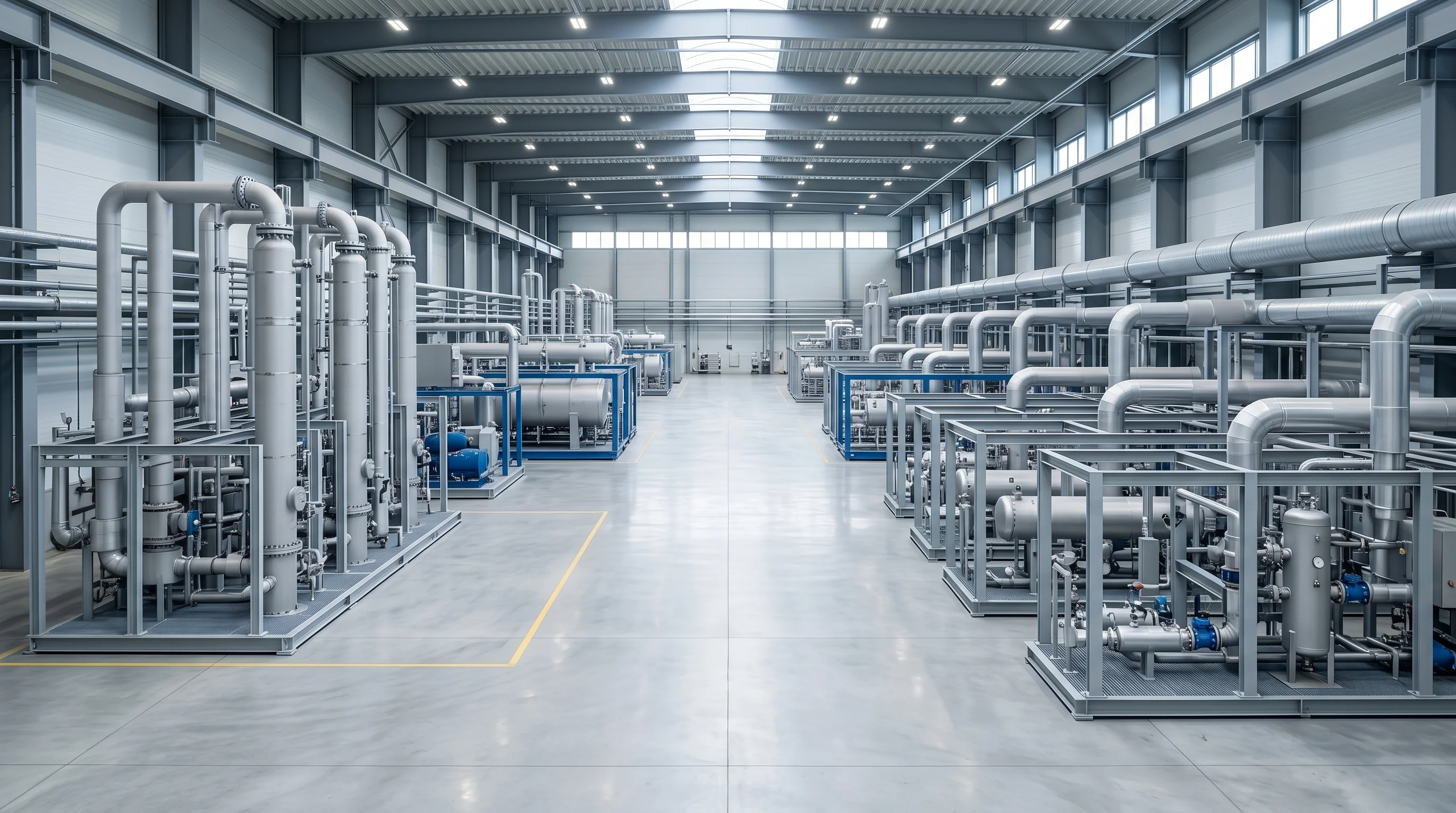
The Series A capital will fund two product lines. ARC PRIME, the pilot-scale system, processes up to 1,000 tons of CO2 annually and is designed for on-site customer validation. ARC GENESIS, the industrial version, scales to 10,000 tons per unit, with modular architecture allowing sites to stack multiple reactors for higher capacity.
Lotte Ligthart, D-CRBN's CEO who oversees sales and industrial partnerships, said the funding would support scaling the plasma reactor technology, accelerating industrial pilots, and moving toward initial commercial deployments. The company also opened a limited secondary closing of up to €5 million for strategic industrial partners—a structure that signals some potential customers want both product access and equity exposure.
The investor composition tells its own story. Beyond Astaia's lead and SFPIM's participation, the EIC Fund's involvement suggests institutional confidence from Brussels. It's the kind of capital mix climate hardware startups covet: patient money, strategic backing, and bureaucratic endorsement.
A Crowded Field of Carbon Converters
D-CRBN has company in this race. ReCarbon, enaDyne, Zefira, and Carbogenesis are all developing variations on microwave or non-thermal plasma reactors for CO2 and hydrocarbon feedstocks. Companies like Twelve and Dioxycle are pursuing electrochemical routes to convert CO2 into useful molecules.
The competition plays out on multiple fronts—technical, economic, and strategic. Plasma systems promise lower temperatures and better flexibility than thermal processes, advantages that matter in theory but must prove out in practice. Electrolysis routes can produce more complex molecules like ethylene directly, though they face their own efficiency and cost challenges.
D-CRBN has positioned itself where two massive industrial sectors intersect: steel and chemicals. The company participated in the BluePlasma ICON consortium project funded by Belgium's innovation agency VLAIO, working alongside ArcelorMittal, BASF, ENGIE, and Vopak to develop CO2 recycling infrastructure in Antwerp's industrial cluster.
That local ecosystem matters more than geography might suggest. Antwerp hosts one of Europe's largest chemical complexes—petrochemical facilities, refineries, and carbon capture infrastructure all within pipeline distance. D-CRBN's modular reactors could theoretically plug into existing sites without requiring wholesale rebuilds, though "theoretically" is doing considerable work in that sentence.
Carbon Economics Under Pressure
The timing aligns with tightening carbon economics across Europe. The EU Emissions Trading System continues raising the cost of releasing CO2, while policy frameworks increasingly favor carbon circularity over simple capture and storage. Industries that can turn waste carbon into valuable products get both emissions credits and new revenue streams—a double financial incentive that didn't exist a decade ago.
CO, the molecule D-CRBN produces, already has established markets. Beyond steel, it serves as feedstock for methanol, acetic acid, and various polymers. Combined with hydrogen, it becomes syngas—the basis for Fischer-Tropsch fuels and a range of e-fuels. The technology potentially converts liability into commodity.
D-CRBN picked up second prize in the "Best CO2 Utilisation 2024" Innovation Award last April from nova-Institut and CO2 Value Europe, technical recognition that validated the approach. The company also presented at the World Economic Forum in Davos in January, part of the growing visibility of carbon utilization technologies among policy circles and industrial players.
The research underpinning the approach has kept pace. A paper published in Energy & Environmental Science provided techno-economic analysis of CO2-to-CO conversion via plasma and electrolysis, citing D-CRBN's technology among reference cases. The company holds patents covering its plasma system design, recirculation approaches, and integration with industrial processes.
What D-CRBN has accomplished, essentially, is engineering laboratory plasma chemistry into something that can connect to a carbon capture unit at a working steel mill.
Whether that translates into a viable industrial business depends on what comes next: proving the economics at commercial scale, securing long-term offtake agreements, and manufacturing enough reactors to make a dent in the gigatons of CO2 that heavy industry produces annually. The €17.5 million gives them runway to find out—though in climate hardware, runway has a way of disappearing faster than founders expect.


