

Stefan Mazy wants to spare a billion people the scalpel. His pitch: a microneedle patch that pulls live skin cells from a suspicious mole in roughly the time it takes to wash your hands, then ships those cells off for RNA analysis that can flag cancer without cutting.
It's an audacious target—and one that reflects a broader restlessness in dermatology, where clinicians biopsy dozens of benign lesions for every melanoma they catch. The calculus is familiar, uncomfortable: cut now and risk overtreating, or wait and potentially miss a cancer that's easiest to cure early. Most biopsies come back negative. The system works, but inefficiently.
DermR Health, the Australian biotech Mazy founded after selling his previous venture in consumer genetics, is betting that molecular diagnostics can solve what dermoscopy and clinical judgment alone cannot. The company's patch uses tiny needles to extract viable tissue—not the dead surface cells collected by tape-strip methods—then profiles gene expression patterns linked to malignancy.
The technology earned a spot in 2026 in MedTech Innovator Asia Pacific's Top 20 cohort, selected from more than 680 applicants. That puts DermR in front of corporate partners including Siemens Healthineers and Johnson & Johnson MedTech, companies that tend to pay attention when a diagnostic can eliminate costly, invasive procedures at scale.
Whether the patch can deliver on that promise remains to be seen. But the opportunity is real.
The Billion-Biopsy Problem
Dermatologists don't biopsy for fun. Clinical literature suggests they may remove anywhere from 14 to 50 benign lesions for every melanoma detected, depending on practice setting and provider experience. Those numbers vary widely—academic dermatologists with specialized training likely fare better than general practitioners—but the pattern holds.
Each surgical biopsy requires local anesthesia, sutures, pathology review, follow-up appointments. For patients in Western Australia's remote Pilbara region, where DermR has conducted proof-of-concept work, access to specialists can mean travel measured in hours, not minutes. A molecular triage test that reliably rules out cancer could redirect limited clinical resources toward higher-risk cases, or at least spare low-risk patients the needle and the wait.
The World Health Organization expects roughly half a million new melanoma cases annually by 2040, with total skin cancers exceeding 1.5 million diagnoses each year. If even a fraction of those workups can be streamlined with a less invasive molecular screen, the savings compound quickly—clinically, economically, and in patient experience.
Mazy, who previously built SkinDNA, a consumer genetics firm focused on skincare personalization, has framed RNA profiling as the "next evolution" beyond visual assessment and dermoscopy. He may be right, though the regulatory and reimbursement path for such tests is rarely straightforward.
How the Patch Works
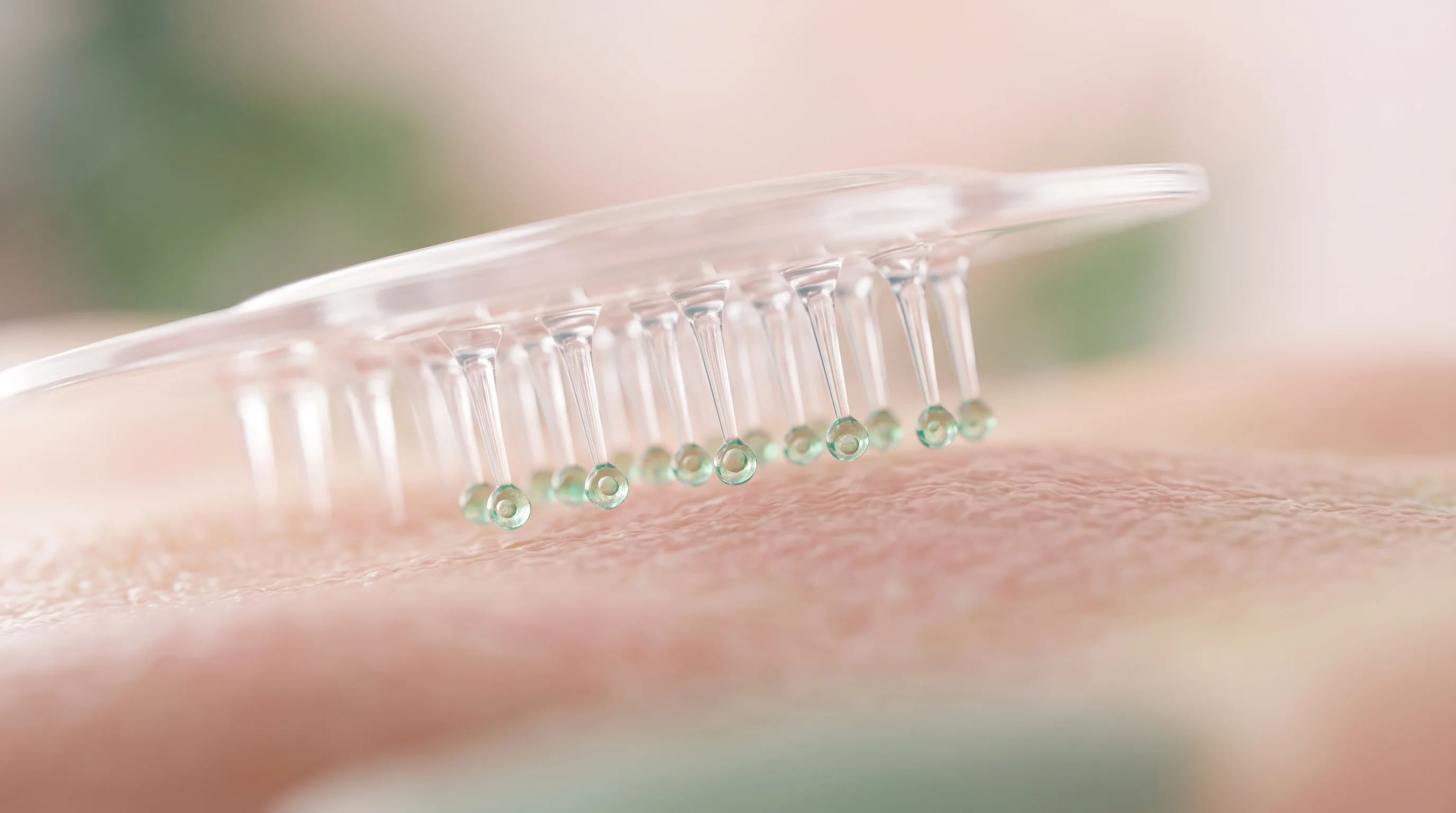
The DermR Patch deploys microneedles to capture live cells from a lesion in about 15 seconds. Unlike tape-stripping, which collects dead keratinocytes from the skin's outermost layer, the microneedle approach harvests viable tissue that can be analyzed for active gene expression. Those cells are sent to a lab for RNA profiling, generating a molecular risk score.
The company reported its first clinical validation in December 2024, when a study published through BioWorld indicated the patch could yield genetic information comparable to traditional biopsy samples. That's an important technical milestone—proving the collection method works is one thing; proving it works as well as the gold standard is another.
DermR received ethics clearance from Western Australia's Aboriginal Health Ethics Committee in mid-2024 to evaluate the patch as a potential biopsy replacement in skin cancer screening. The company also secured AUD$200,000 from Western Australia's Future Health Research and Innovation Fund in fiscal year 2022-23, early-stage funding that helped advance development work.
Trial activity has involved Panaceum Group clinics in the Pilbara and collaboration with the Australian Genome Research Facility in Western Australia, which has served as a quality guardian for the genomic component. A LinkedIn post from last year suggested plans to expand trials with MoleMap Australia & New Zealand, the clinic chain that uses AI-assisted dermoscopy, though no formal partnership has been announced.
Mazy has referenced an aspirational goal of securing Therapeutic Goods Administration approval, though no formal timeline has been publicly established and the path remains subject to the usual clinical and regulatory uncertainties.
A Crowded Field
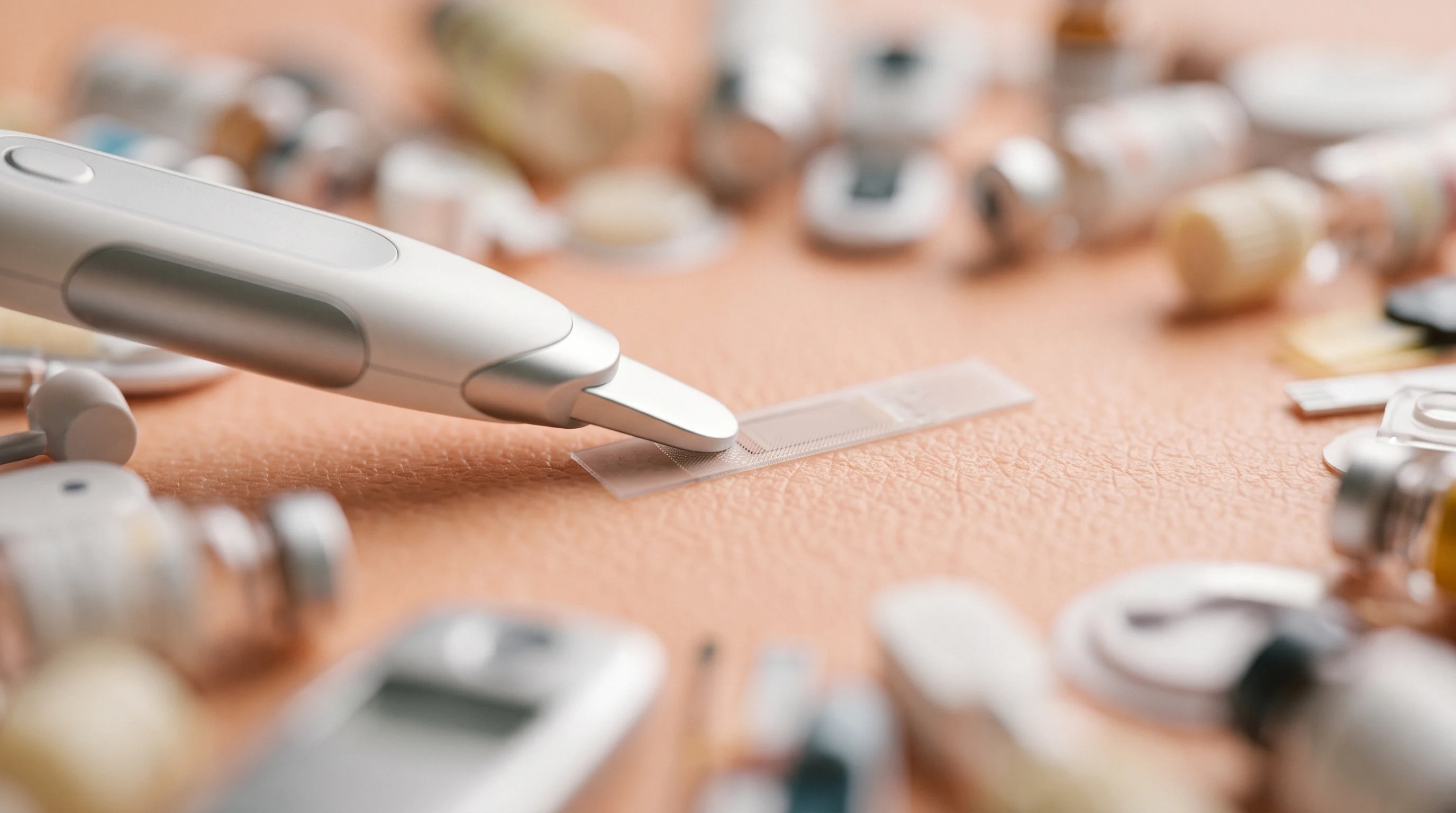
DermR isn't the only company trying to reduce unnecessary biopsies. DermTech, a publicly traded diagnostics firm in California, sells a tape-strip RNA test for pigmented lesions that has demonstrated high negative predictive value in multiple peer-reviewed studies. DermaSensor, meanwhile, offers a handheld optical device designed for primary care triage, using elastic scattering spectroscopy to detect tissue abnormalities.
Then there's MoleMap itself, which processes tens of thousands of dermoscopic images monthly in New Zealand alone, using AI to flag suspicious changes over time. If MoleMap does become a DermR trial partner, it would represent a bridge between traditional visual screening and molecular diagnostics—perhaps an acknowledgment that no single modality will solve the problem alone.
What sets DermR apart, at least in theory, is the microneedle collection method. The company argues it captures deeper, more viable cells than surface tape-stripping, and that its RNA profiling can extend beyond melanocytic lesions to other skin pathologies. Whether payers and regulators will see that distinction as clinically meaningful—and reimbursable—is the question that will determine the company's trajectory.
What Happens Next
DermR Health Solutions Pty Ltd was founded in March 2022 and is based in Waterloo, a Sydney suburb that has become something of a biotech cluster. The company lists between 2 and 10 employees on LinkedIn—a small team, even by early-stage medtech standards. It holds patents related to its minimally invasive collection apparatus, with filings naming Mazy as inventor.
The MedTech Innovator cohort runs through the remainder of the year, offering mentorship, pilot opportunities, and visibility to strategic acquirers. The company presented at the Pathology Technology Australia Congress earlier this year and participated in Berlin's Falling Walls Venture Pitches last fall, building a profile outside its home market.
For a company targeting regulatory approval within the next 12 to 18 months, that exposure may matter as much as the capital raised to date—whatever that figure turns out to be. DermR has not disclosed total funding, and early-stage biotechs in Australia often cobble together government grants, angel investment, and corporate partnerships before a formal Series A.
The bigger question is whether the patch can prove, in rigorous trials that are still pending, that it reduces biopsies without missing cancers. That's a high bar. Dermatologists are cautious by training, and for good reason—missing an early melanoma can be fatal. A molecular test that promises to spare patients the scalpel will need to demonstrate not just technical validity, but clinical utility and, ultimately, trust.
Mazy is betting it can. The next year will reveal whether the rest of the field agrees.


