

The timing was almost too perfect.
On June 29, 2026, shortly after finalizing a settlement with Tesla over alleged trade secret theft, Proception announced an $11 million seed round led by First Round Capital. For a startup building robotic hands with two former Tesla Optimus engineers at the helm, the sequence of events tells its own story: investors had been circling, checkbooks ready, waiting for the legal cloud to lift.
And lift it did. The Bay Area company, which had spent the better part of a year under the shadow of a Northern California federal lawsuit, immediately began shipping its first batch of high-dexterity robotic hands to researchers and robotics firms. First Round was joined by Y Combinator and BoxGroup—a credible syndicate for a hardware venture navigating choppy legal waters.
The whole affair underscores a familiar Silicon Valley dynamic. When a deep-pocketed former employer alleges you walked out with its intellectual property, capital tends to wait on the sidelines. Particularly when the technology in question—in this case, advanced hand sensors for humanoid robots—sits squarely at the center of what you're now trying to sell.
What They're Selling
Proception's flagship product, ProHand, is a 22-degree-of-freedom robotic hand engineered for human-like manipulation. That's a mouthful, but it matters: each additional degree of freedom represents another axis of movement, another motor, another opportunity for fine-grained control—or another point of failure, depending on how charitable you're feeling.
The hardware relies on tendon-driven actuation, with multiple joints articulated per finger, overlaid with integrated sensor "skin" designed to mimic tactile feedback. Think of it as trying to teach a machine not just to grip, but to feel what it's gripping.
Then there's ProGlove, a perhaps more interesting piece of the puzzle. It's a sensor-laden glove that captures how human hands interact with objects—data that can then train manipulation models without needing the robot present. For a field starved of quality training data, that's not a trivial add-on. It's infrastructure.
The company's founders, Zhongjie "Jay" Li and Jianxiang "Jack" Xu, both logged time on Tesla's Optimus humanoid project before decamping to start Proception in 2024. They went through Y Combinator's Winter 2025 batch, and by late June 2026, units were going out the door to select research teams.
The Tesla Problem
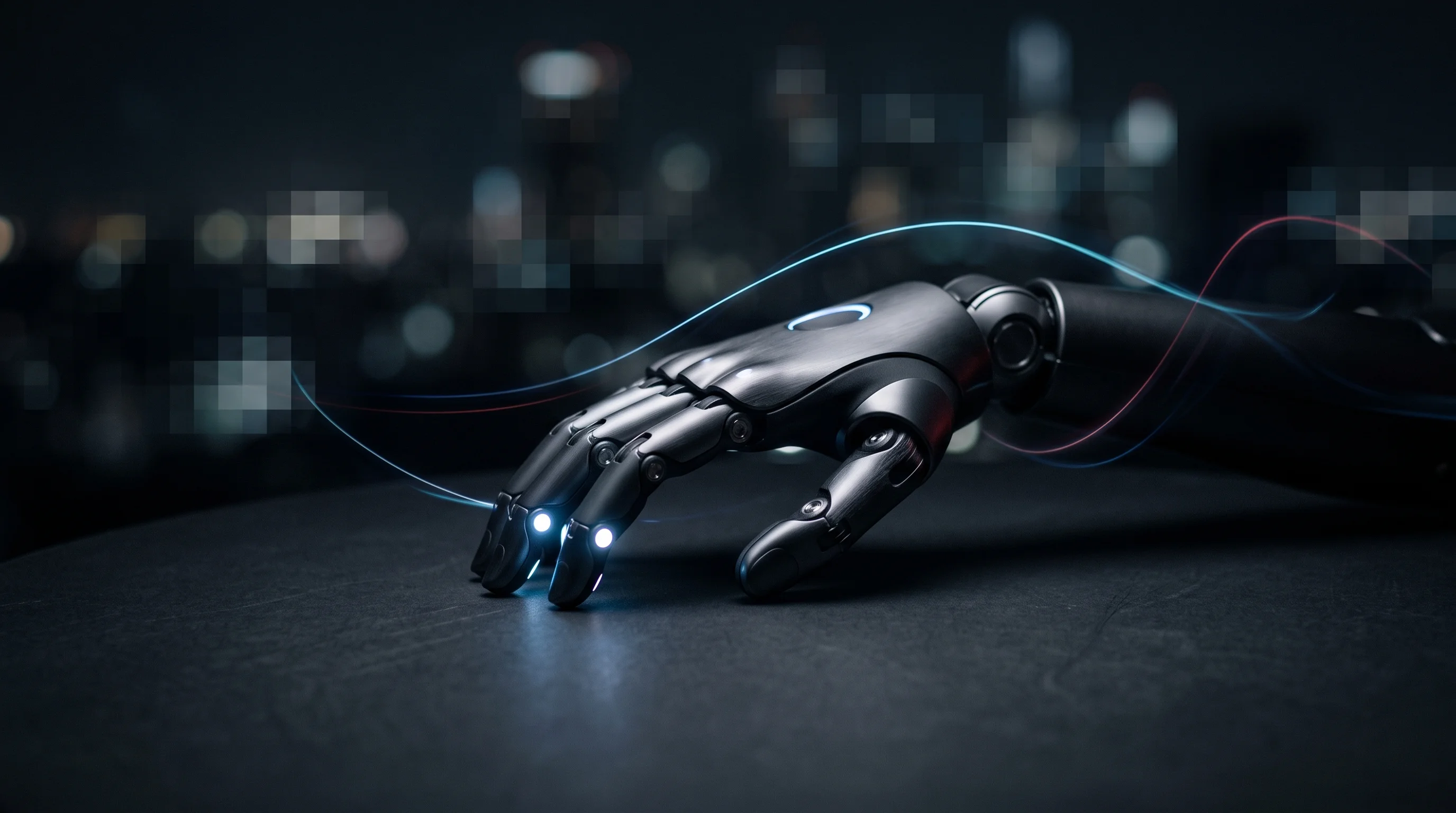
Tesla's complaint, filed June 11, 2025, centered on allegations that Li had misappropriated trade secrets tied to Optimus hand sensors. The case wound through federal court for a year, with Tesla initially seeking a preliminary injunction. The court denied that request in November 2025—a meaningful early win for Proception, though hardly the end of it.
By April 2026, court filings indicated both sides had scheduled settlement talks. The lawsuit was dismissed in June. Terms weren't disclosed, which is standard, but the resolution itself mattered more than the details. For hardware startups, especially those in capital-intensive domains like robotics, unresolved IP disputes are investor kryptonite. Proception's ability to close a round within days of settlement suggests the cap table was essentially ready to go, pending only the stroke of a judge's pen.
Why Now, and Why This?
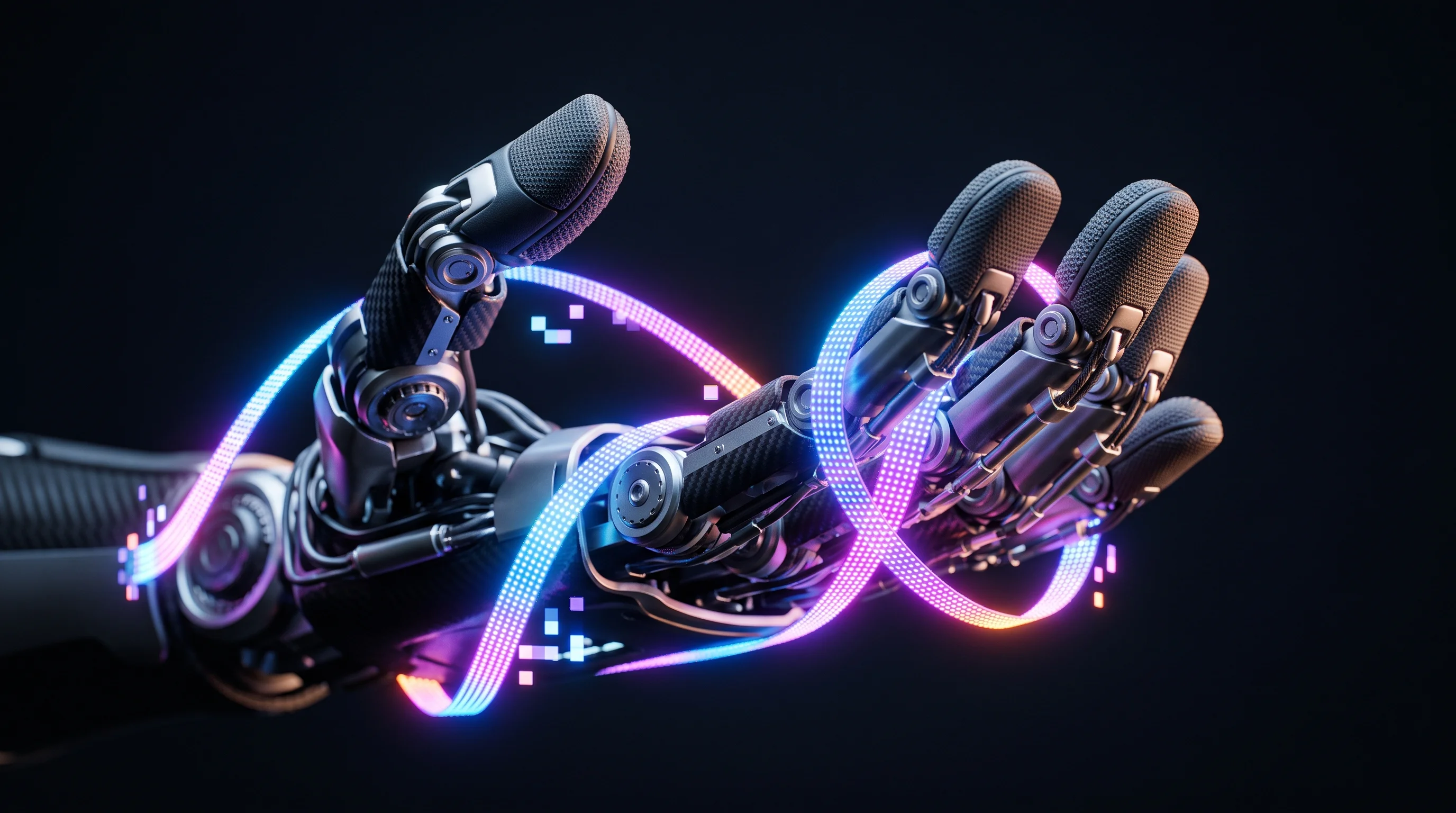
Proception's fundraise lands at an odd moment for humanoid robotics—simultaneously overhyped and underdelivered. McKinsey released analysis in April 2026 identifying dexterous hands, actuators, and tactile sensing as critical supply chain bottlenecks for the humanoid sector. Translation: everyone wants to build humanoid robots, but the components don't quite exist yet at scale.
Gartner offered a sobering counterpoint in January 2026, projecting that fewer than 20 companies will achieve production-scale humanoid deployments in manufacturing by 2028. That's not a lot, and it suggests the market remains more speculative than operational.
Still, capital is pouring in. Skild AI's $1.4 billion Series C in January 2026, at a $14 billion valuation, illustrates the appetite. Whether that translates into actual demand for components like ProHand is another question entirely.
Proception enters a landscape where research-grade hands—Shadow Robot's Dexterous Hand, for instance, with roughly 20 actuated degrees of freedom—have served academic labs for years. But production-ready, scalable alternatives? Sparse. The company's dual-product strategy, hardware plus data collection, positions it less as a component vendor and more as infrastructure for the cohort of well-funded humanoid builders now racing to ship actual robots.
What Happens Next
Proception says it will deploy the seed capital to expand headcount and production capacity, along with building out hardware and data infrastructure. The company's careers page, refreshed in late June, lists openings spanning AI, robotics software, embedded systems, and electrical engineering. Interestingly, job postings reference a Palo Alto base, though the website footer still lists Mountain View. Small discrepancy, perhaps nothing—or the growing pains of a startup scaling faster than its website updates.
First Round partner Bill Trenchard joined the funding announcement, though neither the firm nor Proception offered detailed customer commitments or revenue projections. The fact that shipments began the same week as the funding suggests the company prioritized putting hardware in customers' hands the moment legal uncertainty evaporated.
For robotics companies attempting to build humanoid platforms—a notoriously complex, capital-hungry endeavor—having access to a well-funded, litigation-free supplier of dexterous hands removes at least one variable from an already fraught equation. Whether Proception's technology proves differentiated enough to capture meaningful market share will hinge on performance benchmarks, pricing, and how fast competitors close the gap.
But for now, the runway is clear. And in hardware, that's half the battle.


