

Destro AI, a Brooklyn-based startup building software to manage fleets of warehouse robots from different manufacturers, announced on September 29, 2026, that it closed an $8 million seed round co-led by Base10 Partners and Bonfire Ventures. CoFound Partners also participated. The company, barely a year old, declined to share its post-money valuation.
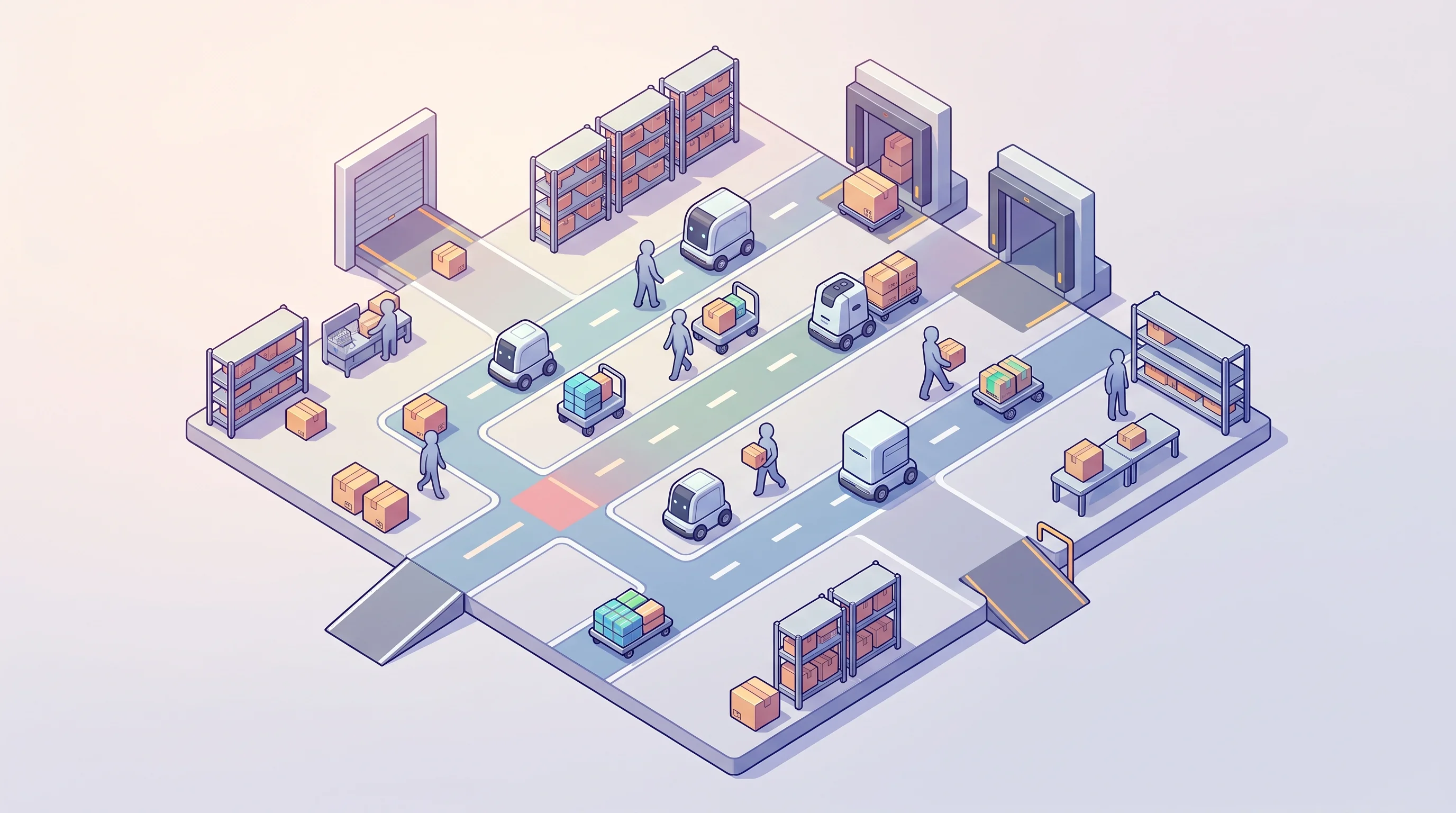
The timing reflects unusual confidence for a founder in a crowded field. Manthan Pawar, Destro's CEO, spent years watching enterprise warehouses struggle to wrangle robots from competing vendors that refused to talk to one another. His answer is a two-layer software system: MothershipOS, which sits off-robot and orchestrates fleets in real time, and VisionOS, which handles on-robot perception tasks like identifying products and controlling mechanical arms.
Destro is already live at facilities run by Yusen Logistics, a global third-party logistics provider. That deployment moved faster than many hardware-adjacent startups manage. According to TechCrunch, a pilot at a Yusen site in the Pacific Northwest began in fall 2025 with three cart-moving robots from Miva Robotics. That operation has since expanded to 26 robots. A second pilot involving 17 robots is underway at a Yusen warehouse in Southern California.
Rick Brunelle, Yusen's director of automation, signaled his company's broader philosophy when the collaboration was announced in August. "Automation is most effective when it helps our people work smarter," he said in a statement released through Business Wire.
Pawar frames the problem as one of misaligned incentives. "Customers aren't buying robots; they're investing in throughput, reliability, and business outcomes," he said in the funding announcement. In a separate conversation with TechCrunch, he added that Destro is "on path to be cash-flow positive at the end of this year," a claim that will face scrutiny as deployment costs mount.
The company's software stack positions itself as vendor-neutral infrastructure. MothershipOS coordinates not just robots but human workers and warehouse workflows, treating the entire operation as a single system. VisionOS translates high-level commands into the actuator-level instructions individual robots need to pick, move, or count inventory. The pitch is straightforward: buy robots from whoever you want, and Destro will make them collaborate.
Pawar holds a master's degree in robotics from NYU Tandon and previously held product and project management roles at HAI Robotics, Dexterity, and Levata. The rest of Destro's team draws from similar backgrounds, including stints at Matic. Soorya Narayanan, whom Pawar recruited as CTO, turned down an offer from a large tech company to join the startup, according to an investment memo from CoFound Partners. Destro's LinkedIn profile lists between two and 10 employees, though such figures often lag reality.
The seed capital will fund expanded deployments, further development of both software platforms, and hiring across engineering and research. Job postings from mid-September show openings for a business development lead and a robotics software engineer focused on field deployment, according to Bonfire Ventures' job board.
Adeyemi Ajao, co-founder and managing partner at Base10 Partners, described the value proposition in practical terms. "This means the robots stay on, the warehouse keeps using them," he said. Jennifer Richard, a principal at Bonfire Ventures, wrote that "the next wave of AI will be physical," echoing a thesis gaining traction among investors who bet on embodied intelligence.
Destro enters a market experiencing simultaneous growth and fragmentation. Prologis Research estimated in its 2025 report that roughly 30 percent of modern global logistics space ran some form of automation, with a forecast pushing that figure to 50 percent within a decade. Grand View Research valued the warehouse automation market at $19.2 billion in 2023 and projected it would reach $27.4 billion in the near term.
The challenge is that automation increasingly means chaos. CoFound Partners noted in its investment memo that, by their estimates, more than 1,000 autonomous mobile robot companies, 600 autonomous forklift manufacturers, and 200 humanoid robotics firms are currently active. That hardware fragmentation creates an opening for software that can impose order, though Destro faces established competitors. SVT Robotics offers SOFTBOT, and InOrbit sells a RobOps system—both integrate multiple robot vendors under a single platform.
Whether warehouses will pay for another software layer remains an open question. Some logistics operators prefer direct relationships with hardware makers. Others see orchestration software as essential infrastructure, much like how cloud platforms abstract away server hardware.

Destro was selected for TechCrunch's Startup Battlefield 200, a showcase that runs in October 2026 at the Disrupt conference. It's the kind of visibility that can accelerate customer conversations or invite deeper scrutiny from competitors who have spent years building similar technology. Pawar is betting that speed to market and a vendor-neutral posture will be enough.


