

The bright yellow storefront on Amsterdam's Javastraat doesn't look like much from the outside. But inside, a peculiar scene unfolds most mornings: residents line up with bags of plastic bottles, old smartphones, even used cooking oil—all waiting to feed the contents into what the company calls a "DropBot." Seconds later, their phones buzz with a payment notification. Ten cents here, twenty there. Sometimes a few euros for a haul of deposit cans.
This is Droppie's pitch to the circular economy: make recycling feel less like a chore and more like a transaction. And on June 22, 2026, the Amsterdam-based startup closed a €4.2 million financing round (roughly $4.9 million) to prove the model can work beyond a handful of experimental locations.
The round drew backing from impact-focused institutions including Amsterdams Klimaat en Energiefonds and Social Impact Fonds Rotterdam and Amsterdam—the kind of patient capital that tends to stomach longer timelines in exchange for measurable environmental outcomes. By the company's count, it now operates 13 stores across Amsterdam, The Hague, Rotterdam, and Utrecht, serving about 72,000 users who've collectively dropped off everything from coffee capsules to cast-off textiles.
Whether that's enough to build a sustainable business—rather than just a feel-good experiment—remains the more interesting question.
The Money Behind the Model
The June funding didn't arrive in isolation. Earlier in the year, Droppie had launched a public offering through Dutch Dragons and NXchange, a crowdfunding-style campaign that ran from late January through the end of March. The target was €2,400,108 at a €10 million pre-money valuation, though the offering documents were candid about one thing: that amount wouldn't be nearly enough to fully execute the business plan.
Instead, management openly anticipated the need for follow-on capital from regional funds and social impact investors. The June announcement suggests that scenario played out more or less as scripted.
The company earmarked the public offering proceeds across three buckets, according to the offering memorandum: €800,000 for capital expenditures like new store buildouts and the AI-powered DropBot machines that sit at the heart of each location; €1.5 million to absorb ramp-up losses as stores scale toward breakeven; and €200,000 for working capital to keep the lights on in the interim.
It's a familiar cash-burn playbook for retail-tech hybrids, though few involve quite this much sorting of garbage.
Reverse Vending Meets Retail Media
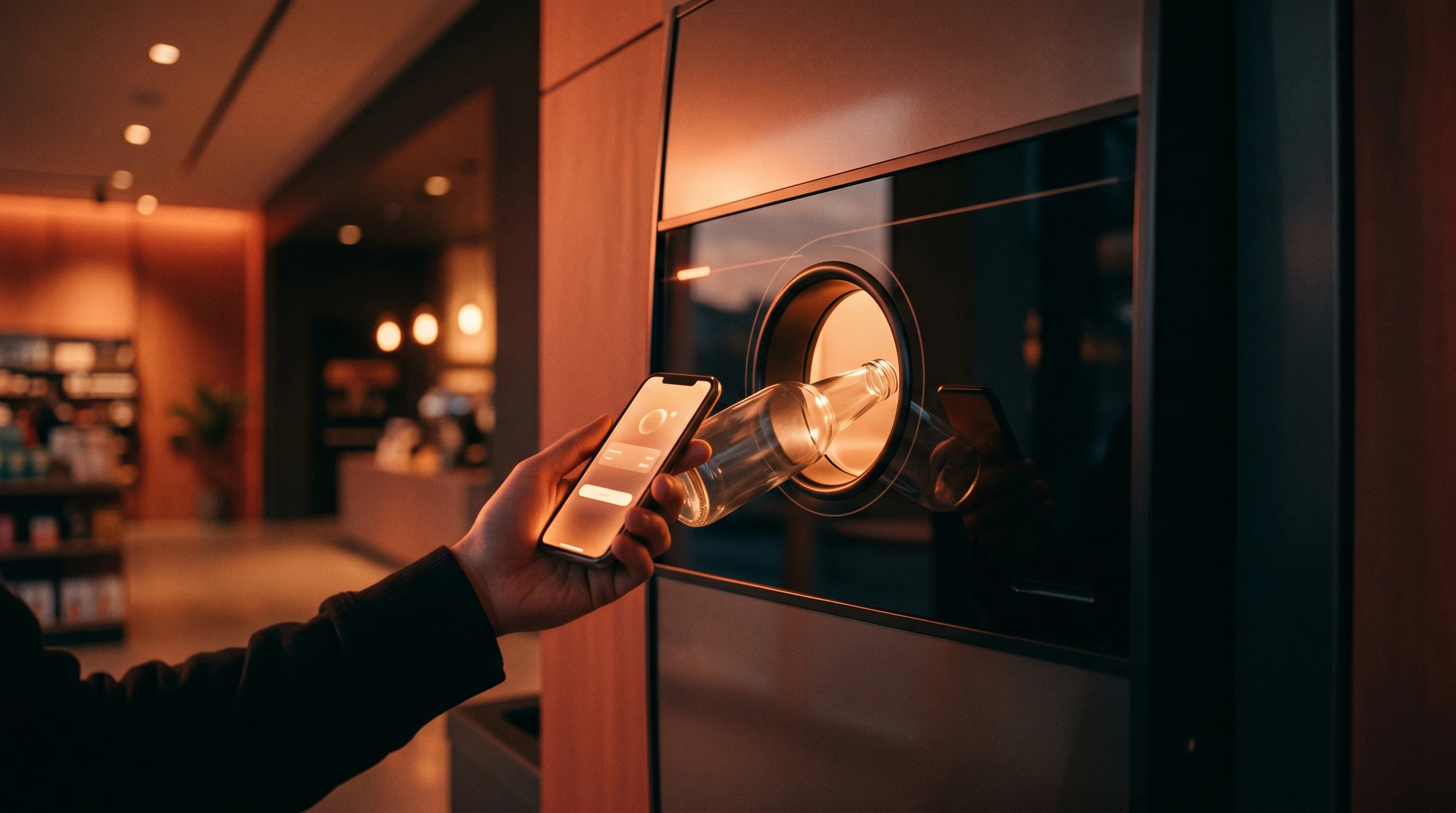
Droppie's stores function as part recycling depot, part convenience hub. Consumers walk in with materials—deposit bottles and cans, obviously, but also plastic packaging, e-waste, old clothes, even small quantities of used cooking oil—and receive instant payouts through the app. Non-deposit streams typically fetch 10 to 20 cents per kilogram. Deposit items, which include small plastic bottles (covered by Dutch law since July 2021) and aluminum cans (added in April 2023), follow statutory payout rates via bulk reverse vending machines supplied by TOMRA, the Norwegian giant that dominates the space.
But the recycling is only part of the revenue picture. Droppie also generates income from material resale, producer responsibility organizations like Verpact and Statiegeld Nederland, and—perhaps more surprising—retail media partnerships. Brands pay to advertise inside the stores or through the app, betting that eco-conscious consumers represent a desirable demographic. The locations also double as parcel drop-off points for Vinted, DHL, and PostNL, a move designed to drive foot traffic beyond the recycling-motivated crowd.
The DropBot system relies on computer vision to identify and sort incoming materials. Company disclosures have claimed contamination rates below 1% for plastic streams, with reuse rates reaching 72% for electronics like old routers and 85% for textiles. Whether those figures hold as the operation scales is an open question; contamination tends to creep up as volume increases and user behavior diversifies.
Scaling Up, or Out
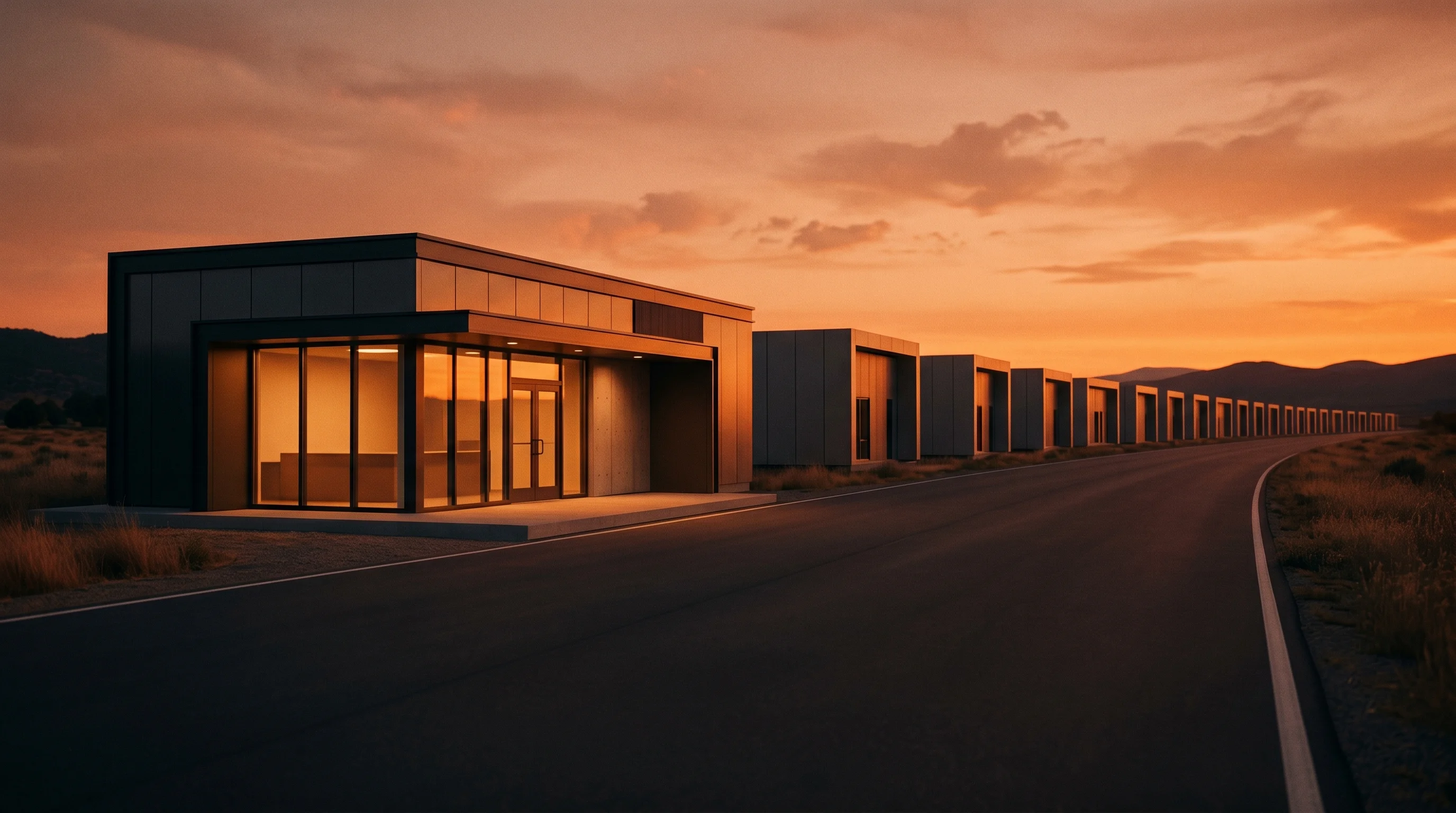
With fresh capital in hand, Droppie says it plans to expand from 13 locations to 70 across the Netherlands. That's an aggressive target—particularly for a format that requires physical real estate, trained staff, and localized logistics to haul sorted materials onward. The company added two stores between December 2025 and the June funding announcement, and it operated just four locations when TOMRA published a case study roughly eight months prior. The pace has clearly accelerated.
In April, Droppie opened its first co-branded location—dubbed a "Statiegeld Retourshop powered by Droppie"—in partnership with Statiegeld Nederland, the national deposit system administrator. That concept focuses on bulk deposit intake, a nod to the growing volume of containers covered under the expanded deposit rules.
The company was founded by Stef Traa and Natascha Hermsen, whose respective backgrounds in plant-based meat and innovation consulting don't exactly scream "waste management"—but that's increasingly common in climate-tech circles, where the old guard is being challenged by operators willing to rethink legacy systems from scratch. In May, Droppie took home the Climate & Energy category at the NL Startup Competition during the Upstream Festival, a minor but morale-boosting signal that the model has admirers.
The Unit Economics Puzzle

Still, the central question lingers: can this actually work as a standalone business, or does it require perpetual subsidy?
The company's 2025 impact report offered some clues. It showed 42,170 households using the app over the calendar year, with 288,938 kilograms of materials recycled and €829,293 paid out in rewards. By June 2026, active users had climbed to 72,000, with more than 322,000 physical drop-offs logged.
Growth, in other words, is happening. But growth and profitability are not the same thing.
The January offering documents projected a path to positive unit economics predicated on each store reaching breakeven—a milestone the company's first Amsterdam location reportedly achieved within a year of opening. If that holds true across new sites, the model might pencil out. If ramp times stretch longer, or if prime urban real estate proves harder to secure at reasonable rates, the math gets trickier.
There's also the question of consumer behavior. Will people keep showing up once the novelty wears off? Or does the app become another forgotten icon on the home screen, like so many loyalty programs before it?
For now, Droppie is betting that convenience and cash incentives can overcome inertia. Seventy stores would give the company a dense enough footprint in the Randstad—the densely populated western corridor of the Netherlands—to test that thesis at something closer to scale. Whether the economics follow is the story to watch next.


