

The satellite business has always moved at a crawl—months of custom engineering, hand-assembled components, launch delays that stretch timelines into years. EnduroSat, a Bulgarian manufacturer that most Americans have never heard of, is trying to change that calculus entirely.
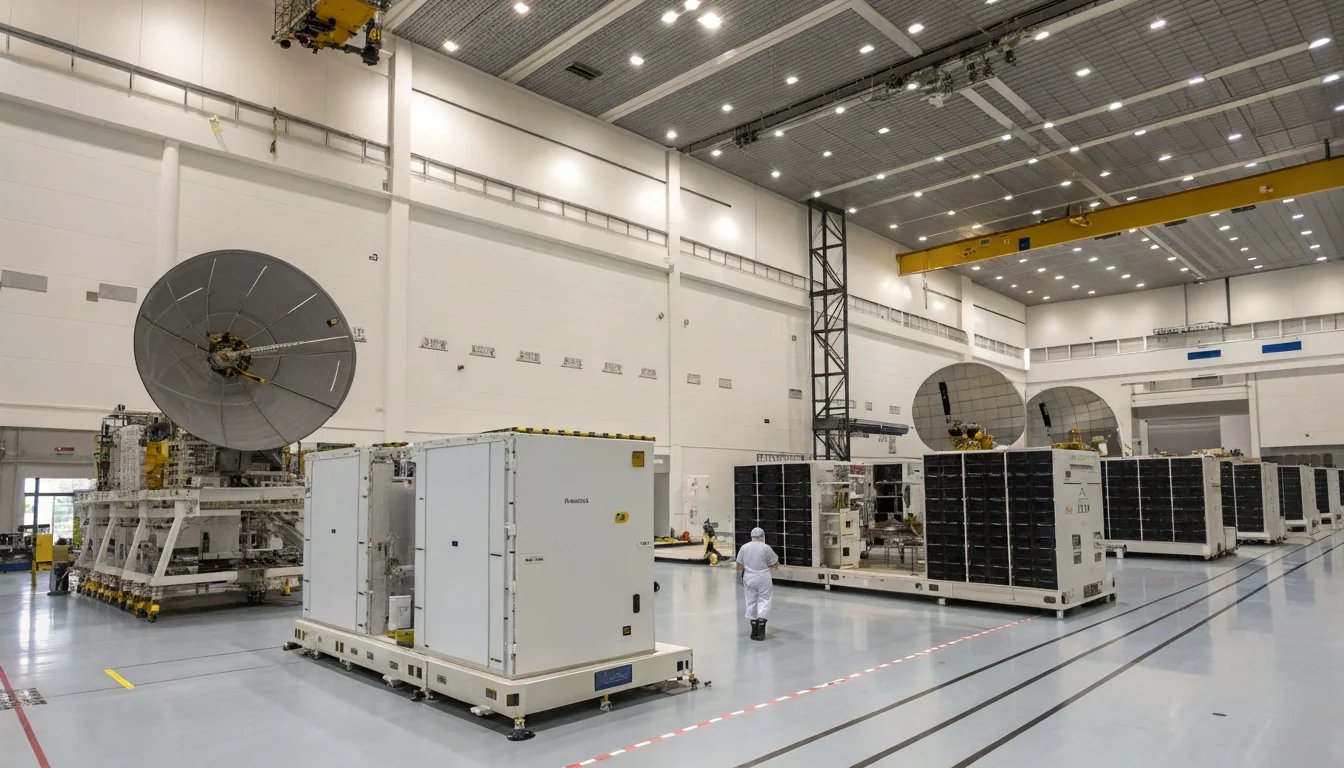
By the end of 2025, the Sofia-based company had closed roughly €160 million across three separate funding rounds, punctuated by a $104 million infusion in October backed by Google Ventures, Riot Ventures, and Lux Capital. The timing wasn't coincidental. Just days before that final close, EnduroSat inaugurated a 188,340-square-foot production facility—dubbed the Sofia Space Center—engineered to churn out two satellites per day.
Two per day. Not per quarter. Not per month.
If that sounds ambitious, perhaps absurdly so, it's worth remembering that ambitious is now table stakes in an industry where SpaceX routinely stacks rockets like Legos and private constellations number in the thousands. But EnduroSat isn't chasing Starlink's scale. It's targeting a different customer: enterprises and governments that want their own dedicated satellite infrastructure without the yearslong procurement headaches or the ballooning budgets.
"Constellations-as-a-service," in the company's preferred framing. Fixed costs, rapid deployment, and satellites in the 200-to-500-kilogram class—larger than CubeSats, nimbler than traditional defense-grade birds.
A Three-Act Funding Sprint
EnduroSat's 2025 capital blitz unfolded in stages, each tied to a specific expansion milestone. The first act came in February, when CEECAT Capital led a €20 million round with participation from Morphosis Capital. That money went toward scaling up from the company's CubeSat origins—those shoebox-sized satellites that launched EnduroSat's reputation—into heftier platforms capable of carrying more sophisticated payloads.
Three months later, Founders Fund stepped in with a €43 million Series B, bringing CEECAT and Morphosis back for seconds. This round funded construction of the Sofia facility and set the production target: 60 satellites per month by year-end. Whether the company hit that mark remains unclear, but the goal signaled intent.
The October finale brought $104 million from a wider consortium—Google Ventures, Riot Ventures, Lux Capital, the European Innovation Council Fund, and Shrug Capital among them. The Sofia Space Center opened on October 30, giving investors something tangible to tour: RF labs, mechanical testing bays, ISO-certified clean rooms, and assembly lines designed to move at automotive speed.
Speed as a Feature, Not a Bug
Walk through the Sofia facility, and you'll notice what's missing as much as what's there. No tangles of cabling snaking through satellite buses. No weeks-long integration cycles. EnduroSat's Gen3 "Frame" platform—an ESPA-class design spanning 200 to 500 kilograms—uses a modular, cableless architecture that the company claims allows assembly and functional testing in hours.
Hours, not weeks. The skeptic in any reporter hears echoes of a hundred other hardware startups that promised revolutionary timelines and delivered... eventually. But EnduroSat isn't exactly a startup anymore. Founded in 2015 by CEO Raycho Raychev, the company has delivered 120 satellites and over 3,000 modules to orbit, serving more than 350 customers from six locations spanning Sofia, Berlin, Toulouse, Luxembourg, Naples, and Denver.
The Gen3 platform borrows heavily from consumer electronics and automotive supply chains—sectors that figured out mass production decades ago. Specs include up to 3.5 kilowatts of peak power and 2 gigabits-per-second data rates, competitive for the small-to-mid-sized satellite segment. That category has gained traction recently as private communications networks and Earth observation constellations proliferate, driven by customers who want dedicated capacity without the complexity of building their own birds from scratch.
Whether EnduroSat can actually hit two satellites per day while maintaining quality standards is the billion-dollar question. Or rather, the €160 million question.
Why Investors Are Circling
In the October announcement, Riot Ventures cited the "modular, cableless design" and "rapid assembly and testing capabilities" as critical to scaling production. Google Ventures and Lux Capital emphasized vertical integration—EnduroSat controls more of its supply chain than many competitors—and the shift from bespoke satellite builds to something resembling an assembly line.
The European Innovation Council Fund's participation offers a different signal: institutional backing for deep-tech hardware scaling within the EU, a region often criticized for lagging Silicon Valley in frontier technology investment. CEECAT Capital, which led EnduroSat's $10 million Series A back in May 2023, has now invested across four rounds since then—a vote of confidence from a firm that typically doesn't chase moonshots.
Still, investors' enthusiasm doesn't guarantee operational success. Capital-intensive hardware businesses have a long history of burning through cash faster than expected, especially when manufacturing targets collide with supply chain realities. EnduroSat's runway is healthy, but the clock is ticking.
The American Expansion
In July 2025, EnduroSat tapped Paul "Rusty" Thomas to lead EnduroSat USA as CEO, a hire that signals serious intent. Thomas's résumé reads like a who's-who of recent space industry milestones: production roles on SpaceX's Dragon capsule and Falcon 9 landing legs, leadership on the Department of Defense's Project Blackjack constellation, and stints at Amazon's Kuiper Government Solutions and Sierra Space.
The company plans to triple its Denver team and open a Washington, D.C., office—because in the satellite business, proximity to Pentagon decision-makers never hurts. Whether EnduroSat can navigate U.S. government procurement processes, notoriously slow and risk-averse, remains an open question. Thomas's track record suggests he knows the terrain.
Beyond the Production Line
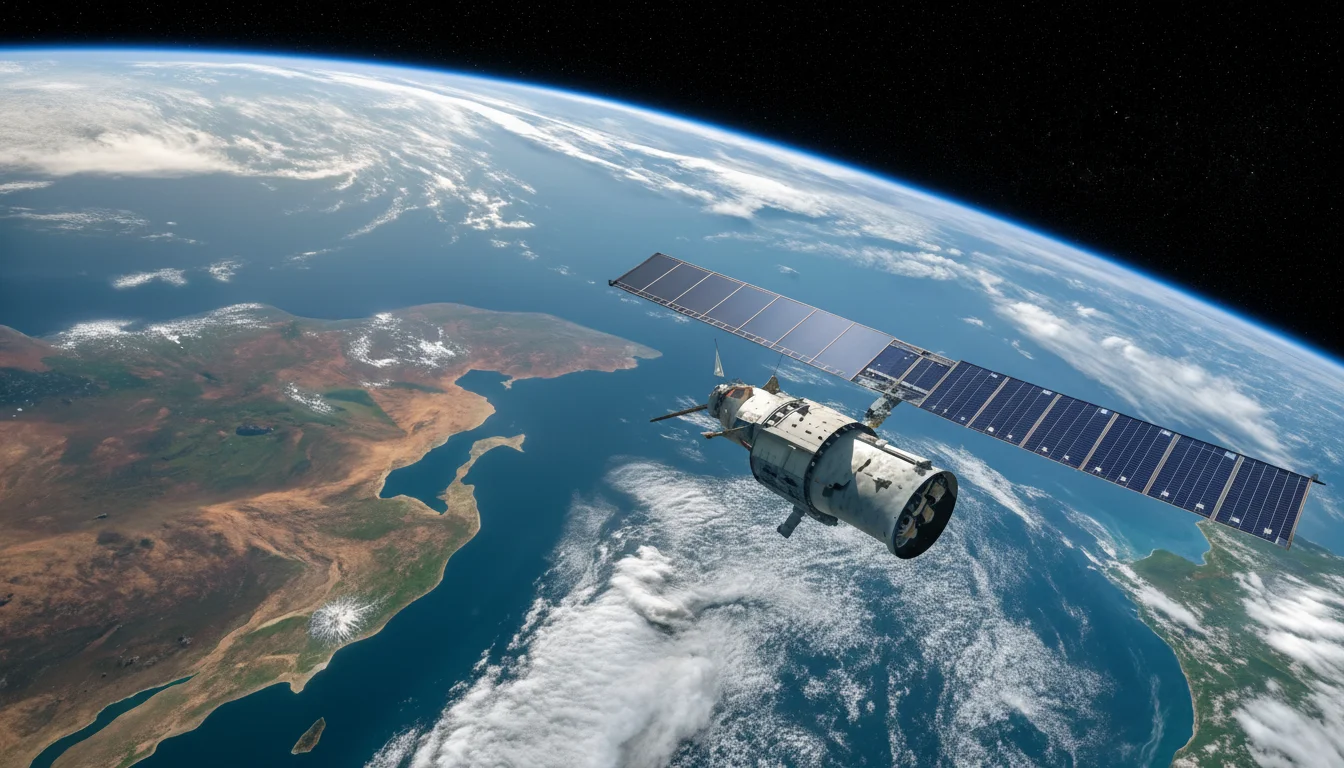
EnduroSat has also been collecting institutional validation beyond investor checks. The company's Balkan-1 satellite, launched in January 2025, was designated a Copernicus Contributing Mission by the European Space Agency—a stamp of approval for its Earth observation capabilities. EnduroSat is building Vyoma's FLAMINGO space situational awareness constellation and partnering with WISeSat.Space on quantum-resilient secure IoT infrastructure, projects that read like bingo cards for current space industry buzzwords but represent real contracts nonetheless.
Now comes the hard part. The Sofia facility is operational. The production line is calibrated for ESPA-class satellites. The €160 million is in the bank. What EnduroSat must prove—to investors, customers, and skeptics—is that the model scales. That two satellites per day isn't just a marketing target but a sustainable manufacturing rhythm. That quality doesn't erode as speed ramps up. That supply chains hold.
In an industry where timelines slip and budgets balloon almost as a matter of course, EnduroSat is promising the opposite. Whether the company delivers will determine if it becomes a case study in hardware innovation or a cautionary tale about overreach. The runway is long enough to find out.


