

The pitch sounds almost heretical in an industry obsessed with scale: What if the future of artificial intelligence isn't bigger models, but smarter ones?
Liquid AI, a three-year-old MIT spinoff, is wagering its trajectory on that contrarian view. In December 2024, the Cambridge-based startup raised $250 million in a Series A led by AMD, vaulting its valuation past $2 billion—a staggering 6.6x leap from the $303 million it commanded at its seed round just twelve months prior. For context, that's the kind of velocity rarely seen outside the most frenzied corners of venture capital.
The company isn't building yet another ChatGPT clone. Instead, it's developing liquid neural networks, an alternative architecture to the transformer models that currently dominate AI. The central argument: smaller, more efficient networks that can run on your phone or laptop, rather than requiring the massive cloud infrastructure that has become synonymous with modern AI.
It's an ambitious thesis. Perhaps too ambitious, some skeptics might say. But AMD's quarter-billion-dollar check suggests at least one heavyweight believes there's something here worth chasing.
AMD Plants Its Flag
AMD led the round through its venture arm, framing the investment as more than financial backing—it's a strategic partnership aimed at optimizing Liquid AI's foundation models for AMD's Instinct GPUs, CPUs, and AI accelerators. For AMD, long overshadowed by Nvidia in the AI chip wars, the deal represents a potential side door into a market it hasn't yet cracked wide open.
The funding will go toward scaling compute infrastructure, accelerating product readiness for edge and on-premise deployments, and expanding into sectors including consumer electronics, telecom, financial services, e-commerce, and biotech, according to the company's December 13, 2024 announcement.
The exact valuation depends on who you ask. Bloomberg pegged it at "over $2 billion." Forge and The Information cited figures closer to $2.28 billion to $2.3 billion. The Boston Globe declared it the largest AI deal in Massachusetts for 2024—a notable distinction in a state thick with biotech unicorns and enterprise software giants.
The MIT Pedigree
Liquid AI emerged in 2023 from MIT's Computer Science and Artificial Intelligence Laboratory, that storied research hub that's produced everything from RSA encryption to iRobot. The founding team reads like a who's-who of neural network research: Ramin Hasani (CEO), Mathias Lechner (CTO), Alexander Amini (Chief Scientific Officer), and Daniela Rus, who directs MIT CSAIL.
They'd spent years studying liquid neural networks—a fundamentally different approach from the transformer architecture that powers ChatGPT, Claude, and virtually every other headline-grabbing AI system of the past few years. Transformers scale through brute force: more parameters, more data, more compute. Liquid networks, by contrast, are inspired by biological neurons, designed to be dynamic and adaptive with far fewer resources.
The company's December 2023 seed round pulled in $37.5 million from OSS Capital and The Pags Group, with participation from Automattic, Samsung Next, Breyer Capital, and a roster of high-profile angels including Shopify founder Tobias Lütke and Naval Ravikant. An earlier $5.6 million seed had closed in May 2023.
Hardware Meets Philosophy
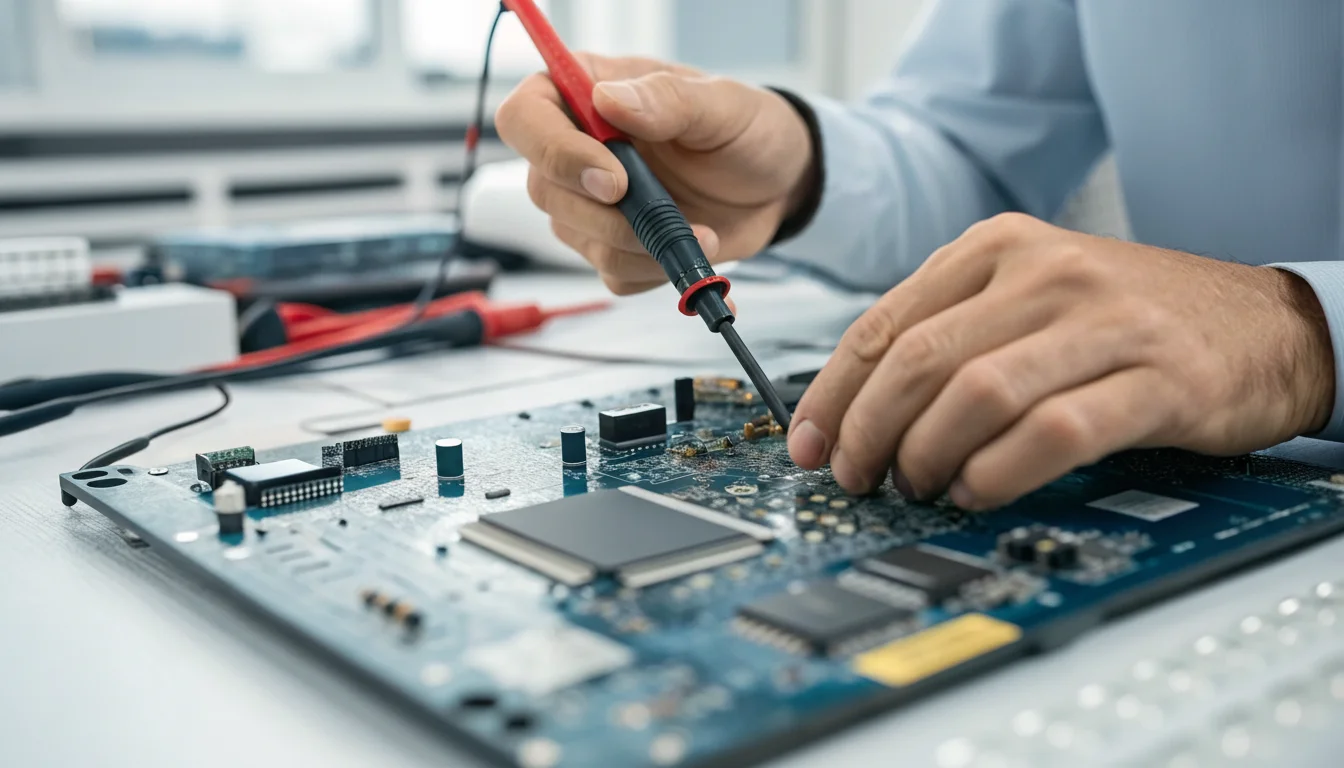
AMD's involvement extends well beyond writing a check. The chip maker is actively collaborating with Liquid AI to train and deploy its Liquid Foundation Models across AMD's hardware stack—a strategic counter-move in a market where Nvidia's CUDA ecosystem has become the de facto standard for AI workloads.
"This partnership will bring efficient AI to enterprises and consumers," AMD CEO Lisa Su said at the time of the investment. It's the kind of statement executives make often, but the hardware optimization work underway suggests genuine commitment.
And that optimization matters for Liquid AI's core value proposition: models efficient enough to run locally, on the very devices people already own.
In July 2025, the company released its LFM2 open-source models and launched LEAP, a developer platform for edge AI deployment, alongside Apollo, a mobile app designed for on-device AI. By August, LEAP supported AMD Ryzen and Ryzen AI laptops. In September, Liquid unveiled "Nanos"—models ranging from 350 million to 2.6 billion parameters, engineered to match the quality of far larger models while running on consumer hardware.
The company has assembled an eclectic portfolio of partnerships. There's G42, announced in June 2025, for multi-region enterprise deployment. Alef Education is deploying on-device models serving 1.5 million students. Sharp is demoing the technology on AQUOS smartphones. Brilliant Labs integrated it into Halo smart glasses. And Capgemini's corporate venture arm, ISAI Cap Venture, participated in the seed round and established a collaboration focused on enterprise AI solutions and, somewhat unexpectedly, decarbonization—a nod to the energy-intensive nature of cloud-based AI.
The Bigger-Is-Better Dogma
Liquid AI's approach cuts against prevailing industry wisdom. For years, the roadmap has been straightforward: build larger models, train them on more data, throw more compute at the problem. GPT-3 had 175 billion parameters. GPT-4, reportedly, has many more. Google's Gemini Ultra, Anthropic's Claude—all massive.
But that approach has downsides. Training costs run into the tens or hundreds of millions of dollars. Inference requires data centers filled with specialized chips. Latency becomes an issue. Privacy concerns multiply when all processing happens in the cloud. And there's the environmental angle: AI training and inference now consume staggering amounts of electricity.
Liquid AI is betting that an entirely different architecture—one that prioritizes efficiency over raw scale—can deliver comparable results with a fraction of the resources. It's a seductive narrative, especially as Gartner projects generative AI spending will hit $644 billion in 2025, with hardware claiming a significant share.
Open Questions

The company now employs somewhere between 51 and 200 people from its Cambridge headquarters. (The wide range reflects the opacity startups often maintain around headcount, particularly when growing fast.)
Whether liquid neural networks can deliver on their efficiency promise at scale remains an open question. Academic research is one thing; production deployment across millions of devices is quite another. The technology needs to prove it can handle not just benchmarks, but the messy, unpredictable demands of real-world use cases.
There's also the matter of ecosystem. Transformers benefit from years of tooling, optimization, and developer familiarity. Liquid networks are starting from scratch in that regard, even if LEAP and the company's other platforms are meant to smooth the path.
But AMD's bet—and the valuation trajectory—suggest the market is at least willing to entertain alternatives to the bigger-is-always-better paradigm. In an industry prone to groupthink, that alone might be worth something.
Whether it's worth $2 billion is a question that will take years to answer.


