

The biology works. That's the maddening part.
Companies have successfully coaxed microbes into producing whey protein, lactoferrin, even heme for plant-based burgers. The lab-scale miracles are real. But somewhere between the benchtop and the 100,000-liter fermenter, the math falls apart. Titers sag mid-run. Strains drift away from their engineered specifications. Chemical inducers—often toxic, always expensive—pile on costs. And the industry's instinctive response—build more stainless steel—only scales the problem, not the solution.
A Princeton spinout called Fermeate thinks the fix might be as simple as flipping a switch. A light switch, to be precise.
The company announced a $2 million seed round on April 27-28, led by Newfund Capital with backing from SOSV (IndieBio), Ajinomoto Group Ventures, Fonterra's Ki Tua Fund, and a cluster of early-stage investors including Heuristic Capital Partners, Momentum Capital, Plug and Play, Tesserakt Ventures, and Ag Startup Engine. Their pitch: bolt an external light-delivery system onto existing fermentation tanks, engineer light-responsive genetic circuits into production microbes, and unlock productivity gains of up to 300%—with, they claim, payback in roughly 11 months.
It's a bold promise. Whether it holds up under industrial scrutiny remains the critical question. But the timing, at least, feels right.
When Capital Gets Tight, Efficiency Looks Appealing
According to the Good Food Institute's April 2026 State of the Industry report, fermentation-focused companies raised $357 million in 2025—down from $632 million in 2024. The sector is pivoting, hard, from "build more capacity" to "sweat the assets you have." Fermeate's approach—retrofitting rather than constructing—fits that newly frugal moment.
Kevin Xu, Fermeate's CEO, doesn't sugarcoat the challenge. Third-party techno-economic analyses indicate the company's technology might deliver a payback period under 11 months by attacking the root causes of runaway costs: productivity that craters during long runs, expensive chemical induction steps, and genetic drift that slowly erodes the performance of engineered strains.
"The focus is on upgrading existing capacity rather than building more," Xu told AgFunderNews in an April 27 interview. The hardware itself—an external module roughly 80 inches by 30 inches for a 100,000-liter tank—recirculates broth through a light-delivery unit that activates engineered, light-responsive circuits inside the microbes. It's designed to connect to standard fermenter ports, the kind already present in most facilities.
The performance numbers, if they translate broadly, would be significant. In paid pilot projects as of April 27, 2026, Fermeate documented output lifts ranging from 60% to 300%, with protein production increases up to 200% achieved in under six months. In one case involving Komagataella phaffii (the yeast formerly known as Pichia pastoris), the system eliminated methanol induction entirely while boosting titer by roughly 50%.
Saurabh Malani, the company's CTO, describes the implementation as a "two-step process": introduce a light-sensitive protein into the organism, then target the promoter controlling the gene of interest. "In two months of work, we achieved a 50% titer increase in Pichia while removing methanol," he said.
Two months. Fifty percent. No methanol. Those are numbers that get attention in an industry where incremental gains are hard-won and expensive.
Optogenetics Leaves the Lab
The underlying science isn't new—both Xu and Malani worked in the José Avalos Lab at Princeton, which published foundational papers on optogenetic regulation of metabolism in yeast bioreactors back in 2018 and 2019. But translating results from lab-scale cultures to multi-thousand-liter industrial tanks has always been where promising technologies go to stumble.
Fermeate's approach targets yeast, bacteria, and fungi with engineered light-responsive switches that let operators toggle between growth phase and production mode in real time. Unlike chemical inducers—which persist in the broth, require careful dosing, and sometimes introduce toxicity—light is sterile, programmable, and leaves no residue. The system also claims to stabilize strains over extended production runs and enable feedstock flexibility, potentially allowing cheaper waste streams as inputs.
Henri Deshays of Newfund positioned the technology as horizontal infrastructure rather than a niche application. "Fermeate upgrades existing fermentation capacity," he said in an April 28 statement. It's not a proprietary strain or a new ingredient; it's a control layer that, in theory, works across multiple organisms and products.
The company isn't working in isolation. Prolific Machines applies optogenetics to mammalian cells—though it's pivoting near-term toward therapeutic proteins, a higher-margin market. Enduro Genetics uses a different mechanism—linking essential gene expression directly to product formation—to chase similar efficiency gains. Enduro reported a 30% titer and yield increase at Vivici within five months, announced April 14.
There's a pattern forming: dynamic control systems that give operators finer-grained command over cellular behavior. Chemical induction was always a blunt instrument.
The Broader Shift Toward Process Intensification
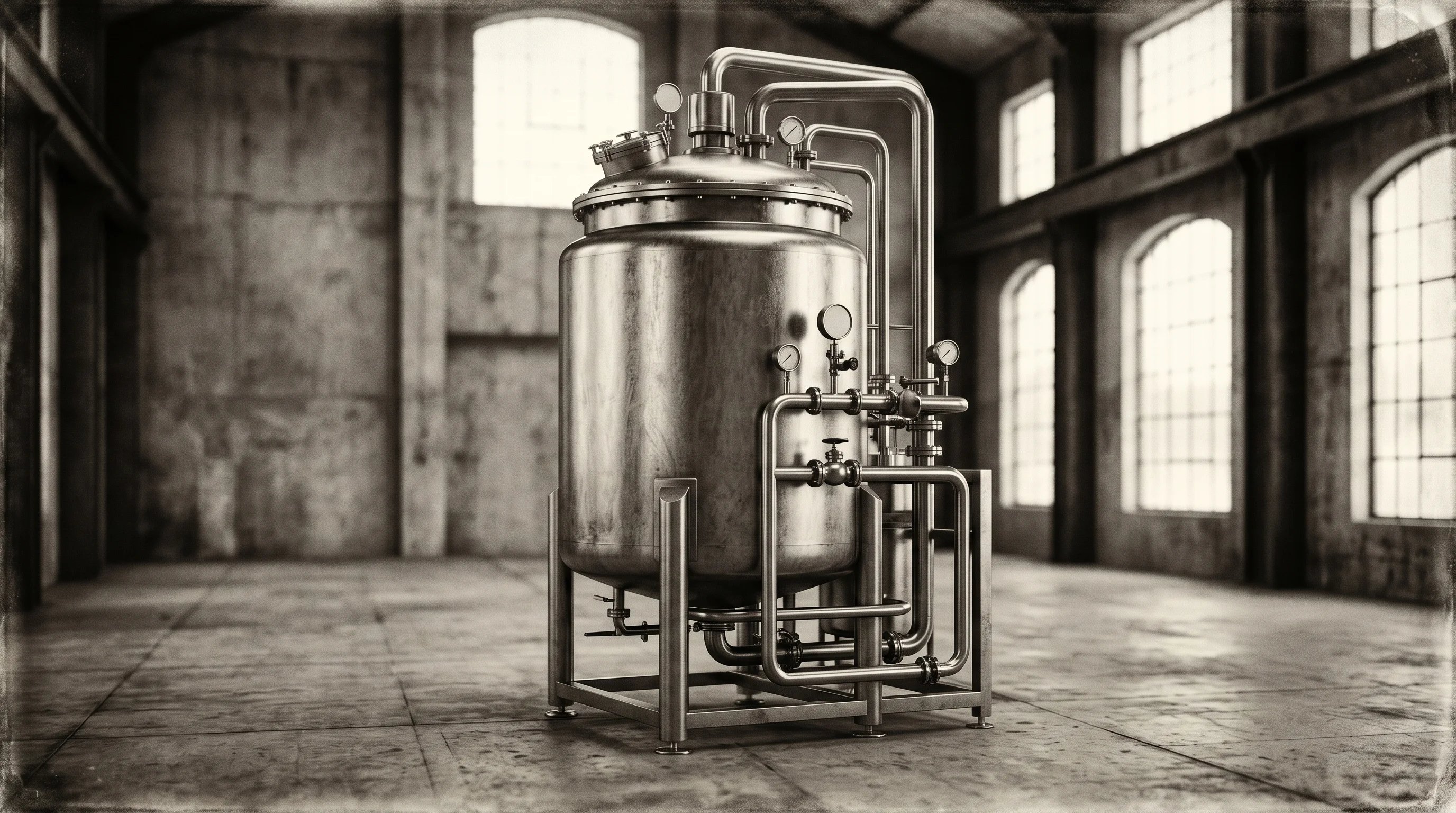
Fermeate's fundraise coincides with a broader sector trend from 2025–2026 towards heavy investment in process optimization. Last December, Pow.Bio and Bühler announced a partnership to commercialize AI-enabled continuous precision fermentation, including a 3,000-liter validation run with ATV Technologies. Continuous and semi-continuous operations promise to slash downtime and boost asset utilization—exactly the kind of efficiency leap the industry needs to close the cost gap with conventional animal protein.
The GFI report highlighted continuous fermentation demonstrations at multi-cubic-meter scale as a key trend. Fermeate's technology, designed to support semi-continuous and draw-and-fill operations, could slot into those platforms.
Meanwhile, regulatory-ready ingredients are trickling onto the market. Vivici—a joint venture between DSM-Firmenich and Fonterra—launched fermentation-derived lactoferrin with self-affirmed GRAS status in the U.S. in February. Onego Bio received an FDA "no questions" letter for its egg-white protein last September. Standing Ovation secured financing to bring fermentation-derived casein to American consumers sometime this year.
These commercialization milestones matter for enabling-technology providers like Fermeate. As more fermentation-derived proteins move from pilot batches to full production, the pressure to nail unit economics intensifies. Fast.
Strategic Bets and Commercial Traction
Fermeate says it's working with four global food and ingredient companies as of late April, running multiple paid pilots. The company is exploring business models that span selling tools outright, licensing the technology, and offering optimization services. The team includes Xu, Malani, scientists Ben Mason and Israel Figueroa, and Bill Dong as Director of Strategy & Partnerships. José Avalos serves as scientific advisor.
The investor lineup tells its own story. Ajinomoto Group Ventures brings strategic interest from a global fermentation and amino acid heavyweight. Ki Tua Fund—Fonterra's corporate venture arm—signals dairy-industry curiosity about alternative protein infrastructure, perhaps hedging against future disruption. SOSV's IndieBio has a long track record seeding early-stage biotech, while Newfund has backed climate-oriented technologies across Europe.
Beyond the funding, the company picked up some validation: finalist for the Global Food Tech Awards in February, and a spot in the BEAM Circular Accelerator cohort in March.
The $100 Billion Question

Perhaps the most ambitious claim is that 11-month payback. That hinges on productivity gains holding up across diverse strains, products, and operating conditions—and on retrofitting costs staying low. If those assumptions prove out at scale, it could reshape how fermentation operators think about capacity expansion. Why build new tanks if you can triple output from the ones you already have?
The broader industry context suggests urgency. A McKinsey report from early last year projected that fermented novel proteins could represent around 4% of global protein consumption by 2050—a market potentially worth $100 billion to $150 billion annually. But reaching price parity with conventional proteins, McKinsey noted, would require more than a quarter-trillion dollars in cumulative capital expenditure for fermentation assets. Grand View Research has estimated the precision fermentation market at $4.68 billion in 2025, projecting growth to $101.53 billion by 2033—a compound annual growth rate north of 48%.
Those are projections, of course. Markets have a way of confounding forecasts. But the underlying challenge is undeniable: making the economics work before the capital runs dry. Technologies that squeeze more output from existing tanks—without requiring greenfield construction—have obvious appeal in a tighter funding environment.
Proving It Out

Fermeate plans to use the $2 million to scale its "plug-and-play" optogenetic module and generate near-term revenue from paid projects. The company is based in San Francisco.
The real test will be whether pilot-scale performance translates across different organisms, target molecules, and industrial conditions. Retrofitting sounds straightforward. Proving it works reliably at 100,000-liter scale, with a bacterium producing one protein today and a yeast producing another tomorrow, is a different proposition entirely.
Still, the direction of travel is clear. Precision fermentation is shifting from proof-of-concept to proof-of-economics. Tools that improve titer, reduce genetic drift, eliminate toxic inducers, and enable continuous operation are exactly what the sector needs right now.
Whether optogenetics becomes a widely adopted solution or remains a boutique optimization tool will depend on execution, reproducibility, and whether that 11-month payback holds up when the spreadsheets get stress-tested. For an industry hunting for margin in every liter of broth, it's a bet worth watching.
Even if the answer seems almost too simple. Light.


