

Twelve dental and maxillofacial surgeons just invested in a startup whose product has yet to touch human bone.
That detail—buried in the investor list of KERVALION, a Montpellier-based medtech company—may be the most telling part of the equity crowdfunding campaign that closed February 19. The young firm exceeded its €500,000 target by nearly a quarter, pulling in €618,437 from 68 backers over two months. For a company that hasn't started clinical trials, that's not nothing. And when practicing surgeons are writing checks, it suggests something beyond PowerPoint credibility.
KERVALION's pitch centers on a persistent headache in dental implantology: what to do when patients don't have enough jawbone to anchor an implant. The conventional fix involves grafting bone (or bone substitute material) first, waiting several months for it to heal, then placing the implant—a two-surgery ordeal that nobody enjoys. The startup wants to collapse that timeline into a single procedure using custom 3D-printed grafts molded from each patient's CT scan.
Whether that works in practice remains an open question. But the company's early traction, at least on the fundraising front, hints at appetite for a solution.
The Money Trail
The Capital Cell campaign—run on a healthcare-focused crowdfunding platform—valued KERVALION at €2.8 million pre-money and offered 8% equity. That equity round, however, is just one piece of a larger financing puzzle. According to documents from AD'OCC, the regional development agency, the startup's broader first round totals around €2.3 million when debt and non-dilutive funding are factored in.
French Tech Journal reported in March that KERVALION secured an additional €1.3 million in debt financing alongside the crowdfunding effort. Before that, in October 2025, the company landed €180,000 in non-dilutive support from Bpifrance, Créalia Occitanie, and SATT AxLR—a technology transfer office tied to the University of Montpellier.
The university connection runs deeper. KERVALION received roughly €850,000 in what's known as maturation funding from SATT AxLR before the company formally incorporated in February 2025. That money underwrote the core technology development while it was still an academic project.
In other words, this is a spinout with institutional backing and a relatively smooth ramp from lab bench to term sheet. The question now is whether the science translates to the clinic.
Custom Grafts, Faster Timelines (In Theory)
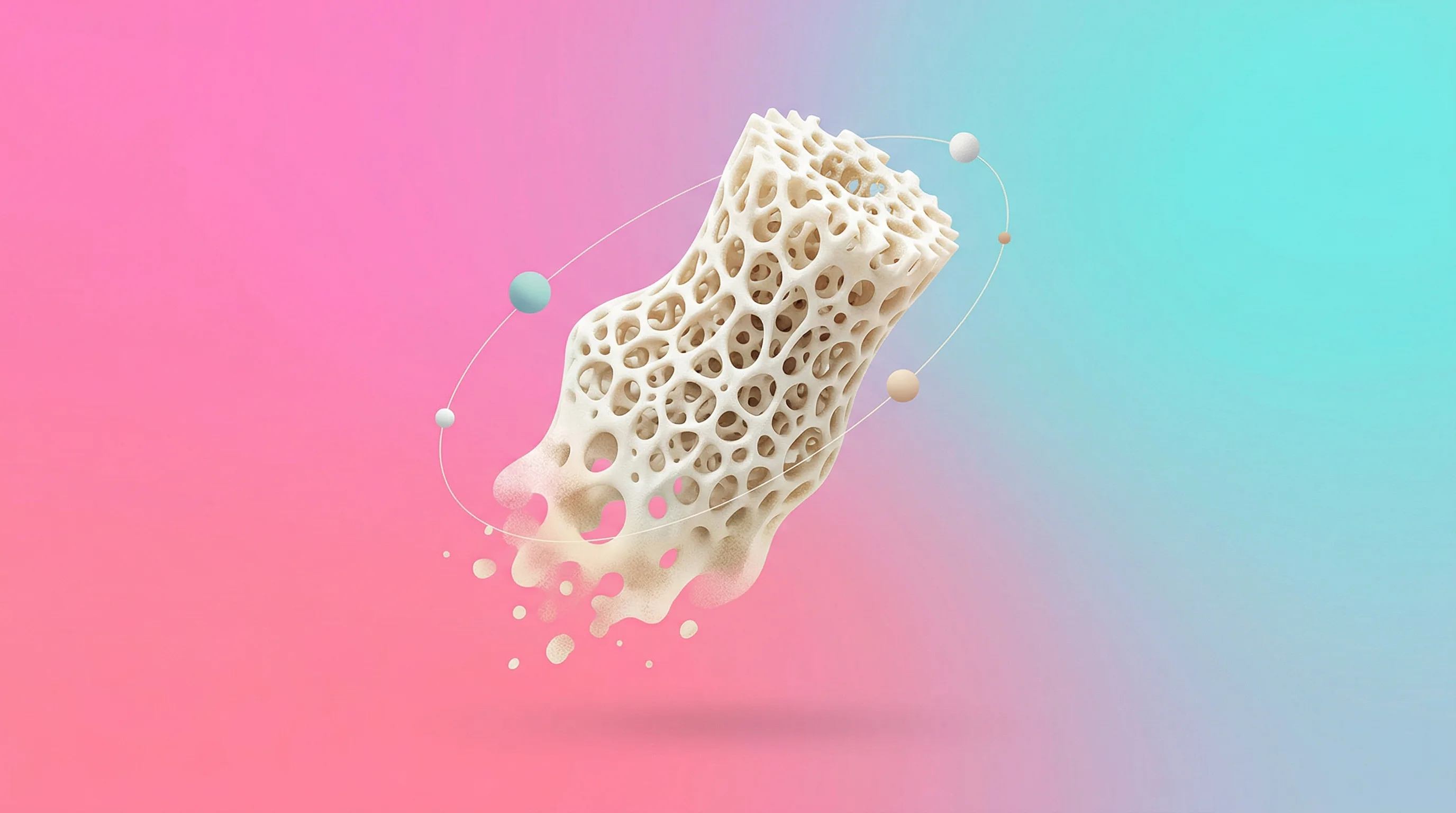
The product itself is straightforward in concept, if not execution: patient-specific bone grafts printed from a bio-based polymer composite that includes calcium phosphate for bone integration and zinc for antibacterial effects. The material is designed to be resorbable—it gradually breaks down as natural bone grows in to replace it.
Founder and CEO Habib Belaïd, who holds a background in materials science and participated in the I-PhD entrepreneurship program in 2021, has assembled a ten-person team spanning executives, engineers, researchers, and dentists. Two patents protect the underlying technology.
The value proposition hinges on speed and customization. Instead of using off-the-shelf graft materials that may not fit perfectly, surgeons would receive a graft tailored to the patient's anatomy, potentially allowing them to place the implant immediately rather than staging the procedure. It's an appealing premise—if the grafts perform as advertised.
A Crowded, Growing Market
Dental bone graft substitutes are hardly a new idea. The global market was valued at $350 million in 2026 and is projected to hit $612 million by 2034, per February data from Fortune Business Insights. Clinical literature suggests up to half of all dental implant cases require some form of bone augmentation, which translates to a substantial patient population.
The competitive landscape, though, is well established. Players like Geistlich, ZimVie, and Botiss dominate, and while few offer the same degree of customization at scale, they have distribution, regulatory approvals, and decades of clinical data on their side.
KERVALION is betting that personalization—and the promise of a single-surgery workflow—will carve out space. Whether dentists and oral surgeons will adopt a new material from an unproven vendor, particularly one that requires changing procedural habits, is less certain.
The Long Road Ahead

Commercialization is still years out. The company plans to establish a Florida subsidiary in 2027 to lay groundwork for U.S. regulatory approval and gather market feedback. An American launch is targeted for 2028, with European entry slated for 2029—a staged rollout that reflects the differing timelines of FDA and CE Mark pathways for Class III medical devices.
KERVALION is currently part of AD'OCC's Occitanie Invest 2026 cohort and is already eyeing a larger Series A round. Internal planning documents suggest the next raise could total approximately €5.8 million, earmarked for industrialization, U.S. market setup, and full-scale commercial operations.
But first, the company needs to prove the technology works in humans. For now, KERVALION remains in preclinical mode, and those twelve surgeon-investors are placing a bet on potential, not performance data.
Perhaps the most honest read on the situation is this: they're betting early, with eyes wide open. That's not unusual in medtech. But it does mean the real test—whether KERVALION can deliver on both the science and the business model—is still to come.


