

As gold prices climb to record highs, Goyaz is scaling a store-based model built on gold-plated silver. Its $14.6 million Series A raises a question: Can affordable luxury crack India's jewelry market?
When Priyanka Vemuluri opened her first jewelry store in Hyderabad in January 2023, she made what seemed like an old-fashioned wager: that Indian consumers wanted to walk into physical showrooms, touch merchandise, and talk to salespeople. No app-first strategy, no influencer marketing blitz—just 92.5 sterling silver pieces dipped in gold plating, BIS-hallmarked, and priced for the masses.
Twenty months later, Goyaz operates 18 locations across three southern states and has closed a Rs 130 crore (~$14.6 million) Series A led by Norwest Venture Partners, the firm announced October 31. It's a trajectory that looks almost anachronistic in an era when most retail startups torch venture capital before opening their second location. Vemuluri bootstrapped the initial store with family money, then scaled on cash flow—a rarity that appears to have caught Norwest's attention.
"Goyaz's profitable operations and strong unit economics position the company well for rapid scale," said Ankit Prasad, a principal at Norwest, in a statement that emphasized the metrics venture firms rarely see this early. Whether that profitability holds at scale remains an open question. But for now, the pitch is straightforward: gold is expensive, silver is not, and middle-class India still cares deeply about jewelry for weddings and festivals.
Timing the Market—Or Getting Lucky?
The round comes at a moment when gold prices are rewriting the rules of India's jewelry trade. The World Gold Council projects softening demand through 2025 as sustained price highs push buyers to delay purchases or trade down. That creates daylight for alternatives, and Norwest's managing director Niren Shah made clear the firm sees Goyaz riding that shift. The startup is "capturing the growing demand for premium gold-plated silver jewelry amid soaring gold prices," Shah said, framing it as both category play and business model innovation in "the traditionally fragmented Indian jewellery market."
That fragmentation is real. Despite the rise of national chains like Titan's Tanishq and e-commerce players like CaratLane and BlueStone, much of India's jewelry business still runs through thousands of family-owned shops operating on razor-thin margins and outdated inventory practices. Goyaz's pitch—transparent pricing, standardized quality, after-sales service—borrows from the organized retail playbook. The company offers 55% exchange value on purchases and lifetime stone services, policies designed to mimic what traditional jewelers have long provided informally but codified into something repeatable.
Whether consumers will develop loyalty to a silver brand the way they do to gold jewelers is unproven. Silver lacks gold's cultural heft, its role as a store of value, its generational symbolism. But it photographs well, and for shoppers planning Instagram-ready engagements or destination weddings on budgets, perhaps that's enough.
The Build-Out

Norwest's capital—facilitated by JSA Advocates & Solicitors as legal counsel and PwC as financial advisor, according to media reports—will fund expansion into new cities, though Goyaz declined to share specific targets. The company also plans to beef up in-house design and manufacturing capabilities and deepen its omnichannel approach, blending online browsing with in-store purchases.
Vemuluri, whose title is founder and CEO, described the round as a way to "accelerate growth, diversify our collections, and strengthen our retail presence across key markets." The language is careful, almost generic. What's less clear: whether Norwest took a board seat, what the post-money valuation landed at, and how quickly the firm expects Goyaz to deploy the capital. Those details, unsurprisingly, were not disclosed.
The company opened its 18th store in Chandanagar, a suburb of Hyderabad, on October 11—weeks before the funding announcement. With venture backing in place, the pace of openings will almost certainly pick up. Retail is a volume game, after all, and Norwest doesn't write checks to watch startups tread water.
Who Else Is Playing Here?
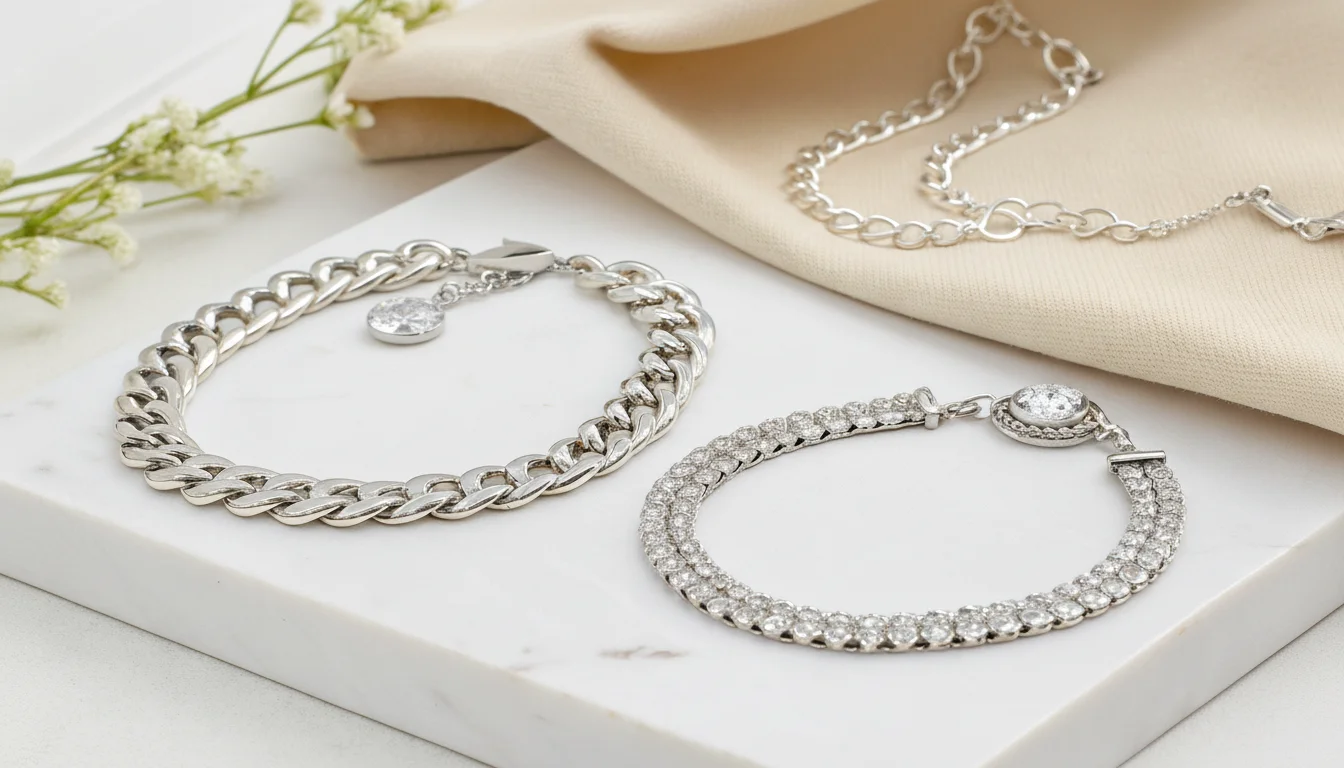
Goyaz isn't alone in chasing silver's moment. GIVA, another venture-backed jewelry brand, raised Rs 200 crore in 2024 and has been aggressive about store rollouts and celebrity partnerships. The difference, perhaps, is emphasis: GIVA skews younger and more fashion-forward, while Goyaz positions itself around occasions—weddings, festivals, formal events. That distinction could matter as both brands compete for real estate in the same malls.
The broader organized jewelry sector continues to chip away at the unorganized market's dominance, a slow-motion shift that consulting firms and investors have been predicting for years. Silver, once relegated to temple offerings and baby gifts, is emerging as its own growth vector, distinct from gold but not quite costume jewelry either.
Still, scaling a jewelry chain in India comes with friction. Supply chains are complex, customer acquisition is expensive, and trust—the currency that matters most in this category—takes years to earn. Vemuluri built Goyaz without institutional money for nearly two years, which suggests a certain discipline. Whether that discipline survives a $14.6 million infusion and the growth expectations that come with it will tell us something about both the founder and the category.
For now, Norwest is betting that record gold prices have cracked open an opening, and that a 20-month-old startup in Hyderabad might be the one to slip through.


