

The helicopter circles low over scrubland, rotor wash scattering red dust across 1.7 million acres of Australian ranch country. Except there is no helicopter anymore—not on the properties where Sam Rogers has been testing his drones.
What's hovering instead is something quieter, cheaper, and arguably smarter: a multirotor aircraft guided by algorithms that have learned to read bovine body language. The cattle, surprisingly, seem fine with it. Better than fine, actually. They respond to the gentle mechanical hum with less agitation than they showed the choppers, moving along planned routes as if an invisible stockman were applying pressure from behind.
It sounds like the premise of a rural science fiction novel. But GrazeMate, the Y Combinator-backed startup Rogers founded after dropping out of robotics studies at the University of Sydney, has raised $1.2 million to deploy what it calls "robot cowboys" across ranches in Australia and California. The company's pitch—replace helicopters, ATVs, and hours of manual labor with AI that can sense when cattle are stressed and back off accordingly—sounds almost quaint until you consider the implications.
This isn't just about herding efficiency. It might be agriculture's most significant labor disruption since the mechanical harvester arrived.
When the Robots Came for the Ranchers
The agricultural drone market has been on a tear, valued at $3.63 billion in 2025 and forecasted to reach $4.08 billion in 2026, with projections hitting $8.65 billion by 2032, according to industry research. Yet most of that growth has concentrated in the relatively straightforward work of crop spraying and field monitoring. Livestock management? That's remained aviation's last frontier—complex, dangerous, desperately short of skilled labor.
The numbers are stark, if unsurprising. H-2A visa certifications for farm work have roughly quadrupled over the past decade, reaching 384,900 positions certified in fiscal 2024. Yet only about 80 percent of those certifications translate to actual visas. Meanwhile, the Bureau of Labor Statistics projects agricultural employment will decline 3 percent through 2034, even as replacement needs generate over 116,000 annual openings. Median pay sits at $35,980—hardly competitive in today's economy.
The costs of traditional mustering keep climbing, too. Helicopter operations carry both financial and human risk that's well-documented. Australia's transport safety bureau has highlighted significant risks in cattle mustering operations, including multiple fatal wirestrikes when pilots flew too close to fencing or power lines. A Robinson R44, the workhorse of rural aviation, burns roughly 15 gallons per hour of aviation gasoline. On large stations, that can translate to thousands in fuel costs for a single muster, plus the not-insignificant carbon footprint of high-altitude flight.
Enter the drones—stage left, humming quietly.
By mid-2025, operations at properties like Moray Downs in Queensland were already using thermal-equipped drones for night mustering. One roundup of 12,000 head across Australian Country Choice properties demonstrated both cost savings and safety improvements over helicopter alternatives. SkyKelpie, an Australian training and equipment provider, now reports 80 clients managing over 300,000 livestock with claimed returns on investment reaching—prepare yourself for this—251 percent in some cases.
Those are the kinds of numbers that make venture capitalists reach for their checkbooks.
The Convergence
Three forces are making autonomous herding viable now rather than perpetually theoretical, and understanding them helps explain why a teenager from rural Australia might actually pull this off.
First: the AI has gotten surprisingly good.
GrazeMate's system uses reinforcement learning to develop what Rogers calls "engagement profiles"—behavioral models that let the drone recognize when cattle are responding properly versus growing stressed. The technology attempts to mimic the pressure-and-release techniques that expert stockmen spend decades mastering. Rogers, who grew up on a 6,000-head station before abandoning university for the startup life, brings an insider's understanding of what actually works in the field versus what looks good in a pitch deck.
The research backs him up, mostly. A 2021 study in Applied Animal Behaviour Science found that semi-autonomous drone flights at roughly nine meters altitude didn't induce significant changes in cattle heart rate or movement. Follow-up work in 2023 explored how consecutive days of drone herding could manipulate spatial distribution without measurable distress. The science suggests that, done right, drones stress cattle less than choppers or even poorly timed human pressure.
Of course, "done right" is doing a lot of work in that sentence.
Second: the hardware ecosystem has matured faster than almost anyone expected. DJI reported some 400,000 agricultural drones active worldwide by late 2024, up 90 percent in just four years. Base stations like DJI Dock 2 and Skydio Dock now enable automated mission cycles with remote operations—launch, fly, recharge, repeat, all managed from a phone or laptop miles away. Thermal cameras have become standard equipment rather than exotic add-ons. GrazeMate's system pairs off-the-shelf DJI drones with a base station and proprietary software, claiming capacity for up to 2,000 head per drone with approximately 10 kilometers of range per charge and 30-minute recharge times.
Whether those claims hold up at scale remains to be seen.
Third—and perhaps most critically—regulation is finally, tentatively, catching up. The FAA published a notice of proposed rulemaking for Part 108 in August 2025, a new framework that would replace case-by-case waivers with risk-based certificates for beyond visual line of sight operations. Legal observers expect a final rule sometime in early to mid-2026, though government timing being what it is, that's hardly certain. Australia launched a 12-month Broad Area BVLOS trial in October 2025, streamlining approvals for aircraft under 25 kilograms. Both moves could transform ranch-scale autonomy from regulatory nightmare to routine operation.
But friction persists, naturally. Remote ID compliance became mandatory in March 2024, adding another layer of technical requirements. State laws complicate matters further—Iowa's legislature voted in April 2025 to broaden bans on drones within 400 feet of farm animals without explicit landowner permission. And DJI, the hardware backbone for much of this industry, faces ongoing U.S. scrutiny that could constrain supply chains precisely when demand is accelerating.
Nothing is ever simple in agtech.
California Dreaming (Because the Regulations Are Better)
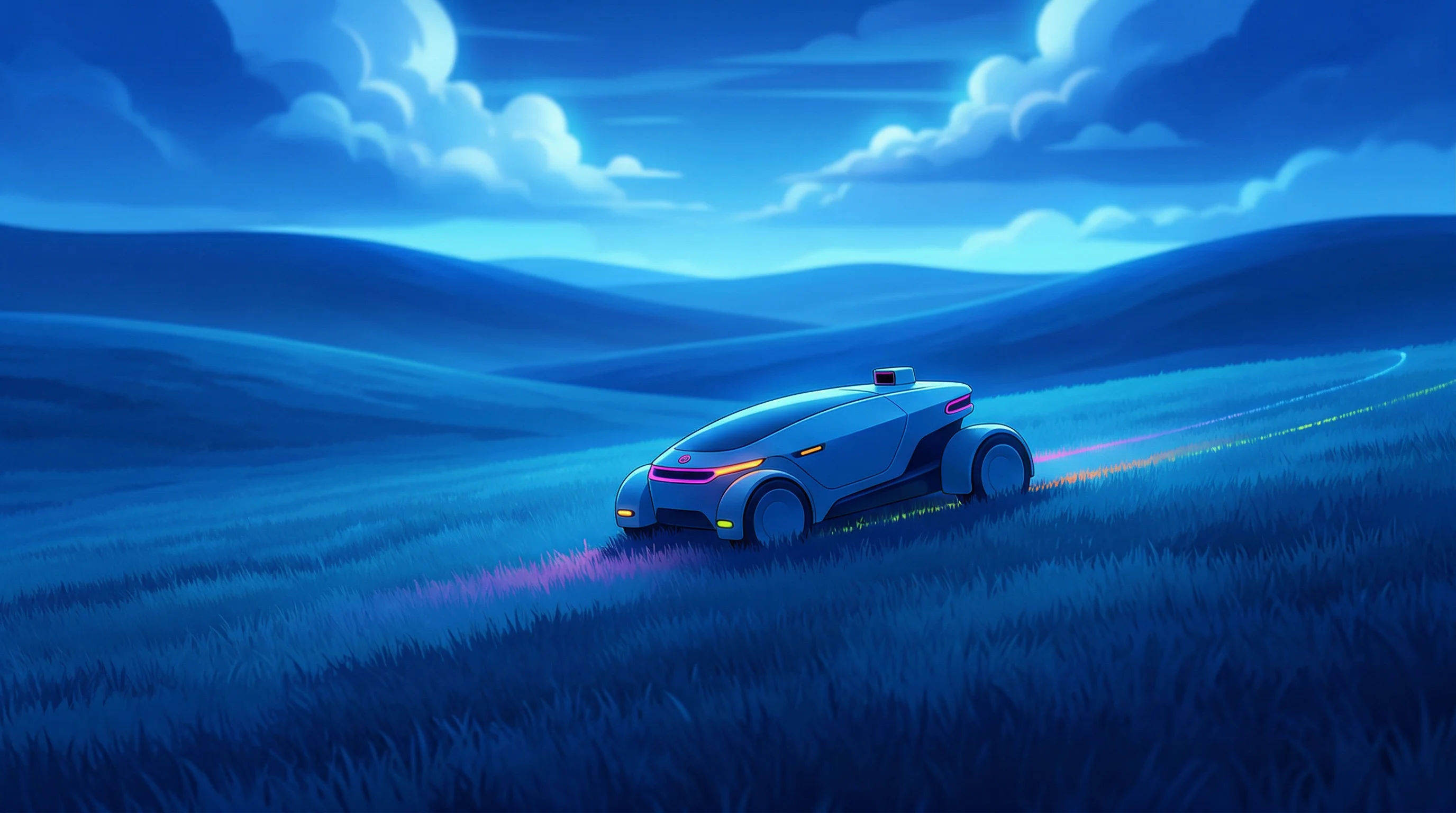
Rogers moved GrazeMate's testing operations to California specifically to access more permissive trial environments—a decision that says something about the regulatory patchwork facing anyone trying to innovate in this space. The company claims over 1,200 testing missions logged and partnerships across 1.7 million acres in New South Wales and Queensland. Its go-to-market strategy hinges on free on-ranch demos and a leasing model designed to lower entry barriers for operations that might be cash-rich in land but cash-poor in liquid capital.
The operational pitch is elegantly simple: schedule shifts via app, let the system locate the herd using thermal or RGB imaging, watch the AI apply graduated pressure while monitoring stress cues, collect real-time weight estimates and pasture data as a bonus. Rogers frames it as compressing hours of labor into seconds of phone interaction.
Australia's early adopters offer a glimpse of what's coming. When Australian Country Choice needed to complete a large muster at Moray Downs last August, thermal-equipped drones worked through the night to locate the "wilier" animals that had evaded daytime efforts. The operation demonstrated what enthusiasts call a win-win-win: safer than helicopters, cheaper than hired labor, available when human workers aren't.
SkyKelpie's training programs and equipment packages have built a modest ecosystem around manual piloting with some autonomous assists. The company emphasizes impressive return-on-investment figures—that 251 percent claim—but stops well short of full autonomy. That gap between assisted piloting and true autonomy is precisely where GrazeMate plants its flag.
The virtual fencing sector provides both competition and potential complement. Halter, a New Zealand-based company, raised a $100 million Series D at roughly $1 billion valuation in mid-2025, deploying smart collars on approximately 400,000 animals. Gallagher's eShepherd launched full U.S. availability in January 2025 with a no-subscription model that resonated with cost-conscious ranchers. These systems enable fine-grained rotational grazing without physical infrastructure but require upfront investment per animal—potentially thousands of dollars for a mid-sized herd.
Drones, by contrast, are relatively asset-light. One system can theoretically serve multiple herds across large properties, spreading the capital investment.
The broader agtech funding environment adds necessary context here. Total agrifoodtech investment has been declining, falling to around $5 billion in the first half of 2025—the lowest level in nearly a decade, by some accounts. Yet robotics remains a relative bright spot in an otherwise chilly climate. Bonsai Robotics raised $15 million in early 2025 to address farm labor shortages. Investors are betting on automation precisely where labor markets have structurally, perhaps permanently, failed to deliver workers at wages the industry can bear.
Which is either a clear-eyed assessment of economic reality or a rather bleak commentary on the state of agricultural work, depending on your perspective.
The Road Ahead (Turbulence Expected)

The trajectory seems clear even if the timeline isn't. Finalized BVLOS rules in the U.S. and Australia would remove the primary regulatory bottleneck currently holding back ranch-scale deployment. Dock-based systems will enable off-site operators to manage fleets across multiple properties—perhaps from urban offices hundreds of miles away. Thermal sensing will mature from mustering assist to continuous monitoring capability. The AI will keep learning, building larger training datasets from diverse herds and terrains.
What's considerably less certain? The competitive landscape.
DJI's dominance brings substantial supply-chain risk if U.S. restrictions tighten further. Startups may need to diversify hardware sources or, more ambitiously, vertically integrate—building their own drones from components. Virtual fencing could evolve from competitor to complement, with collars handling day-to-day movement and drones deployed for intensive gathers or emergency response. The market might fragment by geography, herd size, or ranching philosophy.
The environmental calculus deserves harder scrutiny than it typically receives in startup pitch decks. Replacing helicopter fuel burn cuts emissions per muster, perhaps substantially—though quantifying "substantial" requires baseline data many ranches don't keep. Broader claims about regenerative grazing unlocked by precision livestock management remain genuinely contested in the scientific literature. A synthesis published in Nature Climate Change suggested optimized grazing intensity could help recapture soil carbon stocks. A pointed rebuttal in PNAS argued even well-managed grazing is unlikely to materially increase sequestration without rigorous controls and measurement protocols that few commercial operations maintain.
Drones could enable tighter rotational grazing through better paddock management. But the carbon math depends entirely on baseline practices, soil types, climate zones, and measurement rigor. Claiming climate benefits without hard data is the kind of thing that raises eyebrows in scientific circles, and possibly in marketing compliance departments.
Welfare questions linger, too. Research shows drones can be low-stress under controlled conditions with skilled operators. But codifying best practices and documenting minimal physiological impact will matter considerably as the industry scales beyond early adopters. Wildlife harassment protections add another compliance layer—drones near refuges or nesting sites could trigger federal penalties that make expensive fines look cheap by comparison.
What the Cattle Think
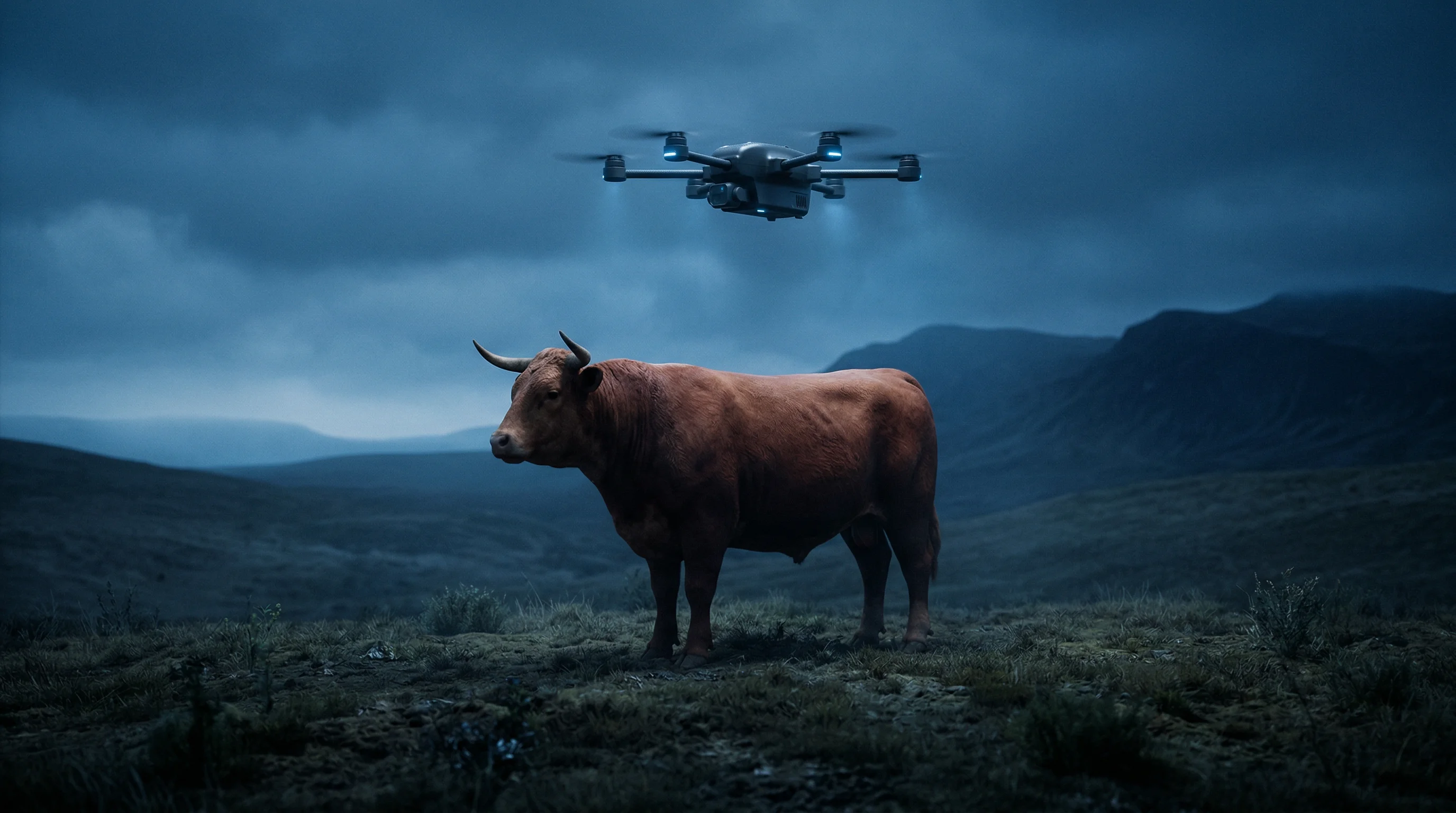
For ranchers, the appeal remains straightforward, almost primal: safer than helicopters, cheaper than hired labor that may not exist anyway, available when human workers increasingly aren't. For investors, it's an equally clear thesis—labor substitution in an industry with structural shortages and potentially measurable ROI.
For the cattle?
If the AI works as Rogers designs it, they might not notice much difference between a good stockman on horseback and a good algorithm in the sky. That's either the best possible outcome or the most quietly unsettling development in agriculture's long march toward automation, depending entirely on your view of what farming should become in the 21st century.
Rogers, still just 19, is betting heavily on the former. With $1.2 million behind him, Y Combinator's network ahead, and apparently boundless confidence in what algorithms can learn, he's positioned to find out whether Silicon Valley can teach drones to think like cowboys.
Or at least fly like them, which might be enough.
The cattle, one imagines, will let us know.


