

Two-thirds of Earth hides beneath clouds at any given moment. It's a number worth sitting with. For the optical satellites that have long dominated Earth observation—machines costing hundreds of millions of dollars—those clouds don't represent a mild operational nuisance. They represent 70% downtime.
The industry has understood the solution for decades: synthetic aperture radar. SAR satellites see through clouds, darkness, smoke. They bounce microwaves off the ground and measure what comes back. But here's the problem that's kept SAR relegated to specialist applications rather than mainstream workhorse status—the imagery looks nothing like what human analysts or computer vision algorithms expect. Instead of photo-realistic scenes, you get grainy, abstract patterns requiring specialized training to interpret.
That interpretability gap is closing. Foundation models trained to translate raw radar backscatter into analysis-ready optical imagery are achieving results that would have seemed implausible three years ago. The convergence is messy and incomplete, but it's happening: maturing commercial SAR constellations, breakthroughs in generative AI, surging defense budgets, and climate monitoring demands are colliding to finally make all-weather, round-the-clock Earth observation practical.
Whether it actually delivers on that promise is another question entirely.
The Long-Standing Paradox
Synthetic aperture radar operates on fundamentally different physics than optical satellites. Rather than passively collecting reflected sunlight, SAR systems actively transmit microwave pulses and measure the return signal. Those microwaves penetrate cloud cover, work at night, and reveal subsurface moisture content and structural deformation invisible to cameras.
None of this is new technology. NASA and the European Space Agency have flown SAR missions for decades. The Copernicus Sentinel-1 constellation has provided free global coverage since 2014. What's changed is the commercial landscape.
Companies like ICEYE, Capella Space, and Umbra now operate constellations capable of sub-meter resolution and rapid revisit times. In 2023, Umbra publicly released a 16-centimeter SAR image—matching the resolution of premium optical satellites. This past July, NASA and India's space agency launched NISAR, which will map Earth's land and ice every 12 days with open data access.
Yet even as SAR hardware proliferated, adoption remained constrained. A commodities analyst can glance at an optical satellite photo and count oil storage tanks. Assess crop health. Track construction. The same scene in SAR? A complex interplay of bright and dark speckles, with radar backscatter intensity encoding surface roughness, moisture, and geometry in profoundly non-intuitive ways. Traditional SAR analysis requires physics-based processing, expert interpretation, or task-specific algorithms that don't generalize.
The paradox was brutal in its simplicity: the one sensor type that could provide continuous, reliable coverage was also the hardest to operationalize for anyone outside a narrow specialist community.
Enter the Foundation Models
Foundation models are now attacking that barrier head-on, using diffusion models—the same generative AI architecture behind image synthesis tools—to translate SAR imagery into optical-like representations.
The concept sounds almost too straightforward: train a model on paired SAR and optical observations of the same location. The model learns to map radar backscatter patterns to visual features we associate with roads, buildings, vegetation, water. At inference time, it generates a synthetic optical image from SAR alone, effectively "seeing" through clouds by inferring what a clear-day photo would look like based solely on radar returns.
Academic progress has accelerated. A November 2024 paper introduced C-DiffSET, a confidence-guided latent diffusion model that set a new benchmark. Subsequent research explored class-conditioned generation, one-step consistency models for faster inference, and fusion approaches that integrate SAR with partial optical data to remove thick cloud cover. By late 2025, multiple research groups were reporting structural similarity scores above 0.60 and inference latencies under 100 milliseconds.
AxionOrbital Space, a San Francisco startup in Y Combinator's Winter 2026 batch, claims its ORION product beats C-DiffSET by 19.23% on the MSAW benchmark. The company—founded by Dhenenjay Yadav, a former ISRO researcher, and Atharva Peshkar, who holds a PhD from CU Boulder—says it achieves a Fréchet Inception Distance of 30.24 with deterministic one-step diffusion and 0.06-second latency. They're targeting defense, commodities, and disaster response customers with what they call "analysis-ready optical imagery" generated in real time from radar.
Whether ORION specifically lives up to its benchmarks remains to be independently validated. But the trajectory is undeniable.
Already Operational
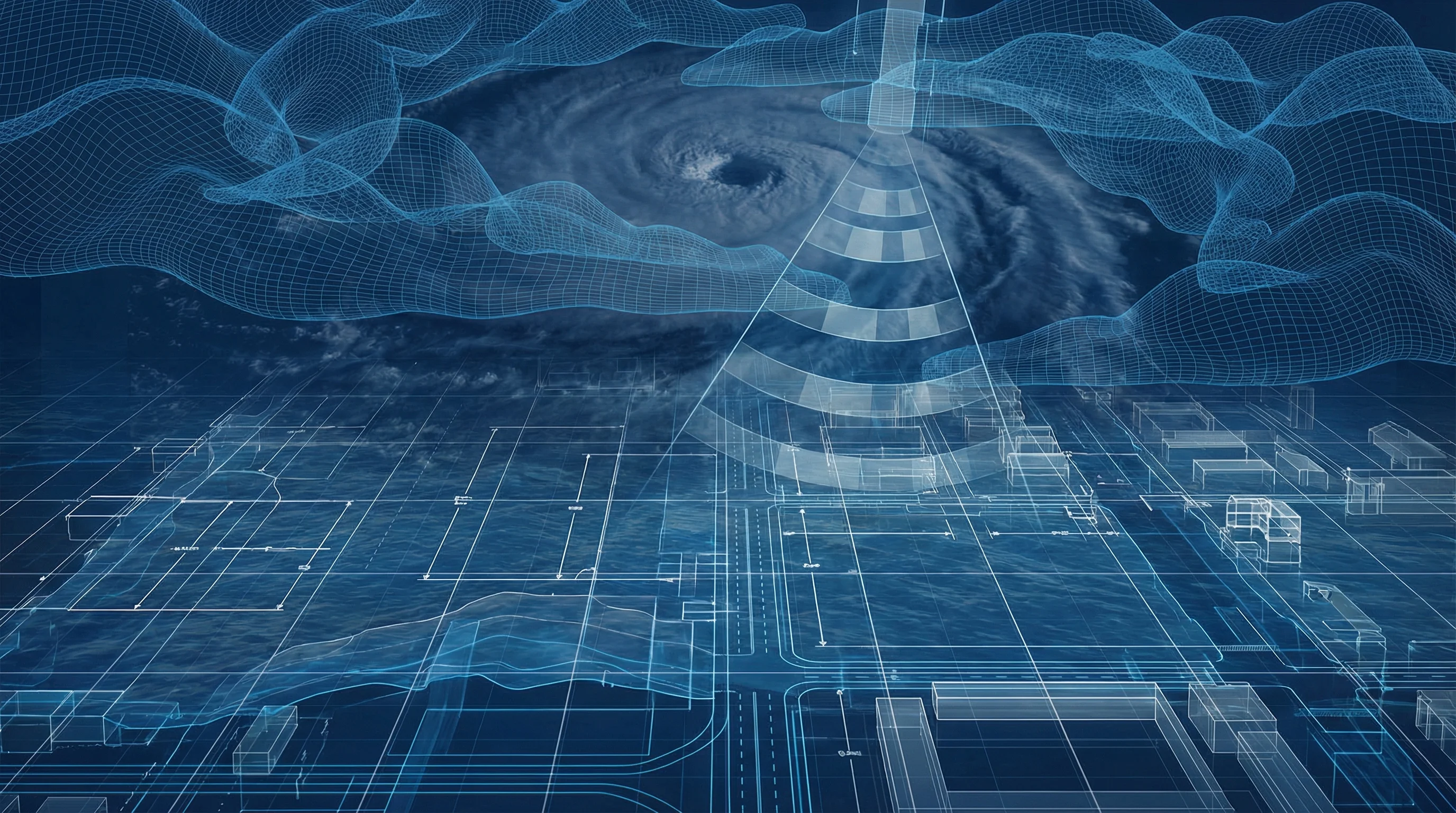
The practical value shows up in operational use cases, even without perfect synthetic optical imagery. SAR's cloud-penetrating capability has made it indispensable in disaster response. During Hurricane Harvey in 2017, NASA and FEMA used Sentinel-1 SAR to map flood extent under heavy cloud cover, producing actionable intelligence within hours. The same pattern repeated for Hurricane Helene in 2024. And Texas flooding this past July.
In commodities markets, firms like Kayrros and Ursa Space run SAR-based products monitoring global oil storage inventories by measuring floating roof tank heights. Ursa tracks over 20,000 tanks representing more than 6.6 billion barrels of capacity—near real-time transparency that influences energy trading. This works specifically because SAR penetrates weather that would blind optical satellites during critical market-moving events.
Defense and intelligence adoption has accelerated even more dramatically.
The National Reconnaissance Office extended contracts in December 2024 to Capella, ICEYE US, and Umbra under its Strategic Commercial Enhancements program, with extensions running into 2027. During the Ukraine conflict, the National Geospatial-Intelligence Agency and NRO integrated commercial SAR "almost overnight"—a phrase one intelligence official used—to provide forward users with persistent monitoring under cloud cover. The capability proved operationally essential.
BlackSky, primarily an optical provider, secured over $100 million in international defense contracts in 2025 and multiple seven-figure U.S. Space Force deals for moving target analytics and tactical surveillance. Its CEO described dynamic space-based intelligence as "no longer optional." While BlackSky itself doesn't operate SAR, the comment reflects the broader defense shift toward continuous monitoring that doesn't depend on clear skies.
Agriculture is emerging as another early adopter. Aspia Space's ClearSky product converts Sentinel-1 SAR into optical-like imagery specifically for crop monitoring, partnering with EarthDaily and Descartes Labs to help farmers track grass growth and field conditions in persistently cloudy regions. A 2023 Wired feature described the service as giving farmers a "cloud-free view of the planet."
The Convergence Factors
Several tailwinds are accelerating this shift, though not always in coordinated fashion.
NISAR's open data policy, combined with the existing free Sentinel-1 archive, creates a massive training dataset for AI models. Commercial high-resolution SAR from Umbra, ICEYE, and Capella adds the fidelity needed for fine-grained analysis. In 2023, NOAA eliminated restrictive operating conditions from X-band SAR licenses—regulatory friction that had slowed data sharing for model development.
Foundation model research itself is maturing beyond SAR-to-optical translation. IBM and NASA released the Prithvi geospatial foundation model in 2023, trained on 4.2 million global HLS (Harmonized Landsat Sentinel) samples and achieving state-of-the-art results on flood and burn scar mapping. By late 2025, IBM published Prithvi-EO-2.0 with spatiotemporal vision transformers and expanded multimodal capabilities. The European Space Agency's Φ-sat-2 demonstrated onboard AI for cloud filtering and real-time vessel detection—showing that inference can happen at the edge rather than requiring downlink and ground processing.
The economic case is strengthening. World Economic Forum analysis projects that Earth observation could enable over $700 billion in economic value by 2030 and help abate 2 gigatons of CO₂ annually. The broader space economy could reach $1.8 trillion by 2035, with Earth observation as a key driver. The commercial EO data and services market, estimated at $6.8 billion in 2024, is forecast to hit $14.6 billion by 2034.
Space Capital's Q3 2025 investment report noted strong funding momentum, particularly in defense-driven infrastructure and AI models for national security applications. European space investment surged 56% year-over-year in 2024, with ICEYE among the top fundraisers. Defense remains the primary near-term growth engine. Climate tech investors and sustainability leaders are watching closely as the technology proves itself in operational contexts.
The Gaps That Remain
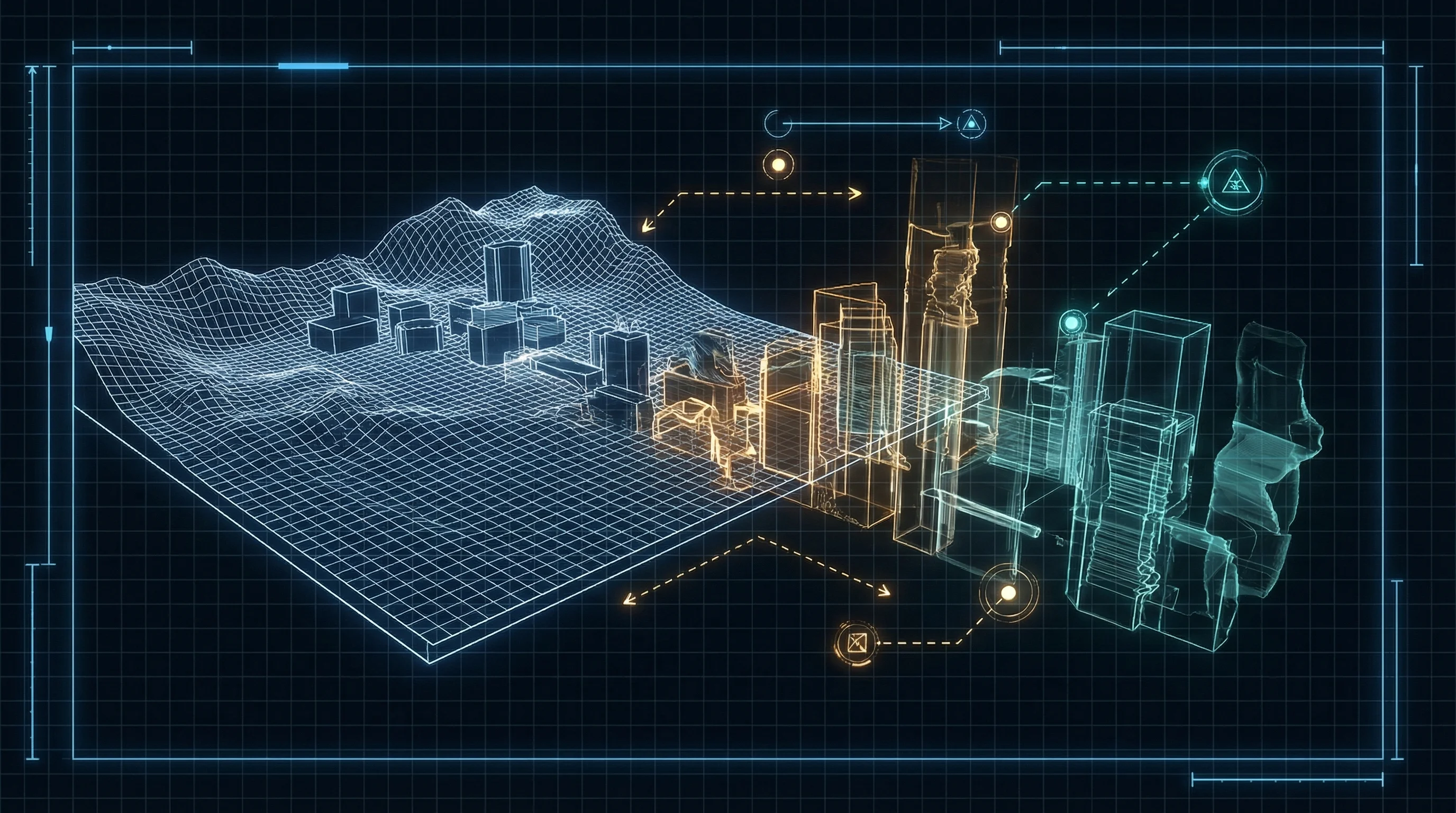
The shift from research prototype to production deployment is happening quickly. But meaningful challenges remain—perhaps more than the founders and investors currently acknowledge.
SAR-to-optical translation models can hallucinate features or misrepresent structures if not properly constrained. Recent research introduces confidence-guided losses and class conditioning to mitigate these risks, but independent validation and provenance tracking are essential for mission-critical applications. Most operational organizations—NGA, the Department of Defense, FEMA—still rely on direct SAR analysis techniques like coherence change detection rather than synthetic optical outputs. They often fuse SAR with digital elevation models and hydrological data for flood mapping.
There's also the question of whether SAR will truly replace optical satellites or simply complement them. Planet's Fusion Monitoring already creates "uninterrupted streams free of gaps and clouds" by harmonizing multiple optical datasets and using temporal compositing. Maxar secured dedicated access to Umbra's SAR constellation in 2023, explicitly positioning it as part of a multisource intelligence solution rather than an optical replacement.
The EU AI Act, which began enforcing obligations for general-purpose AI models in August 2025, adds regulatory complexity for foundation model providers operating in European markets. Transparency requirements and documentation standards may slow deployment, though a Code of Practice offers a compliance pathway.
What Comes Next
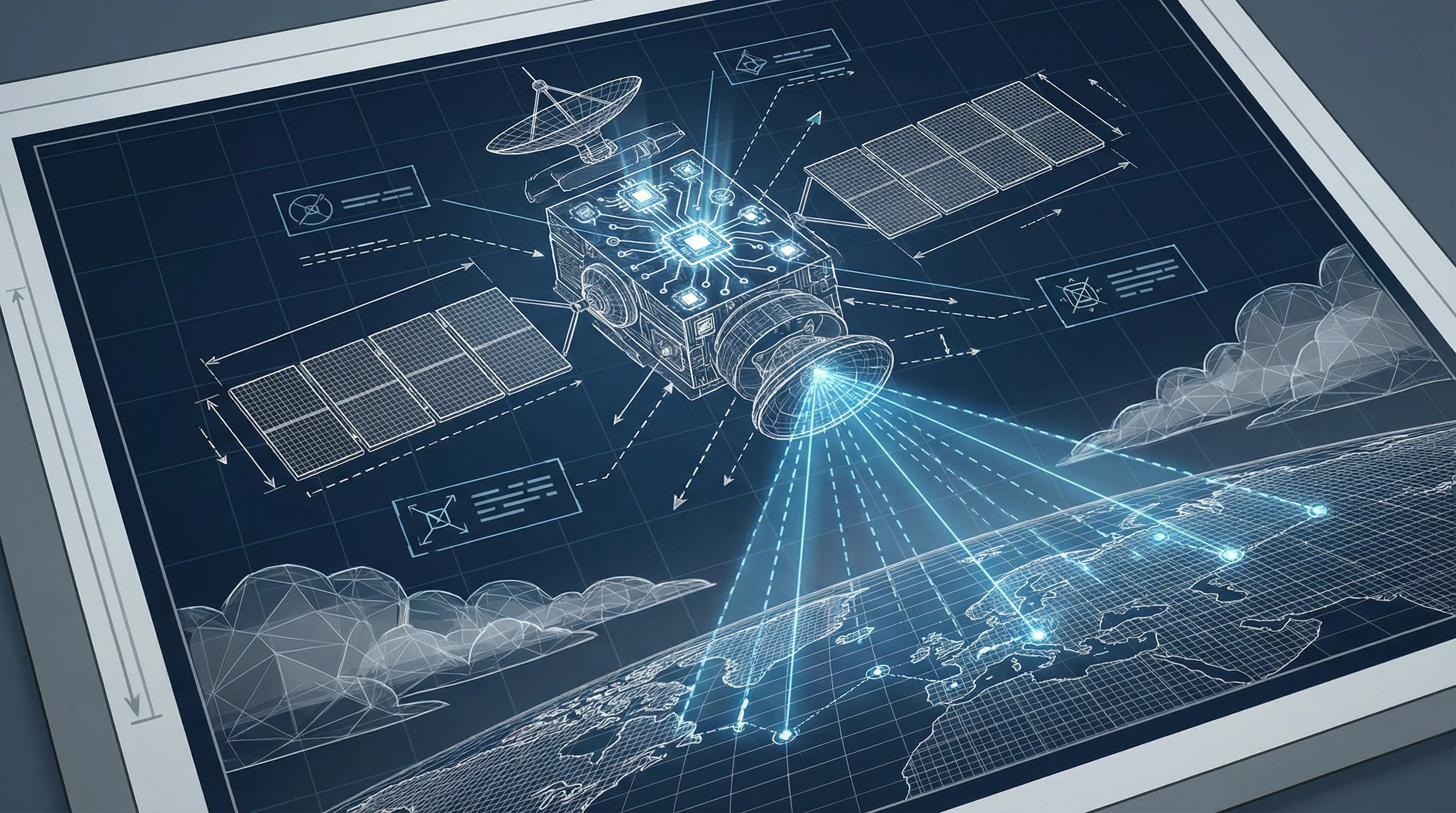
What seems certain—as certain as anything in the volatile space economy can be—is that the Earth observation industry is moving beyond the collect-and-store paradigm toward task-detect-decide workflows. These fuse multiple sensor types and push AI inference to the edge.
SAR's cloud-penetrating persistence, combined with foundation models that bridge the interpretability gap, makes 24/7 monitoring not just technically feasible but economically compelling. The technology is leaving the lab. Defense budgets are backing it. Commercial providers are launching constellations specifically designed around it.
The question is no longer whether this happens. It's how quickly the ecosystem adapts to a world where weather-dependent downtime becomes, well, unacceptable to the people writing the checks. And whether the AI models translating all that radar data into something humans and algorithms can actually understand prove reliable enough for the high-stakes decisions they're increasingly being asked to inform.
That remains to be seen.


