

The mystery sits at the heart of modern medicine. A CAR T cell therapy works—or doesn't—but tracking where those engineered cells actually migrate through the body has been an exercise in educated guesswork. Inject an mRNA vaccine into someone's arm and you know it triggers an immune response. What you don't necessarily know, not with precision anyway, is which cells in which tissues are doing the heavy lifting, or where unwanted payloads might be accumulating in organs you'd rather leave alone.
For drug developers, this blind spot has proven expensive. Perhaps more than they'd care to admit.
"We've been building increasingly sophisticated therapeutics while using 19th-century methods to understand where they go," says Ali Ertürk, a professor at Helmholtz Munich and Ludwig Maximilian University whose lab has spent the past decade trying to fix that problem. His solution, now commercialized through a startup called Deep Piction, involves making entire mouse bodies transparent, scanning them with lasers, and using AI to build annotated digital replicas showing exactly where a therapeutic ends up—down to individual cells.
The pitch is straightforward, if a bit audacious: see where your drug goes before it fails in the clinic.
Making Bodies Transparent
Tissue clearing isn't exactly new. Scientists have been trying to render organs see-through for roughly a century, with varying degrees of success and practicality. What's changed in recent years is scale and precision. Modern chemical protocols—bearing names like DISCO, CLARITY, and CUBIC—can now strip lipids and pigments from intact organs or even whole rodents, turning what were opaque tissues into something resembling pale gelatin. Light that would normally scatter after a few hundred micrometers can suddenly penetrate centimeters.
Pair that with light-sheet microscopy, which scans thin planes of laser illumination rather than tediously moving point-by-point, and you can capture gigapixel 3D datasets in hours. By 2024, instruments from Miltenyi Biotec and ZEISS had become fixtures in research core facilities worldwide. Open-hardware platforms like mesoSPIM brought down costs. Ertürk's own wildDISCO protocol, published in Nature Biotechnology in 2023, demonstrated whole-body immunolabeling of mice without requiring genetically modified animals—producing atlases of nervous, lymphatic, and vascular systems at cellular resolution.
Human organs can be cleared too, though the process remains formidable. The SHANEL method scales to kidney-sized samples, but you're looking at months-long antibody incubations and terabyte image files. Still, the trajectory is clear: what was once a curiosity confined to neuroscience labs is becoming infrastructure for therapeutic development.
The real breakthrough, at least for drug developers, comes from pairing visualization with molecular readouts. If you can see every cell in three dimensions, you can start counting gene therapy vectors, tracking immune infiltrates, or mapping the exact landing zones of drug-loaded nanoparticles.
From Lab Bench to Business Model
Deep Piction, headquartered in Neuherberg, Germany, emerged directly from Ertürk's academic work. His 2016 uDISCO paper demonstrated whole-rat transparency; three years later, vDISCO used nanobody amplification to trace neuronal circuits and immune cell migrations through the skull. By 2024, his lab had published DISCO-MS—robotic extraction of cleared-tissue regions for mass spectrometry—and SCP-Nano, a method claiming to detect nanoparticle biodistribution at sensitivities 100 to 1,000 times sharper than conventional approaches.
The company positions itself as a "precision platform" rather than a single-asset play. Three pillars: high-speed 3D whole-body imaging via DISCO clearing and light-sheet microscopy; AI-generated anatomical digital twins for quantitative biodistribution mapping; and spatial multi-omics workflows that overlay molecular data onto structural maps. Target customers are developers working on gene therapies, cell therapies, biologics, and nanoparticle formulations.
Leadership includes Ertürk as CEO, Martin Baatz as COO, and Ceren Kimna as CTO. The initial disease focus—Long COVID—is strategic, underscoring the platform's value in mapping complex, multi-organ pathophysiology that conventional tissue sectioning might miss entirely.
The technical leap gets quantified in a 2024 Nature Biotechnology paper describing SCP-Nano. Traditional nanoparticle biodistribution studies inject milligrams per kilogram into test animals. Ertürk's protocol worked at 0.0005 mg/kg—the dosing range of mRNA vaccines. At those minuscule concentrations, the system identified lipid nanoparticles in heart tissue after intramuscular delivery, off-target accumulation that standard methods would likely overlook. The approach generalized to AAV viral vectors, DNA origami, and different LNP formulations. Add proteomics to the mix and you start revealing mechanistic details: which receptors mediate uptake, which cell types are mere bystanders.
For CAR T developers, the promise follows similar logic. A 2025 Nature Biomedical Engineering study from another group demonstrated PET reporter genes tracking engineered T cells longitudinally in living animals, detecting densities down to roughly 100 cells per cubic millimeter. Deep Piction's endpoint histology offers the complementary view: where did those cells go after the PET signal faded? What microanatomical niches do they occupy? One technology provides kinetics; the other, spatial context at subcellular resolution.
Why This Matters Now
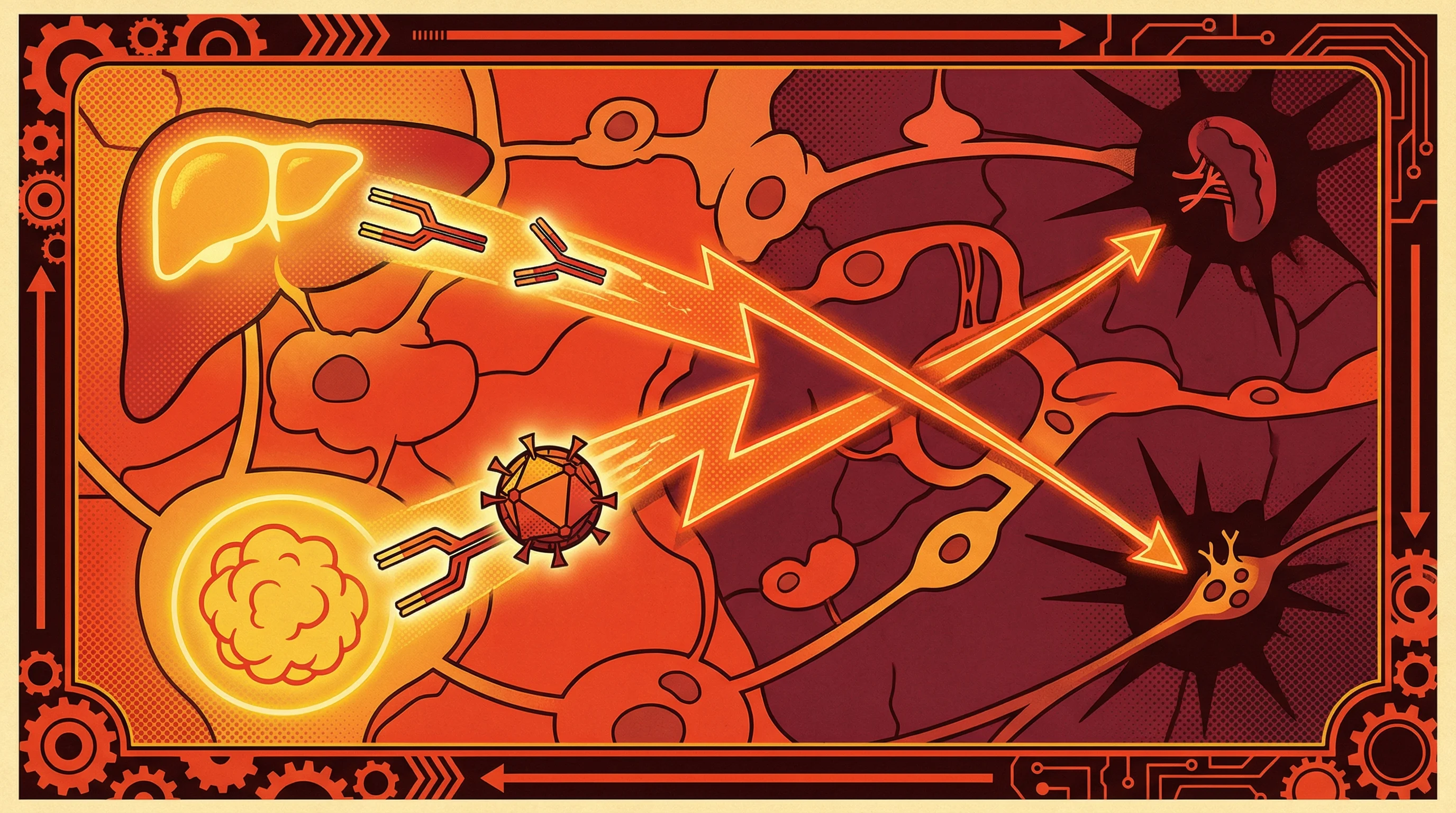
Therapeutic failures often trace to biodistribution surprises. An AAV serotype designed for liver tropism may inadvertently transduce dorsal root ganglia. A bispecific antibody intended for tumor penetration may sequester in the spleen instead. Discovering these liabilities during lead selection rather than Phase II trials saves years and considerable capital.
The timing, at least from a market perspective, appears favorable. The spatial omics sector was valued at $711 million in 2024 and is projected to reach $1.70 billion by 2030, according to Grand View Research—a compound annual growth rate of 16.3 percent. (Precedence Research offers more conservative estimates: $340 million in 2025 growing to $842 million by 2034, still a robust 10.6 percent CAGR.) The tissue clearing niche itself, while smaller, may grow from roughly $134 million in 2025 to nearly $300 million by 2034.
Regulatory winds are shifting too. The FDA's Center for Biologics Evaluation and Research reported 19 approved gene therapies as of June 2024, with listening sessions increasingly emphasizing long-term safety monitoring. The ICH S12 guidance, finalized in May 2023, harmonizes nonclinical biodistribution study expectations for gene therapies and explicitly encourages reduction of animal use—a nod toward more efficient, information-dense methods. Imaging-based biodistribution isn't yet a primary regulatory endpoint, but it's increasingly supplementing traditional qPCR and immunohistochemistry.
The commercial ecosystem reflects this evolution. Akoya Biosciences and Enable Medicine announced in April 2025 what they called the largest commercially available single-cell spatial proteomics atlas—over 100 million cells from more than 8,500 samples. Quanterix moved to acquire Akoya in January 2025, bridging blood-based biomarker detection with tissue spatial profiling. LifeCanvas Technologies and BioInVision now offer fee-for-service whole-body AAV mapping using cleared-tissue or cryo-imaging workflows. Core facilities at UCSF and MD Anderson list light-sheet microscopes alongside standard confocal systems.
A July 2024 editorial in Nature Methods argued that "tissue histology in 3D" should become standard practice, noting that modern clearing, light-sheet instruments, and machine learning make volumetric analysis feasible at diagnostic scale. Ertürk's accompanying perspective piece, "Deep 3D histology powered by tissue clearing, omics and AI," outlined a vision of whole-organ blueprints—structural, molecular, and functional—as the foundation for next-generation therapeutics.
It is, in other words, a field coming of age. Whether the science translates to sustainable business traction remains the open question.
The Long COVID Gambit
Deep Piction's Long COVID program serves dual purposes: technical demonstration and strategic positioning. SARS-CoV-2 antigen persistence in tissues—detected months or even years post-infection in some cohorts—has been linked to post-acute sequelae. A 2024 UCSF study reported viral protein in blood and tissue samples more than a year after acute COVID. The platform's whole-body, multi-organ imaging could theoretically localize these reservoirs and quantify therapeutic penetration of antivirals or immune modulators. Success here would provide proof-of-concept for other complex, systemic conditions.
The broader commercial opportunity lies in de-risking therapeutic development. Gene therapy developers could screen AAV serotypes not just for transduction efficiency in a target organ, but for absence of off-target hits in the nervous system or gonads—safety liabilities that derail programs late in development, when pivots become prohibitively expensive. Cell therapy companies could visualize CAR T migration into solid tumors versus lymphoid organs, informing decisions about dosing or combination strategies. Nanoparticle formulators could iterate on surface chemistries with empirical biodistribution feedback at early research stages.
Challenges, naturally, remain. Cleared-tissue workflows are endpoint assays; they lack the longitudinal tracking of PET or bioluminescence imaging. Image file sizes run into terabytes, demanding robust computational infrastructure that many academic labs and even some biotech companies lack. Regulatory acceptance of imaging-based biodistribution as a standalone primary endpoint is still evolving—most gene therapy sponsors will run qPCR alongside any optical method, hedging their bets. The spatial omics market, though growing, remains fragmented across sequencing-based, proteomics-based, and imaging-based platforms, each with partisan advocates who sometimes talk past one another.
Reading Bodies Like Code
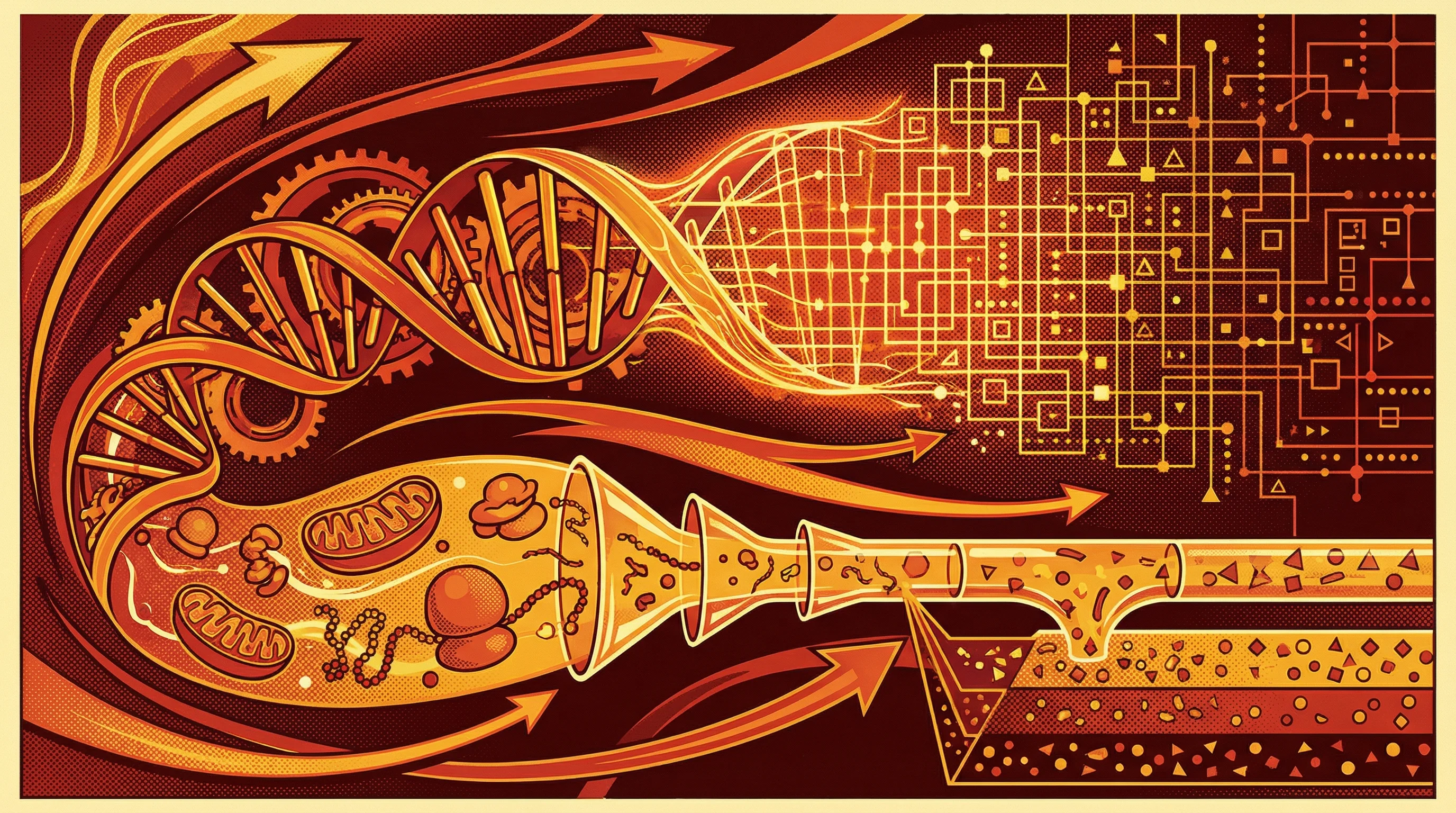
Yet the trajectory seems increasingly inevitable. As gene therapies, cell therapies, and precision biologics move from blockbuster oncology into rare diseases, autoimmunity, and metabolic disorders—areas where patient stratification and dosing precision matter far more—demand for granular biodistribution data will likely rise. The FDA's emphasis on long-term safety monitoring and the ICH S12 push for animal reduction both favor technologies that extract more information per study. AI tools like DELiVR, which can segment millions of cells in VR-assisted workflows, are making the data deluge manageable, if not exactly intuitive.
Deep Piction is positioning itself at the intersection of these trends: academic pedigree in tissue clearing, a platform designed for partnership rather than single-asset development, and a disease focus that requires exactly the kind of whole-body, multi-scale view the technology provides. Whether it becomes the de facto standard for preclinical biodistribution or remains a specialized tool for academic collaborations will depend on execution, partnerships with pharma companies that control most development budgets, and the platform's ability to deliver actionable insights that demonstrably shorten development timelines.
But the underlying science—rendering bodies transparent and reading them at cellular resolution—has already crossed a threshold. What was once spectacle has become, perhaps quietly, utility. The question now is less whether we can see where drugs go, and more what we'll do once we can no longer claim ignorance.


