

For decades, booking ocean freight in South Korea has meant phone calls, faxed rate sheets, and a stubborn reliance on personal relationships. Seonjin Choi spent six or seven years navigating that world at Hyundai Glovis—long enough, apparently, to decide it needed disrupting.
His answer is SURFF, a Seoul-based shipping marketplace that closed an undisclosed seed round on May 3, 2024. The backers tell you something about the company's unusual pedigree: Korea Investment Accelerator, Hyundai Motor's ZER01NE Fund, and Hyundai Glovis itself, the logistics arm of one of Korea's most powerful conglomerates. It's not every day a startup gets funding from the very incumbent it's ostensibly trying to modernize.
SURFF spun out of Hyundai Motor Group's internal ZER01NE venture program in early 2023. Choi and a handful of former Glovis colleagues—veterans of global forwarding operations and systems planning—set out to build what they describe as a "Skyscanner for ocean freight." The pitch: compare rates across carriers and forwarders online, book cargo slots with a few clicks, and track shipments in real time. Simple enough in theory. In practice, they're taking aim at an industry where opacity is often the business model.
Multiple reports from MarketScreener, Wowtale, and Korean outlet KSValley confirmed the seed close between May 2 and May 5, 2024, though no one disclosed the size of the check. That's typical for early-stage rounds in Korea, where startups often treat funding figures like trade secrets.
The Marketplace Play
SURFF operates on two fronts. First, there's the marketplace: freight forwarders can list surplus container capacity, and exporters or importers can shop for space—a digital middleman in a sector that's run on spreadsheets and Rolodexes for longer than anyone cares to admit. Second, the company aggregates real-time data from ports, carriers, and transport networks, offering visibility into pricing and availability that small and midsize shippers rarely get.
Korea Investment Accelerator, an early-stage fund launched in late 2021, lists SURFF in its public portfolio as a "maritime data-driven trading platform for export-import cargo space." The description is a mouthful, but it captures the dual nature of what SURFF is trying to do: be the transaction layer and the data layer for an industry desperate for both.
By May 2024, the startup claimed monthly active users had tripled since January, with web-based quote inquiries up fivefold. More than 100 container transports had moved through the platform from over 30 import-export firms, according to statements published by Wooltale around the time of the seed announcement. Not earth-shattering numbers, but enough to suggest the concept resonates with at least a slice of the market.
By April 2025, SURFF said transaction volumes had surged more than 600 percent year-over-year, with cumulative transaction value hitting around KRW 2 billion—roughly $1.5 million. The company reported facilitating 300-plus container shipments and supporting close to 50 businesses in overseas expansion, per a Venturesquare piece on SURFF's acceptance into Seoul Fintech Lab residency. (Whether those figures have held or accelerated since is unclear; startups tend to trumpet milestones and go quiet in between.)
A $1.3 Trillion Problem
The opportunity SURFF is chasing sits inside South Korea's sprawling trade economy. The country's total trade volume reached about $1.34 trillion in 2025—exports of $709.7 billion and imports of $631.7 billion, according to data from Korea's Ministry of Trade, Industry, and Energy. That's a lot of containers moving in and out of Busan, Incheon, and smaller ports.
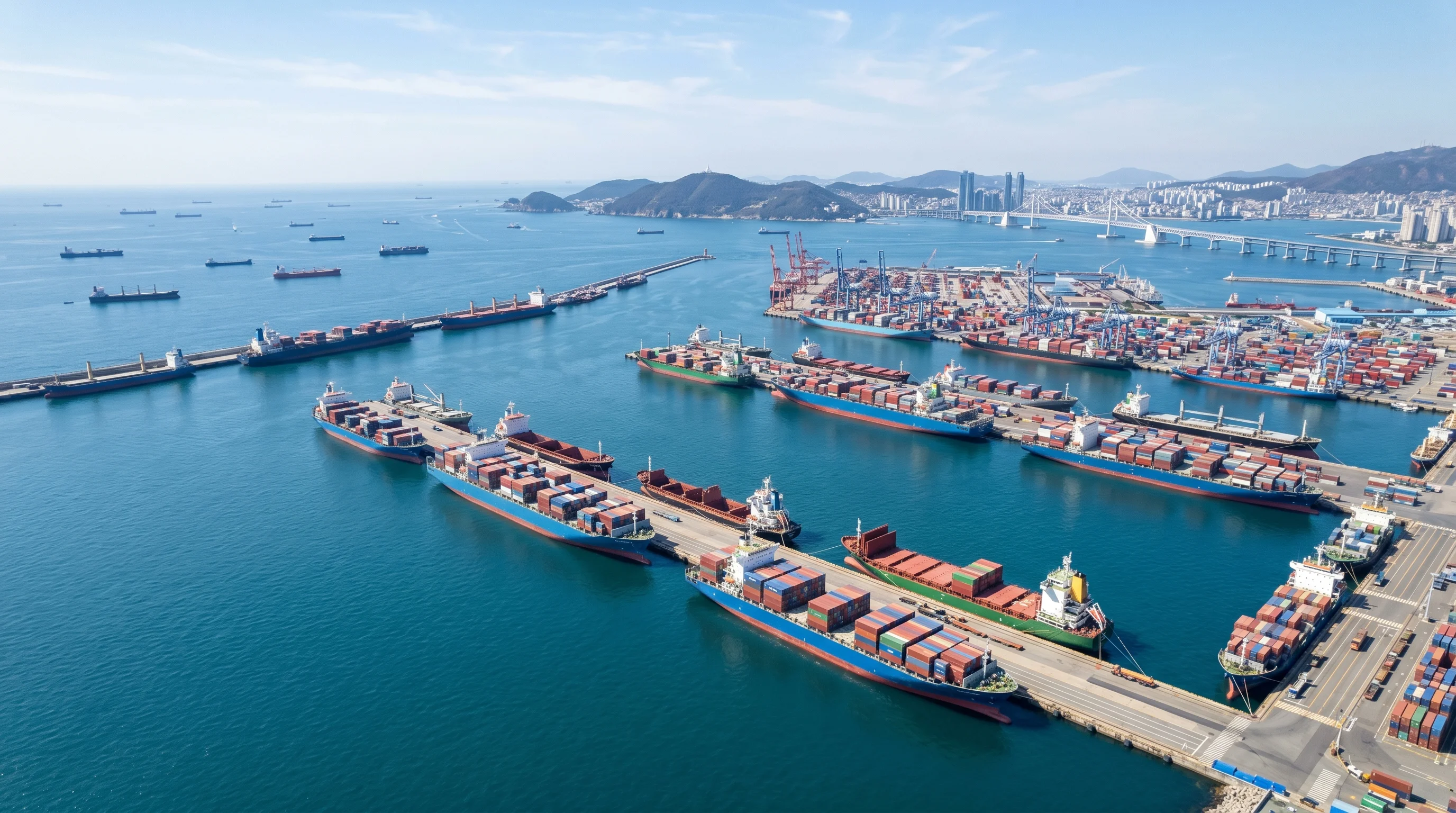
Yet for all that volume, Korea ranked just 17th in the World Bank's 2023 Logistics Performance Index, up from 25th in 2018 but still trailing peers like Singapore and Hong Kong by a wide margin. Ocean freight in Korea and much of Asia remains heavily intermediated, paper-intensive, and frustratingly opaque. Small exporters often lack the leverage to negotiate directly with shipping lines, leaving them at the mercy of forwarders who may or may not be offering competitive rates.
SURFF's bet is that transparency—real-time pricing, carrier availability, and streamlined booking—can carve out a new kind of infrastructure for those smaller players. It's a familiar playbook in freight tech: shine a light on an opaque market, aggregate fragmented demand, and hope the incumbents don't squash you before you hit scale.
The Hyundai Paradox
Which brings us back to that investor list. Having Hyundai Glovis on your cap table is both an asset and a complication. Glovis is a logistics giant, moving everything from automotive parts to heavy machinery across global supply chains. It's also, in theory, the kind of intermediary SURFF wants to disintermediate—or at least make more efficient.
Choi and his co-founders presumably know this tension intimately, having spent years inside the system. The ZER01NE spinout model gives them some distance, but corporate venture backing often comes with strings, implicit or otherwise. Does Glovis see SURFF as a way to modernize its own operations, a hedge against disruption, or both? The company hasn't said much publicly.
SURFF has tried to expand beyond pure brokerage. In April of last year, it announced a collaboration with Woori Bank to develop credit and risk models for logistics financing—adding a fintech layer to the freight platform. Around the same time, the startup integrated SeaVantage's real-time tracking and predictive analytics, though a case study from the data provider didn't disclose hard metrics on retention or efficiency gains. These moves suggest SURFF is thinking beyond marketplace fees, perhaps eyeing the broader financial flows around shipping: trade credit, cargo insurance, working capital.
The startup has collected a handful of local accolades: the KDB 2022 Start-Up Grand Prize, the 2023 Marine Startup Contest Excellence Award, and selection for South Korea's TIPS government R&D support program. Useful credibility markers in a market where pedigree still matters.

What Comes Next
SURFF's story is a familiar one in freight tech—take a fragmented, analog process, digitize it, and hope network effects kick in before incumbents wake up or capital runs dry. The company has an inside track via its Hyundai lineage, but that same connection could limit how far it can push against the status quo.
For now, the startup is still in the early traction phase, measured in hundreds of shipments rather than tens of thousands. Whether it can scale beyond Korea's mid-tier exporters—and whether the Hyundai connection proves more asset than liability—remains an open question. The ocean freight market has humbled plenty of well-funded startups before. SURFF's founders are betting their years inside the machinery give them an edge the outsiders lacked.
Maybe they're right. Or maybe they'll discover that some industries resist digitization for reasons deeper than technology.


