

The demonstration looked simple enough: a small aircraft lifting off from a patch of ground near Bangalore, buzzing across open air, then plunging into water without hesitation. Seconds later, what had been a drone became a submarine, navigating beneath the surface before emerging, shaking off droplets, and resuming flight.
Simple to watch, perhaps. Devilishly hard to engineer.
That March 2026 unveiling marked the public debut of AVATAAR, an amphibious autonomous platform from AquaAirX Autonomous Systems—a Bangalore outfit barely two years old at the time. The company claims AVATAAR is the first Indian-made system that can fly through air, dive underwater, and operate in both domains without needing human hands to reconfigure anything in between. Not the first globally (more on that shortly), but the first to emerge from India's defense-tech ecosystem with serious commercial ambitions.
The timing wasn't accidental. Two months earlier, AquaAirX had closed a ₹12.5 crore seed round led by Rainmatter, the investment arm of discount brokerage giant Zerodha. With fresh capital and a functioning prototype, the startup was making its pitch: defense surveillance, disaster response, and environmental monitoring represent markets it plans to crack commercially starting in 2027.
Whether those markets materialize on schedule is another matter entirely.
The Transition Problem
Here's what makes amphibious drones tricky: air and water are fundamentally different fluids. Wings optimized for lift in low-density air become useless underwater. Propellers designed for atmospheric flight lack the torque for submerged propulsion. Waterproofing electronics enough to survive saltwater immersion adds weight that kills aerial endurance. And the moment of transition—that split second when an aircraft hits water at speed—can destroy components designed for one environment or the other.
Most amphibious concepts fail right there, at the handoff.
AVATAAR's answer involves autonomous logic that manages the entire cycle: takeoff, aerial transit, water entry, submerged navigation, resurfacing, and continued flight. The system won't attempt a dive if battery levels drop too low, according to coverage from India Today following the launch—a safety threshold that suggests AquaAirX learned early lessons about stranded prototypes.
Underwater, the platform carries multi-beam imaging sonar, an acoustic communication modem (radio doesn't penetrate seawater), a Doppler Velocity Log for measuring speed, and Ultra-Short Baseline navigation for positioning. Above the surface, it reverts to conventional surveillance sensors. The carbon fiber chassis includes specialized coatings to fend off saltwater corrosion, with post-mission freshwater flushing built into standard maintenance protocols.
What the company doesn't disclose publicly: dive depth, mission endurance, or payload capacity. Those specifications require a direct conversation with AquaAirX, which may signal either competitive sensitivity or specs that aren't yet market-ready.
Validation, With Caveats
AquaAirX pegs AVATAAR at Technology Readiness Level 6—a designation meaning the system has been tested in relevant environments (actual lakes or coastal waters, not just controlled lab tanks). That rating appeared across multiple reports from India Today, The Week, and defense trade publications around March 2026.
TRL-6 is respectable for a young startup. It's also a far cry from TRL-9, which denotes a system proven in operational conditions at scale. Defense customers, notoriously risk-averse, typically demand extensive trials before committing procurement budgets. The gap between "demonstrated in relevant environments" and "ready for Navy deployment" can stretch years.
The company cleared certain milestones under iDEX—India's Innovations for Defence Excellence program, designed to channel startup innovation toward military applications—though specific challenge IDs haven't been published. In September 2025, AquaAirX showcased the platform at Israel Aerospace Industries' NeuSPHERE Demo Day in New Delhi, an innovation accelerator that selected five Indian startups. Founder and CEO Gouthami T S also landed recognition on HDFC Bank Group's Tech Innovators 2025 list last December, the sort of accolade that helps when pitching institutional investors.
Still, accolades don't equal purchase orders.
Where It Might Actually Work
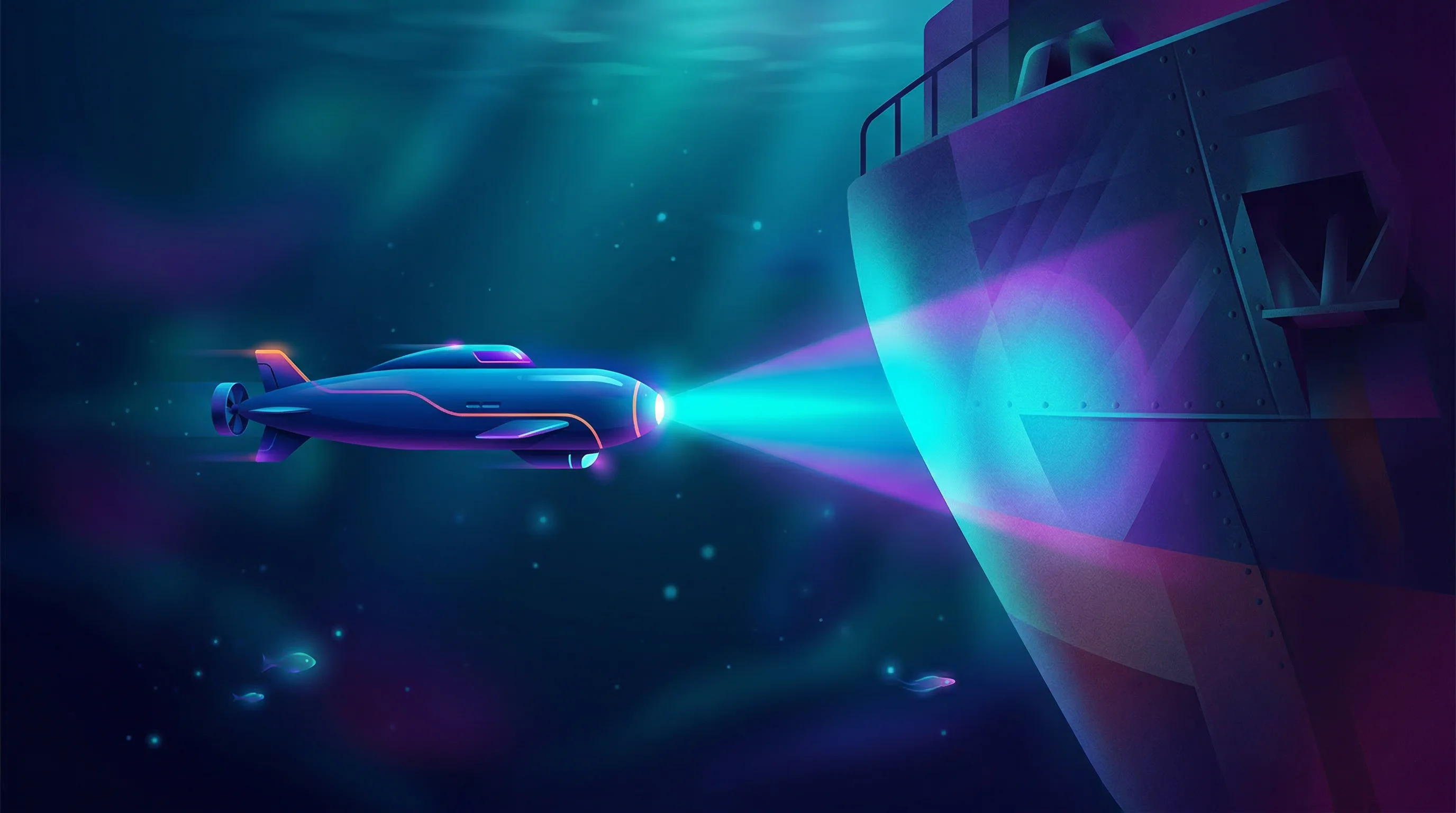
Defense applications anchor the pitch. Indian Navy and Coast Guard operations involving persistent harbor surveillance, littoral intelligence gathering, and autonomous inspection of subsea infrastructure align with AVATAAR's design. The platform could, in theory, conduct hull security checks and seabed surveys without deploying separate aerial and underwater assets—appealing for resource-constrained missions.
Search-and-rescue teams gain a tool that transitions between surface scanning and subsurface search without the delays of recovering one vehicle and launching another. Offshore energy operators could inspect pipelines, subsea cables, and platform structures in a single sortie. Environmental monitoring groups might appreciate combined aerial and underwater data for water quality analysis or conservation surveys, though whether budget-conscious NGOs can afford bespoke drones is another question.
AquaAirX pairs AVATAAR with DeepNimbus, its own cloud platform for stitching together aerial and underwater mission data. The system promises 3D seabed mapping and AI-driven insights from combined sensor feeds—features that sound impressive in pitch decks but will need to prove themselves against established competitors' analytics suites.
Money In, Questions Out
The January 28, 2026 seed round brought in Prime Venture Partners, Wyser, and India Accelerator alongside lead investor Rainmatter. The ₹12.5 crore infusion will fund improvements to system autonomy, air-to-water transition reliability, sensing and communications capabilities, and team expansion.
That 2027 market entry target suggests AquaAirX views TRL-6 as sufficient for pilot deployments but acknowledges needing further refinement before volume production. No pricing has been disclosed, which could mean the company hasn't settled on a cost structure—or that early units will carry price tags better suited to government contracts than commercial sales.
Defense procurement cycles, famously glacial, rarely align neatly with startup timelines.
A Sparse Field

AVATAAR enters a competitive landscape that's more empty lot than crowded arena. Internationally, Rutgers University's Naviator system demonstrated combined aerial and underwater bridge inspections as far back as 2017, eventually spinning into a commercial venture. Academic prototypes like the TJ-FlyingFish from Chinese University of Hong Kong and Tongji University reflect ongoing research interest. But commercially available amphibious platforms remain scarce, perhaps because the engineering challenges outweigh the addressable market.
Within India, no prior autonomous system appears to have combined flight and dive capabilities in a single platform before AVATAAR's arrival. Vikra Ocean Tech's Koorma amphibious robot, showcased at Aero India 2025, operates on land and water but lacks aerial capability. DRDO's AUV-150 and Maya AUV are purely underwater vehicles, designed for mine countermeasures and oceanographic research.
That makes AVATAAR novel domestically, though whether novelty translates to commercial traction remains unsettled.
The Startup Behind the Splash
AquaAirX was incorporated on April 11, 2024, which makes AVATAAR's March 2026 launch roughly 23 months after company formation—a brisk development timeline, possibly accelerated by prior research from co-founder and CTO Jitendra Saini. The company operates from Bangalore's Nitte Meenakshi Institute of Technology, a hub that's incubated other defense-tech ventures.
The product portfolio extends beyond AVATAAR. AquaAirX lists NEXOR, described as a hovering autonomous underwater vehicle, and maintains proprietary ground control station software. The company's self-description—"building amphibious and underwater autonomous platforms integrating robotics, AI, sensing, autonomy, and cloud analytics"—reads like a mission statement designed to appeal to both defense planners and venture capitalists, who increasingly view dual-use technology as a sweet spot.
Whether defense procurement cycles will align with the 2027 commercial timeline, whether endurance and depth specifications meet operational requirements, and whether pricing hits feasible budget thresholds—these remain open questions.
For now, AVATAAR represents India's most serious attempt yet to commercialize a drone that operates in two fundamentally different fluid environments without human intervention between domains. The technology works, at least at demonstration scale. Whether it works profitably, and at the pace investors expect, is a story still being written beneath the surface.


