

Mohammed Alboury Njie has a simple pitch, though one that defies solar industry orthodoxy: stop laying panels flat. Stack them up instead.
His Dallas startup, Janta Power, just closed $5.5 million to prove it—a seed round led by MaC Venture Capital, with Collab Capital joining, announced October 21. The money will fund what Njie and his small team call "3D vertical solar towers," structures that arrange photovoltaic panels in tracked, vertical configurations rather than sprawling them across acres of dirt and scrub.
The geometry, Janta claims, squeezes roughly 50% more daily energy from the same hardware—and triples the solar surface per acre. If the technology delivers on those promises in the field, it could appeal to exactly the customers who can't afford to think horizontally: data centers hemmed in by property lines, airport tarmacs, telecom sites, EV charging plazas where every square foot counts.
Whether it actually works at scale is another question.
A Patent and a Wager
Janta's design—which earned U.S. Patent 11,837,674 last December—stacks panels vertically with single- or dual-axis tracking. The effect, according to the company's specs, is a "dual-peak" power curve: the towers capture morning sun on one side, evening light on the other, smoothing out the notorious solar duck curve that plagues grid operators.
On paper, the performance looks compelling. Janta models a capacity factor around 32%, versus the 22% typical for flat-panel installations. The company projects a levelized cost of energy as low as five cents per kilowatt-hour. Those are competitive figures—if they hold up. So far, they haven't been validated by independent field studies or published in peer-reviewed technical journals, a fact the company doesn't dispute.
The towers are engineered to withstand winds between 110 and 170 mph, no small consideration given Texas weather. Janta currently offers a 5-kilowatt model, with rooftop (1.5 kW), mid-range (8.5 kW), and larger (10 kW) versions in development.
Njie, who has ties to Southern Methodist University's Lyle School of Engineering and previously ran a social enterprise in The Gambia, describes his invention as a "poly-layered, poly-dimensional solar-stack structure." It's the kind of phrase that sounds engineered for patent attorneys—but the underlying idea is straightforward enough: when land is expensive or scarce, build up.
Pilots, Airports, and a $7 Million Pipeline
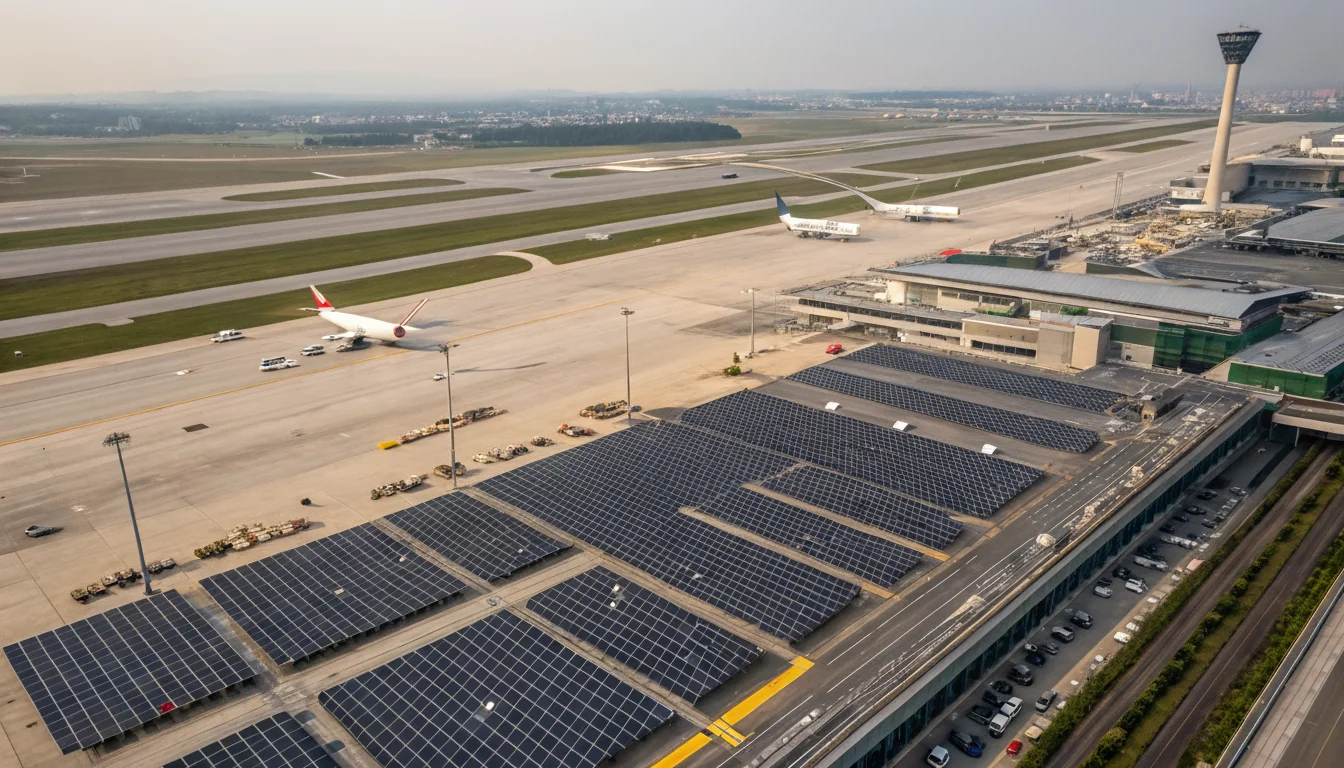
Janta isn't waiting for academic validation. The company is chasing behind-the-meter customers—the ones who pay retail electricity rates and feel land constraints acutely.
In May, Janta won the Sustainable Aviation challenge in the Airports for Innovation program, a competition that earned it pilot slots at Munich Airport, Spain's Aena network, and Dallas Fort Worth International. Those airport deployments represent the startup's most visible near-term tests. Janta also reports an undisclosed telecom pilot and a pipeline worth approximately $7 million, according to profiles on Dealroom and Capital Factory, the Austin-based accelerator where Janta is a member.
The seed round follows earlier backing from Dallas-based Mansah Capital, which took a minority stake in October 2024, and Ideaship, a GTT Group affiliate that invested in July with an eye toward bolstering Janta's IP portfolio. Founded in 2021, the company operates with fewer than ten employees—a lean team for a hardware venture trying to challenge incumbents in solar tracking and ground-mount systems.
Janta is also part of Greentown Labs, the cleantech incubator, which perhaps signals ambitions beyond Texas. The company currently has openings for a VP of Sales, a Supply Chain Leader, a Senior Mechanical Engineer, and a Software Engineer—roles that suggest it's preparing to scale manufacturing, not just design.
The Uphill Climb
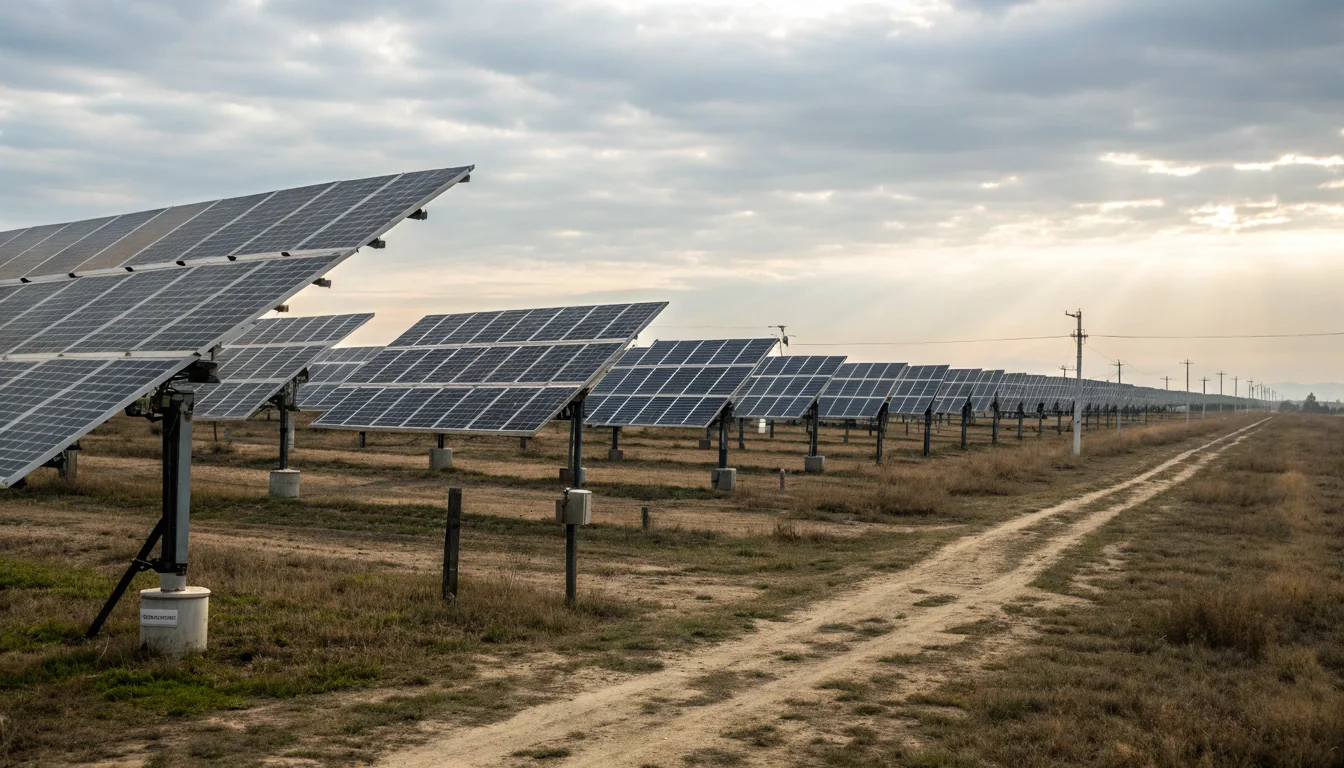
Here's the uncomfortable reality Janta faces: the solar industry has already solved for efficiency. Single-axis trackers dominate utility-scale projects precisely because they're proven, bankable, and understood by insurers and lenders. Vertical towers, no matter how elegant the geometry, represent a departure—and departures require evidence.
Data centers and airports might be willing to experiment, especially if land costs justify the premium. But Janta will need to demonstrate that its towers can survive years of weather, require manageable maintenance, and deliver energy at the costs it projects. The company's airport pilots will serve as that proof of concept, assuming they move forward on schedule.
There's also the question of manufacturing. Solar hardware is a scale game, and Janta is starting small. Whether the startup can negotiate supply chains, manage quality control, and hit price points competitive with conventional systems remains an open question. The seed funding will help—but $5.5 million doesn't go far in hardware.
Still, if Njie is right about the land-density advantage, Janta might carve out a niche before anyone notices. In a solar market increasingly constrained by permitting, transmission bottlenecks, and property access, vertical might be worth a second look.
Just perhaps not from everyone. Not yet.


