

After five years perfecting a technology that can print circuitry at nanometer scales, Hummink raises €15 million to prove it works where it matters most: inside semiconductor factories
Somewhere in an OLED display factory—probably in South Korea or Taiwan, though the companies won't say which—a machine the size of a small desk is attempting to rescue millions of euros worth of screens that would otherwise be scrapped. The culprit? Defects so small you'd need a microscope to see them, but damaging enough to render a high-end television or smartphone display worthless.
This is the problem Hummink has spent half a decade trying to solve. On November 17, 2025, the Paris-based deep tech startup announced it had closed a €15 million funding round to take its capillary-based printing technology—essentially, as CEO Amin M'Barki describes it, "the world's smallest fountain pen"—from university research benches into the unforgiving environment of industrial manufacturing.
The round was co-led by KBC Focus Fund, Cap Horn, and Bpifrance Deeptech Ventures, with support from the European Innovation Council Fund and French Tech Seed, along with returning backers Elaia, Sensinnovat, and Beeyond. It's the kind of investor constellation you'd expect for European hardware: a Belgian nanotech fund, French state-backed vehicles, and a consortium tied to the founders of chipmakers Melexis and X-FAB.
What they're betting on isn't just clever physics. It's economics.
The €16 Billion Scrap Problem
Microscopic defects plague OLED manufacturing at a scale that would shock most consumers. Up to 30% of displays produced can end up scrapped during production—dead pixels, misaligned layers, contamination issues invisible to the naked eye but fatal to yield. Industry estimates peg the annual cost at roughly €16 billion globally.
Traditional fixes involve scrapping entire panels or, in some cases, trying to rework them through cumbersome mask-based processes. Neither is ideal when you're dealing with production lines that measure throughput in seconds per unit.
Hummink's pitch is appealingly straightforward, if ambitious: deposit conductive materials—silver, copper, gold, polymers, even graphene—through controlled capillary flow at resolutions between 50 microns and a few hundred nanometers. No masks. No UV exposure. Positioning accuracy under 100 nanometers in XY and 5 nanometers along the Z-axis. Real-time repair, direct to the defect site, in under two seconds.
Early qualification tests suggest around 10% yield improvement in display fabrication. If that holds—a significant "if"—the math becomes compelling fast.
From Physics Lab to Factory Floor
Hummink emerged in 2020 as a spin-off from ENS-PSL's physics laboratory and the Institut Pierre-Gilles de Gennes, names that carry weight in French research circles but mean little in Hsinchu Science Park or the Samsung supplier ecosystem. The gap between those worlds is precisely what this funding round aims to bridge.
The company's NAZCA system already operates in research settings—Duke University and Université Paris Cité use it to print sub-micrometer transistors for experimental recyclable electronics. Impressive technically, perhaps. But research tools, no matter how precise, don't generate the kind of revenue semiconductor capital equipment demands. That requires something tougher: an industrial module that can integrate directly into existing fabrication lines without disrupting throughput or requiring operators to rethink their entire process flow.
M'Barki speaks about "precision where it has never been possible before" with the careful enthusiasm of someone who knows he's dealing with skeptical engineers. And skepticism is warranted. Display and semiconductor fabs run on tolerances tighter than most industries can fathom, with margins to match. Convincing procurement teams to add another process step—another potential failure point—requires more than whitepapers and university partnerships.
The Asia Strategy (Because That's Where the Fabs Are)
Hummink plans to double its workforce by 2026, with team members already planted across the US, Taiwan, Japan, and South Korea. This isn't wanderlust; it's necessity. The heart of display and semiconductor packaging manufacturing beats in Asia, where yield losses from pixel-level defects run highest and competition for process improvements is fiercest.
The company targets qualification with major Asian display manufacturers, though it hasn't disclosed which ones or how advanced those conversations are. That opacity is standard for this stage—manufacturers don't advertise testing relationships until they're confident in outcomes—but it also means investors are largely taking execution risk on faith.
And the competitive landscape? Not empty. Optomec's Aerosol Jet systems already handle direct-write printing down to 10-20 micron resolutions. At CES 2025, Switzerland's Scrona unveiled a 128-nozzle electrohydrodynamic printhead aimed at pushing sub-micron printing toward true mass manufacturing scalability.
Hummink's claimed differentiator centers on closed-loop resonance control and material flexibility—any ink, any substrate, with what the company calls zero-waste deposition from its pipette reservoir. Whether that proves defensible once competitors refine their own approaches remains an open question.
The European Bet on Hardware
The funding tells a familiar European deep tech story. KBC Focus Fund, a €50 million Belgian vehicle focused on nanotech and microelectronics, joined French government-backed funds and the European Innovation Council in backing what they hope becomes a strategic manufacturing capability Europe can claim as its own.
Previous raises brought in €700,000 in seed funding (2020) and €5 million in 2022. Total equity raised now stands around €20.7 million—substantial for a university spin-off, modest compared to the capital requirements of semiconductor equipment plays once they hit scaling phase. Sensinnovat, the Belgian investor with ties to X-FAB and Melexis founders, stayed in for this round, a signal of continued conviction from people who understand chip manufacturing economics.
What Comes Next (And What Could Go Wrong)
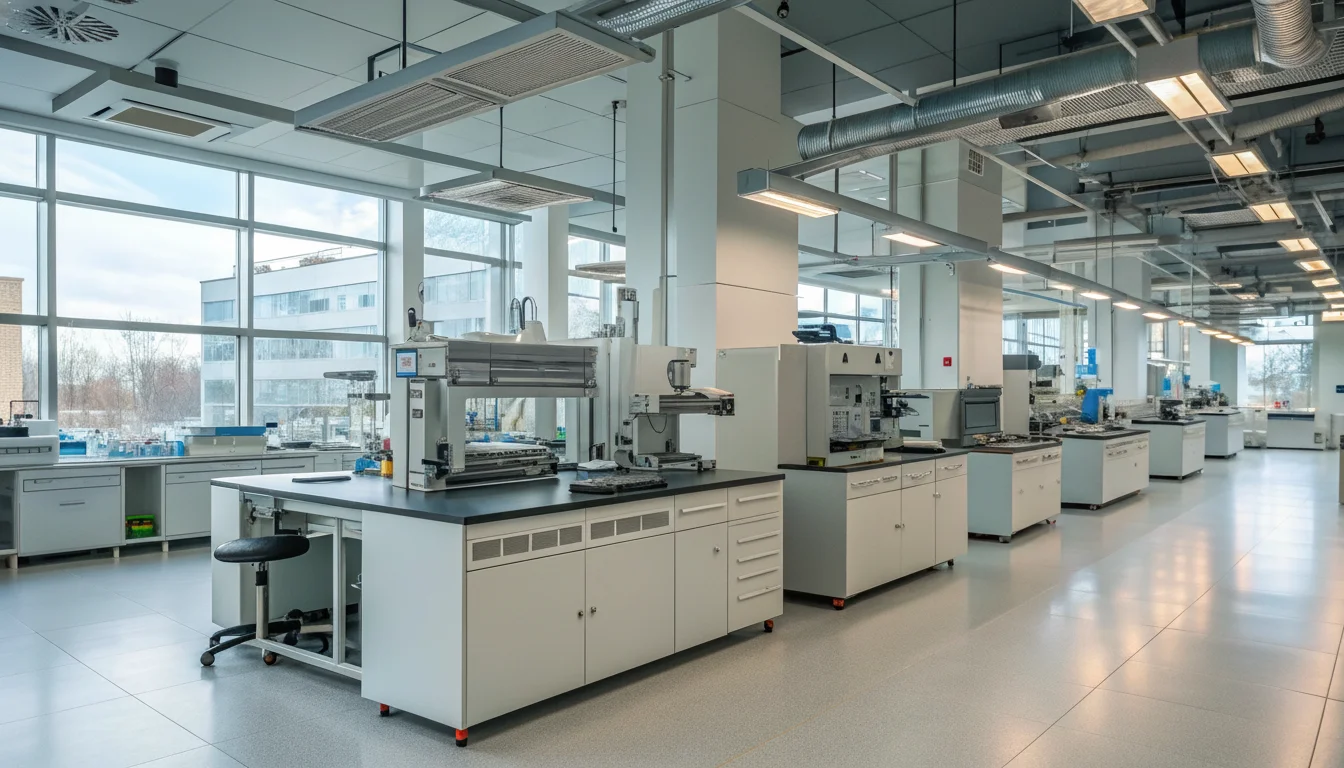
The 10% yield improvement figure is tantalizing. In an industry where single-digit efficiency gains can mean hundreds of millions in recovered value, that would matter. But early qualification tests aren't production volumes. Lab conditions aren't fab environments. And Hummink hasn't yet demonstrated the kind of sustained, high-volume performance that turns a clever technology into an indispensable tool.
The company also faces the classic hardware scaling challenge: each new customer likely requires significant customization and integration work, making revenue growth slower and lumpier than software ventures. Capital equipment sales follow long cycles—proof-of-concept, qualification, pilot integration, volume orders—often spanning years. Hummink will need to show traction before its current funding runs out, ideally in the form of named customers, production deployments, or at minimum, public partnerships with Tier 1 manufacturers.
Yet the problem the company is tackling is real, expensive, and growing as display technologies advance toward ever-higher resolutions. Microscopic defects aren't going away. The question is whether a Parisian startup born from a physics lab can convince the world's most demanding manufacturers that salvation arrives through a capillary tube barely wider than a human hair.
M'Barki and his team have five years of refinement behind them and now €15 million to prove the fountain pen metaphor isn't just clever marketing. In semiconductor manufacturing, though, even the cleverest metaphors eventually face the ultimate test: does it work when the line is running at full speed and the cost of failure is measured in millions per hour?
The answer, for now, remains unwritten.


