

The pitch sounds almost too tidy. Take Indian government securities, back a digital token with them one-to-one, and voilà—a rupee stablecoin that sidesteps the capital flight concerns plaguing dollar-pegged alternatives. Simple, sovereign, seamless.
Except nothing about launching a private stablecoin in India is simple.
Polygon and Anq, a Bengaluru-based fintech founded just three years ago, are pushing ahead with what they're calling ARC—the Asset Reserve Certificate. Documents reviewed by the Times of India in early November described it as a rupee-denominated token backed entirely by Indian government securities and Treasury Bills. Each ARC would maintain strict parity with sovereign debt instruments, a structure its backers believe differentiates it from USDT, USDC, and the other dollar-centric stablecoins dominating crypto markets.
The fundamental question isn't whether the architecture works. It's whether Indian regulators will let it exist at all.
A Twin-Rupee System That Doesn't Quite Have Permission
The model centers on what Polygon and Anq have dubbed a "Twin-Rupee" framework. In their telling, the Reserve Bank of India's digital rupee—the e₹, still in pilot—would handle settlement, while ARC serves as a programmable layer for smart contracts and payments, issued by regulated private entities.
It's positioned carefully: not a competitor to the central bank digital currency, but a complement. The talking points emphasize remittances, keeping rupee liquidity onshore instead of bleeding into foreign stablecoins, perhaps even deepening demand for India's government securities market. Every ARC token minted, after all, would require an equivalent holding of G-Secs.
Anq came together in 2022 under founders Ashish Khandelwal, Swagat Sarma, and Abhinav AV, building what they describe as a digital banking bridge between traditional finance and blockchain rails. This past May, the company partnered with Aptos Foundation to introduce on-chain rewards—a modest experiment in blending Web3 incentives with consumer banking. Polygon, meanwhile, has been racing to expand its footprint in real-world assets. It recently onboarded R25's yield-bearing rcUSD+ token and is preparing to host Agora's AUSD stablecoin on its AggLayer infrastructure.
But here's where the narrative stumbles. As of mid-November, there's no public confirmation that the Reserve Bank of India—or any arm of the government, for that matter—has approved ARC for launch. No regulatory authorization disclosed. No licensed issuer named. No whitepaper circulating.
Just a development project and a lot of hopeful press.
What Regulators Are Actually Saying
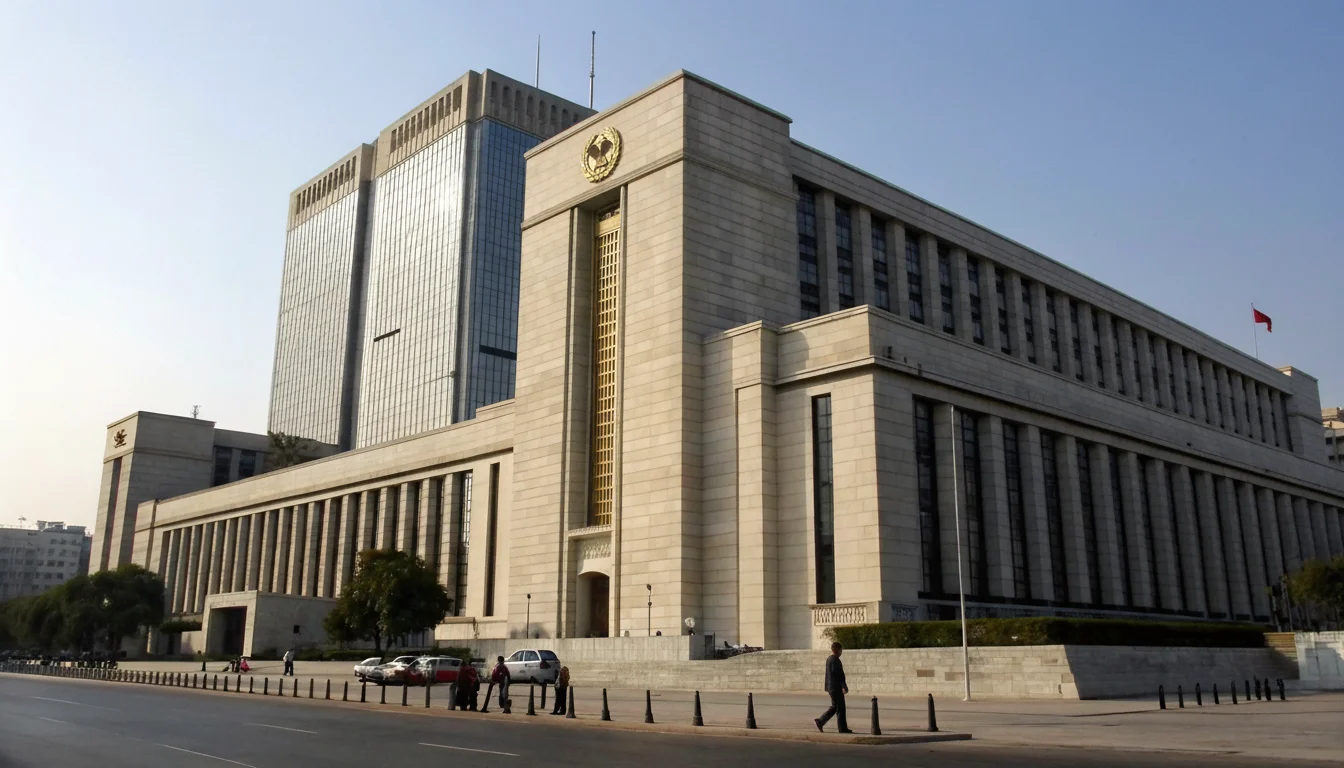
Perhaps more revealing than what hasn't been said is what has.
On October 16, RBI Governor Sanjay Malhotra stood before an audience of central bankers and made his position plain: CBDCs, not stablecoins, should be the vehicle for cross-border payments. India's domestic infrastructure, he argued, is already working. Why introduce private alternatives that complicate monetary sovereignty?
Deputy Governor T. Rabi Sankar was blunter at a Mumbai gathering. Stablecoins, he said, "pose risks to policy sovereignty." Not some stablecoins. Stablecoins, full stop.
The timing is awkward for Polygon. Back in September, CEO Sandeep Nailwal told reporters he was "100% sure" an INR-backed stablecoin would launch within three months. Three months have elapsed. No launch. No formal announcement from Polygon or Anq beyond that initial Times of India report, which itself was based on documents rather than official press releases.
FinanceFeeds noted on November 17 that India's Economic Advisor had met with Polygon representatives to discuss tokenization and the ARC concept. A meeting, though—particularly in the cautious world of financial regulation—is a far cry from endorsement. Meetings happen all the time. Approvals do not.
India's crypto policy remains, by design, in flux. A September 2025 internal document reviewed by India Today and Reuters showed officials actively resisting comprehensive regulation while monitoring what other countries do. Stablecoins, in particular, have been flagged as potential threats to UPI, India's wildly successful unified payments system, which processes millions of transactions daily with minimal cost and maximal convenience. Why risk undermining that with private digital currencies?
Sovereign Backing as a Regulatory Gambit
There is, admittedly, something clever about the ARC structure—at least on paper.
Unlike USDT, which holds reserves across corporate treasuries and commercial paper, or USDC, which does much the same under tighter disclosure, ARC would theoretically hold nothing but Indian government debt. No exposure to foreign assets. No capital leaving the country. No dilution of monetary control.
That design might, in theory, address the exact concerns RBI officials keep articulating: capital flight, monetary sovereignty, dependence on dollar-denominated infrastructure. If your stablecoin is backed entirely by your own sovereign bonds, doesn't that keep everything in-house?
Maybe. The Reserve Bank has shown willingness to experiment with tokenization under strict oversight. In October, it launched a pilot program tokenizing Certificates of Deposit on wholesale CBDC infrastructure—a controlled test of blockchain rails for traditional instruments.
But there's a chasm between a central bank-run pilot and a privately issued token, even one backed by government securities. Polygon and Anq are essentially proposing that private actors can issue a quasi-sovereign digital instrument that lives alongside the official CBDC. It's a model with scant precedent globally.
JPMorgan's deposit token, which went live on Coinbase's Base layer-2 network last month, operates within established regulatory frameworks and serves institutional clients. ARC would need to carve out entirely new regulatory space in a jurisdiction that has shown little enthusiasm for private-sector experimentation in monetary infrastructure.
A Proposal, Not a Product

For now, ARC exists mostly as an idea amplified by secondary sources—crypto news aggregators and exchange blogs citing that November Times of India report. The language around it has been slippery, occasionally misleading.
Headlines proclaimed "India's first government-backed stablecoin launched." But government-backed here means collateral, not issuer. Not endorsement. No government entity is standing behind this project in any official capacity. Not yet, anyway.
The vocabulary matters. So does the absence of formal documentation. Without a whitepaper, without named regulators giving green lights, without a licensed issuer stepping forward, ARC remains in development limbo—a proposal that may be technically ready but regulatorily adrift.
Whether Polygon and Anq can navigate India's regulatory maze will test how much room authorities are willing to carve out for private innovation in digital currency infrastructure. The RBI has been unambiguous about preferring its own CBDC over private alternatives. Officials have publicly questioned whether stablecoins serve any purpose that existing systems don't already handle better.
That's a steep hill to climb. Polygon's bet is that sovereign-backed collateral and a complementary, rather than competitive, positioning might make the difference.
Perhaps it will. But until regulators say yes—explicitly, publicly, officially—ARC is a blueprint waiting for permission to become real.


