

A warehouse robot rolled through a Sydney facility last month, its batteries untouched for twenty-four straight hours. Not because they were oversized. Not because they were particularly advanced. Because they weren't powering the machine at all.
Instead, a laser beam—invisible, tracking every movement—transmitted four kilowatts of electricity through the air. The robot traveled twenty-five kilometers on light alone.
When Australian startup Aquila announced the demonstration on May 28, the company positioned it as more than an engineering curiosity. It was the latest signal that laser-based wireless power transmission has crossed a threshold, from laboratory phenomenon to something approaching commercial viability. And it arrives amid what can only be described as a race: defense contractors, space companies, industrial giants, all converging on the same realization. The decades-old promise of beaming electricity through free space might finally be within reach.
Might be.
From Science Fiction to Field Tests
Optical wireless power transfer—converting electricity into a tightly focused laser beam, transmitting it through air, reconverting it at a photovoltaic receiver on the other end—has long occupied that uncomfortable boundary between science fiction and serious research. What's changed, recently, is the cadence of demonstrations.
In May 2025, DARPA announced it had transmitted more than 800 watts across 8.6 kilometers during tests at White Sands Missile Range, delivering over one megajoule of energy during the campaign. The agency's program manager, Paul Jaffe, said the test "obliterated" prior optical power beaming records. He pointed toward a future vision of relay networks that could "instantly beam power where needed." Bold language from a government researcher, perhaps, but not entirely unearned.
By April 2026, PowerLight Technologies—a Washington-based firm that traces its lineage to a 2009 NASA Centennial Challenge win—demonstrated what it called the "industry-first power beaming to a fielded military UAS in flight." The company's Aerial ReCharge system locked onto a KHA K1000ULE drone at altitudes up to 5,000 feet during a Department of Defense test. A month later came Aquila's robot demo, which the company claims set two world records: the most power ever delivered to a moving platform via beaming, and the longest continuous duration.
These aren't isolated efforts. In Japan, NTT and Mitsubishi Heavy Industries conducted field trials in early 2025, transmitting one kilowatt over a kilometer to a silicon photovoltaic receiver. They achieved 152 watts of electrical output—fifteen percent end-to-end efficiency despite strong atmospheric turbulence. The companies published their results in September 2025, detailing beam-shaping techniques and current-leveling circuits designed to handle real-world turbulence. The kind of unglamorous work that suggests people are actually trying to make this practical.
Meanwhile, in the space sector, Star Catcher Industries raised $65 million in a Series A round announced May 12, 2026, to build what CEO Andrew Rush describes as the world's first orbital laser power grid. The company claims it has already signed seven power purchase agreements. It demonstrated 1.1 kilowatts beamed to commercial off-the-shelf solar panels at NASA's Kennedy Space Center last November.
When you line up these announcements—from DARPA's desert tests to private companies signing power contracts—a pattern emerges.
Why Now? Three Converging Forces

Three trends have accelerated the field, and the first is straightforward economics.
Blackbird, the Australian VC firm that led Aquila's A$3 million seed round in June 2023, projected in its investment thesis that laser costs would decline roughly sixty percent per production doubling. Ruby Jones, Aquila's CEO, offered a concrete data point in a May interview: kilowatt-class lasers that cost around $120,000 in 2022 are now available for approximately $6,000.
It's a dramatic shift. The kind that changes unit economics fundamentally.
Second, conversion efficiency has improved—though this requires some unpacking. Laser power converters, specialized photovoltaic cells tuned to specific laser wavelengths, have demonstrated over sixty percent efficiency under monochromatic illumination in laboratory conditions—typically under high irradiance, sometimes at cryogenic temperatures. Particularly with III-V multijunction devices at wavelengths around 850 to 860 nanometers. Real-world systems lag those figures considerably, but the gap is narrowing. DARPA's White Sands test measured over twenty percent laser-to-DC efficiency at short distances, though the test focused on distance rather than optimization. NTT and MHI's fifteen percent end-to-end figure at one kilometer, achieved under turbulent outdoor conditions, suggests the technology is maturing beyond controlled lab environments.
Still, fifteen percent. For context, that means eighty-five percent of the energy is lost somewhere in the conversion chain. Commercial viability may require higher figures in cost-sensitive applications.
Third, and perhaps most critical from a regulatory standpoint, safety systems have evolved. High-power outdoor lasers present obvious hazards: eye damage, aircraft interference, skin burns. In the U.S., regulations involve coordination between the FDA (which governs laser product standards under 21 CFR 1040), the FAA (which manages airspace hazards), and compliance with international standards like IEC 60825-1. Companies are addressing these constraints with camera-based detection systems that shutter beams instantly when humans or animals enter the transmission corridor. Aquila emphasizes its auto-shutoff capabilities; recent research published in February 2026 explores low-latency safety architectures designed exactly for this purpose.
The regulatory path remains complex. But it's no longer uncharted.
Where the Technology Finds Traction
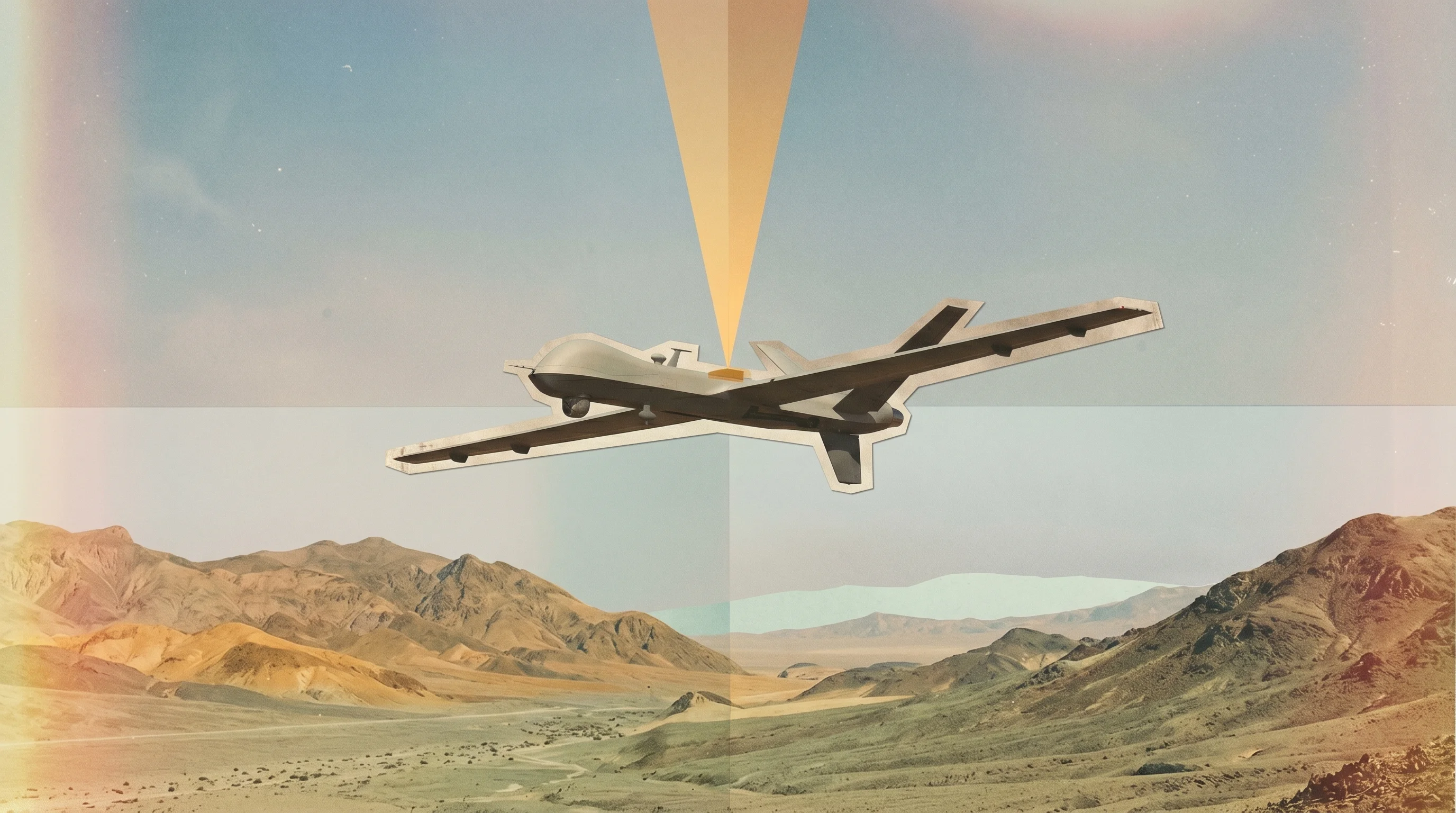
Consider the defense sector first, because that's typically where expensive, unproven technologies find their initial market.
Persistent surveillance drones and sensors are power-hungry. Resupply logistics in contested or remote environments are expensive and dangerous. Laser power beaming offers a potential solution: beam electricity to a hovering drone, extending its mission duration indefinitely. PowerLight's April demonstration for the Department of Defense moved the concept from theory to practice, tracking a moving aircraft and maintaining the power link at operationally relevant altitudes.
The company's trajectory is instructive. It won $900,000 in the 2009 NASA Space Elevator Games for demonstrating a laser-powered climber ascending one kilometer. Since then it commercialized power-over-fiber systems and returned to free-space beaming with defense backing. That's how these technologies mature—not in a straight line, but through adjacent applications until the core idea becomes viable.
Industrial automation represents a different application profile. Warehouses and factories increasingly rely on mobile robots, and Aquila's twenty-four-hour demonstration targets exactly that use case. The company, co-founded by Will Jeremijenko and Nelson Smith (who previously worked at Rocket Lab), raised an additional A$2 million in June 2024 to advance its Lightway Sentry product, initially focused on charging drones mid-flight. The robot demo signals a broader vision.
Jeremijenko argued in 2023 that lasers were "becoming cheaper faster than batteries" and that a "dynamic, wireless power supply could remove the need for bulky, expensive batteries." Whether that proves true remains to be seen, but the four-kilowatt, twenty-four-hour run suggests the company is progressing toward commercial viability. They've stated a target of bringing laser power systems to market by 2027—ambitious, but perhaps not implausible given the progress demonstrated.
Space applications carry their own urgency. Satellites in low-earth orbit experience regular eclipses. Lunar missions face fourteen-day nights. Star Catcher's $65 million Series A, one of the larger venture rounds in the space power sector, funds the construction of orbital nodes designed to beam power from one satellite to another, extending operational uptime. The company plans its first in-orbit beaming demonstration later this year, aiming to scale commercial services by decade's end.
Canada's Volta Space Technologies is developing a laser-enabled lunar power network, with a demonstration targeted for 2028 to supply electricity to lunar assets during the long nights. These aren't distant moonshots anymore. They're funded programs with near-term milestones.
Even terrestrial grid applications are in play, albeit with different physics. New Zealand's Emrod is partnering with utility Powerco and energy innovation hub Ara Ake to demonstrate long-range microwave-based wireless power transmission for connecting remote sites. Microwave beaming trades laser's precision for larger apertures and different regulatory challenges around spectrum use. The approaches are complementary rather than competitive, each suited to specific distance, power, and environmental profiles.
What Comes Next
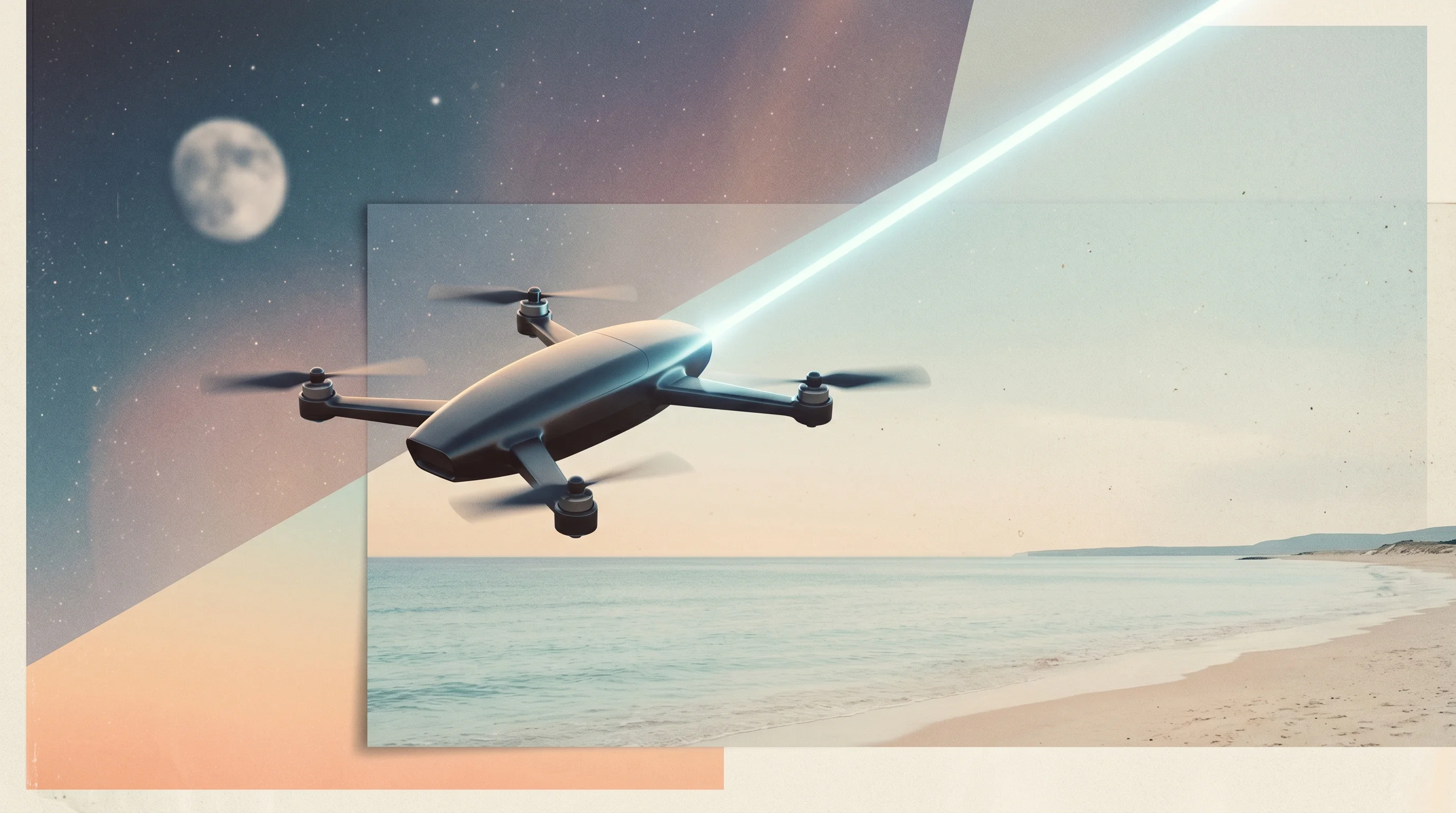
The next eighteen months will clarify whether laser power beaming achieves commercial liftoff or remains confined to niche defense and space applications.
Aquila's 2027 target for commercial deployment is ambitious. But the company's testing partners—including Quickstep and Surf Life Saving New Zealand—suggest real-world use cases beyond controlled demonstrations. PowerLight's trajectory from NASA prize winner to Pentagon contractor illustrates how early validation can accelerate adoption in high-value, performance-driven markets where cost takes a backseat to capability.
Market projections for wireless power transmission vary widely. Estimates for recent market size range from roughly $12.6 billion to $28.6 billion depending on methodology and scope. Space-based solar power, which relies heavily on beaming technologies, is projected by some analysts to reach around $1.05 billion by 2030, though such long-range forecasts carry obvious uncertainty. The European Space Agency's SOLARIS program aims for an in-orbit demonstration around 2030 and operational geostationary stations by 2040, subject to ministerial approval. Japan Space Systems conducted a microwave wireless power flight demonstration in December 2024 and is assessing space solar power system feasibility toward the mid-2040s.
For founders and investors, several watch points matter.
First, end-to-end system efficiency remains a gating factor. The chain from wall-plug electricity through laser generation, atmospheric transmission, receiver conversion, and final DC output involves multiple loss mechanisms. NTT and MHI achieved fifteen percent under turbulent conditions. Commercial viability in cost-sensitive applications may require substantially higher figures.
Second, the regulatory environment for outdoor high-power laser operations is stringent and will shape deployment timelines. Companies that establish robust safety protocols and cultivate relationships with aviation authorities will have a structural advantage.
Third, the diversity of applications—defense, industrial automation, space infrastructure, even data center power for AI workloads—suggests multiple paths to revenue rather than a single winner-take-all market. Which matters, because breakthrough technologies rarely succeed where their inventors first imagined.
Perhaps the most telling indicator is simple convergence. When DARPA, established defense contractors, venture-backed startups, and industrial conglomerates all demonstrate similar capabilities within a twelve-month window, it suggests the technology has moved past what Gartner would call the trough of disillusionment.
Aquila's robot, running for twenty-four hours on a beam of light, isn't a miracle. It's an engineering accomplishment built on decades of research, recent hardware cost declines, and incremental efficiency gains. The kind of breakthrough that looks inevitable in retrospect.
The question is no longer whether laser power beaming works. It's where it will deploy first, and how fast the market will follow.


