

The wrist has become something of a battleground in computing. Apple watches it for your heart rate. Meta's researchers wire it for muscle signals. Now a small London spinout from Imperial College is betting on an altogether different signal: the mechanical tug of tendons beneath the skin.
Fether Labs announced on May 28, 2026, that it had closed a €1.15 million funding round led by Prague-based Purple Ventures, with backing from Chapter One and the a16z Scout Fund connected to Andreessen Horowitz. The funding will support the company's push to commercialize what it calls "mechanotendography"—a wrist-worn system that tracks hand and finger movements by sensing tendon displacement rather than electrical muscle activity or camera feeds.
It's a technical distinction that may not mean much to consumers, but in the world of gesture control, nuance matters. The company, incorporated barely two years ago in March 2024, is chasing applications in augmented reality interfaces, surgical robotics, and industrial systems where precision counts and gloves or cameras get in the way.
Whether Fether can translate academic elegance into shipping hardware remains the open question.
Money From Prague, Ambitions Beyond
Purple Ventures, which typically writes checks between €250,000 and €750,000 across Central and Eastern Europe, put in roughly CZK 11 million—about €450,000—according to the Czech business daily e15. Share allotment filings at Companies House suggest the round dribbled in over several months, closing in tranches through the spring of 2026.
The three-person founding team emerged from Imperial College. CEO Jacques Blagburn and CTO Michael (Rongyu) Ma are joined by Dr. James Junesik Choi, an associate professor with over fifteen years in ultrasound and mechanical sensing research. Czech press reports indicate the startup secured an exclusive global license to a university patent, though the specific filing hasn't been made public.
The company lists around twelve employees on LinkedIn—a lean crew for a hardware play.
Tendons Instead of Electrons
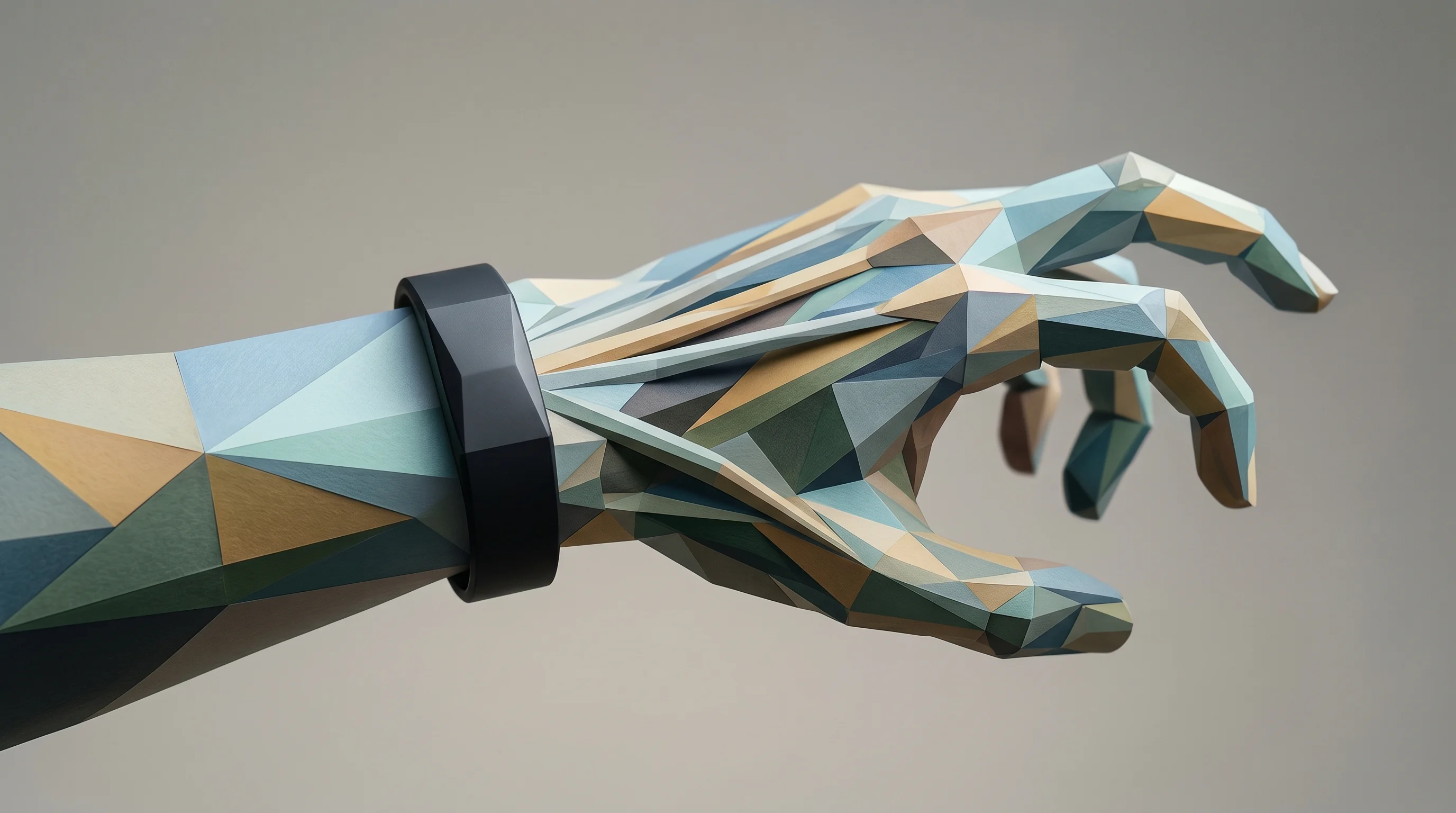
Fether's wristband doesn't measure the electrical impulses muscles generate when they fire, the approach taken by companies like Wearable Devices and, at various points, Meta's Reality Labs. Instead, it watches what happens mechanically: the shift and strain of tendons at the wrist as fingers curl and extend.
The device bundles a 9-axis inertial measurement unit and a haptic feedback engine with the tendon-sensing array. Fether says it can detect all five fingers individually and even measure grip force during object manipulation. The company plans to open the system to outside developers through SDKs and APIs, presumably hoping to avoid the fate of closed-loop wearables that never found an audience.
It's a different path than Apple's AssistiveTouch feature, which coaxes basic hand gestures from the Apple Watch's existing heart-rate sensor and accelerometers. And it diverges from the EMG neural bands Wearable Devices has aimed at the Apple Vision Pro ecosystem since 2024—those read electrical signals from the skin's surface, a method that can drift with sweat or movement.
MIT published research in March 2026 on a wrist-based hand pose tracker for robotic control. Teams at other institutions have poked at similar problems in recent years. Fether is wagering that mechanical sensing of tendons yields a cleaner, more reliable signal for fine motor tracking than alternatives. Perhaps. The proof, as ever, will be in shipping something developers actually want to use.
What Happens Now
The fresh capital will go toward launching a developer kit and running early business pilots. Job postings for hardware engineers and SDK-focused software developers hint at preparation for a broader rollout, though no customers or pilot partners have been named publicly.
Fether is targeting the usual suspects: AR and VR interface designers, robotics engineers, healthcare system integrators, industrial automation shops. It's a crowded field, and the company—still shy of its second birthday—faces the grinding reality of hardware startups: you have to ship a working product, at scale, before someone with deeper pockets decides your idea is worth copying.
The wrist, it turns out, still has secrets left to tell. Whether Fether can unlock them profitably is another matter entirely.


