

There's a number that venture capitalists have been passing around in whispered conversations for months now, the kind of figure that sounds like a typo until you check it twice. In February 2026—yes, just February 2026—a Stockholm startup called Lovable added $100 million to its annualized recurring revenue. In one month.
That wasn't a fluke. When TechCrunch caught wind of it in March 2026, Lovable had already blown past $400 million ARR with a team of just 146 people. Do the math and you get roughly $2.7 million in revenue per employee, a ratio that makes even hardened enterprise software executives blink. Eight million users were on the platform by then, building apps simply by describing them, as if ordering coffee. A year earlier? Half a million.
The timeline makes it stranger. Lovable launched publicly in November 2024. Fifteen months later, it had reached a scale that typically takes software companies half a decade to achieve, if they're lucky.
An unusual founding team
Anton Osika isn't the typical startup founder, which perhaps explains some of what happened next. He spent his early years as a physicist at CERN—the particle accelerator in Switzerland where they discover things like the Higgs boson—before pivoting to AI at Sana, a Swedish startup where he was literally the first employee. He co-founded Depict.ai, a YC-backed search company that raised something in the neighborhood of $20 million, but couldn't let go of a larger, more unsettling question: what if software could build itself?
His co-founder, Fabian Hedin, brought the kind of résumé that reads like a side character in a sci-fi novel. Hedin developed an interface for Stephen Hawking's computer. He worked with ex-SpaceX engineers on advanced wheelchair technology. He's someone who understands how to marry audacious ideas with the messy reality of actually building things.
They founded Lovable in 2023 with what Osika frames—without apparent irony—as "building the last piece of software." By late 2024, they had something worth showing the world.
The numbers that didn't make sense
Even the early traction seemed off-kilter. Three months after launch, in February 2025, Lovable had 500,000 users. Thirty thousand of them were paying. That translated to $17 million ARR, and Osika told 20VC host Harry Stebbings they were adding $2.1 million in new recurring revenue every single week. Then he mentioned something that sounded almost too good: 85% Day-30 retention, a figure he claimed beat ChatGPT.
But those numbers were just the prologue. By July 2025—eight months after crossing the first $1 million—Lovable hit $100 million ARR. The company claimed it was the fastest pace in software history. Maybe it was. The milestone came alongside Agent Mode, which transformed the platform from a conversational code assistant into something more autonomous: a system that could break down complex features and execute them without constant hand-holding.
The revenue kept doubling, each milestone arriving faster than anyone predicted. November: $200 million. January: $300 million. February 2026: $400 million. The curve was starting to look vertical.
What they actually built

Lovable calls itself a "vibe-coding" platform, which sounds more like a meme than a business model until you see what it actually does. Users describe an app in plain language—something like "build me a fitness tracker with social features"—and the platform spits out production-grade React code. It handles backend setup through Lovable Cloud or Supabase, provides deployment options to Vercel, Cloudflare, or Netlify, and by May 2026, new projects defaulted to TanStack Start with server-side rendering.
There's a conversational builder, naturally. Also an in-app code editor. Visual Edits launched in February 2025—think Figma, but for live UI tweaking. By April 2026, iOS and Android apps let users build software from their phones, which felt either brilliantly democratizing or slightly absurd, depending on your perspective. The documentation emphasizes code ownership: everything can be exported to GitHub and self-hosted. You're not locked in, theoretically.
Behind the scenes, the technical gymnastics were less glamorous. In February 2025, the team migrated from Python to Go to handle the scaling demands. By June 2026, a Google Cloud partnership announcement revealed that apps built on Lovable were attracting 600 million monthly visits. Internal job postings later claimed 700 million visits and 50 million projects built, though those figures weren't independently verified—a detail worth noting.
The enterprise surprise
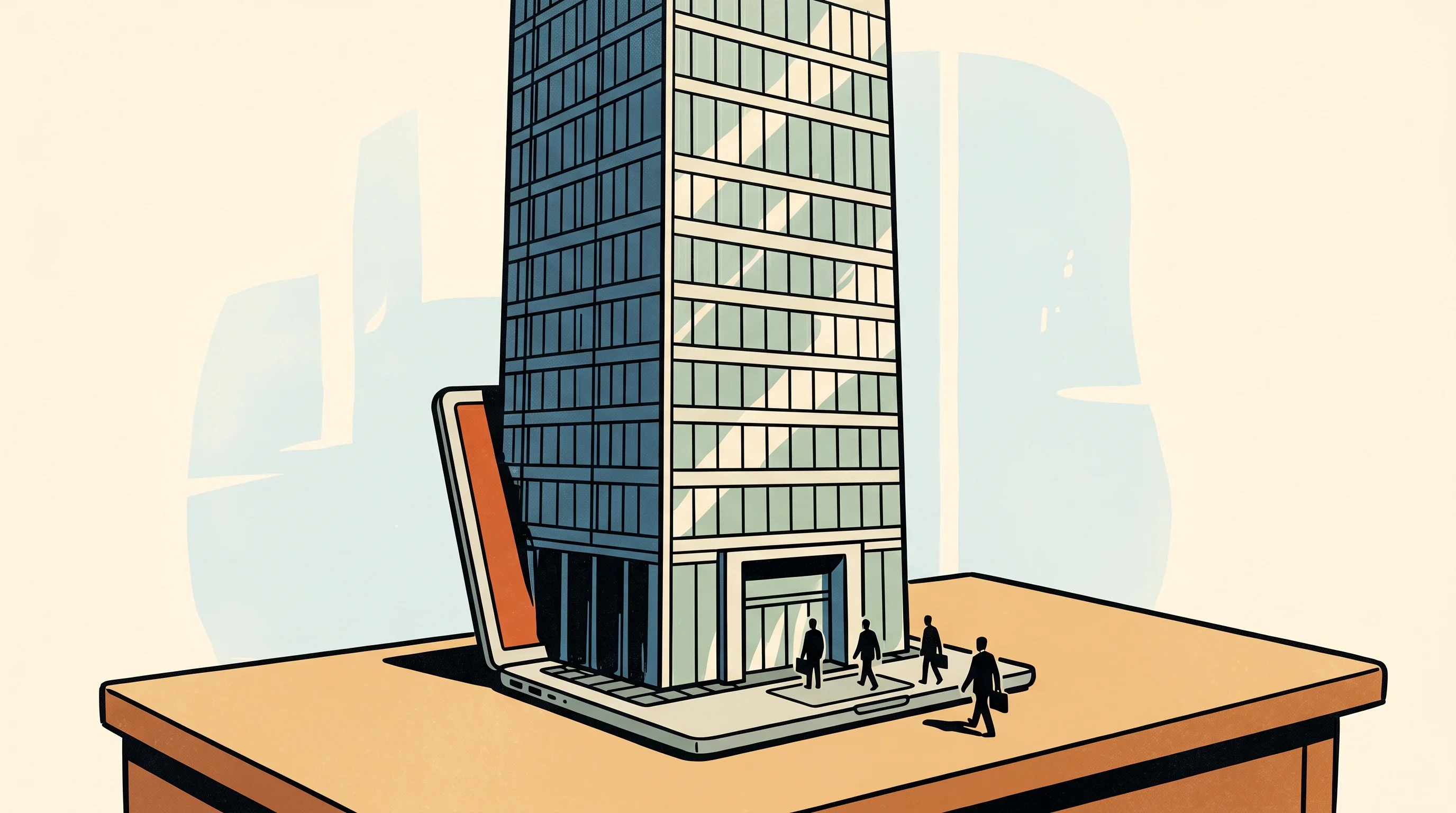
What caught people off guard was how quickly enterprise customers showed up. Lovable started with individual developers and startup founders, the natural early adopters. But by March 2026, companies like Klarna, HubSpot, Uber, and Microsoft were using the platform. Forbes reported in June that enterprise accounts represented roughly $20 million of Lovable's ARR—a small slice of the total, but significant nonetheless. Corporate buyers don't usually move this fast.
The SheBuilds campaign on International Women's Day 2026 offered another data point: 500,000 projects built or updated in a single day. Whether that was genuine grassroots momentum or clever marketing theater is harder to say.
A fundraising blitz
The funding rounds came fast and furious. Lovable raised €6.8 million in a pre-seed from Hummingbird Ventures and byFounders in October 2024, followed by a $15-16 million pre-Series A led by Creandum in February 2025. Then the checks got serious. In July 2025, Accel led a $200 million Series A at a $1.8 billion valuation—just eight months after public launch. By December, CapitalG and Menlo Ventures led a $330 million Series B at $6.6 billion, with NVIDIA's NVentures, Salesforce Ventures, Databricks Ventures, and a roster of enterprise software giants all piling in.
Forbes reported in June 2026 that Lovable was in talks to raise again, this time at roughly $12 billion. The round apparently hadn't closed as of their reporting, but the signal was unmistakable: investors were betting that the trajectory wasn't just smoke and mirrors.
When things broke
Not everything went smoothly, of course. In April 2026, Lovable disclosed a security incident that should worry anyone paying attention. A regression introduced on February 3, 2026 had made chat history and source code for public projects accessible to any authenticated user with a link. The bug sat there for over two months until April 20, 2026, when it was fixed within two hours of discovery. Private projects and Lovable Cloud data weren't affected, according to the company's post-mortem, but still.
The incident was a reminder that scaling at this velocity creates blind spots. Lovable responded with expanded security processes, a beefed-up HackerOne bug bounty program, and a detailed public breakdown. The transparency earned some goodwill—probably more than if they'd stayed quiet—but the episode underscored a fundamental tension: maintaining production-grade infrastructure while adding hundreds of thousands of users every month is hard. Something's going to break eventually.
The efficiency question
Here's what stops people mid-conversation when they hear about Lovable: $400 million ARR with 146 employees. That ratio defies everything we know about SaaS businesses. The company has been hiring—they've opened an office in Boston, with listings in London, New York, and San Francisco—but growth remains weirdly disciplined. Some of that efficiency comes from the product itself. The platform's AI agents handle work that would traditionally require customer success teams or professional services departments.
But the model also raises uncomfortable questions. Can a team this lean actually support enterprise customers at scale? What happens when early adopters hit edge cases that require human intervention, not just algorithmic responses? The efficiency is impressive until it becomes a bottleneck.
What happens next (and who's betting on it)
Lovable's mission framing—"building the last piece of software"—is either audacious or absurd. Maybe both. Osika seems unfazed by the skepticism, which is either confidence or naiveté. The company competes in a crowded market with Cursor, Replit's Agent, Bolt.new, and Vercel's v0, each taking a different angle on AI-assisted development. Differentiation in this space is already getting murky.
The valuation talks at $12 billion suggest that investors, at least, believe Lovable has found something durable. Whether that's the retention metrics, the enterprise traction, or simply the unprecedented revenue velocity is harder to parse from the outside. What's certain is that the company has rewritten assumptions about how fast a developer tool can scale, and with how few people.
Whether that efficiency was a feature of the growth phase or a sustainable competitive advantage? That's the $12 billion question. The next chapter will tell us if Lovable built something that lasts, or just rode a wave that broke at exactly the right moment.


