

The work of bending and tying steel reinforcement bars—rebar, in industry shorthand—has long been one of construction's least forgiving tasks. It's physically demanding, chronically short-staffed, and stubbornly resistant to automation. Which is precisely why a small team of roboticists from ETH Zurich thinks they've found an opening.
MESH, a spin-off from the university's Gramazio Kohler Research group, announced on March 26 it has raised CHF 2.9 million (roughly $3.8 million) in seed funding. The round pulled together an unusual coalition: Sika, the Swiss chemicals giant; ABB Robotics Ventures; Japan's Shimizu Corporation; and a handful of early-stage investors including Apprecia Capital, buildify.earth, and regional bank Aargauische Kantonalbank.
It's the kind of investor roster that reveals more than the headline number. Construction materials, industrial robotics, Japanese mega-contractors—these aren't the usual suspects writing checks to two-year-old startups. Then again, MESH isn't pitching vaporware. The company claims its robotic systems have already processed over one million rebar elements across Swiss job sites, including a high-profile stint fabricating reinforcement cages for the new Gotthard Road Tunnel.
When Academic Research Meets the Factory Floor
Ammar Mirjan and Mattis Koh founded MESH in 2022, though the technology's roots stretch back further. Mirjan's trajectory is telling: an automation apprenticeship at ABB, followed by architecture studies and a PhD focused on multi-robot assembly. That hybrid background—equal parts shop floor and research lab—seems to have shaped the company's pragmatic approach.
Rather than reinventing rebar fabrication from scratch, MESH built software and robotic modules that slot into existing workflows. The platform breaks down into four pieces: PLAN handles production planning and integrates with Building Information Modeling systems. ACTUATE automates the tending of cut-and-bend lines, moving steel at what the company says averages 1,250 kilograms per hour. NODE manages robotic tying and welding. ASSEMBLE handles the final choreography of joining components into finished cages.
The pitch, in essence, is one-click execution—no robot programming required. Whether that holds up under the messy realities of construction sites is another question, though early deployments suggest the system isn't purely theoretical.
Tunnels, Ties, and Traction
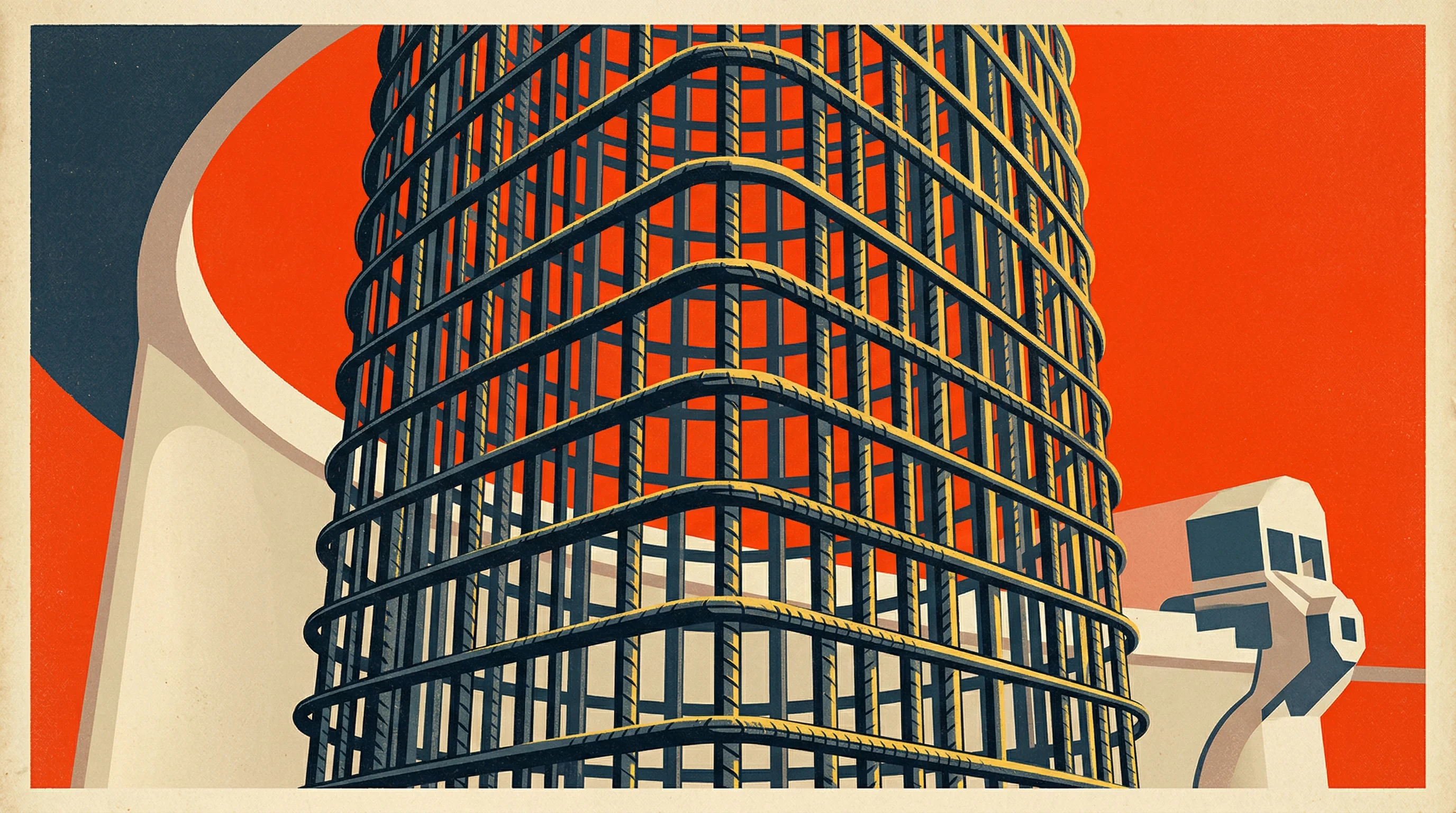
An ETH Zurich feature from last June noted MESH had landed a contract for approximately 10,000 reinforcement cages on the Gotthard project. More recently, the company pointed to SABAG AG, which has been running a MESH Node for nine months—producing thousands of cages and what the company describes as millions of ties for a tunneling job. There's also been a pilot with ERNE AG Holzbau, IAR Group, and ABB Robotics testing on-site welding.
These aren't mega-scale deployments yet. But they're the kind of reference projects that matter when you're trying to convince a notoriously conservative industry to trust robots with mission-critical work.
Sika's involvement carries particular weight. The company framed its investment as advancing digital manufacturing in reinforcement—a pairing of robot-assisted production with its own materials portfolio. ABB Robotics Ventures, for its part, had already been collaborating with MESH in the field before cutting a check. Shimizu Corporation's participation hints at ambitions beyond Europe; the Japanese construction market, with its acute labor shortages and appetite for automation, represents a natural target.
According to S&P Capital IQ data, the round was structured as convertible preferred shares—a standard setup, though one that keeps the company's valuation off the public record for now.
Labor Gaps and Market Momentum
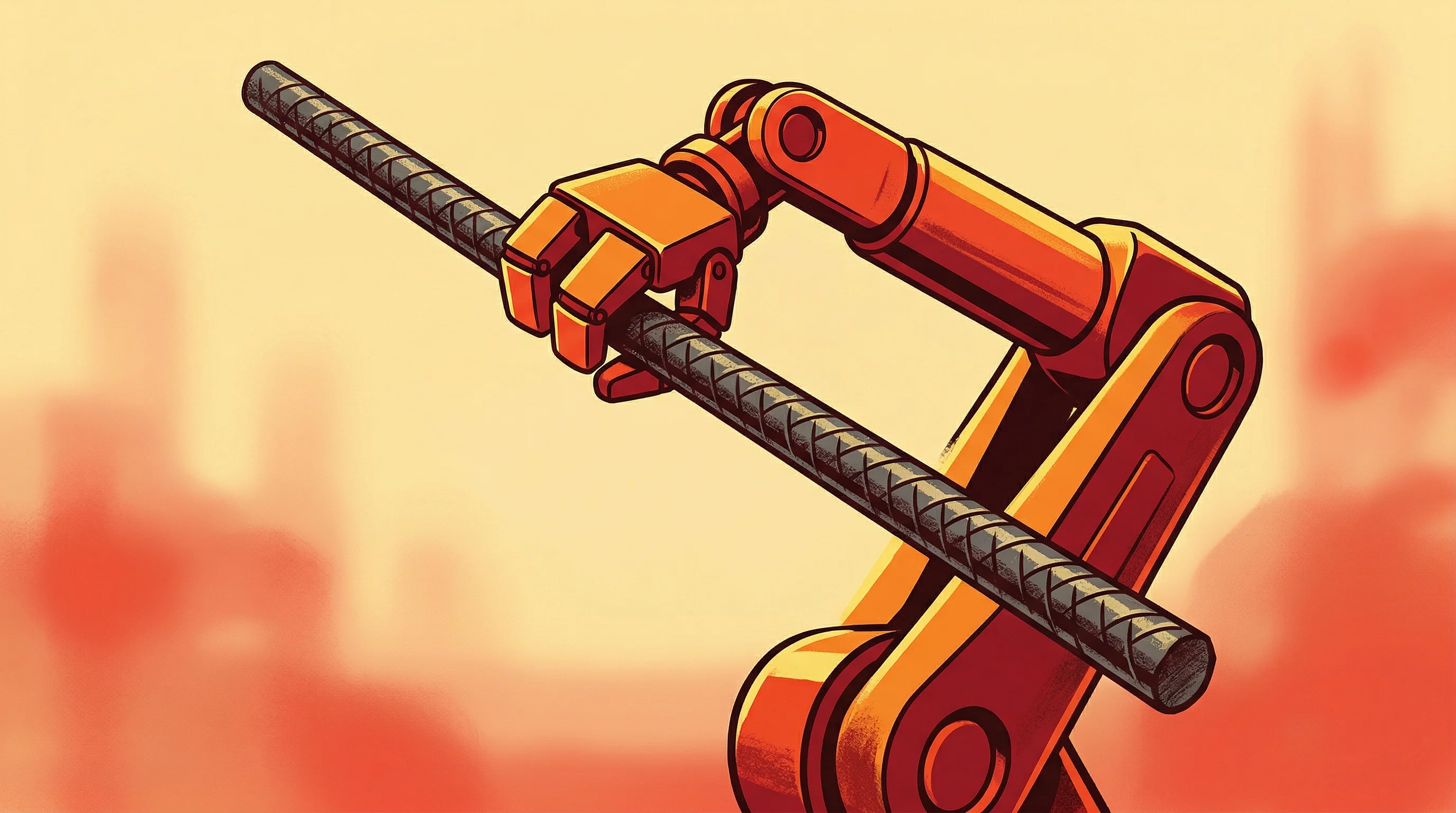
In his statement on the funding, ABB Robotics President Marc Segura hit the familiar themes: labor shortages, safety concerns, productivity bottlenecks. It's boilerplate language, perhaps, but it reflects real pressures. Rebar work is hard to staff, and the demographic trends aren't encouraging.
Apprecia Capital's Emi Naganuma, meanwhile, emphasized the leap from laboratory research to industrial application—a nod to the company's academic origins and the gap many spin-offs struggle to cross. Shimizu's Yoichi Taji referenced support for Asia-Pacific expansion, suggesting the Japanese contractor sees a role beyond passive investor.
MESH says the fresh capital will fund global expansion, team growth, and new partnership models. The company, which remains in the 2–10 employee range as of early 2026, has recently posted openings for a Lead Robotics Engineer, Sales Director, and Technical Project Manager. Small team, big ambitions—a familiar startup posture, though one that seems more credible when your early backers include industry incumbents rather than just venture generalists.
The broader context matters here. Construction robotics attracted $1.36 billion in funding during the first three quarters of 2025, according to a March report from Zacua Ventures—a 125% jump year-over-year and roughly 37% of all construction technology capital in that stretch. The sector, in other words, is having a moment. Whether that momentum sustains itself, or follows the pattern of earlier hype cycles, remains to be seen.
For now, MESH occupies an interesting middle ground: no longer purely academic, not yet a scaled industrial player. The next test will be whether the technology that worked on Swiss tunnels can travel—geographically, and across the messy diversity of construction projects worldwide. The investor lineup suggests some well-resourced players are willing to find out.


