

For eons, ticks have been doing something remarkable at the site of every bite: suppressing your immune system just enough to feed without getting killed. Helminths—parasitic worms—have perfected an even more delicate dance, living inside human hosts for years while keeping inflammation in check. These aren't accidents of nature. They're the result of millions of years of evolutionary R&D, molecular experiments conducted on human biology that, by definition, worked.
Now a three-person startup thinks it can steal that playbook.
Ditto Biosciences, backed by Y Combinator and operating out of San Francisco, launched in 2025 with a premise that sounds almost too obvious once you hear it: Why not mine the proteins these parasites evolved—proteins that already modulate human immune responses—and turn them into drugs? The autoimmune therapeutics market clocked in at $271 billion last year. Current treatments suppress the immune system broadly, often with diminishing returns. What if evolution had already solved the problem more elegantly?
It's an audacious thesis. And in their first seven months, according to materials from Y Combinator's Winter 2026 batch, the team claims to have analyzed more than a million proteins from primate-infecting viruses, ticks, and helminths. They say they've identified thousands with predicted activity against clinically validated human targets. Some early binders, they report, show affinities in the 1-to-2 nanomolar range—tight enough to matter.
The question, of course, is whether any of this translates into actual medicines. Parasite-inspired drug discovery isn't new. Academic labs have been picking apart tick saliva and worm proteins for years. A few candidates have even made it to early trials. But whole-organism helminth therapy—the most direct attempt to harness this biology—crashed and burned in Phase II trials more than a decade ago. Coronado Biosciences' pig whipworm program for Crohn's disease failed spectacularly, undone by high placebo response rates and a fundamental misunderstanding of what made the worms work in the first place.
Ditto's founders believe the difference this time is precision. And maybe, computational speed.
The Team Behind the Bet
The three co-founders bring credentials that span evolutionary biology, CRISPR technology, and computational protein design—a combination rare enough to warrant attention.
Adair Borges, who earned her PhD at UCSF, co-invented anti-CRISPR systems and later served as a Miller Fellow at UC Berkeley. Dennis Sun studied evolutionary and developmental biology at Harvard and Berkeley, then cut his teeth in early-stage biotech operations. Emily C.P. Weiss, the computational biologist leading the parasite-focused platform, has publications in Nature Microbiology and eLife and previous stints at Illumina and DuPont.
They're lean—just the three of them—splitting time between San Francisco and Oakland. Ankit Gupta is listed as their Y Combinator partner. According to F6S, they've raised undisclosed capital from Weiss herself and at least two other backers, though no formal seed or Series A round has been announced. For now, they're operating in stealth mode, disclosing little about specific drug candidates or timelines.
What they have disclosed is scope. More than 98 percent of viral and parasite proteins remain uncharacterized, according to their launch materials. That's the competitive moat they're betting on: a dataset so vast and unexplored that even computational competitors would struggle to catch up quickly.
The Problem They're Chasing
Autoimmune diseases affect somewhere between 15 million and 27 million Americans, depending on which estimate you trust. A Mayo Clinic study published this January in the Journal of Clinical Investigation pegged nationwide prevalence at 4.6 percent, with more than a third of patients battling multiple conditions simultaneously. Women are hit nearly twice as hard as men.
The market is enormous and growing. Global Industry Analysts valued autoimmune therapeutics at $271.1 billion in 2024 and projects that figure will reach $338.7 billion by 2030. The U.S. alone accounts for roughly $72.8 billion. Yet for all that commercial firepower, most of these diseases remain chronic and debilitating. The National Institute of Allergy and Infectious Diseases counts 80 to 150 distinct autoimmune conditions, the vast majority lacking anything resembling a cure.
Existing therapies fall into two broad buckets. First, biologics like TNF inhibitors and IL-17 blockers—drugs that dial down inflammation but also suppress the immune system indiscriminately, leaving patients vulnerable to infections. Then there are the newer "reset" therapies: CAR-T cells and engineered regulatory T cells designed to reboot the immune system entirely. Both categories have problems.
Biologics face pricing pressure. Medicare's drug negotiation program, which kicked in January 2026, set "Maximum Fair Prices" for Enbrel and Stelara—two blockbuster autoimmune drugs. Biosimilars have stormed the market, capturing 20 to 25 percent share from adalimumab by late 2024 and hammering AbbVie's Humira revenues. Formularies have shifted aggressively toward lower-cost alternatives.
Meanwhile, CAR-T therapies are showing promise in refractory lupus and stiff person syndrome, but they come with manufacturing headaches, costs that run into the hundreds of thousands per patient, and logistical complexity that makes broad deployment a challenge. Engineered Tregs offer specificity but require genetic engineering at scale. Antigen-specific tolerance platforms are elegant in theory, less consistent in practice.
Into this landscape walks Ditto, proposing something different: proteins refined by evolution, optimized by computation, small enough to manufacture cheaply.
Evolution's Laboratory, Decoded

Parasites don't want to kill their hosts. Dead hosts are bad for business. So over evolutionary timescales, they developed molecular countermeasures—proteins that dampen immune responses with surgical precision.
Take evasins, a family of chemokine-binding proteins found in tick saliva. When a tick bites, these molecules neutralize multiple chemokines at once, blocking the recruitment of inflammatory cells that would otherwise swarm the bite site and dislodge the parasite. Academic work published in Accounts of Chemical Research in 2026 described multi-target evasins engineered with broad selectivity across CXC and CC chemokine families. Oxford University's "Bug-to-Drug" platform has identified 30 to 40 distinct evasins using yeast display and recently secured £2 million to test evasin-derived peptides in type 1 diabetes models.
Helminths offer their own pharmacopeia. ES-62, a glycoprotein secreted by the filarial nematode Acanthocheilonema viteae, suppresses Th17 and IL-17 signaling networks—the same pathways implicated in rheumatoid arthritis and inflammatory bowel disease. In mouse models of collagen-induced arthritis and chronic asthma, ES-62 showed real efficacy. Researchers later synthesized small-molecule analogs that retained disease-modifying effects without the worm.
Other helminth proteins mimic human TGF-beta, inducing regulatory T cells or antagonizing inflammatory signaling in tissue-specific ways. Heligmosomoides polygyrus, a gut nematode, produces TGF-beta-like molecules that reshape the host's immune environment to tolerate chronic infection.
Viruses contribute, too. Epstein-Barr virus, cytomegalovirus, and parapoxviruses all encode IL-10 homologs that suppress immunity through molecular mimicry. A 2025 Biochemical Journal review highlighted these viral scaffolds as natural templates for immunomodulators—though the authors also flagged inherent safety concerns given their origin in human pathogens.
Academic reviews now routinely describe parasites as "treasure boxes" of drug leads. The mechanisms aren't fully understood—parasitology is still revealing surprises—but the breadth of validated biology is striking. These are proteins that evolved to hit human targets with exquisite specificity, refined over millions of generations. As one researcher put it in a 2024 paper: parasites have been running drug discovery experiments on us for longer than pharmaceutical companies have existed.
From Worms to Drugs: A Rocky History
The idea of harnessing parasites for therapy isn't new, and its track record is... mixed.
Whole-organism helminth therapy had a moment more than a decade ago. Trichuris suis ova—eggs of the pig whipworm—showed early promise in small trials for Crohn's disease and ulcerative colitis. The theory was appealingly simple: reintroduce controlled parasitic infections to "re-educate" the immune system, restoring the balance that modern hygiene disrupted.
Coronado Biosciences ran with it. The company advanced TSO into large Phase II programs: TRUST-I in the U.S. in 2013 and a European randomized trial that ran from 2010 to 2014. Both flopped. Neither study met its primary endpoints. Placebo response rates were unexpectedly high, and the treatment effect—if it existed—was inconsistent and clinically meaningless. Coronado discontinued the program.
The lesson, perhaps, was that whole organisms are too messy. Dosing varied wildly. Immune responses differed patient to patient. Timing mattered in ways no one fully understood. The promise wasn't in the worms themselves—it was in the specific proteins they secreted, the molecular machinery doing the actual work.
That's the path academic labs have pursued since. The ES-62 program produced drug-like synthetic analogs now in preclinical testing. Oxford's evasin work has progressed from basic discovery to "two-warhead" evasins—engineered molecules that hit multiple chemokines simultaneously—and now toward peptide-based candidates designed to overcome the immunogenicity, delivery challenges, and cost-of-goods hurdles inherent in full-length proteins. In 2024, Oxford received funding to test evasin-inspired peptides in models of myocarditis, myocardial infarction, and type 1 diabetes.
Even venom-derived scaffolds have reached clinical proof-of-concept. Dalazatide, a sea-anemone peptide that blocks Kv1.3 channels, demonstrated efficacy in psoriasis trials. The precedent exists: animal-origin scaffolds can become real drugs. But the path is long, expensive, and littered with failures.
Ditto's Computational Gambit
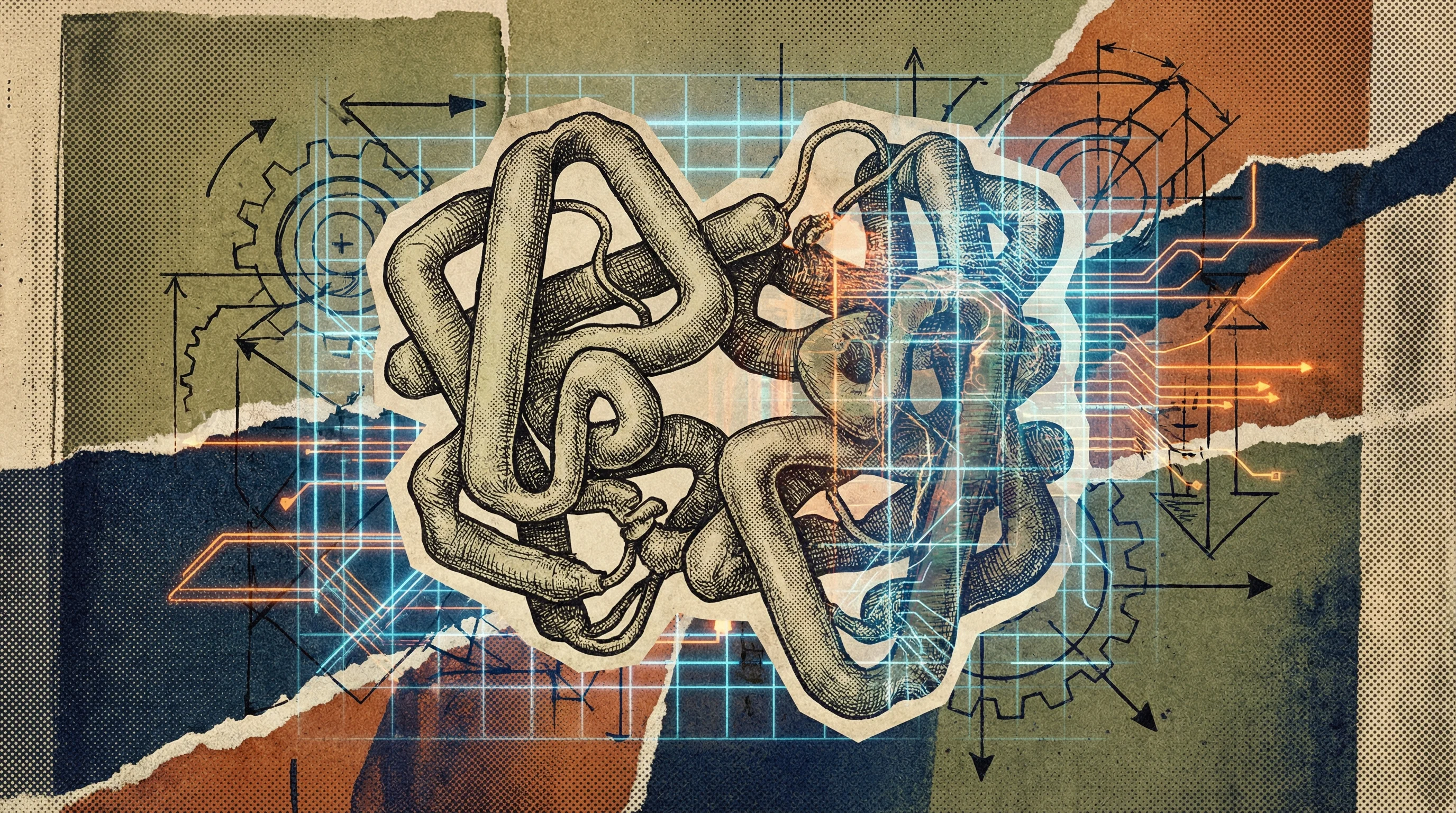
Ditto positions itself at the intersection of evolutionary biology, structural AI, and immunogenicity de-risking. The pitch is that they start with proteins evolution has already validated—molecules refined by host-parasite coevolution—then use computational tools to identify, prioritize, and engineer them into therapeutics.
The platform layers large-scale proteome mining with AlphaFold-era structure prediction and generative protein design. AlphaFold 3, released in 2024, enabled structure prediction and interaction modeling across proteins, DNA, RNA, and small molecules, compressing discovery timelines that once took years into weeks. Ditto is using that foundation to hunt for "structural mimics"—parasite proteins that resemble human immune regulators—an approach validated in work from Arcadia Science and other computational biology groups.
Beyond the million-plus proteins analyzed, Ditto is building what it calls a tissue biobank. The goal: map real-world immune memory to parasite proteins across human populations. If you've been exposed to a particular helminth or tick-borne pathogen, your immune system may have formed memory responses against its proteins. Those responses could neutralize a drug candidate before it ever has a chance to work. By identifying which parasite proteins humans have already "seen," Ditto hopes to flag immunogenic liabilities early—before sinking resources into leads that will trigger neutralizing antibodies or T-cell responses.
It's a smart strategy, at least in theory. Immunogenicity remains the Achilles' heel of non-human protein therapeutics. FDA guidance dating to 2014 emphasizes risk-based immunogenicity assessment for any therapeutic protein product, and European regulators follow similar principles. Predicting immunogenicity computationally is still more art than science, but mapping real-world exposure could offer a meaningful edge.
Ditto hasn't disclosed which targets or indications it's prioritizing first. Its website lists rheumatoid arthritis, inflammatory bowel disease, psoriasis, lupus, multiple sclerosis, and type 1 diabetes as areas of interest—essentially, the full roster of high-prevalence autoimmune diseases. That's either strategic flexibility or a sign they're still figuring out where to place their first bet.
A Crowded, Fast-Moving Field
Ditto enters an autoimmune landscape more competitive than at any point in recent memory. The past two years have seen an explosion of interest in immune "reset" therapies.
Anti-CD19 CAR-T, originally developed for blood cancers, has achieved drug-free remissions in refractory lupus patients in academic case series. Kyverna Therapeutics is advancing KYV-101 toward a biologics license application in stiff person syndrome in the first half of 2026 and into Phase 3 for myasthenia gravis. The company presented updated lupus nephritis data at the American College of Rheumatology meeting in 2024, and results were encouraging enough to turn heads. CAR-T platforms are expanding into systemic sclerosis and myositis.
Engineered Treg therapies represent another wave. Sonoma Biotherapeutics received a $45 million milestone payment from Regeneron in 2024 and is scaling manufacturing for inflammatory bowel disease programs. Quell Therapeutics is advancing QEL-005 for rheumatoid arthritis and systemic sclerosis; AstraZeneca optioned a Quell IBD candidate in 2025. GentiBio launched its POLARIS trial of engineered Tregs in type 1 diabetes last year.
Antigen-specific tolerance platforms offer yet another angle. Anokion reported positive symptom data in January 2025 from a Phase 2 gluten-challenge celiac study of KAN-101, its liver-targeted tolerance therapy. COUR Pharmaceuticals, partnered with Takeda, is testing nanoparticle-based tolerance induction (TAK-101) in celiac disease and expanding into primary biliary cholangitis, type 1 diabetes, and myasthenia gravis.
Even IL-2 pathway agonists are showing promise. Rezpegaldesleukin, a PEGylated IL-2 mutein designed to preferentially activate regulatory T cells, hit Phase 2b endpoints in atopic dermatitis with durable biomarker effects—evidence that "tolerance-skewing" biologics can work outside the complexity of cell therapy.
None of these modalities compete directly with parasite-derived scaffolds. But they compete for patient populations, investment dollars, clinical trial sites, and mindshare among rheumatologists and gastroenterologists who decide which trials to enroll patients in. The bar for differentiation is high. CAR-T offers the tantalizing possibility of durable remissions but comes with manufacturing complexity, eye-watering costs, and logistics that make broad deployment a nightmare. Tregs promise specificity but require genetic engineering at scale and GMP-compliant production facilities. Antigen-specific tolerance is elegant on paper, less consistent in humans.
Direct competitors to Ditto's approach—AI-driven mining of parasite proteomes for immunomodulatory scaffolds—are harder to identify. Most parasite-inspired programs remain in academic labs or translational consortia like Oxford's evasin platform. That suggests Ditto is operating in genuine white space. But it also means the company will have to prove the entire thesis from scratch, with no blueprint to follow and no comps for investors to point to.
The Obstacles No One Talks About
Translating parasite proteins into drugs is harder than it sounds.
The Oxford group working on evasins has been refreshingly candid about the obstacles: immunogenicity, delivery routes, cost of goods for full-length proteins. Those barriers led them to pivot toward peptide mimetics—shorter, cheaper, less immunogenic, more amenable to standard pharmaceutical manufacturing. Even then, they've been at it for years and haven't yet moved a candidate into formal clinical trials.
Immunogenicity looms largest. Parasite proteins evolved in a foreign organism. Even if they bind human targets with nanomolar affinity, the human immune system may recognize them as non-self and mount neutralizing responses—antibodies that clear the drug from circulation or T cells that attack tissues where the drug accumulates. FDA guidance on immunogenicity assessment for therapeutic proteins emphasizes assay development, risk stratification, and post-marketing surveillance. The bar is high, and for good reason. Immunogenic drugs fail in the clinic all the time.
Ditto's tissue biobank is one attempt to address this prospectively. By mapping which parasite proteins humans have encountered naturally—and which have elicited immune memory—the company hopes to de-risk its pipeline before burning capital on optimization. Computational tools have advanced as well. In silico epitope prediction and MHC-associated peptide proteomics (MAPPs) can quantify which protein regions are likely to be presented on major histocompatibility complexes, flagging immunogenic hot spots for engineering out before synthesis.
Generative protein design tools—RFDiffusion, flow-matching models like AlphaFlow and ESMFlow—offer pathways to "humanize" parasite scaffolds. These methods, described in Nature and other journals in 2024 and 2025, enable the design of stable binders and multifunctional miniproteins. If Ditto can marry generative design with parasite-inspired starting points, it could theoretically produce molecules that retain activity while shedding immunogenic liabilities.
But theory is one thing. Execution is another.
The cautionary tale of Coronado Biosciences' helminth therapy hangs over this entire field. That failure highlighted how much can go wrong when biology is too complex or poorly understood. Ditto's bet is that precision matters—that a single, well-characterized protein optimized computationally is fundamentally different from dosing patients with live worm eggs. Maybe. Or maybe the immune system will recognize these molecules as foreign no matter how clever the engineering.
Market Forces and the Pricing Squeeze
Autoimmune drug development is happening against a backdrop of pricing pressure and biosimilar competition that would have been unthinkable a decade ago.
The Inflation Reduction Act's drug price negotiation program took effect in 2026, setting maximum fair prices for the first ten negotiated drugs—including Enbrel and Stelara, two cornerstones of autoimmune therapy. Those negotiated prices sent a clear signal: payers will no longer tolerate premium pricing for established biologics without differentiation that matters clinically, not just commercially.
Biosimilars have accelerated the squeeze. CVS Caremark, Express Scripts, and OptumRx shifted formularies in 2024 to favor adalimumab biosimilars, boosting market share from low single digits to 20–25 percent or more by late last year. AbbVie has acknowledged steep Humira revenue declines in earnings calls and pivoted aggressively to newer assets like Skyrizi and Rinvoq.
For Ditto, this creates both opportunity and peril. On one hand, a novel mechanism with superior efficacy or durability could justify premium pricing, especially if it delivers functional cures or disease modification rather than symptom management. On the other hand, evidentiary standards are rising. Payers want head-to-head comparisons, real-world evidence, long-term safety data. A three-person startup will need to marshal significant capital and strategic partnerships to generate that evidence. And even then, there are no guarantees.
Cost of goods matters, too. If Ditto can engineer small, stable miniproteins or peptide analogs rather than large, complex biologics, manufacturing costs could be orders of magnitude lower than CAR-T or Treg therapies. That would improve unit economics and potentially make therapies accessible in markets outside the U.S. and Europe, where biologics pricing is often unsustainable. But achieving that outcome depends on retaining activity and specificity in smaller scaffolds—something academic groups are still struggling to demonstrate consistently.
What Happens Next
The next 18 to 24 months will tell the story. Can Ditto move from computational predictions to validated binders in disease models? Can its tissue biobank meaningfully reduce immunogenicity risk, or is that a clever hypothesis that doesn't hold up


