

The agricultural technology world has no shortage of companies promising to revolutionize how we measure carbon in soil. Most struggle to get past the pilot stage. So when Miraterra Technologies quietly closed a C$16 million seed extension in October 2025—oversubscribed beyond its C$13.9 million target—investors were betting on something more concrete than promises.
What they're backing, the Vancouver-based company disclosed March 25, is a platform that threads multi-laser spectroscopy through existing soil testing labs, a strategy designed to sidestep the scaling challenges that have plagued competitors. The round, led by At One Ventures with first-time participation from Farm Credit Canada, brings Miraterra's total capital raised to nearly C$40 million as it pushes beyond soil analysis into plant and food system measurement.
That's an ambitious pivot for a startup that only spun out from agtech parent Terramera in January 2023. But Miraterra's CEO Nate Kelly argues the company has an advantage competitors lack: infrastructure. In July 2025, Miraterra acquired the assets of Trace Genomics—including its DNA-based soil testing products, intellectual property, and crucially, an analytical laboratory in Ames, Iowa. Trace had raised US$10.5 million in a Series B just 18 months earlier.
The deal wasn't just about technology. It gave Miraterra a customer base and U.S. operational footprint overnight.
Spectroscopy Meets Genomics
Miraterra's core technology relies on Raman spectroscopy—a method that uses lasers to identify molecular compounds in soil samples. The company's proprietary Digitizer instrument can detect materials at concentrations below 10 parts per million without destroying the sample, a meaningful advantage when labs are processing thousands of tests weekly. Layer in machine learning, satellite remote sensing, and LiDAR data, and you get what At One Ventures partner Tom Chi describes as "mineralogical, hydrological, and biological measurement" in one system.
Whether that integration actually works at scale remains to be seen. A December 2025 paper in Analytical Chemistry validated Miraterra's uncertainty estimation methods for soil organic carbon using dual near-infrared lasers—but peer-reviewed accuracy is one thing, commercial viability another.
Kelly frames the technology as turning "soil's biological and chemical intelligence into actionable insight," though he's careful to acknowledge the company is still building out its AI and data science capabilities. That's part of what the new funding will support, alongside expanding into plant and food measurement—a significant leap from soil diagnostics.
The Lab Distribution Bet
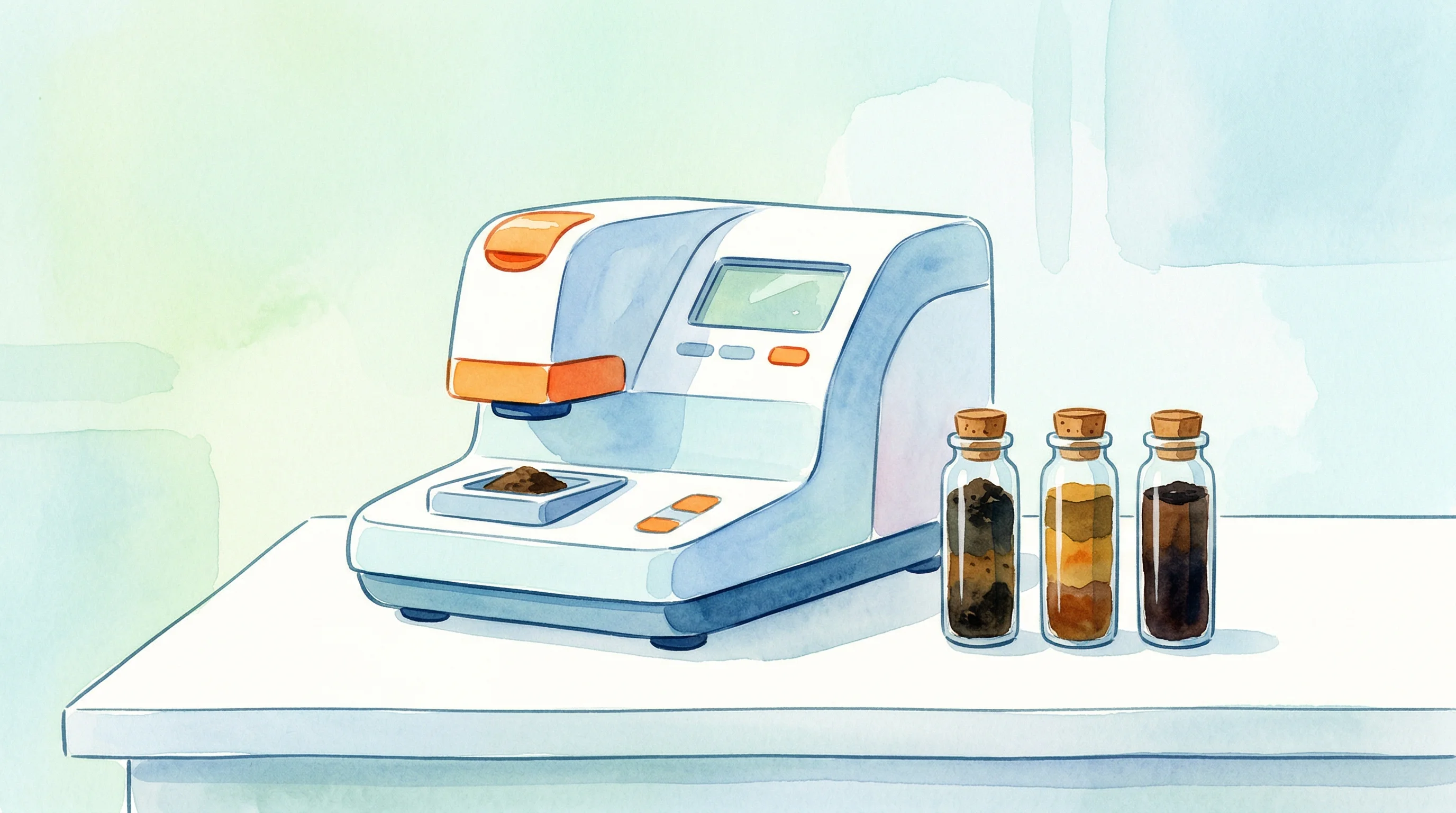
Here's where Miraterra diverges from the typical agtech playbook. Rather than selling directly to farmers, the company embeds its Digitizer instruments in soil testing labs that already serve agricultural customers. It's a go-to-market strategy that trades rapid farmer adoption for embedded presence in established workflows.
The logic is straightforward enough: labs process samples at volume, have existing customer relationships, and understand the economics of testing. If Miraterra can demonstrate superior accuracy or faster turnaround, labs adopt the technology. Farmers benefit without changing their purchasing behavior.
That approach also positions Miraterra to service the Trace Genomics customer base it acquired—now offering TraceCOMPLETE, TracePHOS, and TraceCARBON products while integrating them with its spectroscopy platform. The company has grown to 50 employees as of March, Kelly told BetaKit, a modest headcount for a startup closing in on C$40 million in funding.
Crowded Field, High Stakes

Miraterra enters a market where measurement credibility is both critical and contested. Carbon markets demand robust verification. Regenerative agriculture requires proof that practice changes actually sequester carbon. Startups promising better measurement have proliferated—and so have questions about whether their methods hold up under scrutiny.
EarthOptics raised US$24 million in November 2024. Yard Stick secured a US$10.6 million Series A in August 2023. Perennial earned Verra approval for its soil carbon verification tool last August, a meaningful validation. Each takes a different technical approach; each faces the same fundamental challenge of proving their model works across millions of acres at reasonable cost.
Miraterra's answer—threading hardware through labs already processing samples—sidesteps some complexity but introduces new dependencies. The company must convince labs to adopt its technology, maintain accuracy across diverse soil types, and demonstrate that combining spectroscopy with genomics delivers insights neither method provides alone.
There's also the dual-use angle. In February, Miraterra highlighted its inclusion in Canada's Defense Innovation Scheme, positioning soil measurement technology as relevant to national security. It's a curious tangent for an agtech startup, perhaps signaling interest in government contracts or simply hedging commercial risk.
Farm Credit Canada's participation—both equity and an undisclosed amount of debt—suggests institutional confidence in Miraterra's approach. So does continued backing from existing investors S2G Investments, Sitka Foundation, and iSelect. But confidence and market validation aren't the same thing.
Kelly insists comprehensive, AI-driven soil analysis will become "table stakes" as carbon markets mature. Maybe. The open question is whether Raman spectroscopy and genomics can deliver that analysis cost-effectively at the scale agriculture demands—and whether Miraterra's lab-centric distribution model proves durable or just delays the inevitable challenge of reaching farmers directly.
For now, the company has capital, infrastructure, and a customer base to test its thesis. The soil measurement market will be watching.


