

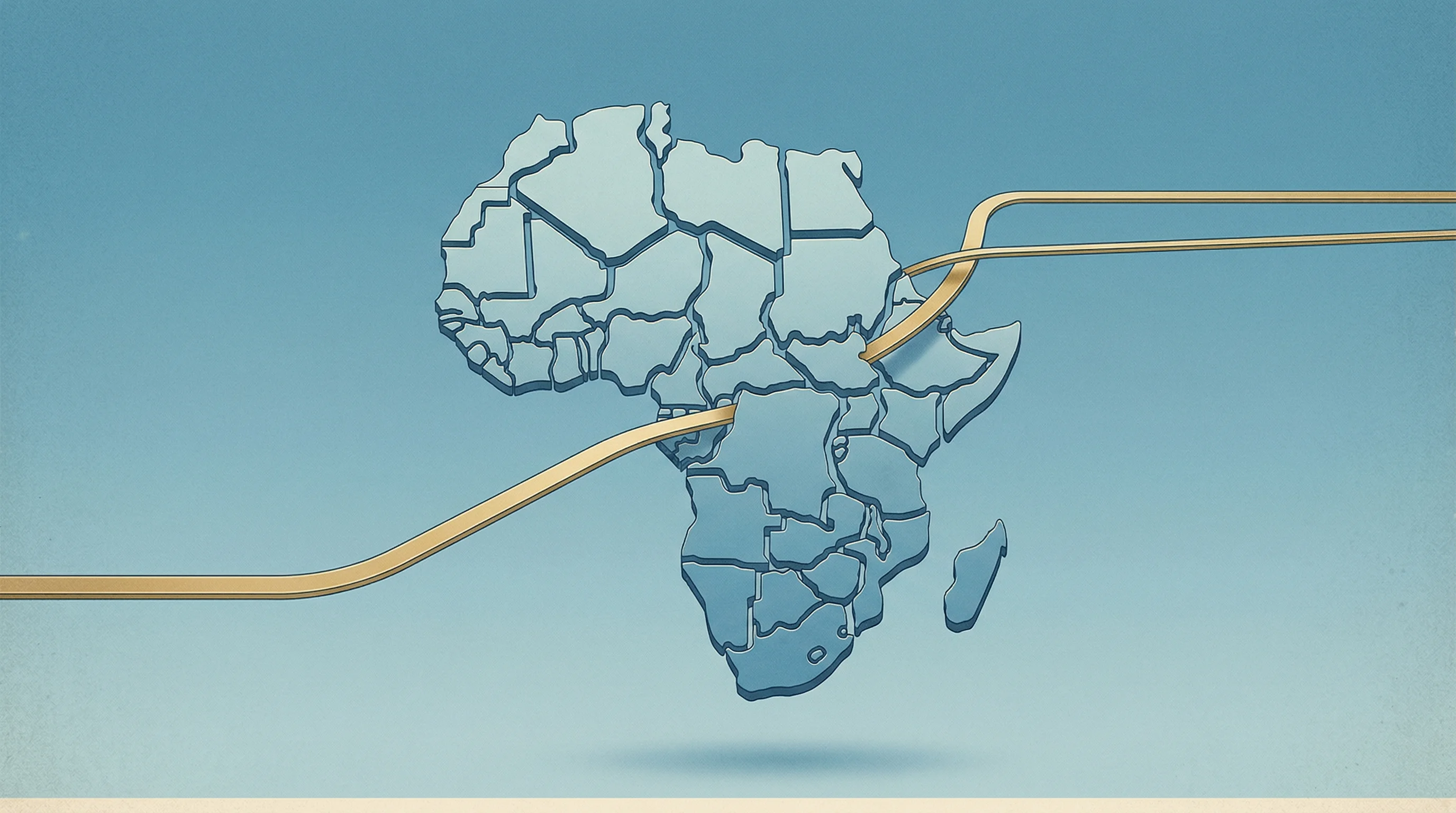
Anyone who's tried to sell online across African markets knows the drill. You need one payment processor for Nigeria. Another for Kenya. Maybe three more to cover South Africa's card schemes, mobile wallets, and whatever else your customers happen to be carrying. Each comes with its own dashboard, its own reconciliation headaches, its own reasons for declining a perfectly good transaction.
NjiaPay, a South African startup that spun out of telecom platform Talk360 just over a year ago, is betting that merchants have had enough. On March 9, the company announced a $2.1 million seed round led by Newion, a European investor focused on B2B software. The funding arrives roughly fourteen months after NjiaPay raised a $1 million pre-seed round—oversubscribed, led by HAVAÍC—back in January 2026.
The pitch is straightforward: one API that sits atop a merchant's entire payment stack, routing transactions in real time and consolidating what might otherwise be six separate integrations into a single view. Call it payment orchestration, if you need the industry term. CEO Jonatan Allback prefers "control tower."
The Talk360 Case Study That Started It All
There's a reason NjiaPay exists in the first place, and it's rooted in Talk360's own frustrations. The telecom platform—NjiaPay's parent company until the December 2024 spinout—had been managing six different payment service providers, each with its own quirks and failure modes. After consolidating those integrations through what would become NjiaPay's orchestration layer, Talk360 saw checkout conversion jump 25% in key markets.
That number now anchors every pitch NjiaPay makes to subscription businesses. And there are plenty of them: the company claims one in five subscription transactions fail because of expired or stolen cards, a form of involuntary churn that quietly bleeds revenue from recurring-payment models. For merchants navigating South Africa's mix of card schemes and mobile wallets—or selling across borders—that kind of friction adds up.
NjiaPay's platform offers intelligent routing, redundancy across providers, and fraud prevention through Dynamic 3DS. It's integrated with Shopify and WooCommerce, and supports branded checkouts plus pay-by-link functionality via WhatsApp, email, or QR codes. Clients include Anytime Fitness South Africa, Melon Mobile, and Ziwani, though Talk360 remains the most compelling proof point.
Adyen Experience Meets African Fragmentation
Allback brings a particular pedigree to the problem. He previously served as VP of Strategic Projects at Adyen, one of Europe's largest payment processors, before turning his attention to Africa's fragmented market. His co-founder, Roderick Simons, comes from Yolt—ING's smart money app—where he was CTO. Hans Osnabrugge chairs the board. Dean Hiine runs African operations as managing director.
In October 2025, the company added Mike McLaren as COO, a hire that signaled expansion ambitions. McLaren previously served as general counsel at Stitch, another payments player in the region, and his role centers on supporting NjiaPay's continental growth.
Mathijs de Wit, managing partner at Newion, pointed to the market fragmentation NjiaPay is addressing—a reality where merchants juggle multiple PSPs not by choice but by necessity. "That's the opening," he said, though he didn't elaborate on Newion's thesis beyond the obvious: orchestration layers make sense when integration overhead becomes a competitive disadvantage.
What Comes Next

The seed capital will fund engineering and commercial hires, deepen PSP integrations, and accelerate growth across the continent. A near-term priority: launching Card Account Updater in South Africa, a feature that automatically refreshes stored card credentials to cut down on involuntary subscription churn. It's the kind of unsexy infrastructure work that merchants desperately need but rarely think about until it's missing.
NjiaPay operates from Cape Town, Johannesburg, and Amsterdam. LinkedIn suggests a team of around 22 employees, though headcount at early-stage companies tends to be a moving target. The company's product pages carry PCI and Proudly SA certifications—important signals in a market where trust and regulatory alignment aren't negotiable.
The pre-seed round, which closed in January 2026, included Renew Capital and angels tied to Anyfin, Banxware, and Maxidrive. NjiaPay didn't disclose other participants in the seed round beyond lead investor Newion, a common practice at this stage. Whether the company can turn its Talk360 case study into a repeatable playbook for the broader African market remains the open question. For now, the bet is that enough merchants are tired of the chaos to make orchestration worth the switch.


