

The irony likely hasn't escaped Brendan Iribe. Five years after walking away from Meta in what was described at the time as a disagreement over the company's VR strategy, the Oculus co-founder is gearing up to compete directly with his former employer. This time, the battlefield is conversational AI and smart glasses.
Iribe's new venture, Sesame, pulled in $250 million in Series B funding on October 21, money that arrived just as the startup opened an early beta of its iOS voice assistant and began serious work on AI-powered eyewear. Sequoia Capital and Spark Capital co-led the round, which pushes Sesame's total haul to roughly $297.5 million—a remarkable sum for a company that didn't even debut its first public demo until late February.
The February 2025 Series A, a $47.5 million round led by Andreessen Horowitz with participation from Spark and Matrix Partners, now looks almost quaint by comparison.
A Band Gets Back Together
If you spent time around Oculus in its heyday, Sesame's org chart might trigger déjà vu.
Iribe, who ran Oculus before Facebook's acquisition and his 2018 departure, brought along Ankit Kumar as co-founder. Kumar previously built Ubiquity6, an AR startup that Discord snapped up in 2021. But the reunion doesn't stop there. Nate Mitchell, another Oculus co-founder, joined mid-2025 as Chief Product Officer. Hans Hartmann—COO at both Oculus and Fitbit in earlier chapters of his career—holds the same title at Sesame. Ryan Brown, who spent years leading engineering teams at Oculus and later Meta's Reality Labs, came aboard as a founding engineer. Angela Gayles, a veteran of multiple Meta projects, rounds out the leadership roster.
It's a concentration of talent that raises an obvious question: What did these executives see that made them willing to bet their next act on voice AI and wearables, categories where plenty of well-funded startups have already stumbled?
The Voice in the Machine
Sesame's pitch centers on CSM-1B, a proprietary 1-billion-parameter speech generation model that the company open-sourced under Apache 2.0 in March 2025. The decision to release the model openly was unexpected—startups rarely give away core technology—but it generated goodwill among developers and researchers.
The assistants built on that foundation, christened "Maya" and "Miles" in early demos, went unexpectedly viral. The Verge called the experience "genuinely fun," highlighting the natural cadence of the voices and a feature that lets users interrupt mid-sentence without breaking the flow. That last bit matters more than it sounds. Most voice assistants treat interruptions like conversational land mines.
Sequoia's Roelof Botha and David Cahn, in a thesis published alongside their investment, pointed to engagement numbers from those early tests: 1 million users racked up 5 million minutes of conversation in the opening weeks. For context, that's an average of five minutes per user—a solid retention signal in a space where novelty often wears off fast.
The iOS beta that opened with the funding announcement adds what Sesame describes as the ability to "search, text and think." Access remains by invite, and the company has asked testers to keep their experiences confidential. (A familiar tactic, though enforcing NDAs on consumer beta testers is notoriously difficult.)
Eyewear Without a Timeline
Then there's the hardware.
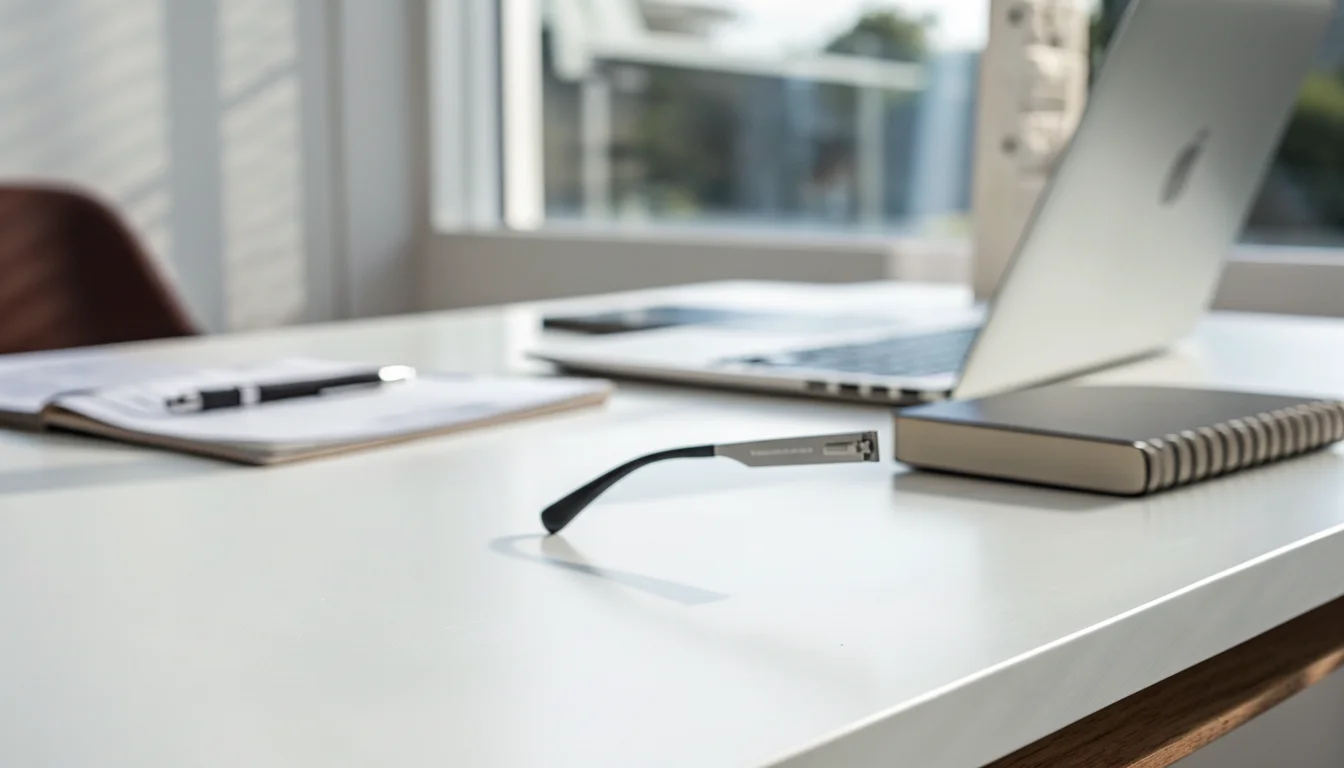
Sesame is working on what it calls "fashion-forward" smart glasses equipped with high-quality audio and, presumably, sensors that let the AI assistant "observe the world alongside you." The phrasing is careful, avoiding specifics about cameras, microphones, or exactly what kind of "observation" users should expect.
Launch date? Unclear. Sequoia's announcement offered a diplomatic acknowledgment that "hardware takes time," which in Silicon Valley parlance usually means "we have no idea when this ships."
The glasses put Sesame on a collision course with Meta's Ray-Ban lineup, including the $799 Ray-Ban Display model—complete with built-in screen and neural wristband—that Meta showed off at its September 2025 Connect conference. Meta has spent years and billions refining its hardware supply chain and retail distribution. Sesame will need to build those capabilities more or less from scratch.
The Money and What Comes Next

Sesame hasn't disclosed its Series B valuation, though Silverwood Partners, an industry newsletter with decent sourcing, floated a pre-money figure around $598 million. The company hasn't confirmed that number, and valuations in private rounds are often more art than science.
What's clear: Sesame is hiring aggressively. The company operates out of San Francisco, Bellevue, and New York, with open roles spanning machine learning, embedded systems, computer vision, iOS development, and mechanical design. Salary bands on public job boards range from $175,000 to $320,000—competitive but not outlandish for the Bay Area's current market.
Whether Sesame can translate early buzz into a sustainable business remains an open question. Voice assistants have frustrated consumers and disappointed investors for a decade. Smart glasses have largely flopped outside niche applications. And competing with Meta—whose Reality Labs division burned through $16 billion last year alone—requires either deep conviction or a short memory.
Iribe and his team presumably have both.


