

The irony wasn't lost on anyone paying attention.
A company founded in 2015 on the principle that artificial general intelligence should benefit all of humanity—not governments, not militaries, but everyone—has now embedded its technology into the Pentagon's most closely guarded systems. The agreement, finalized February 28, brings OpenAI's models onto classified military networks in what may be the most consequential marriage yet between commercial AI and national security apparatus.
It happened fast, perhaps faster than even OpenAI anticipated. Just weeks earlier, on February 9, the company had announced something that seemed almost routine: ChatGPT would integrate into GenAI.mil, the Defense Department's enterprise platform for unclassified work. Another government contract. Another customer logo for the slide deck.
But the classified deployment? That's a different animal altogether.
Tearing Down the Walls They Built
Getting here required OpenAI to dismantle principles it had enshrined in its own policies. In January 2024, the company quietly scrubbed a blanket prohibition on military applications from its usage rules. Gone was the simple, categorical ban. In its place: a more textured framework that permits national security use cases while supposedly maintaining hard boundaries against weapons development, autonomous violence, and surveillance overreach.
Anna Makanju, OpenAI's Vice President of Global Affairs, defended the pivot during the World Economic Forum that month. The Pentagon, she argued, needed AI for legitimate purposes—cybersecurity, administrative drudgery, research. Fair enough. The company's usage policies, refined through October 2025, still forbid weapons development, terrorist support, malicious cyber operations, and the like. They just no longer slam the door on defense agencies entirely.
By June 2025, OpenAI had formalized the approach under the banner "OpenAI for Government." The program consolidated earlier federal partnerships—U.S. National Labs, Air Force Research Laboratory, NASA, NIH, Treasury—and introduced ChatGPT Gov. Buried in the announcement: a pilot with the Defense Department's Chief Digital and Artificial Intelligence Office carrying a ceiling of $200 million. The mission? Frontier AI for administrative tasks and cyber defense.
Administrative tasks. The phrase does heavy lifting.
GenAI.mil's Meteoric Rise
GenAI.mil launched as the Defense Department's bid to democratize AI across its sprawling bureaucracy. The platform hit one million users within two months, a milestone the department trumpeted February 9. Google Cloud's Gemini for Government went live first in December 2025, followed by Elon Musk's xAI on December 22.
OpenAI's integration, announced alongside the million-user mark, promises access for all three million department personnel. The ChatGPT variant approved for GenAI.mil operates on unclassified systems with what the company describes as explicit data isolation—inputs remain inside government infrastructure and don't feed OpenAI's commercial training pipelines.
That architecture became feasible through Microsoft's Azure backbone. In April 2025, Microsoft announced Azure OpenAI Service had secured authorization for DoD Impact Level 6—the Secret classification tier—and was running in both Azure Government Secret and Top Secret clouds. The technical plumbing was in place for OpenAI models to handle U.S. government data across all classification levels, assuming proper configuration.
Assuming.
Crossing the Classification Line

What emerged February 28 goes beyond GenAI.mil's unclassified terrain. Reports from Business Insider, Axios, and other outlets describe an agreement to deploy OpenAI models onto the department's classified networks—SIPRNet for Secret material, potentially JWICS for Top Secret. The specifics remain murky: which networks precisely, which missions, which oversight structures.
But the trajectory is unmistakable.
Axios reported the deal includes safety provisions aligned with OpenAI's public commitments: maintaining human control over lethal decisions, prohibiting domestic mass surveillance. These red lines mirror the company's Model Spec and usage policies. Translating them into enforceable technical and contractual language inside classified environments, however, presents challenges the public may never see resolved—or even see, period.
The timing carries its own message. One day earlier, on February 27, the administration designated Anthropic a national security supply chain risk and ordered federal agencies to abandon its AI systems. OpenAI, meanwhile, advanced with safety frameworks in hand.
The General on the Board
When OpenAI added retired General Paul Nakasone to its board in June 2024, nobody missed the symbolism. Nakasone—former NSA Director and U.S. Cyber Command chief—joined the company's Safety and Security Committee. His presence signaled both OpenAI's ambitions in national security and its awareness that such work invites scrutiny bordering on paranoia.
The company has weathered governance storms before. November 2023 brought the crisis that briefly ejected Sam Altman from the CEO chair before a chaotic reversal. By October 2025, OpenAI had restructured, keeping its nonprofit foundation in control of a for-profit public benefit corporation—preserving mission alignment while unlocking massive capital inflows. Reports surfacing today describe a $110 billion funding round with Amazon, Nvidia, and SoftBank circling.
What the Pentagon Actually Gets
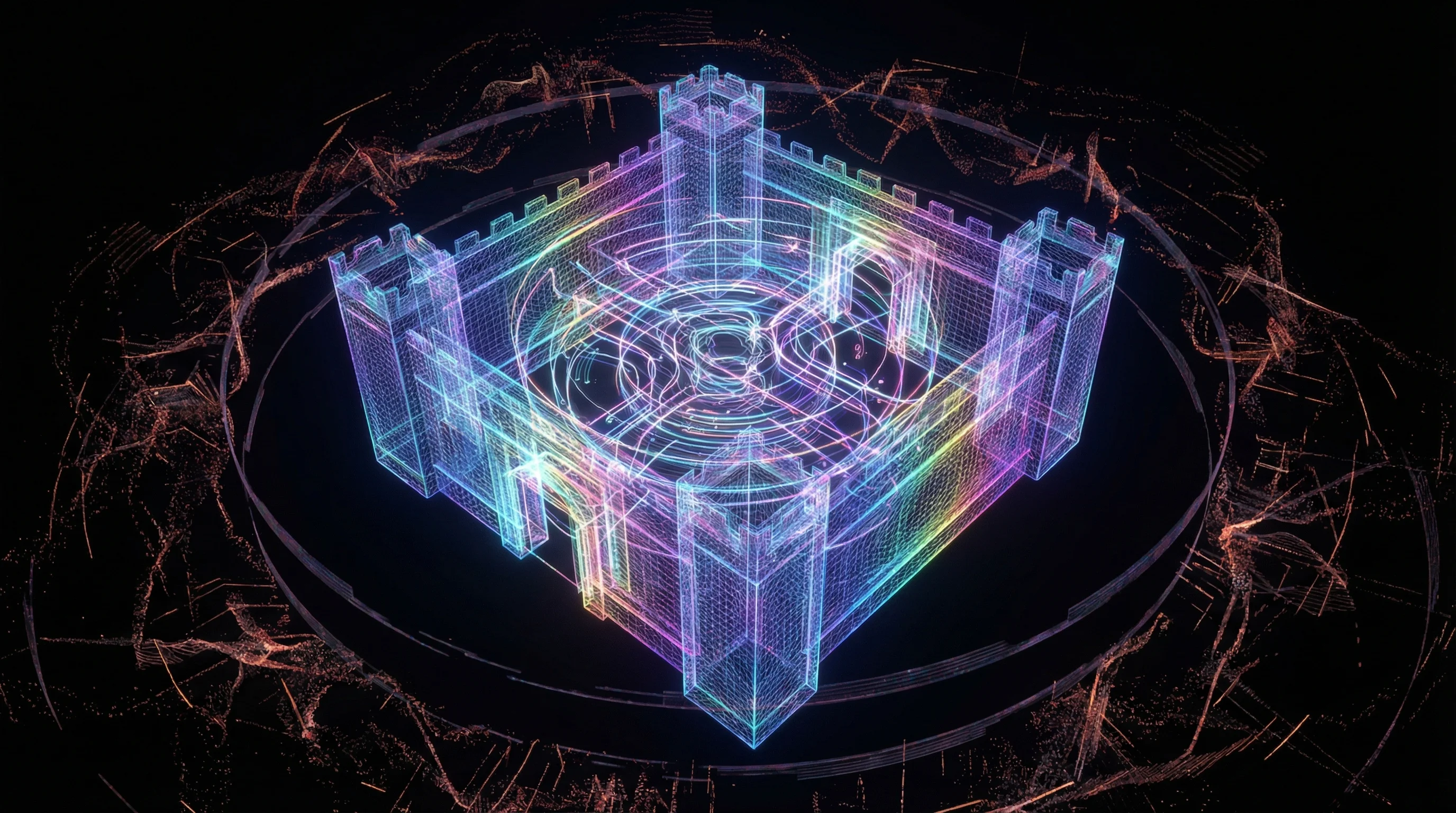
This isn't a generic ChatGPT license with government pricing.
What the Defense Department acquires are models deployed in air-gapped government clouds, with data that never touches commercial infrastructure. Integration flows through partners like Palantir, which announced in 2024 it would weave Azure OpenAI Service into its classified Gotham and Foundry platforms—software already embedded in intelligence workflows.
The use cases, at least on paper, remain constrained by OpenAI's policies and presumably specific contractual terms. Intelligence analysis support. Logistics optimization. Administrative automation that could free analysts from reading the thousandth cable. Cyber defense pattern recognition at scale.
Not autonomous weapons targeting. Not mass surveillance of domestic communications.
Whether those boundaries survive operational pressure inside classified settings depends on enforcement mechanisms not visible in public documents—or likely ever to become visible.
An Inflection Point for the Industry

OpenAI's classified network deployment arrives as the AI industry wrestles with existential questions about frontier models and national power. The company that launched as a nonprofit research lab has evolved into a commercial titan now deploying inside the world's most formidable military machine.
The arrangement doesn't resolve the inherent tension. How does ensuring AGI benefits all humanity square with embedding your models in classified defense networks serving distinctly national—not universal—interests? OpenAI's answer seems to be that it can manage both, that safety guardrails can coexist with Secret and Top Secret clearances, that commercial AI can serve national security without abandoning foundational principles.
Perhaps.
The GenAI.mil platform will reach three million users with OpenAI's models handling unclassified tasks—emails, reports, summaries. The classified agreement extends that footprint into spaces the public will never observe, into decisions and analyses that shape kinetic operations and intelligence collection.
For an industry that built its identity on openness and broad benefit, it's a striking evolution. For the Pentagon, it represents a calculated wager: that commercial AI has matured sufficiently to entrust with the nation's most sensitive information.
Whether that bet pays off may only become clear in retrospect—and possibly not even then, given classification constraints. What's certain is that OpenAI has crossed a threshold. The company that once banned military applications outright now operates inside the classified heart of American defense infrastructure.
The walls came down. What gets built in their place remains to be seen.


