

The numbers still sound improbable. When researchers tested a cooling optimization system at a Massachusetts data center in 2021, energy consumption for cooling dropped 74 percent. A similar pilot in Florida delivered a 53 percent reduction. Both facilities were real, operational sites—not laboratory simulations.
Those results came from Professor Wangda Zuo's lab at the University of Colorado Boulder, the product of federally funded research that had been quietly accumulating since 2013. Four years after those pilots, the work is finally leaving academia. In early 2025, Glacian Technologies launched to commercialize more than a decade of research backed by over $8 million in grants from the Department of Energy, National Science Foundation, Department of Defense, and ASHRAE.
The proposition: free up power for computing by dramatically cutting the energy cooling systems waste. No construction required. No waiting on utility hookups that can stretch years. Just better software.
When AI Became an Infrastructure Problem
The timing isn't accidental. Generative AI has created a capacity crisis that's reshaping how the industry thinks about power. Data centers now consume roughly 2 percent of U.S. electricity, a figure the National Renewable Energy Laboratory expects to climb as training runs and inference workloads proliferate. Cooling alone typically accounts for 30 to 40 percent of a facility's total load—sometimes more in aging facilities with inefficient air handlers or oversized chiller plants.
Glacian's thesis is straightforward: most operators are leaving massive efficiency gains on the table. The company's website frames it plainly—this isn't just about sustainability. It's about "unlocking compute power," helping facilities cram more servers into existing electrical envelopes by running cooling infrastructure with far greater precision.
For data center operators who've maxed out their power contracts, that pitch has bite.
A Long Gestation
The technical foundation traces back further than most startups dare admit. Zuo's group began exploring model predictive control for chilled water plants in 2013, supported initially by DoD funding and JPMorgan Chase. By 2016, a major DOE project took shape: "Improving Data Center Energy Efficiency through End-to-End Cooling Modeling and Optimization." The effort, which ran through 2020, brought together Lawrence Berkeley National Laboratory and Schneider Electric.
That collaboration yielded open-source physics-based models built in Modelica—a high-fidelity equation modeling language more commonly associated with aerospace and automotive design than HVAC systems. The team also developed ISAT-FFD, a reduced-order airflow simulation method fast enough to guide real-time decisions in live data halls, where adjusting setpoints on the fly can mean the difference between efficiency and thermal violations.
The Florida and Massachusetts pilots applied these tools to actual facilities. Recommendations covered air handler speeds, chiller staging, economizer modes—all calibrated to weather forecasts, IT workloads, and equipment constraints. Massachusetts hit that 74 percent figure after investing $110,000 in upgraded controls. Florida required no capital expenditure to achieve 53 percent savings. A DOE article in March 2021 documented both cases, noting the toolkit's potential to scale across "many more" sites.
Other grants followed. ASHRAE Research Project 1661, spanning 2017 to 2022, focused on near-optimal control sequences for chiller plants with water-side economizers. Peer-reviewed papers showed energy reductions around 15 percent in certain configurations. Then in October 2024, NSF awarded $340,000 to develop fault detection and diagnostics capabilities—a parallel workstream aimed at improving resilience, which now feeds the commercial product roadmap.
Rethinking the Pitch

By 2024, Zuo had relocated to Penn State's Department of Architectural Engineering and taken a joint appointment at the National Renewable Energy Laboratory. He and several doctoral students—Viswanathan Ganesh, Michael Maloney, Hongjun Li among them—began probing commercialization through NSF's I-Corps program. First came a short course in spring 2024. Then the national I-Corps Teams track in fall.
Customer discovery reshaped everything. Early messaging centered on sustainability, carbon footprints, ESG mandates. But interviews with data center operators surfaced a sharper pain point: capacity constraints. Many facilities can't add racks because they've hit power or cooling ceilings. Securing additional utility capacity can take two, three years—sometimes longer. If cooling optimization could reclaim 30 or 40 percent of the power currently burned by CRAC units and chillers, operators could deploy more servers now.
The product thesis pivoted. Hard.
On February 6, 2025, Wenyan Zou and Wangda Zuo registered NexDCCool Technologies LLC in Pennsylvania, with a State College address near Penn State's campus. Zou, now CEO, handles the business side. Zuo, as CTO, oversees technology. By March 13, Penn State published a feature spotlighting the startup and its I-Corps journey. The university's Invent Penn State ecosystem—spanning the Small Business Development Center, Dickinson Law's Entrepreneur Assistance Clinic, and Ben Franklin Technology Partners—provided early support. Penn State's Office of Technology Transfer lists "Cooling System Software for Data Centers" among its GAP-funded projects, with Zuo as lead faculty.
Around that same period, the company launched a second web presence under the Glacian Technologies brand. The relationship between the two entities isn't entirely clear publicly, though evidence suggests Glacian is the commercial-facing identity for the same underlying effort. The Glacian site, copyright 2025, leans heavily on that research pedigree—and those DOE pilot numbers, 53 percent and 74 percent, are front and center as proof points.
Physics Meets Machine Learning
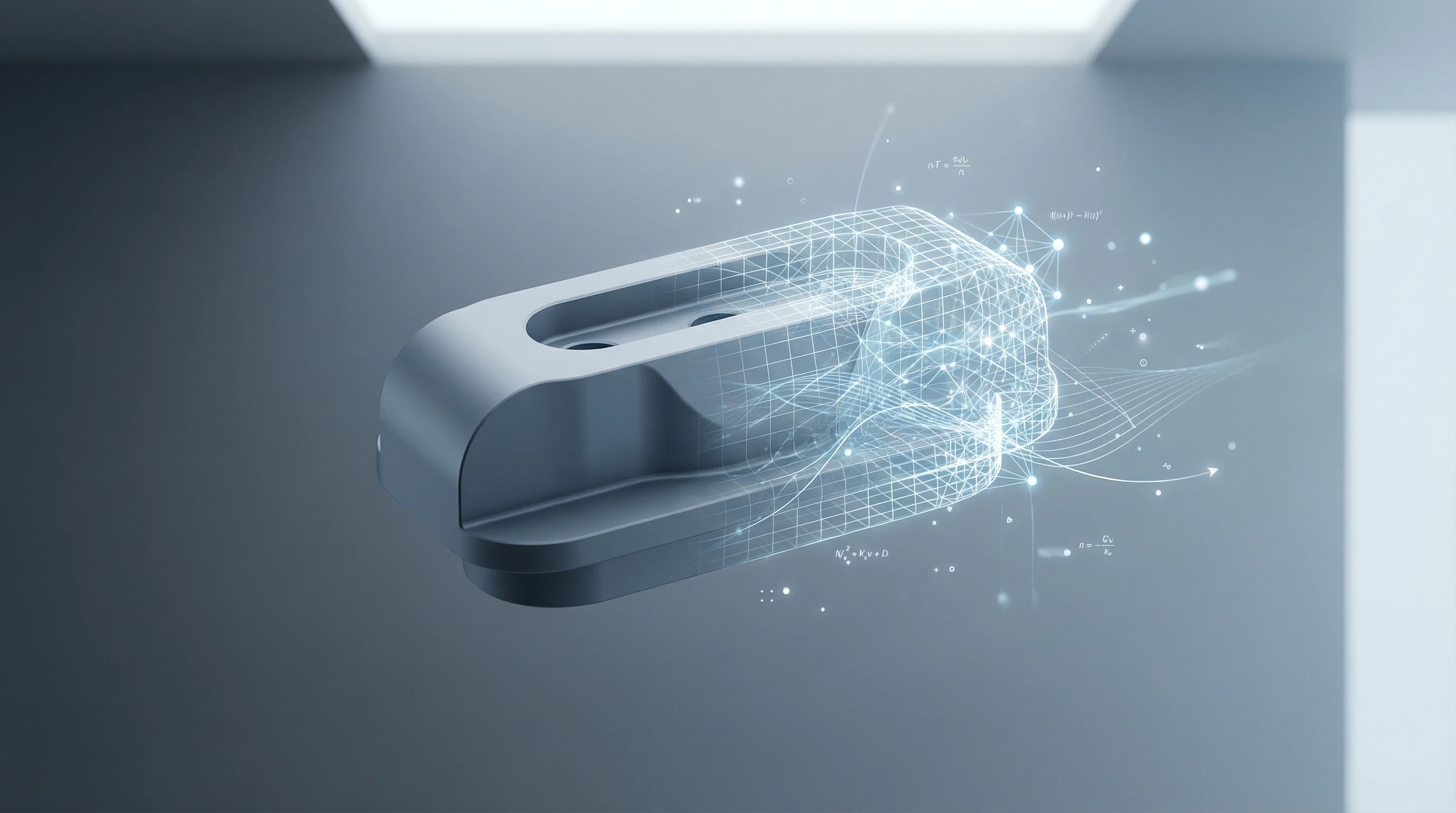
Glacian calls its methodology "Physical AI," merging physics-based digital twins with machine learning. The distinction isn't just branding. Pure AI approaches—training neural networks on historical sensor data—can optimize well within known operating ranges. But they tend to stumble when conditions shift unexpectedly or equipment starts to degrade. Physics-based models, by contrast, encode the thermodynamic and fluid mechanics relationships that actually govern how chillers, pumps, and air handlers behave.
The platform ingests telemetry from building management systems, DCIM tools, cooling plant controllers. Add weather forecasts and IT load schedules. It runs modular digital twin simulations—reusable Modelica templates adaptable to different equipment configurations—and applies multi-objective optimization across energy consumption, thermal compliance, reliability, and carbon impact. Then it recommends setpoint changes (or, in autonomous mode, executes them): raise the chilled water supply temperature, stage down a redundant chiller, adjust air handler speeds based on predicted load.
Because the models incorporate first principles, the system can predict performance in scenarios it hasn't encountered—a heat wave exceeding historical norms, say, or a new GPU cluster doubling rack density in one zone. And because it can run on-premises, security-conscious operators can keep all telemetry and control logic inside their own walls.
The Crowded Field Ahead
As of early 2026, Glacian's public materials don't showcase customer logos or commercial case studies. The company remains in those awkward early stages—moving from research validation to actual market traction. Competitors like Vigilent and EkkoSense have been deploying AI-driven cooling optimization for years, racking up global installations and partnerships with integrators including Siemens. EkkoSense cites cooling energy reductions near 30 percent in some deployments. Vigilent promotes dynamic real-time control across multiple facilities.
Where Glacian might differentiate—if the pitch holds—is the depth of its physics modeling and those years of DOE-funded validation in real data centers. That 74 percent result in Massachusetts remains an outlier. Few sites will see gains that dramatic. But even half that magnitude would matter enormously for operators bumping against power limits.
The company continues building out its research base, too. Penn State's Institute for Computational and Data Sciences is funding development of a digital twin for liquid-cooled data centers, acknowledging that the next wave of AI infrastructure may sidestep traditional air cooling altogether. That work, led by Zuo's Sustainable Buildings and Societies Lab, could position Glacian for the immersion and direct-to-chip cooling architectures hyperscalers are already testing.
The Hard Part Begins
For now, the immediate opportunity is almost prosaic: tens of thousands of air-cooled data centers running legacy infrastructure, many over-provisioned and under-optimized, managed by teams stretched thin and laser-focused on uptime. If Glacian can deliver meaningful power savings without demanding rip-and-replace capital expenditures or risking thermal excursions, the business case more or less writes itself.
The question, as always, is execution. Translating a decade of academic research into software that functions reliably in the messy, risk-averse environment of production data centers is a different challenge entirely. The pilots proved the physics works. What remains is the hardest part—turning validated research into a product operators will trust enough to deploy at scale. One pilot in Massachusetts or Florida is impressive. A hundred paying customers running mission-critical workloads? That's a different story.
And that's the story Glacian now has to write.


