

On a crisp morning in Chandigarh, somewhere between the city's planned grids and the industrial sprawl, PolyCycl is making a familiar pitch: waste plastic goes in, virgin-quality petrochemical feedstock comes out. If it sounds too neat, well, that's the bet Rainmatter—the climate fund backed by Zerodha's trading fortune—decided to take this January.
The Series A round went undisclosed in size. But the timing? That tells you something. India's extended producer responsibility mandates just hit a threshold: flexible packaging must now contain 10 percent recycled content, and the country still imports somewhere around 9 million tonnes of naphtha every year to keep its polymer plants humming. PolyCycl thinks it can wedge its way into that gap, turning post-consumer plastic waste—grocery bags, food wrappers, the detritus of daily commerce—into a drop-in substitute for imported feedstock.
Whether that substitution happens at scale, economically and consistently, remains the unanswered question hanging over chemical recycling's noisiest claims.
The machine and the model
PolyCycl's flagship offering, the Contiflow Cracker Generation VI, rolled out on January 29 last year. It's designed to handle the plastics that mechanical recycling can't touch: polyolefin films contaminated with food residue, multilayer packaging, the stuff that clogs sorting lines and winds up in landfills. The company says its continuous pyrolysis system yields between 65 and 80 percent conversion—600 to 800 kilograms of liquid hydrocarbon oil per tonne of plastic fed through.
Those are company figures. No independent audits have been published, no third-party verification shared publicly.
Rainmatter joins what the company describes as an earlier cohort of backers: Spectrum Impact (the family office behind Aarti Industries), Milestone Gears, and Supermorpheus. The capital is earmarked for deployment, but PolyCycl isn't planning to build plants itself. Instead, it's pursuing a licensing model—selling or leasing the technology to operators who'll run facilities under their own risk. In late 2025, the company mentioned it was talking to four or five potential licensees, targeting one or two reference plants in India within the next couple of years.
As of now? No commercial plants have been announced as operational. No signed contracts disclosed.
What's under the hood
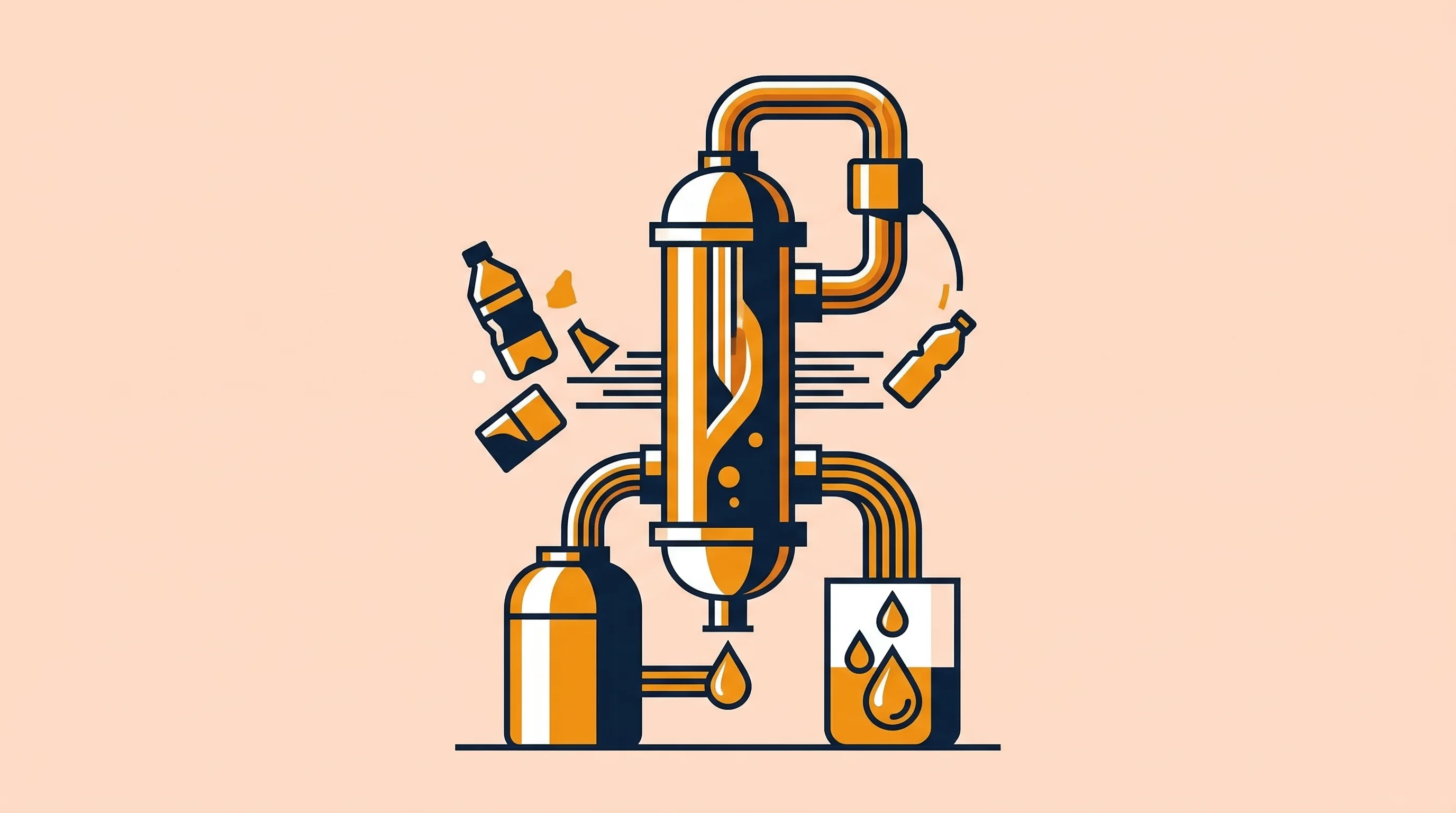
Amit Tandon, PolyCycl's founder and CEO, secured a U.S. patent back in 2018 for continuous plastic-to-fuel conversion. The current system builds on that architecture, pairing the Contiflow Cracker with a purification module called PyOilClean. According to the company, PyOilClean strips out organic chlorides and other contaminants "without the use of expensive hydrogenation."
That detail matters more than it might sound. Pyrolysis oil—pyoil, in industry shorthand—typically picks up halogens, nitrogen, and sulfur from PVC films, printed inks, and other additives lurking in waste plastic. Most of the big players in advanced recycling—Honeywell's UOP platform, ExxonMobil's Exxtend program—lean on hydrotreatment to bring pyoil up to petrochemical-grade specs. Hydrotreatment isn't cheap, neither in capital outlay nor operating cost.
If PolyCycl's non-hydrotreating purification actually works at commercial throughput, consistently, it could shave costs in a sector where margins remain stubbornly tight. The company claims capital expenditure runs 50 to 75 percent below competitors in Europe and North America, with project-level EBITDA above 50 percent.
Those are PolyCycl's projections. Unaudited, unverified by customers or independent engineers.
The technology purportedly reached TRL-7—technology readiness level seven, meaning extended continuous operations under real-world conditions. PolyCycl says its pyrolysis oil has been "pre-qualified by global petrochemical companies" for circular feedstock use. No names. No public spec sheets or offtake agreements to back that up.
Modular capacity ranges from 15 to 100 tonnes per day per conversion train. The company's R&D hub in Kalka, Haryana, houses a continuous demonstration plant and a petroleum testing lab. PolyCycl has also partnered with Re Sustainability—formerly Ramky—to develop feedstock preparation infrastructure across India, which matters because contaminated, poorly sorted plastic feedstock can wreck pyrolysis economics before the oil even flows.
The naphtha angle and India's circular ambitions

India's petrochemical industry burns through millions of tonnes of imported naphtha annually, cracking it into ethylene and propylene—the molecular building blocks for virgin polyethylene and polypropylene. A report floated last December suggested that scaled-up chemical recycling could displace some of that import dependency, positioning pyrolysis oil as a domestic, circular alternative.
Perhaps. But substitution in practice hinges on oil quality, pricing, and regulatory acceptance—three variables that remain in flux.
In March of this year, a Clariant–Borealis–SINTEF pilot in Europe demonstrated that upgraded pyrolysis oil could meet virgin polyolefin feedstock requirements. So the technical bar is achievable. PolyCycl's PyOilClean output still has to prove it can hit that bar consistently, at commercial scale, and at a cost petrochemical producers can stomach.
Chemical recycling, broadly, draws mixed reviews. ExxonMobil has committed to 500,000 tonnes per year of advanced recycling capacity by year-end, and Honeywell has poured hundreds of millions into the space. Meanwhile, a November report from the Center for Climate Integrity—titled, pointedly, "Fraud of Advanced Recycling"—challenged scalability claims and questioned the climate math, reflecting the scrutiny that shadows the sector.
What's still unproven, and what's missing

PolyCycl's environmental claims are eye-catching: 40 percent greenhouse gas reduction, 75 to 90 percent cut in fossil resource use compared to virgin production. Those figures appear in company materials and media coverage but lack published, peer-reviewed lifecycle assessments specific to the Generation VI system. For a technology pitching itself as a climate solution, that's a conspicuous gap.
The company reported in January that it was working with L&T Technology Services on scale-up engineering and had its tech evaluated by Topsoe, the catalyst maker. Neither firm has issued independent statements confirming those engagements or their outcomes. Topsoe's silence is notable—catalyst companies typically tout successful collaborations when they bear fruit.
No commercial reference plants are running. The licensing pipeline—four to five discussions as of late last year—hasn't converted into contracts the company's willing to name.
The timeline ahead, and the risk
PolyCycl's stated plan calls for fast-tracked deployments this year with the fresh Rainmatter capital. The licensing model reduces the company's own capital intensity, which is smart—but it also means revenue depends on convincing plant operators that the economics and technical risk are manageable. That's a harder sell when you don't have a track record of commercial plants humming along profitably.
India's EPR framework creates regulatory pull for circular feedstock, and that policy tailwind is real. But whether chemical recycling can meet demand at price points competitive with virgin polymers—and whether PolyCycl's continuous pyrolysis can outcompete batch systems or alternatives like solvent-based depolymerization—will play out over the next year or two as the industry moves from pilot announcements to operating plants with audited economics.
The chemistry might work. The unit economics might pencil. But until PolyCycl or its licensees can point to a facility processing tonnage day in, day out, with verified output quality and transparent cost structures, the company remains in that familiar startup space: promising technology, untested at the scale where promises meet payrolls.
Rainmatter's bet, in essence, is that PolyCycl can cross that chasm before the market, or the skeptics, lose patience.


