

Alexander John Fitzgerald made his first fortune selling Cuckoo, a scrappy UK broadband startup. His second venture couldn't be more different—or more capital-intensive.
On March 9, Fitzgerald's manufacturing startup Isembard pulled in a $50 million Series A, led by Union Square Ventures, to fund what amounts to an audacious wager: that the future of precision manufacturing belongs not to sprawling mega-factories, but to a distributed network of AI-coordinated machine shops scattered across two continents. By December, the company plans to operate 25 facilities, up from just five today.
It's the kind of timeline that makes even seasoned manufacturing executives wince.
The Money, and Where It's Going
Union Square Ventures' Rebecca Kaden confirmed the firm's lead role in a company statement. The round also attracted Tamarack Global and IQ Capital as new backers, alongside earlier investors Notion Capital and CIV. A handful of operators threw in personal checks, too—Alex Bouaziz of Deel, Andrei Danescu of Dexory, and Matt Briers, formerly of Wise among them.
The capital will bankroll expansion in the UK and across select US markets, plus a push into Germany, France, and Ukraine. Isembard also intends to beef up its engineering headcount to support the buildout, though the company hasn't disclosed current team size.
That geographic spread is deliberate. Aerospace and defense customers—Isembard's primary clientele—increasingly demand regional manufacturing capacity to hedge supply chain risk and meet regulatory requirements. The Ukraine presence, in particular, reflects growing Western investment in the country's nascent defense industrial base.
Five Factories to Twenty-Five in Nine Months
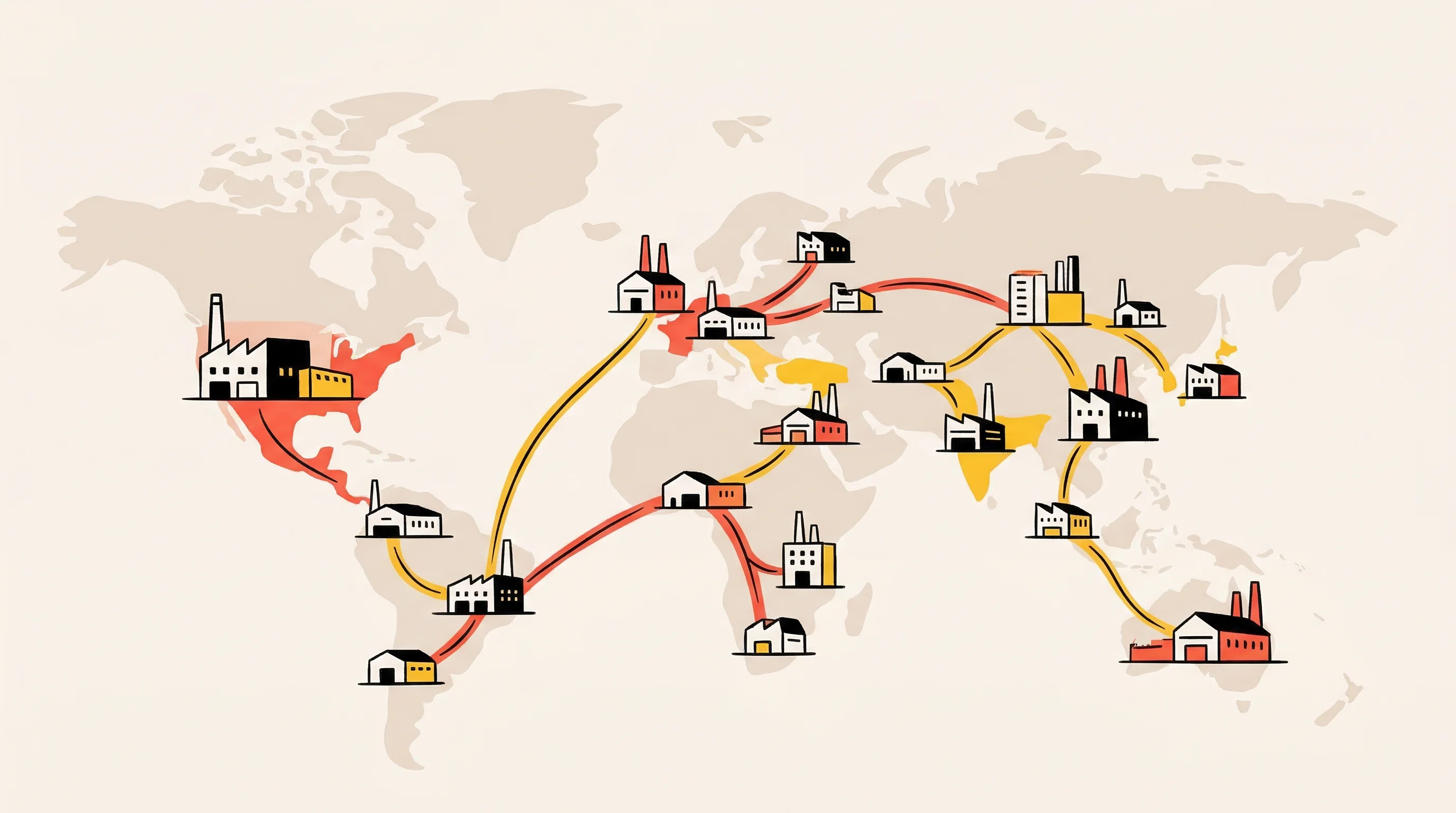
Right now, Isembard operates what it calls a "network of precision factories" in Exeter, Portsmouth, and London, plus two facilities in the Dallas–Fort Worth area. The second DFW site—a 25,000-square-foot operation—opened in early February.
The planned expansion to 25 locations by year-end represents a fivefold jump in under ten months, an aggressive timeline even by venture-backed standards. Some of that growth will come through company-owned builds. But much of it hinges on Isembard's franchise model, which launched last October and lets existing machine shops retrofit their operations to run on the startup's proprietary software.
That model is unusual in manufacturing, where scale typically means consolidation, not distribution. Whether independent shop owners will embrace the franchise structure—and whether Isembard's software can truly deliver on its promises at scale—remains an open question.
The Software Pitch
At the core of Isembard's approach sits MasonOS, the company's AI-powered operating system that handles everything from customer quotes to final delivery. The platform was announced in late September 2025 and claims to integrate quoting, scheduling, supply chain logistics, production floor management, quality control, and shipping.
According to the company, MasonOS can boost throughput by 40 to 60 percent, slash lead times by as much as 70 percent, and trim operating costs by roughly 30 percent. Those are Isembard's own figures, not independently verified metrics—a caveat worth noting given the startup's growth ambitions. The software is designed to meet AS9100, ISO 9001, and ITAR standards, the certifications required for aerospace and defense work.
Justin Baucum, a US Army Special Forces veteran, runs American operations from the DFW region. His military background isn't incidental; defense contracts often favor vendors with security clearances and familiarity with Pentagon procurement processes.
The Broader Play in Defense Manufacturing
Isembard's Series A arrives amid a surge of capital flowing into automated precision manufacturing, particularly for aerospace and defense applications. US-based Hadrian Automation raised a $260 million Series C last July. Machina Labs, which builds robotic factories to produce missile structures, secured $124 million in February.
The geopolitical backdrop is hard to ignore. Russia's invasion of Ukraine exposed critical weaknesses in Western defense manufacturing capacity, prompting governments and investors to pour resources into rebuilding industrial bases that atrophied over decades of outsourcing. Precision components—the gears, housings, brackets, and fasteners that go into everything from fighter jets to missile guidance systems—suddenly matter again.
Isembard's distributed model sets it apart from competitors building large centralized facilities. The bet is that a networked approach offers more resilience and faster turnaround times than traditional mega-factories. But distributed manufacturing also means distributed risk: quality control challenges, coordination headaches, and the complexity of managing a franchisee network that may lack the startup's cultural DNA.
The Founder's Background
Fitzgerald's path to manufacturing is circuitous. Before launching Isembard, he serves in the Army Reserve—experience that perhaps informs his focus on defense contracting. Cuckoo, his first company, was a broadband provider that positioned itself as a consumer-friendly alternative to incumbent UK telecoms before its acquisition.
The company raised a $9 million seed round (approximately £7 million) in April 2025, led by Notion Capital, with participation from 201 Ventures, Basis Capital, Forward Fund, Material Ventures, and others. That's a relatively modest seed for a capital-intensive manufacturing play, which helps explain the jump to a $50 million Series A less than a year later.
What Comes Next

Twenty new factories in nine months. It's an ambitious target, maybe overly so. Manufacturing expansion doesn't move at software speed, even when software powers the factories. Permitting, equipment procurement, workforce training, customer certification—each step takes time, and compressed timelines invite mistakes.
Still, the capital is there. The geopolitical winds are favorable. And the market for precision components, particularly in defense, shows no signs of cooling. Whether Isembard can execute on its franchise vision at the pace it's promised will become clear soon enough. By the time 2026 ends, we'll know if this was a well-timed bet on distributed manufacturing—or an object lesson in scaling too fast.


