

When you load gateway.prismax.ai and punch in a one-time passcode, you're not scrolling through robotics demos. You're joining a queue to actually operate a robot—maybe a Unitree humanoid, maybe a four-legged MIT Mini-Cheetah. The interface looks deceptively simple for what's happening on the other end: real hardware, real motors, real consequences if you miscalculate a movement.
PrismaX, a San Francisco startup founded by Bayley Wang and Chyna Qu, launched this web-based teleoperation platform on August 11, 2025. The pitch is straightforward, almost underwhelming in its directness: one interface, eight different robot types, and a data collection engine designed to feed the next generation of physical AI models. No lengthy white papers about what robotics could become. Just a login screen and a list of machines you can control right now.
That modesty might be strategic. The company raised an $11 million seed round in June 2025, led by a16z's CSX fund. Other investors—Stanford Blockchain Builder Fund, Symbolic, Volt Capital, Virtuals Protocol, plus a handful of angels—rounded out the syndicate. Two months later, the platform went live.
A Fleet That Spans Form Factors
The initial hardware lineup reads like a robotics catalog spanning different use cases and price points. Unitree's G1 humanoid and Go2-W quadruped sit alongside Ubtech's Walker, Pollen Robotics' Reachy 2, K-Scale Labs' K-Bot, Boardwalk Robotics' Alex, Enchanted Tools' Mirokai, and the MIT Mini-Cheetah. Some of these platforms cost tens of thousands of dollars; others represent research-grade hardware not typically available for casual experimentation.
Getting hands-on time—remote hands, technically—requires nothing more exotic than a browser. Robotech Magazine reported in August 2025 that operators can also use VR headsets and haptic gloves for control, though PrismaX's own launch materials keep the focus on accessibility rather than hardware requirements. Perhaps the company learned something from earlier teleoperation ventures that demanded proprietary controllers or specialized training.
The stated goal isn't to make remote piloting a permanent fixture. PrismaX frames teleoperation as a means to an end: capturing high-quality action and visual data that eventually trains AI models to handle tasks autonomously. Remote operators demonstrate the movements, the platform logs everything, and machine learning algorithms digest those examples. Over time—this is the strategy, anyway—the robots would learn to perform tasks without a human in the loop.
The Flywheel, In Theory and Practice
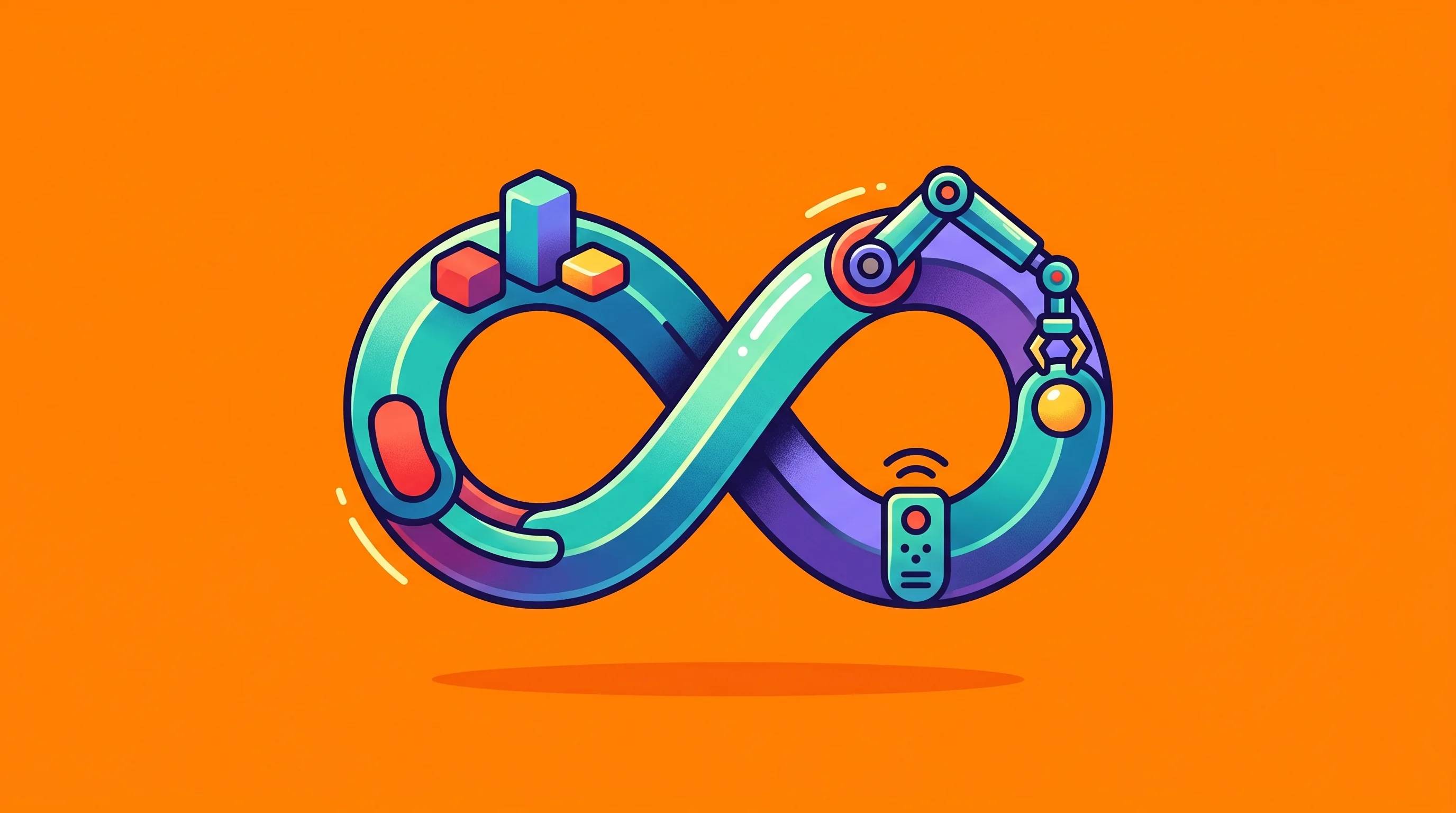
The company calls this loop a "data-model-tele-op flywheel," and the phrasing isn't entirely marketing speak. Remote work generates training data, which refines AI models, which reduces reliance on constant human intervention. It's the same playbook companies like 1X are running, where teleoperation fills the gaps autonomous systems can't yet handle.
At RoboCon, an event PrismaX organized around the platform launch, Wang announced plans for a teleoperation tournament. No public results have emerged as of this writing—whether that means the competition fizzled or simply ran internally isn't clear. What has materialized: a Q1 2026 changelog, published April 2, that detailed a raft of incremental improvements. Better queue accuracy. Faster stream initialization. Social account linking for X, Discord, and Telegram. A revamped "Robot Control Center" with designated training arms and an invite-only private arm option.
That level of detail suggests active usage, even if the company hasn't disclosed how many sessions run daily or how many operators have signed up. Third-party sources have floated numbers—hundreds of operators, maybe a thousand—but those claims don't appear in PrismaX's official communications. The opacity is notable in an era when startups typically lead with growth metrics.
Timing the Infrastructure Wave
PrismaX's arrival coincides with what a16z general partner Oliver Hsu called the "physical AI deployment gap" in a January 13, 2026 essay. His argument: research labs have made stunning progress in robotic manipulation and locomotion, but translating those breakthroughs into production systems remains maddeningly difficult. A follow-up piece in April 2026 explored how teleoperation datasets differ fundamentally from simulated environments or egocentric video—the kind of data that trained large language models. Physical AI, Hsu suggested, needs its own collection infrastructure.
That thesis creates an opening for standardized platforms. Rather than every robotics team building bespoke teleoperation stacks, PrismaX is betting some will license a ready-made solution. The company joined NVIDIA's Inception Program in March 2026, a partnership announcement that focused on the alignment rather than specific program benefits.
The competitive landscape isn't empty. Viam offers browser-based control with VR controller support. PickNik's MoveIt Pro added Meta Quest teleoperation data capture in August 2025. Newer names like Proxy Robotics and AY-Robots are circling the same opportunity. Then there's the consolidation angle: Serve Robotics acquired Phantom Auto and Voysys assets in September 2025, a signal that low-latency streaming infrastructure—originally developed for autonomous vehicles—holds value for broader robotics applications.
The Unquantified Question
For robotics teams weighing a build-versus-buy decision on teleoperation infrastructure, PrismaX represents a live experiment. The platform works. It supports multiple hardware platforms. It ships regular updates. What's less clear: how many users it serves, how much data it's collecting, and whether that scale justifies the abstraction layer it introduces.
The company's reluctance to share adoption metrics might reflect early-stage caution or simply strategic discretion. Either way, the product is accessible enough that interested engineers can log in and form their own judgments. Maybe that's the point—letting the platform speak for itself, rather than wrapping it in projections about the future of physical AI.
Whether PrismaX becomes essential infrastructure or just another tool in a fragmented ecosystem depends on adoption curves the company hasn't made public. For now, it's a functioning gateway to a fleet of robots, operable from any browser tab. Sometimes the simplest description is the most accurate one.


