

The ambition borders on audacious. While much of the quantum computing industry inches toward systems with hundreds or perhaps a few thousand stable qubits, a Tel Aviv startup that emerged from stealth last week is aiming for something else entirely: a neutral-atom quantum computer with one million qubits.
Q-Factor, which announced a $24 million seed round on April 6, 2026, has assembled a founding team of four Israeli physicists—all alumni of Talpiot, the country's notoriously selective military R&D program—and convinced a syndicate of venture and strategic investors that the path to quantum scale runs through their lab. NFX and TPY Capital co-led the round, joined by Intel Capital, Korea Investment Partners, a new deep-tech fund called Deep33, and the Matias family. The Israel Innovation Authority added a grant.
It's the kind of bet that quantum computing seems to inspire these days, equal parts technical brilliance and sheer nerve.
The company's three academic founders hold professorships at the Weizmann Institute of Science and Technion, Israel's leading physics research centers. Prof. Nir Davidson, formerly Dean of Physics at Weizmann, has built a career studying ultracold atoms and Bose-Einstein condensates across more than 280 publications. Prof. Ofer Firstenberg, also at Weizmann, spent years at Harvard and MIT before returning to Israel to focus on quantum optics and Rydberg atoms—the exotic atomic states that underpin much of neutral-atom computing. Prof. Yoav Sagi, based at Technion, came up through JILA and the University of Colorado, specializing in the delicate art of manipulating ultracold Fermi gases.
The fourth founder, Dr. Guy Raz, brings roughly two decades of deep-tech leadership, according to investor materials, though his background remains less publicly documented than his academic co-founders.
Both Technion and Weizmann have taken equity stakes through their commercialization arms—a structure that positions Q-Factor as a direct extension of decades of Israeli atomic physics research.
"Four Talpiot graduates with hundreds of published papers … uniquely positioned to execute on one of the most ambitious goals in quantum computing," said Gigi Levy-Weiss of NFX, the Israeli-American venture firm that has become a fixture in the country's tech ecosystem.
Neutral atoms have been having a moment. The approach—cooling atoms to near absolute zero and manipulating them with laser light—offers certain theoretical advantages over rival modalities: long coherence times, relatively straightforward qubit fabrication, and the ability to arrange atoms in flexible geometric patterns. Pasqal, a French neutral-atom company, announced plans in March 2026 to go public via SPAC with at least €340 million in combined financing. Infleqtion struck a $1.8 billion SPAC deal in September 2025. QuEra pulled in $230 million in February 2025 from backers including Google Quantum AI and SoftBank Vision Fund.
The challenge, as anyone in the field will tell you, is scaling. Moving atoms around without losing quantum information, maintaining connectivity between distant qubits, preserving gate fidelity as array sizes grow—these remain some of the thorniest problems in quantum engineering.
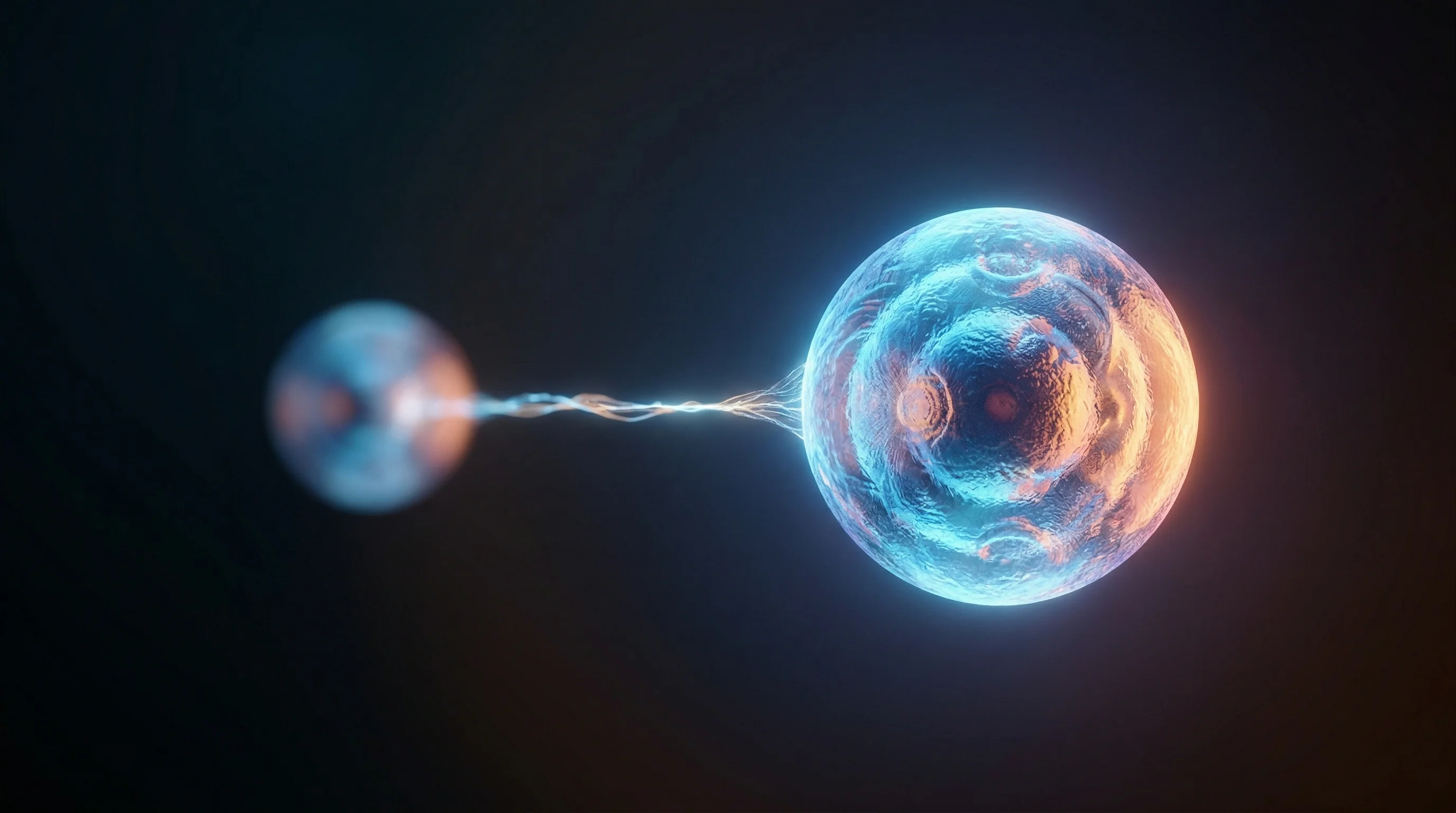
Q-Factor's claim is that it has found a way around these bottlenecks. "The quantum computing industry needs a revolution, not an evolution," Firstenberg said in the company's announcement. The architecture, he added, is "designed for continuous scalability … from thousands of qubits to millions and beyond."
What that architecture actually looks like remains undisclosed. As of April 7, 2026, the company has not yet launched a website or established a LinkedIn presence, and technical details are scarce. Whether that's strategic stealth or a reflection of how early-stage the work remains is unclear.
Lisa Cohen, Investment Director at Intel Capital, described the problem Q-Factor is tackling as "the hardest remaining problem in quantum computing: scale." Intel has been methodically building out quantum bets—it backed Quantum Machines, an Israeli quantum control startup, in 2024. TPY Capital has also been assembling a quantum portfolio; it participated in Qedma's $26 million Series A last July, a round that also drew Korea Investment Partners.
Deep33, the newest name in the syndicate, launched earlier this year targeting $100 million to $150 million for deep-tech investments. Dekel Persi of TPY Capital said that "Q-Factor is entering the race with a distinct architectural advantage," though what constitutes that advantage in practical terms awaits demonstration.
Here's the context that hangs over all of this: the million-qubit target sits well beyond anything currently operational. Recent academic work published in March suggests that even 10,000 reconfigurable atomic qubits—assuming sufficient gate fidelity and connectivity—could enable useful algorithms like Shor's factorization, the legendary method for breaking encryption that has become quantum computing's most famous theoretical application.
Whether Q-Factor's architecture can bridge that gap, and on what timeline, will determine if this seed round marks the start of a genuine breakthrough or simply another ambitious wager in a field that has never lacked for ambition. The company has not disclosed a roadmap, valuation, employee count, or specific milestones.

Perhaps that's fitting. In quantum computing, the distance between what's theoretically possible and what's practically achievable has always been the most interesting—and treacherous—terrain.


