

The day before winter break in 2018, a Cambridge startup most people had never heard of closed what was then the largest Series C round in biotechnology history. Relay Therapeutics, barely two years old, secured $400 million in a single stroke—no tranches, no contingencies. Just an enormous bet on computational drug discovery led by SoftBank Vision Fund, the Japanese conglomerate's Silicon Valley-sized vehicle for tech investments.
It was an audacious sum for a company with no drugs in human trials yet. But Relay's pitch had captivated a roster of heavyweight investors: the promise that proteins, when watched in motion rather than frozen in place, might reveal drug targets invisible to traditional methods.
The Money
SoftBank Vision Fund anchored the December 20, 2018 financing, bringing in Foresite Capital, Perceptive Advisors, and Tavistock Group as new backers. The usual Cambridge biotech crowd followed—GV, Casdin Capital, BVF Partners, EcoR1 Capital, Alexandria Venture Investments, and an affiliate of D.E. Shaw Research, which had deeper ties to Relay's technology than most realized at the time.
The $400 million marker made it the third-largest biopharma venture round that year, according to Citeline's Finance Watch. For context, that's roughly what some mid-stage biotechs spend getting a single drug through Phase 3 trials. Cooley advised SoftBank on the deal.
With the Series C, Relay's total private fundraising reached approximately $520 million—a staggering haul for a company founded in mid-2016.
The Science (Simplified)
Relay's founding team reads like a computational biology all-star roster: Matthew Jacobson from UCSF, Dorothee Kern from Brandeis and the Howard Hughes Medical Institute, Mark Murcko from MIT, and scientists from D.E. Shaw Research, the secretive computational firm better known for quantitative trading than drug development.
Their thesis? That traditional drug discovery treats proteins like static sculptures when they're actually shape-shifters, constantly morphing and flexing. Relay's Dynamo platform cobbles together room-temperature crystallography, nuclear magnetic resonance spectroscopy, cryo-electron microscopy, and—here's where it gets exotic—long-timescale molecular dynamics simulations run on D.E. Shaw's Anton 2 supercomputer, a machine purpose-built to watch proteins wiggle at microsecond timescales.
The hope was to spot allosteric pockets—hidden crevices that appear only when proteins contort into certain shapes—and design drugs that exploit those transient vulnerabilities. More selective. Fewer side effects. Perhaps.
The CEO and the Pipeline

Sanjiv K. Patel, who'd spent years at Allergan, took the helm in April 2017 and steered Relay through the fundraising blitz. By the time the Series C closed, the company had four oncology programs underway, two inching toward first-in-human studies.
"A financing of this magnitude allows Relay Therapeutics to significantly scale and advance both its platform and its pipeline," said Alexis Borisy, a partner at Third Rock Ventures and Relay's board chair, in the company's announcement. Borisy, a serial biotech founder himself, doesn't tend toward understatement.
Deep Nishar from SoftBank Investment Advisers offered the expected corporate pleasantries: "We are proud to support Relay Therapeutics' world-class team."
Relay said it would funnel the proceeds into beefing up its computational engine, expanding discovery work, pushing molecules into clinics, and—inevitably—renting more lab benches in Cambridge's overheated real estate market. Patel hinted the pipeline might stretch beyond cancer eventually.
The Aftermath
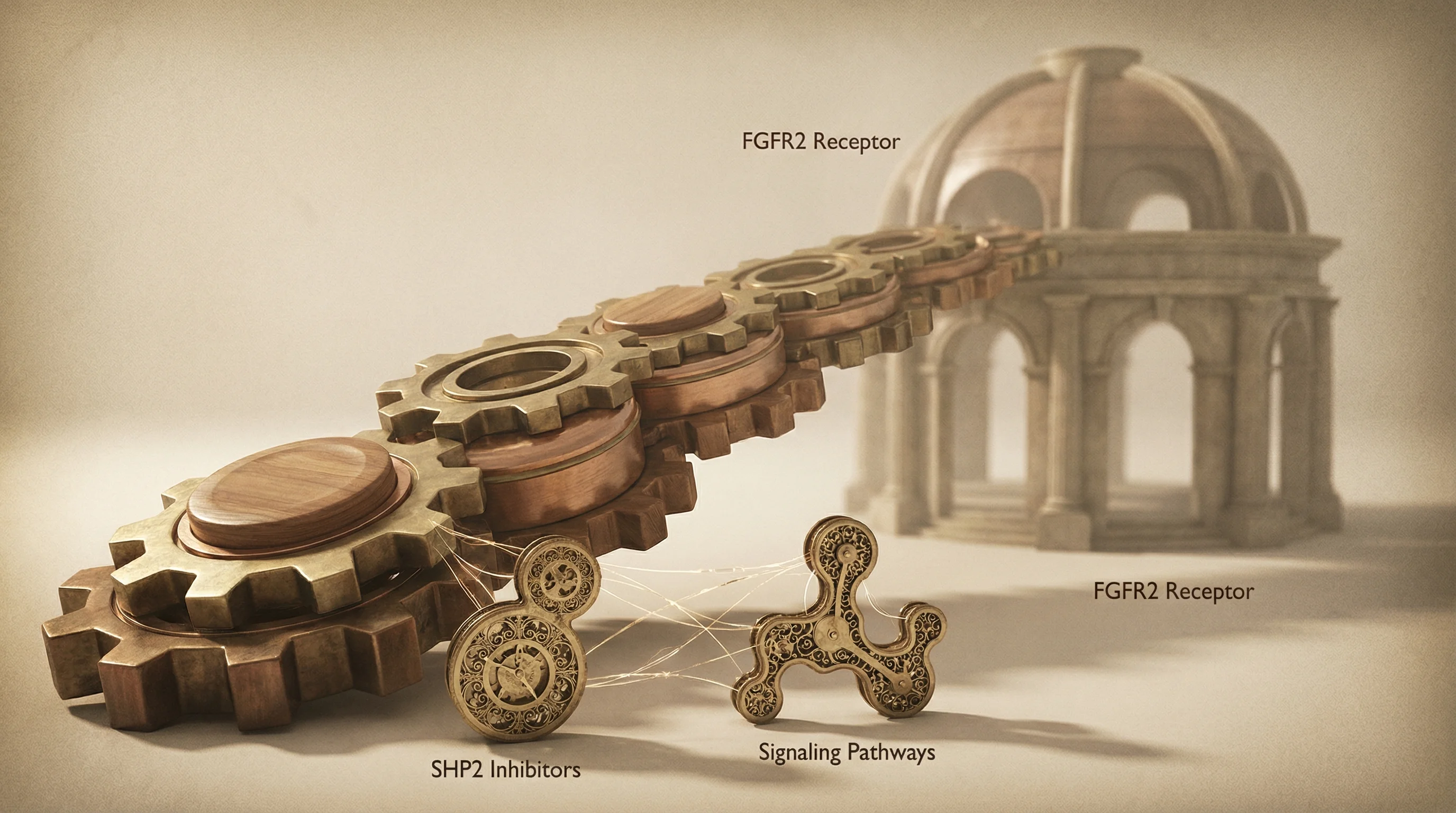
The capital bought runway, and Relay used it. In January 2020, the company dosed its first patient in a Phase 1 trial of RLY-1971, an inhibitor of SHP2, a protein involved in cancer cell signaling. A second program targeting FGFR2, a receptor implicated in certain tumors, was teed up for later that year.
By mid-2020—pandemic and all—Relay filed to go public. The IPO priced in July at roughly $400 million, matching its Series C almost dollar for dollar. Not bad timing, given the market's appetite for anything vaguely life sciences-adjacent.
The SHP2 program caught Genentech's attention, resulting in a partnership potentially worth up to $770 million. Genentech would eventually pull out in 2024 after paying Relay more than $120 million, a reminder that even well-funded science doesn't always pan out. Last December, Relay offloaded its FGFR2 inhibitor to Elevar Therapeutics in a deal carrying up to $500 million in milestone payments—the kind of structure where the big numbers depend on clinical success that may or may not arrive.
Six years later, Relay's story illustrates both the allure and the uncertainties of computational drug design. The money was real. The supercomputers were real. Whether the drugs ultimately work better than those designed the old-fashioned way? That question is still playing out in clinics, one patient at a time.


