

In the unglamorous back offices of the electric vehicle revolution, there's a spreadsheet problem that won't go away. Someone still has to plug in all those cars.
For depots running autonomous robotaxis or delivery fleets, that someone might be a team of workers cycling through parking slots around the clock, connecting and disconnecting charging cables. It's repetitive, expensive, and—according to a San Francisco startup called RoboDock Technologies—entirely unnecessary.
The company emerged from Y Combinator in 2026 with a pitch that sounds almost too straightforward: vision-guided robots that retrofit onto existing charging infrastructure, automatically plug and unplug vehicles, verify charging status, and run thermal inspections. No depot rebuild required. No greenfield construction timelines. Just bolt it on and let it run.
Whether that pitch survives contact with reality is another question entirely.
Labor Costs That Add Up Faster Than You'd Think
Fleet operators already navigating the bumpy transition to electric vehicles have discovered a secondary headache in depot operations. RoboDock estimates that a typical facility burns through roughly $900,000 annually on charging labor and associated overhead—though the company doesn't break out exactly what "overhead" includes or which depot sizes that figure represents.
Building new automated facilities to sidestep those costs carries its own penalty: construction timelines stretching two to three years and capital expenditures north of $8 million, according to the startup's launch materials. Then there's the downtime tax. Missed maintenance issues and reactive repairs can hemorrhage up to $650,000 per year at a single depot, RoboDock claims—a figure that feels plausible for robotaxi operators or logistics companies running on razor-thin margins, though again, no independent verification exists.
For context, companies like Waymo and Zoox operate depot charging operations continuously. Traditional electric fleets—Amazon delivery vans, airport shuttles, port vehicles—face similar scaling pressures. The labor equation gets worse as fleet sizes grow.
Retrofit Over Rebuild
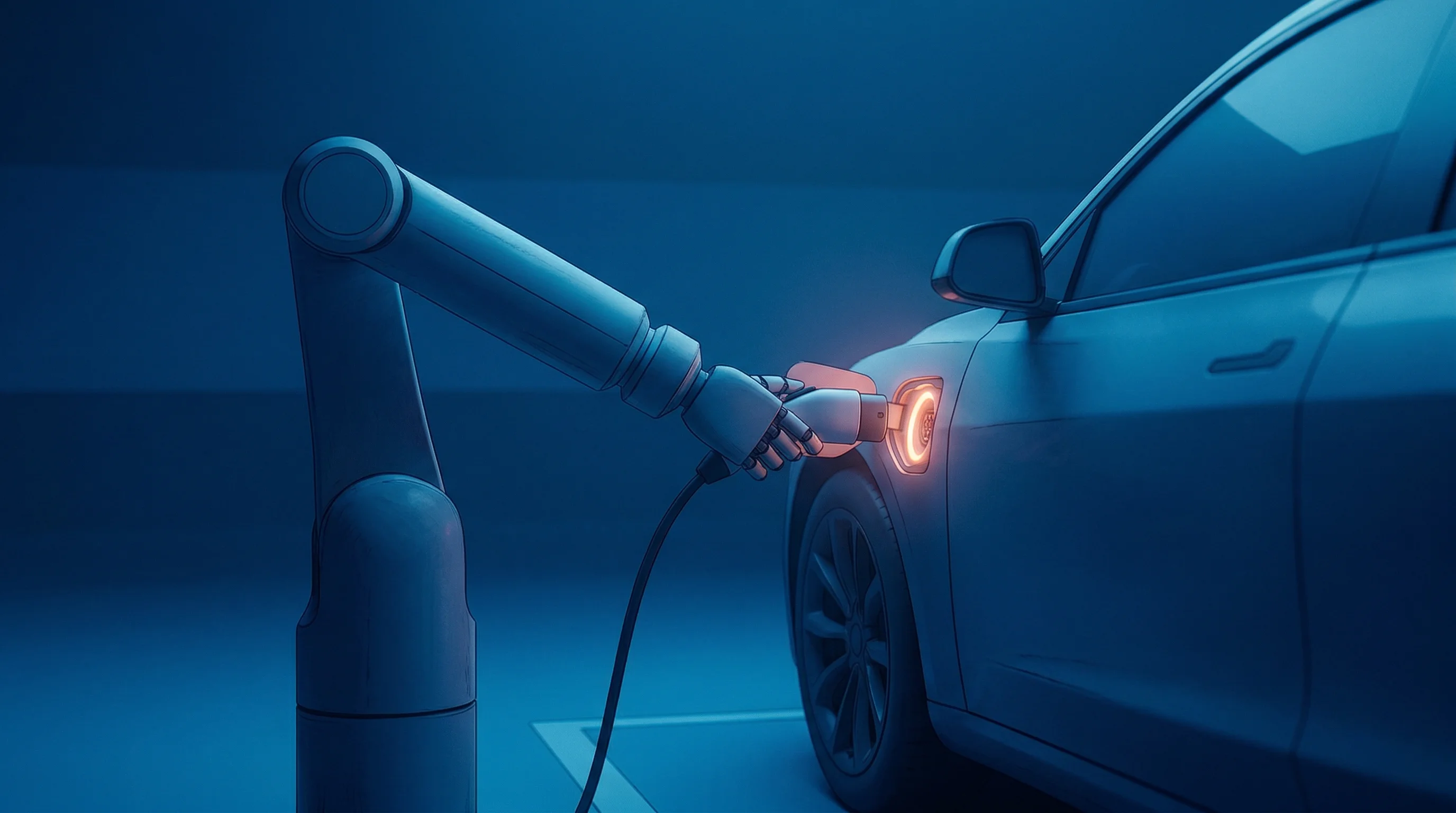
RoboDock's central bet is that simplicity sells. The system mounts directly to existing charging infrastructure rather than demanding purpose-built facilities. A vehicle pulls into a standard parking envelope. Vision-guided robotics handle plug insertion, verify the charge sequence initiated, then move on to the next vehicle. The same hardware runs automated post-trip inspections using vision and thermal sensors, supposedly catching potential failures before they strand a vehicle—though these capabilities haven't been independently validated.
The company describes this as "closed-loop learning," which in practice means each charging event feeds telemetry back into the system to optimize energy delivery and flag anomalies. It's designed to work with mixed fleets—electric vans alongside sedans, different charge port configurations—meaning operators don't need to standardize their entire roster to deploy it.
As for the promised returns: RoboDock says the system can recover more than $1.2 million annually per depot through a 40% reduction in labor costs, 30% lower energy bills, and uptime improvements approaching 99%. Asset utilization supposedly jumps 25%.
Those figures come straight from the company's website. None have been independently verified, and the methodology behind them isn't public. Treat them as aspirational until field data says otherwise.
Founders With Relevant Scars
The two-person founding team carries experience that maps well to the problem, at least on paper. CEO Zinny Weli previously led autonomous drone charging infrastructure at Zipline—where keeping delivery drones powered in remote African health clinics required reliability under less-than-ideal conditions. Before that, he designed charging systems for Amazon's ill-fated home robot project.
CTO Celine Wang worked as a vehicle platform and mechatronics engineer at Plus, the autonomous trucking company, where she retrofitted self-driving systems onto semi-trucks. Both hold Stanford degrees in robotics and mechanical engineering, which in the Bay Area startup ecosystem is table stakes rather than differentiator.
Still, the pairing feels deliberate: drone charging automation combined with heavy-vehicle retrofit experience. Autonomous fleets need lights-out charging that doesn't fail at 3 a.m. Retrofitting existing depots dodges the capital expenditure and multi-year timelines of building from scratch. Whether that combination translates into a working product is the next chapter.
Not Exactly a Clear Field

RoboDock isn't the first to chase automated charging, though the competitive landscape remains fragmented. Netherlands-based Rocsys has been deploying its Steward S2 system at ports and logistics yards, with early pricing reportedly in the $20,000-$30,000 range per robot back in 2023—though those figures are now dated and may have shifted. Stäubli and Tritium completed a mechanized high-power charging program at the Port of Long Beach. Hyundai showcased its Automatic Charging Robot in 2023 and released updates in May 2025.
The difference, perhaps, is less about the technology and more about execution speed. Several of those efforts have been gestating for years or remain tethered to OEM product roadmaps. RoboDock launched publicly in February 2026 and is now actively courting pilot partners: autonomous vehicle operators, fleet managers, ports, logistics yards. The company is also recruiting engineers and what it describes as "hardware-focused investors."
No customers are named publicly yet. That's standard for a freshly launched startup, but it also means the claimed economics remain theoretical. The company's website includes a "Backed by" section, though specific investor names weren't immediately visible in public disclosures.
The Real Test Ahead
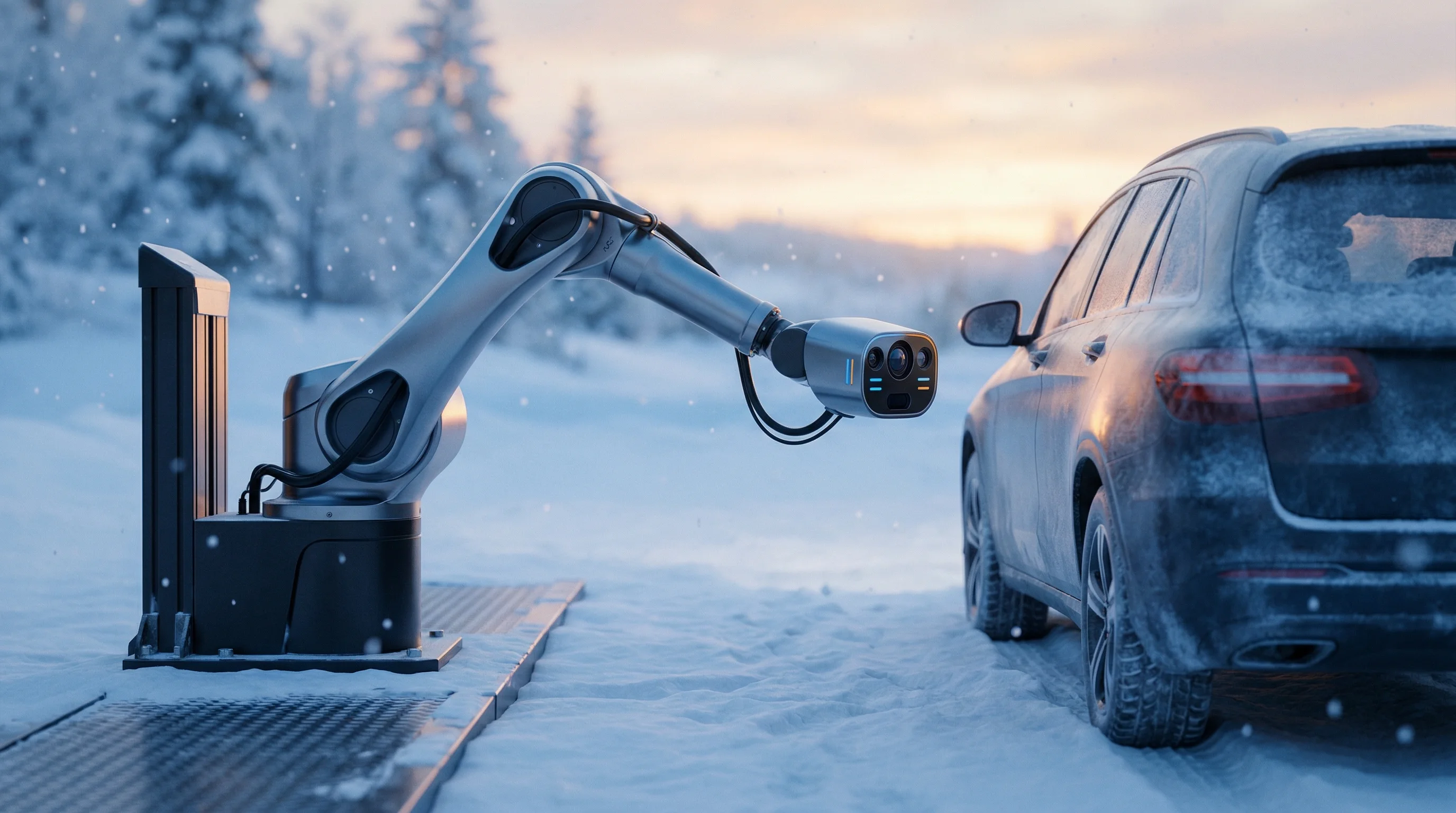
RoboDock's immediate priority is landing those first deployments—the unglamorous work of turning pitch deck promises into functioning systems under real-world conditions. Can the vision guidance handle winter weather in Minnesota, lighting variations at dawn, or vehicles that don't park precisely within the designated envelope? How does uptime hold up after six months of continuous operation? What does total cost of ownership actually look like once installation labor, ongoing maintenance, and software updates are factored in?
The robotaxi and autonomous delivery markets are expanding, certainly. Waymo operates depot charging around the clock in multiple cities. Zoox is ramping commercial service. Traditional EV fleets face similar scaling pressures as electrification accelerates. If the technology works as advertised—and that's still an if—the addressable market is substantial.
For now, RoboDock represents a bet that the EV charging bottleneck is solvable with existing technology, applied cleverly and retrofitted quickly. Whether it becomes an industry standard or just another well-intentioned attempt will come down to how fast the founders can move from launch buzz to proven deployments that pencil out financially.
The spreadsheet problem, after all, only goes away if the numbers actually work.


