

"We're Amazon warehouse workers with PhDs."
That's how one crew member aboard the International Space Station reportedly described the reality of life in orbit—a reminder that even 250 miles above Earth, someone still has to unpack the boxes.
Enter Icarus Robotics, a New York-based startup that thinks it has a better solution. On September 17, 2025, the company announced it had closed $6.1 million in seed funding to build what it calls embodied-AI robots: free-flying, two-armed machines designed to handle the mundane logistics work that currently eats into astronauts' research time.
The pitch is straightforward, if ambitious. Every month and a half or so, roughly 3.5 tons of cargo arrives at the ISS, the co-founders say. Unpacking it, stowing it, tracking it—all of that takes hours. Hours that, in theory, could be spent doing actual science instead of inventory management in microgravity.
Soma and Xtal Take the Lead
Soma Capital and Xtal co-led the round, joined by Nebular and Massive Tech Ventures. The capital will bankroll development of Icarus's first product: a fan-propelled robot equipped with two arms and what the company calls "jaw grippers." (Not humanoid, the founders stress—microgravity doesn't care about legs.)
The money will also fund a parabolic flight campaign set for 2026, followed by what could be the real proving ground: a one-year demonstration aboard the ISS itself. The company has already shown off ground-based teleoperation of the robot unzipping, unpacking, and re-zipping actual ISS cargo bags, though skeptics will note that Earth-bound demos and orbital operations are two very different things.
Barajas and Palmer met through Entrepreneurs First, the London-based startup program, and launched Icarus in 2024. Barajas has an unusual résumé—he started working with NASA at 17 through the agency's HUNCH program, later moved on to lunar rover work at Caltech, then dropped out to start the company. Palmer's background is in robotics and dexterous manipulation, including time at Columbia University's ROAM Lab. Before that? Therapeutic robots and motorsport engineering. It's an eclectic mix, perhaps fitting for a company trying to solve a problem that's equal parts mechanical challenge and operational puzzle.
A Mission Services Partner Enters the Frame
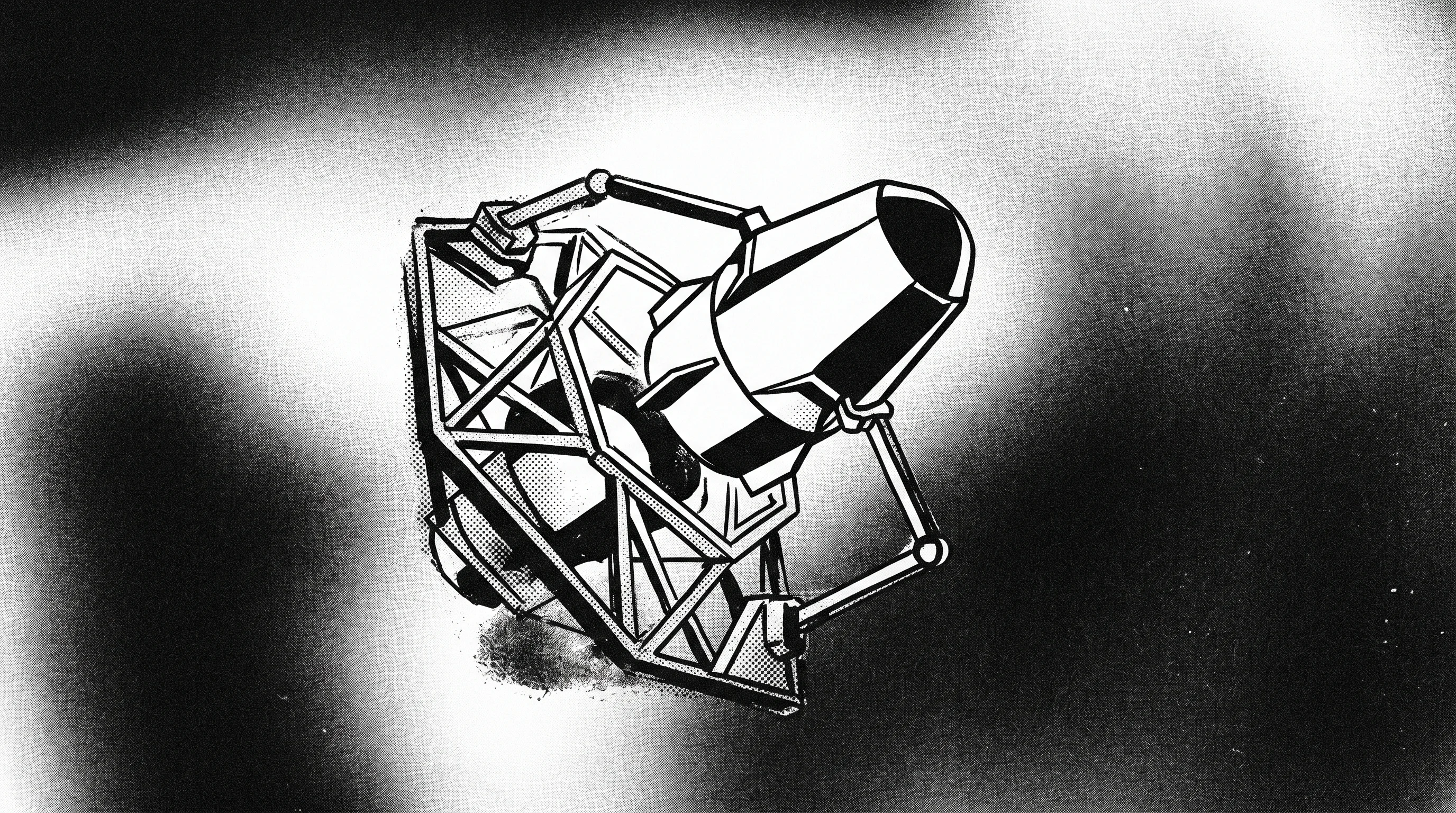
Then, on March 30, 2026, Voyager Technologies announced it had secured a contract to manage mission services for what Icarus is calling "Joyride," the company's robotic platform demo targeted for early 2027. Voyager, which claims heritage from more than 1,400 ISS missions, will handle payload integration, safety certification, launch coordination, and operations. The demo will use Voyager's Bishop Airlock, a commercial addition to the station that's become something of a go-to for private payload deployments.
That partnership matters. Getting hardware to the ISS is notoriously complex—certification alone can take months—and Voyager's involvement suggests Icarus is serious about meeting NASA's stringent requirements. It also adds a layer of operational credibility that early-stage space startups often lack.
The Autonomy Question
Icarus's near-term approach leans on teleoperation, with plans to inch toward partial and then full autonomy as the system gathers in-orbit data. That's a pragmatic choice. Building a robot that can unpack cargo bags under human supervision is one thing; building one that can navigate the station's cluttered interior, make real-time decisions, and recover from unexpected situations is another order of magnitude harder.
Still, the founders believe a general-purpose robotic labor force for space is within reach. The ISS, with its predictable cargo cycles and relatively controlled environment, is as good a testbed as any. If the robot can handle routine tasks there—stowing equipment, managing inventory, perhaps eventually assisting with maintenance—it could prove the concept for future commercial space stations, where crew time will likely be even more expensive.
Racing Against the Clock—and the ISS Timeline

Here's the wrinkle: NASA plans to operate the ISS only through 2030, after which the agency intends to transition to commercial low-Earth orbit destinations. That's less than five years out, assuming the timeline holds. For Icarus, the window to demonstrate value on the existing station is narrowing.
On the other hand, that transition is precisely why the company exists. As commercial stations come online—Axiom, Orbital Reef, others still in development—the need for autonomous systems that can scale without adding crew members could become acute. NASA's own Astrobee robots, which demonstrated AI-assisted flight aboard the ISS in December 2025, have already shown that the technology is maturing. Icarus is betting it can go further: not just fly autonomously, but manipulate objects with the kind of dexterity that logistics work demands.
With the 2027 ISS demo now under contract, the company has roughly 18 months to prove its hardware can do what the founders say it can. That's not much time in the space industry, where delays are more common than on-schedule deliveries. But if Icarus succeeds, it could carve out a niche in an industry that's slowly, fitfully learning to operate more like a business and less like a research project.
For now, though, the astronauts are still unpacking the boxes.


