

Mitchell Fogelson has a habit of thinking in extremes. The Carnegie Mellon PhD spent years designing mechanical structures that could extend kilometers into space—the kind of challenge that sounds more like science fiction than engineering. Now, as founder of Beyond Reach Labs, he's betting that the next generation of space infrastructure will live or die on a surprisingly mundane problem: whether you can unfurl enough solar panels in orbit to keep the lights on.
The International Space Station's arrays remain impressive after all these years. Stretched end to end, they'd cover a football field and pump out more than 250 kilowatts—enough to power dozens of homes back on Earth. But those arrays took the better part of two decades to design, cost somewhere in the hundreds of millions, and needed multiple shuttle missions just to get them bolted into place.
That playbook doesn't scale. Not for the orbital data centers now moving from PowerPoint slides to production schedules. Not for the commercial space stations that NASA expects will replace the aging ISS. And certainly not for the lunar bases that space agencies are sketching out with increasing detail.
Beyond Reach Labs, fresh from Y Combinator's Winter 2026 cohort, thinks it has an answer: deployable solar arrays that launch compact, unfold to football-field dimensions in orbit, and deliver ten times more usable power per launch. If the technology works—still a significant if—it could arrive just as the space industry hits a critical bottleneck in power and thermal management. Whether it actually does work remains the defining question.
The Energy Crunch Nobody's Talking About
Perhaps the simplest way to understand where space is heading is to look at the power budget. The ISS, humanity's most energy-intensive orbital asset, runs on 75 to 90 kilowatts. That's enough for laboratory work and keeping astronauts alive, but barely a rounding error compared to what's on the drawing boards.
Orbital data centers, according to a 2024 feasibility study led by Thales Alenia Space for the European Commission's ASCEND program, will require hundreds of kilowatts per facility. The study concluded these ventures are technically and economically viable—potentially worth "several billion euros" by 2050—but only if someone solves the infrastructure puzzle first. The biggest piece? Getting sufficient power and thermal capacity into orbit without hemorrhaging money on launch costs.
Commercial space stations face identical constraints. Blue Origin and Sierra Space are targeting roughly 100 kilowatts for Orbital Reef in its initial configuration—a station designed to house ten people. Voyager Space and Airbus's Starlab, which cleared preliminary design review this past March, is aiming for comparable numbers. Both are NASA Commercial LEO Destinations partners, which means they're trying to replace ISS-class capabilities on something closer to a commercial budget. The math gets uncomfortable quickly.
Meanwhile, terrestrial data center electricity demand is projected to nearly double by 2030, climbing from 415 terawatt-hours in 2024 to 945 TWh, per the International Energy Agency's latest electricity outlook. Grid bottlenecks are already slowing new construction in key markets. Japan's Space Compass—a joint venture between telecom giant NTT and satellite operator SKY Perfect JSAT—is exploring orbital alternatives with backing from Japan's Ministry of Defense. Startups like Starcloud, which emerged from YC's Summer 2024 batch, claim they've already put Nvidia H100 GPUs into orbit as of November 2025, though early-stage orbital compute ventures tend to be heavy on press releases and light on verification.
The gap between what's projected and what current supply chains can deliver is starting to look uncomfortably wide.
Breaking the Stiffness Problem
Beyond Reach Labs' approach grows out of NASA-funded research into what engineers call "high-expansion-ratio deployable structures"—a mouthful that basically means things that pack small and expand large. Fogelson's doctoral work at CMU focused on mechanical metamaterials and kilometer-scale extending structures, which led to development of Pop-Up Extending Trusses (PETS) and Hierarchical High-Expansion Ratio Deployable Structures (HERDS) under a NASA Innovative Advanced Concepts grant.
The core technical challenge is straightforward, even if the solution isn't. As solar arrays grow longer, they get floppier. Their first bending modes drop into the 0.1 to 1 Hz range, creating jitter and coupling headaches for attitude control systems. Anyone who's worked on Hubble Space Telescope pointing or other flexible spacecraft knows this problem intimately—longer arrays tend to wobble, which complicates everything from station-keeping to precision payload operations.
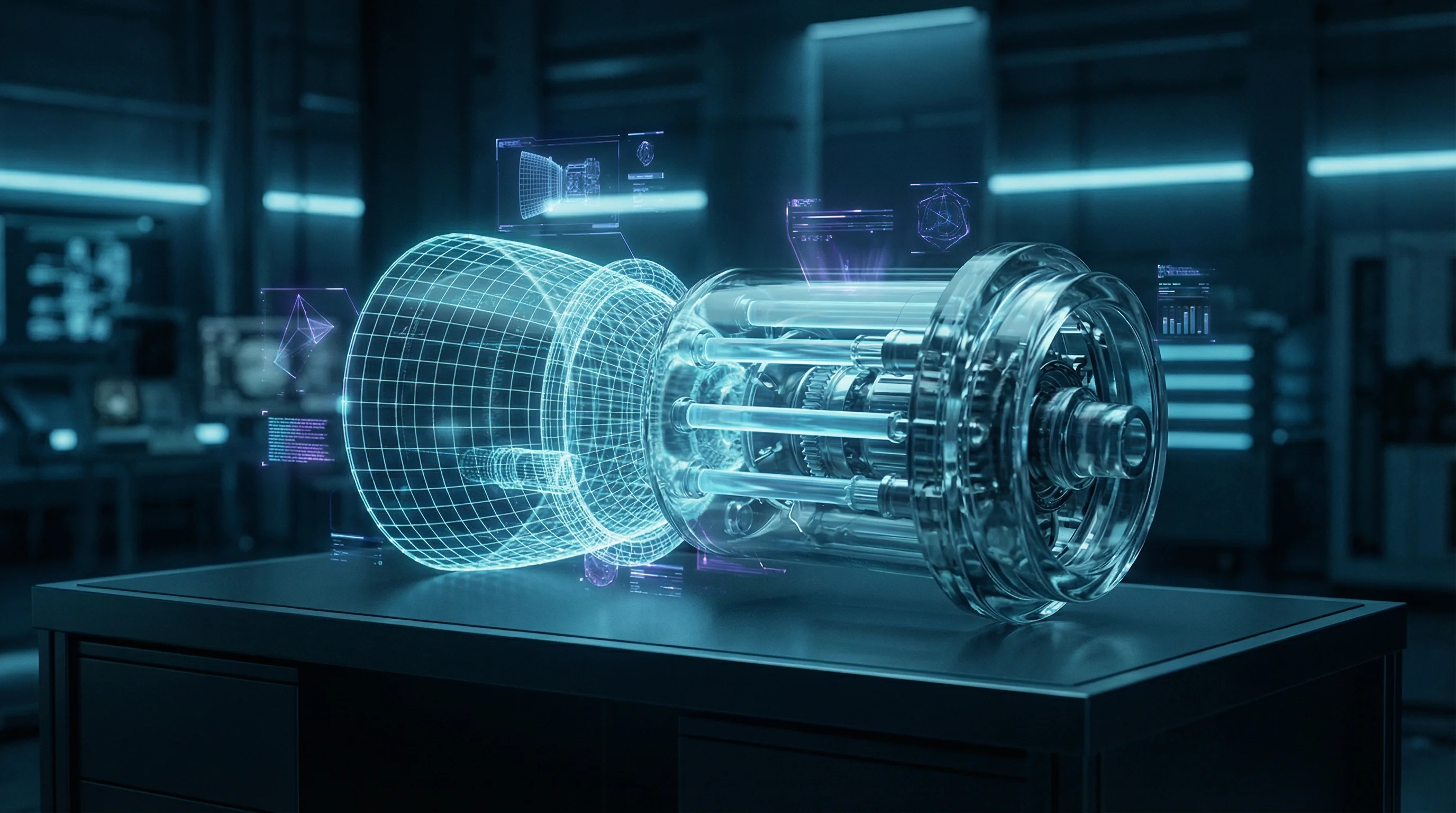
Beyond Reach Labs claims its patented architecture maintains structural stiffness at much larger scales. The company's website promises "orders-of-magnitude more energy per launch," though the specific mechanisms remain under wraps pending a "forthcoming announcement." The pitch, stripped to basics: compact stowage, football-field deployment, structural performance that enables 100-kilowatt-plus arrays without the control problems.
Co-founder Pele Collins brings an unusual resume—seven years developing Dragon parachute systems at SpaceX, plus a stint at Commonwealth Fusion Systems. It's a strange combination of human-rated deployment hardware and high-energy physics, but perhaps fitting for a company trying to solve power and deployment in one shot.
The technical advisors add weight. Tom Cooley held senior positions at the Air Force Research Laboratory and led SpaceWERX and DoD Space Community of Interest initiatives. Zac Manchester, now an assistant professor at MIT's AeroAstro department, made his name in deployable structures and small satellite work.
Of course, there's already plenty of flight-proven hardware out there. Redwire's Roll-Out Solar Array (ROSA), which evolved into the iROSA upgrades now boosting ISS power by more than 30 percent, stows as a compact cylinder and deploys via strain energy. Six iROSA wings are installed on the station, each delivering 20 to 28 kilowatts at beginning-of-life, with two more ordered in 2023. ROSA derivatives flew on NASA's DART asteroid mission (generating over 6.5 kilowatts in deep space) and are baselined for the lunar Gateway's Power and Propulsion Element.
Northrop's UltraFlex arrays—those circular, umbrella-like structures—power NASA's Lucy mission to the Trojan asteroids with two 7.3-meter-diameter arrays. MegaFlex, a 32-foot demonstration wing, targets higher-power solar electric propulsion missions. Airbus is ramping up production of Sparkwing arrays for constellations; MDA has ordered more than 200 units for the AURORA/Telesat Lightspeed programs.
These systems work. They have flight heritage and customer bases. But as one Beyond Reach Labs video frames it: "If we're ever going to build a world beyond our own, we need a more efficient 2x4." Whether that's marketing or prophecy depends largely on what happens over the next few years.
The Thermal Side of the Equation

Power and thermal management are two sides of the same coin at high energy levels. Every hundred kilowatts of computing or industrial activity in orbit generates waste heat that has to go somewhere. In vacuum, that means large, lightweight deployable radiators—a market that's matured alongside arrays but remains somewhat fragmented.
Beyond Reach Labs is developing deployable radiators alongside its solar arrays, which is less common than you might think. The Y Combinator announcement in February 2026 highlighted both: "deployable solar arrays and radiators that launch compact and expand to football-field scale in orbit... enabling 100kW+ systems needed for orbital data centers and other large space infrastructure."
Current radiator options run the gamut from flight-proven to aspirational. ESA's Alphasat carries a two-phase deployable radiator technology demonstration. The agency has backed development of lightweight carbon-fiber-reinforced polymer radiators and modular scalable concepts. Commercial vendors like ARQUIMEA offer deployable radiators up to roughly six square meters with multi-loop heat pipes; DCUBED and Thermal Management Technologies market similar systems, though technology readiness levels vary considerably.
Integrating high-power arrays with matched radiator capacity from one supplier could streamline spacecraft design, particularly for data center and station applications where thermal loads are substantial. It's a systems-level play—if you're already solving deployable structures for power, the thermal architecture is a logical extension.
The company also references lunar applications, specifically deployable vertical solar towers positioned on crater rims at the lunar south pole to capture continuous sunlight. NASA and international partners are eyeing the south pole for sustained surface operations. Power infrastructure isn't an afterthought; it's a prerequisite for any permanent presence.
A Market at Inflection
The space solar array market sits at an interesting moment. Grand View Research pegs growth from roughly $635 million in 2024 to $1.05 billion by 2030. Global Industry Analysts projects a similar arc—$667 million to $1.0 billion. Other firms cite more aggressive numbers tied to constellation expansion and higher power classes, some approaching $8.7 billion by 2034, though those figures should probably be taken as directional rather than gospel given the sector's volatility.
What's driving the optimism? Several trends converging. High-throughput GEO communication satellites are pushing past 25 kilowatts of bus power. Viasat-3 F2, launched in 2025, is Boeing's highest-power commercial satellite to date, exceeding 25 kW. Mega-constellations need standardized, mass-producible arrays. And entirely new markets—orbital manufacturing, in-space assembly, commercial stations, lunar infrastructure—are transitioning from PowerPoint to purchase orders.
Supply chains are responding, sometimes with government help. Rocket Lab acquired SolAero in January 2022 and secured U.S. CHIPS Act funding in 2024 to expand domestic production of space-grade inverted metamorphic multi-junction solar cells by roughly 50 percent over three years, adding more than 100 jobs. AZUR SPACE, now part of 5N Plus, is expanding European capacity. The willingness of governments to subsidize solar cell production signals strategic value beyond simple commercial dynamics.
Beyond Reach Labs enters a market with established players. Redwire—whose heritage stretches back through ATK and Deployable Space Systems—and Northrop have multi-mission flight records and deep NASA relationships. Airbus controls significant constellation supply. Breaking in will require more than a better pitch deck. It will require flight demonstration, customer validation, and probably a few expensive lessons in space-rated manufacturing.
But maybe the timing favors newcomers. NASA canceled its On-orbit Servicing, Assembly, and Manufacturing-1 project in 2024, signaling a retreat from near-term complex assembly demonstrations. Yet DARPA's Novel Orbital and Moon Manufacturing, Materials and Mass-efficient Design (NOM4D) program is pushing toward small on-orbit demos in 2026, exploring how to build structures in space from raw materials to sidestep fairing constraints entirely.
The regulatory environment is shifting too. The FCC created a dedicated Space Bureau in 2023 to streamline satellite licensing, and adopted a five-year LEO deorbit rule in 2022, replacing the old 25-year guideline. Small signals, perhaps, but they suggest the bureaucracy is trying to keep pace.
If orbital data centers and commercial stations materialize at scale—and the feasibility studies suggest they will, contingent on reusable heavy lift and falling launch costs—demand for hundred-kilowatt-class power systems could spike faster than traditional suppliers can ramp. That's the window Beyond Reach Labs is betting on.
The Bigger Picture

Space-based solar power is having something of a renaissance after decades in the wilderness. Caltech's Space Solar Power Project wrapped its first in-space mission in January 2024, demonstrating wireless power beaming (MAPLE), solar cell evaluation (ALBA), and a 1.8-meter deployable structure (DOLCE). Japan is planning a 2025 OHISAMA space power beaming demonstration. Japan Space Systems achieved a five-kilometer-plus aircraft-to-ground microwave wireless power transmission test this past December.
ESA's SOLARIS program is maturing space-based solar power concepts through contracts with Arthur D. Little and Thales, with a feasibility reassessment planned at the 2025 ministerial conference. China has articulated timelines stretching to 2050 for SBSP pilots and eventual scale, though the quality of publicly available sources varies.
A February 2026 Financial Times Energy Source newsletter cited a UK government-commissioned study by Frazer-Nash, Space Solar, and Imperial College suggesting that hundreds-of-megawatts SBSP could reach competitiveness by roughly 2040 in certain orbits—£87 to £129 per megawatt-hour—assuming Starship-class launchers and significant capital flows materialize. DARPA's Persistent Optical Wireless Energy Relay program set a record in 2025 for long-range optical power beaming, transmitting roughly 800 watts over 8.6 kilometers.
None of this is commercial yet. But it's no longer purely academic either. The technical building blocks—high-efficiency multi-junction cells, large deployable structures, wireless power transmission—are advancing in parallel. If any of these pathways gain real traction, demand for massive, lightweight deployable arrays and radiators could dwarf current projections.
What Comes Next
For Beyond Reach Labs, the immediate challenge is moving from research pedigree to flight hardware. The company was founded in 2023, completed Y Combinator in early 2026, and hasn't announced customers or mission manifests publicly. Patents are pending but not detailed on the website. The "forthcoming announcement" of the deployable architecture suggests the company is still in that awkward stealth-to-launch phase—likely working qualification tests, customer pilots, or early design contracts.
The founders' backgrounds provide technical credibility. NASA NIAC research, SpaceX deployment systems, CMU metamaterials work—these aren't small credentials. But space hardware is brutally unforgiving. Flight heritage matters deeply. So does the ability to manufacture at scale, survive qualification testing, and deliver on schedule without cost overruns. Redwire and Northrop didn't build their market positions in a couple funding rounds; they built them on decades of missions, failures, and iterative improvements.
Still, the industry's trajectory seems undeniable. Space infrastructure is getting bigger, more power-hungry, more thermally complex. Traditional array and radiator architectures were designed for a world of billion-dollar GEO satellites and government science missions. The emerging world—constellations, compute, commerce, lunar bases—demands different economics and different performance envelopes.
Whether Beyond Reach Labs' specific architecture becomes the industry standard or simply accelerates innovation among incumbents remains to be seen. But the underlying problem is real, the market window is opening, and someone is going to crack deployable structures at football-field scale without the mass penalty. The only question is who gets there first, and whether they can do it before the infrastructure bottleneck becomes a hard ceiling on the entire orbital economy.
For now, Fogelson and his team are making the kind of bet that only works in moments of genuine technological transition. They're betting that the old answers won't suffice, that the market will materialize faster than skeptics expect, and that a small team with the right technical insight can outmaneuver much larger competitors.
It's the kind of bet that fails more often than it succeeds. But when it works, it tends to work spectacularly.


