

A Dammam-based geothermal venture has raised $6 million to tackle the kingdom's energy-guzzling air conditioning habit—and it's chasing data centers next
When temperatures in Saudi Arabia routinely breach 50 degrees Celsius, air conditioning isn't a luxury. It's survival infrastructure. And it's devouring the kingdom's electricity grid.
The numbers tell a stark story: cooling accounts for roughly half of Saudi Arabia's annual power consumption. During summer's brutal peak, that figure climbs to 70%. For a nation trying to diversify beyond oil while simultaneously building cutting-edge industrial zones and data centers, that's become an expensive paradox.
Enter Strataphy, a Dammam-based startup that thinks the solution lies underground rather than on rooftops. The company announced November 25 it had closed a $6 million seed round co-led by Outliers VC and Shorooq Partners, with PlusVC joining the investment. The capital will fuel an expansion that targets perhaps the most energy-intensive new frontier in the region: hyperscale data centers.
Renting Cool Air, Not Buying Chillers
Strataphy's pitch is deceptively straightforward. Rather than selling geothermal cooling systems outright—a capital-intensive proposition that can deter even well-funded enterprises—the company offers what it calls "Cooling as a Service." Customers pay monthly or per-usage fees while Strataphy handles everything: site investigation, drilling, installation, commissioning, and ongoing maintenance.
It's a financial sleight of hand that transforms major capital expenditure into predictable operating costs. For CFOs, that's often the difference between a project that gets approved and one that languishes in budget purgatory.
The technical backbone is the company's proprietary PrimeLoop subsurface technology, which demonstrated a coefficient of performance above 5.5 during Saudi test campaigns. Those trials involved 18 thermal response tests and drilling to 250 meters—deep enough to tap into cooler subsurface temperatures but shallow enough to avoid the complexities that plague deeper geothermal projects.
Energy savings hover between 40% and 50% compared to conventional systems, according to the company. The systems also require a third less surface footprint and, crucially for a desert nation, consume zero water.
From Poultry Farms to Steel Mills
Strataphy's early client roster reads like a cross-section of Saudi industrial ambition. In August, the company inked a deal with Al-Ittefaq Steel to deploy geothermal cooling at ISPC's steel manufacturing facilities—an energy-intensive sector where cooling costs cut directly into margins. A month earlier, it partnered with Naba Al Saha Hospital in Riyadh for a future hospital complex.
Perhaps more unexpected: the startup is developing what it describes as MENA's first geothermal-cooled poultry farm with Tanmiah Food Company at a facility in Shaqrah. Chickens, it turns out, are temperature-sensitive creatures, and keeping them comfortable in Saudi heat is an ongoing expense.
The company also counts NEOM, King Abdullah Economic City, Saudi Tabreed, ADNOC Drilling, and Alpha Dhabi Holdings among its clients and partners—a list that spans the region's most ambitious development projects and established industrial players. Whether all these relationships are paying customers or exploratory partnerships remains unclear, a common ambiguity in early-stage venture announcements.
The Data Center Gambit
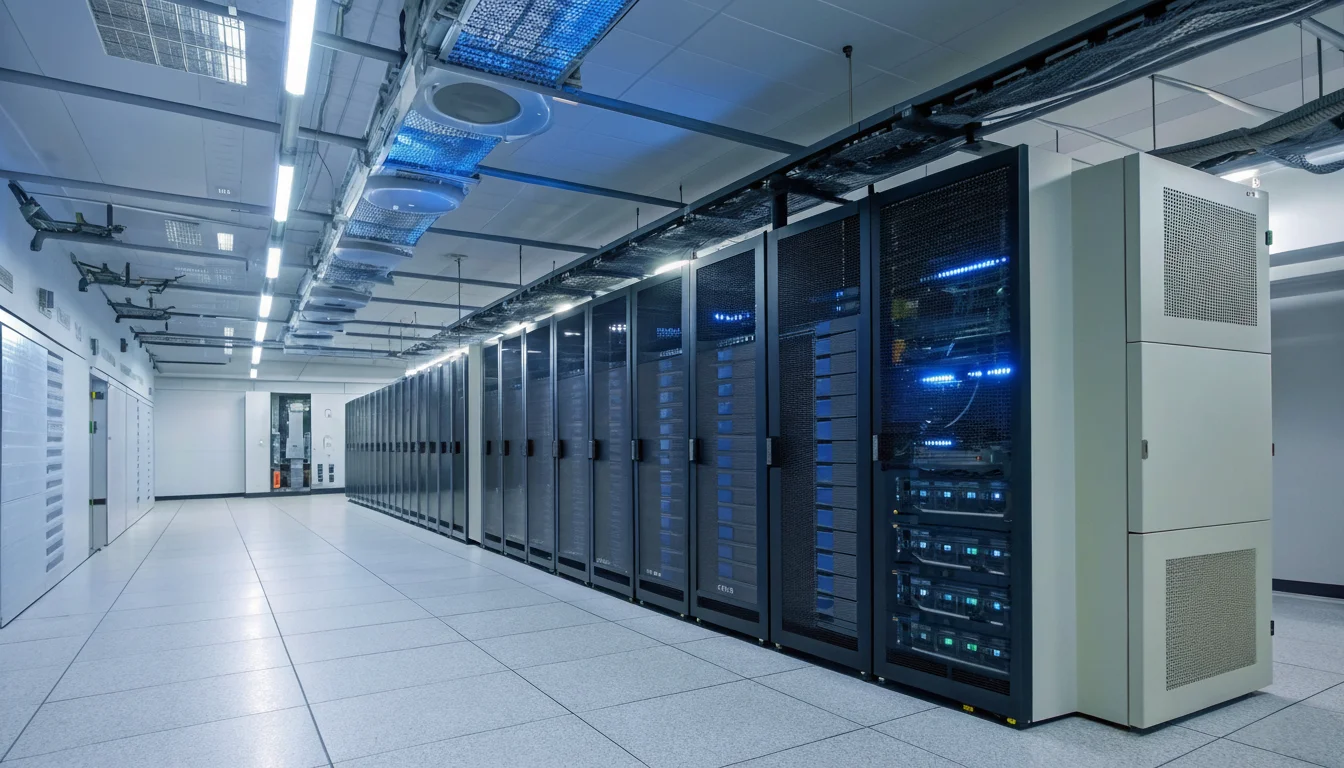
But the real prize lies in data centers. And the timing, from Strataphy's perspective, couldn't be better.
A November Savills report highlighted what's become an open secret in the industry: power supply constraints are throttling data center expansion across EMEA. Meanwhile, cooling infrastructure represents more than 65% of mechanical spending in MENA facilities, according to ResearchAndMarkets data. That's a cost center ripe for disruption, particularly as AI workloads push power density—and heat generation—to new extremes.
Strataphy has set ambitious capacity targets: more than 15 MW-thermal within three years, expanding to over 50 MW-thermal within five years across Saudi Arabia. For context, a single hyperscale data center can require tens of megawatts of cooling capacity, which means the company will need to execute flawlessly and scale rapidly to meet its own projections.
The economics are compelling on paper. But geothermal cooling in arid climates isn't exactly proven at scale, and the subscription model introduces its own complexity—Strataphy must essentially become both a technology company and an infrastructure operator, maintaining systems across diverse sites for years.
The MIT Connection
Leading the technical charge is CEO Ammar Alali, who earned his PhD from MIT's Earth, Atmospheric and Planetary Sciences department in 2023. Before that, he worked as a geophysicist at Saudi Aramco—a pedigree that carries weight in a kingdom where the national oil company remains the gold standard for technical talent.
Ahmed Alhani serves as Chief Operating Officer, overseeing a team the company pegs between 11 and 50 staff. That's a relatively lean operation for the deployment ambitions laid out, though venture-funded startups typically hire aggressively post-funding.
Strataphy only launched publicly in January, making this seed round a quick validation of its thesis. The company positioned its patent-pending PrimeLoop system as adaptable across geological settings while optimized for hot climates—a geographic specialization that could prove either limiting or lucrative, depending on how global markets evolve.
A Cooler Future, If the Physics Cooperate
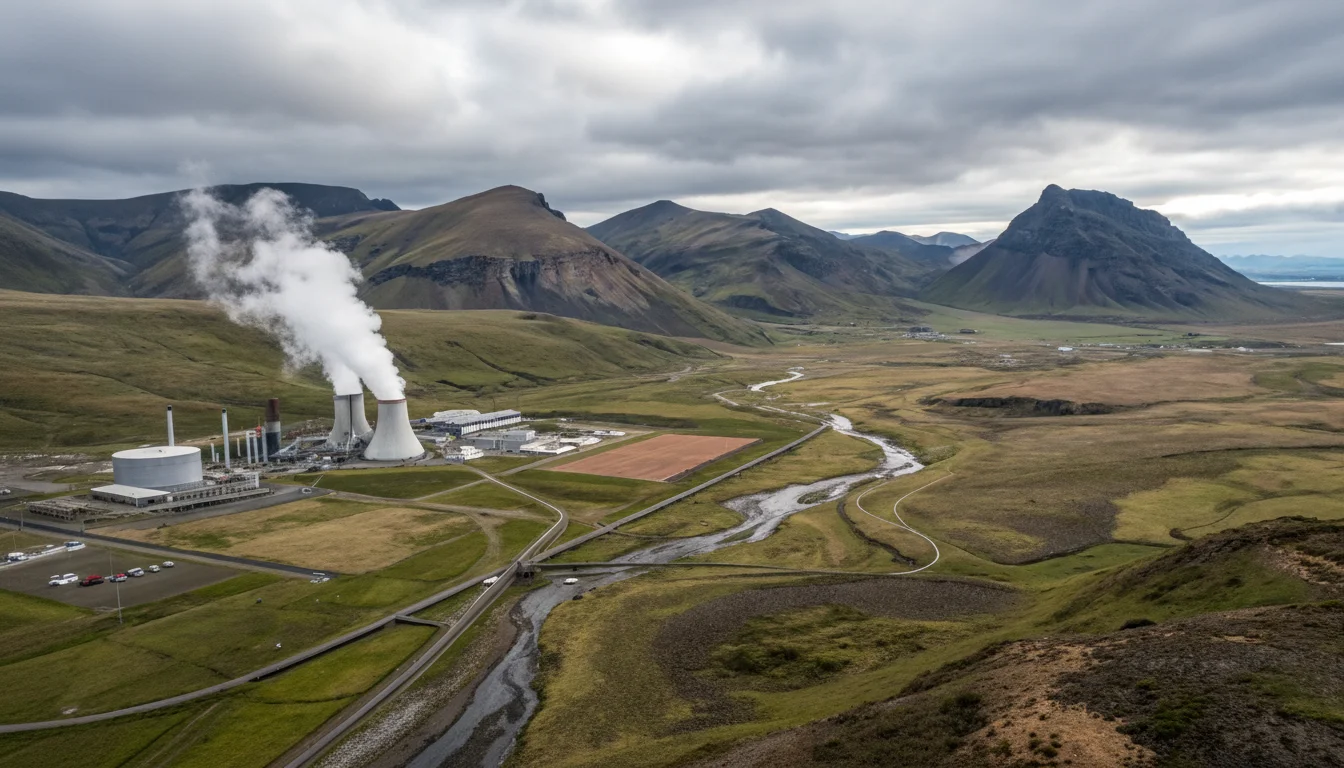
The broader question is whether geothermal cooling can scale beyond niche applications. Traditional geothermal has struggled with site-specific challenges, high upfront costs, and long payback periods. Strataphy's subscription model addresses the financial hurdle, but geology remains geography's most stubborn variable.
Still, in a region where summer heat is guaranteed and electricity demand is climbing, betting on cooling innovation doesn't seem particularly risky. The real test will come when those hyperscale data centers start breaking ground—and Strataphy needs to deliver megawatts of reliable, below-ground cooling in a market that doesn't tolerate downtime.
For now, the company has capital, customers, and a climate crisis working in its favor. Sometimes that's enough.


