

The numbers alone tell an interesting story: 276 billion liters of water saved, 120,000 tonnes of CO2 avoided, 10 million farmers served. What those figures represent—and whether they translate into a sustainable business model—is the $30 million question Just Climate has decided to answer.
The climate-focused investment firm, an arm of Generation Investment Management, led AgroStar's latest funding round announced Thursday, marking its inaugural India bet from a $375 million natural climate solutions strategy. For the Pune-based agritech platform, which has spent twelve years threading together agricultural inputs, AI advisory tools, and market access across a dozen Indian states, the deal brings something its existing roster of backers—Accel, British International Investment, Rabo Frontier Ventures—couldn't quite deliver: a climate investor willing to stake capital on the proposition that environmental impact and farmer economics can scale in tandem.
That's a trickier bet than it sounds.
The Hybrid Play
Walk into one of AgroStar's 10,000+ "Saathi" retail outlets scattered across 7,500 Indian pincodes, and you'll find something that doesn't quite fit the typical Silicon Valley narrative of agricultural disruption. There's a mobile app, yes. AI-powered pest detection and irrigation recommendations, certainly. But there's also a human advisory network, physical shelves stocked with over 200 proprietary products—biologicals, water-retention solutions, climate-adapted seeds—and a missed-call ordering system that co-founders Shardul and Sitanshu Sheth first built when they launched the company in 2013.
Shardul, who cut his teeth at Best Buy and PwC before returning to India with an MBA from Rochester Institute of Technology, secured the company's first institutional check from Aavishkaar. The brothers have since constructed what they describe as a "connected ecosystem," though what that means in practice is messier: a sprawling omnichannel operation that serves smallholder farmers however they prefer to be served, whether that's digitally, in-person, or somewhere in between.
The model helped AgroStar generate Rs 260 crore (roughly $31 million) in operating revenue in FY22, the most recent publicly filed financials. It also produced a Rs 142 crore loss. The company hasn't disclosed updated numbers or profitability timelines, and neither the funding announcement nor the press materials addressed when—or if—the path to positive unit economics becomes clearer.
Output Ambitions
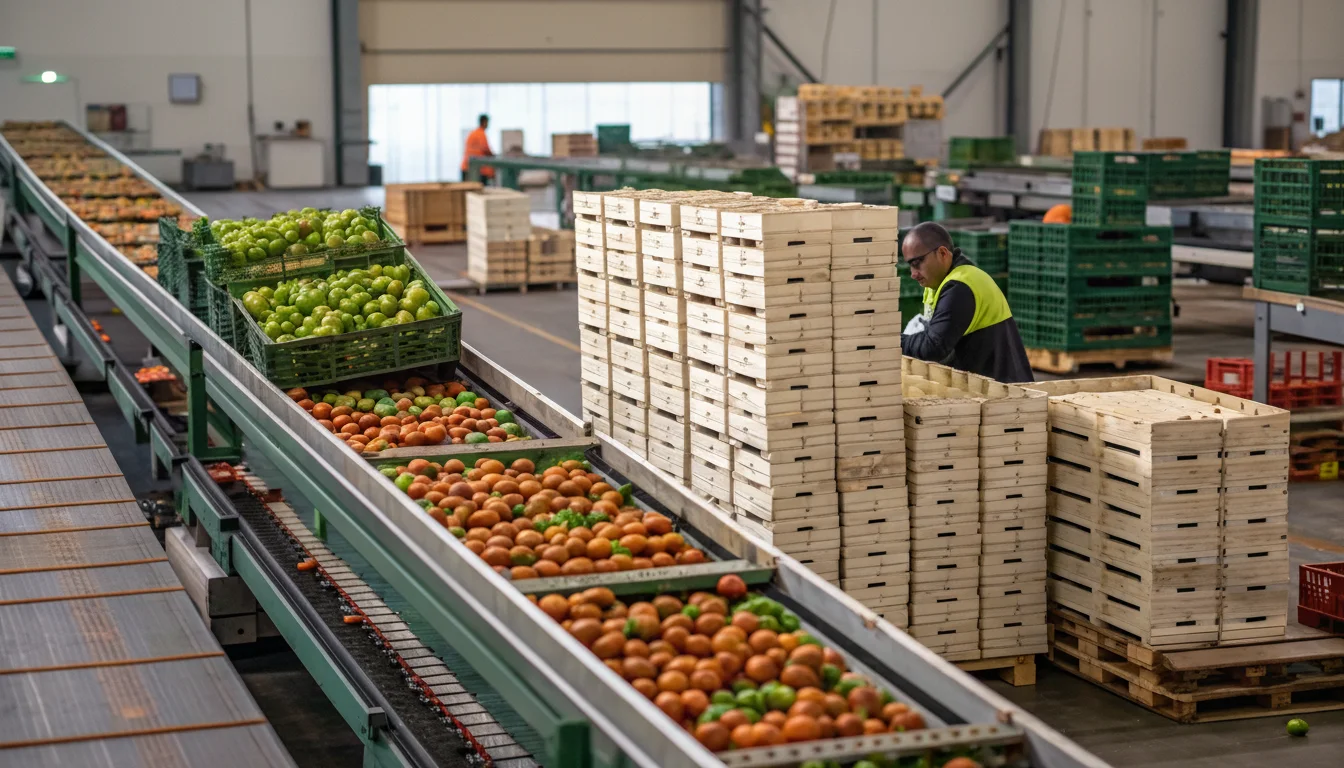
Perhaps more interesting than the input side of AgroStar's business is what happened in March 2022, when the company acquired INI Farms and its Kimaye premium produce brand. That move pushed AgroStar into output markets—processing over 100,000 metric tonnes annually, exporting to 25+ countries, and claiming the title of India's largest banana exporter.
It's a vertical integration play that makes strategic sense if you believe farmers need not just better seeds and advice, but also guaranteed offtake at fair prices. Whether it makes financial sense depends on execution in notoriously thin-margin produce logistics. The company says the $30 million will flow toward three priorities: expanding its Saathi retail network, driving product innovation across both input and output verticals, and deepening AI capabilities.
The AI piece is where investor interest tends to concentrate these days. Real-time agronomic recommendations at scale sound compelling in pitch decks. Delivering them profitably to millions of smallholders operating fragmented plots in variable conditions is another matter entirely.
A Market Out of Step
AgroStar's ability to attract $30 million in equity—on the heels of a $70 million Series D in December 2021 and a smaller $6.7 million round in April 2025—places it in unusual company. Indian agritech has defied broader trends. While global agrifoodtech funding contracted sharply through 2024, developing-market agrifoodtech capital jumped 63% year-over-year to $3.7 billion, with India leading that cohort, according to data from AgFunder and Omnivore.
Regulatory filings from the April round pegged AgroStar's post-money valuation near $293 million, per Entrackr estimates. The company declined to disclose valuation for the Just Climate-led round, which also drew participation from existing backers Aavishkaar India, Bertelsmann, Evolvence India, Chiratae Ventures, and Hero Enterprises. The Raine Group advised on the transaction.
That valuation—assuming it held or improved—suggests investors are willing to look past near-term losses in exchange for long-term positioning in a market where distribution, trust, and last-mile delivery remain formidable barriers. AgroStar competes with platforms like DeHaat and Ninjacart, each pursuing slightly different models in a space that has proven difficult to crack at scale.
The Climate Calculus

Just Climate's entry as AgroStar's first dedicated climate investor adds a wrinkle. The firm's natural climate solutions strategy has secured $375 million from global institutional investors betting that nature-based interventions—reforestation, soil carbon sequestration, sustainable agriculture—can generate both environmental and financial returns. Capital for those strategies remains scarce relative to flashier industrial decarbonization plays, and the performance track record is still being written.
For Just Climate, AgroStar represents a test case: Can a platform designed primarily to serve farmer economics also deliver verifiable climate outcomes at scale? The company's FY25 figures—276 billion liters of water conserved, 120,000 tonnes of CO2-equivalent emissions avoided—suggest the potential is there. What's less clear is whether those metrics matter to the farmers making purchasing decisions, or if they're primarily valuable as marketing collateral for impact investors.
"AgroStar's platform combines agronomic expertise with climate-smart solutions that deliver measurable outcomes for farmers and the environment," the company said in materials accompanying the announcement. The phrasing is careful, positioned to appeal to both constituencies.
Long Build Ahead
With fresh capital and a climate-focused backer now in its cap table, AgroStar faces the challenge most agtech platforms eventually confront: proving that unit economics work beyond pilot projects and flagship partnerships. Expanding from 10,000 retail touchpoints to true national coverage while maintaining service quality and profitability is a different proposition than demonstrating product-market fit in select geographies.
The Sheth brothers have been at this for twelve years—longer than many of their competitors. That persistence matters in a sector where exits remain rare and the path from early traction to sustainable scale is littered with cautionary tales. Whether this $30 million round marks an inflection point or simply another checkpoint in a long, uncertain build depends on execution details the funding announcement didn't address: customer acquisition costs, repeat purchase rates, margin trajectories, competitive moats.
Just Climate's backing suggests at least one group of institutional investors sees a path through that uncertainty. The farmers AgroStar serves will ultimately render the verdict.


