

The bulrush, that stubby cattail you might ignore on a walk through a marsh, is having a moment in high fashion. And it arrived there via an unlikely route: peatland restoration, climate accounting, and a determined crew of material scientists betting that the fashion industry's insulation problem can be solved with swamp grass.
Ponda, a Bristol-based biomaterials company, just closed a $2.4 million seed round—announced November 24—to scale production of BioPuff, a plant-based alternative to goose down made primarily from Typha bulrush harvested on rewetted peatlands. The funding, co-led by Lisbon's Faber and London's Counteract, pushes the company's total capital raised to roughly $6.5 million when you factor in earlier grants from Innovate UK, a 2022 H&M Foundation Global Change Award, and support through the Terra Carta Design Lab.
For context: the round was oversubscribed. That matters because Ponda isn't peddling a concept anymore. The company, which spun out of Imperial College London and the Royal College of Art in 2020, already runs multi-tonne pilot production in Bristol. Brand names like Stella McCartney and Berghaus have moved past polite interest.
Carbon Math Meets Wetland Economics
BioPuff's pitch hinges on what its backers call a "carbon-negative solution," though the numbers require some unpacking. The material—a blend of 60 to 80 percent Typha fiber with recycled polyester—clocks in at 3.4 kg of CO₂ equivalent per kilogram produced, according to lifecycle assessments cited in trade publications. That's 88 percent lower than goose down and 19 percent below standard polyester fill.
The bolder claim? Ponda says BioPuff can hit a negative footprint of -42.76 kg CO₂e per kilogram when biochar production and land-use change credits enter the equation. Those vendor-reported figures still await third-party verification at commercial scale, a fact that ought to give climate-minded procurement officers a moment's pause.
But here's where the model gets interesting, maybe more than the founders expected. Peatlands cover just 3 percent of Earth's land but lock up 25 to 30 percent of global soil carbon. Drained for agriculture, they flip from carbon sink to emissions source. Ponda's approach—paludiculture, or wet farming on restored peatlands—offers landowners a revenue stream for rewetting degraded land. A pilot under the UK's Natural Environment Investment Readiness Fund estimated emissions cuts of 20 to 30 tonnes of carbon per hectare annually at participating farms.
That's the elegant part: aligning economic incentive with ecological restoration. Whether it scales gracefully is another question entirely.
From Swatches to Stella McCartney Bags
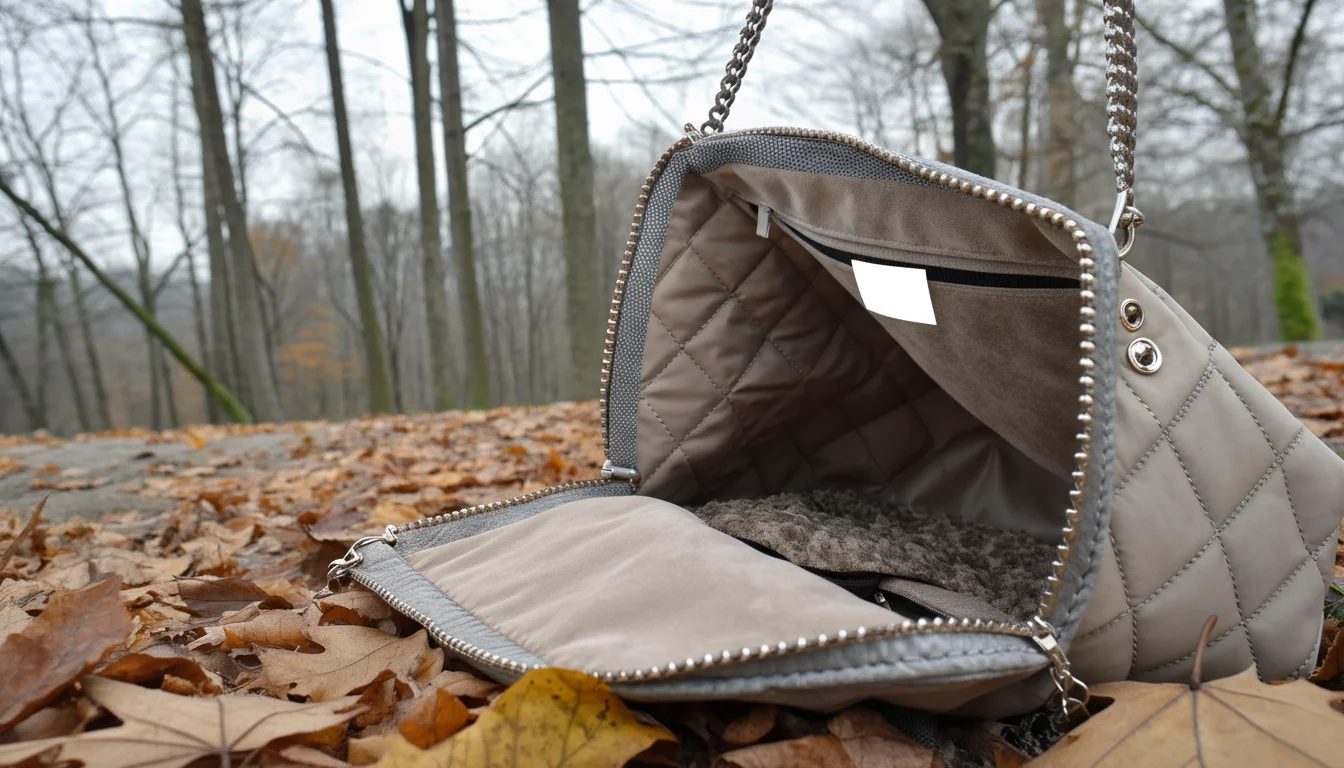
The company's traction isn't theoretical. Stella McCartney used BioPuff in the padding of her Falabella bag for Autumn 2024, sourced from a regenerated wetland in Cambridgeshire. Berghaus, the British outdoor brand, prototyped a concept jacket with BioPuff insulation last year at London's Fashion-Enter facility and has signaled plans to integrate the material into its AW 2025 line.
Earlier collaborations include a capsule collection with 8 by YOOX (Ponda won the Vogue Yoox Challenge in 2020) and partnerships with Parley for the Oceans and Sheep Inc. PETA UK handed the company—originally called Saltyco—its 2023 Fashion Award for "Best Vegan Down."
The brand commitments suggest real momentum, though outdoor and luxury fashion operate on wildly different supply rhythms. Ponda already offers swatch sets to designers, positioning itself in a down and feather market that IMARC Group projects will grow from $8.27 billion in 2024 to $16.25 billion by 2033.
Scaling a Fragmented Network
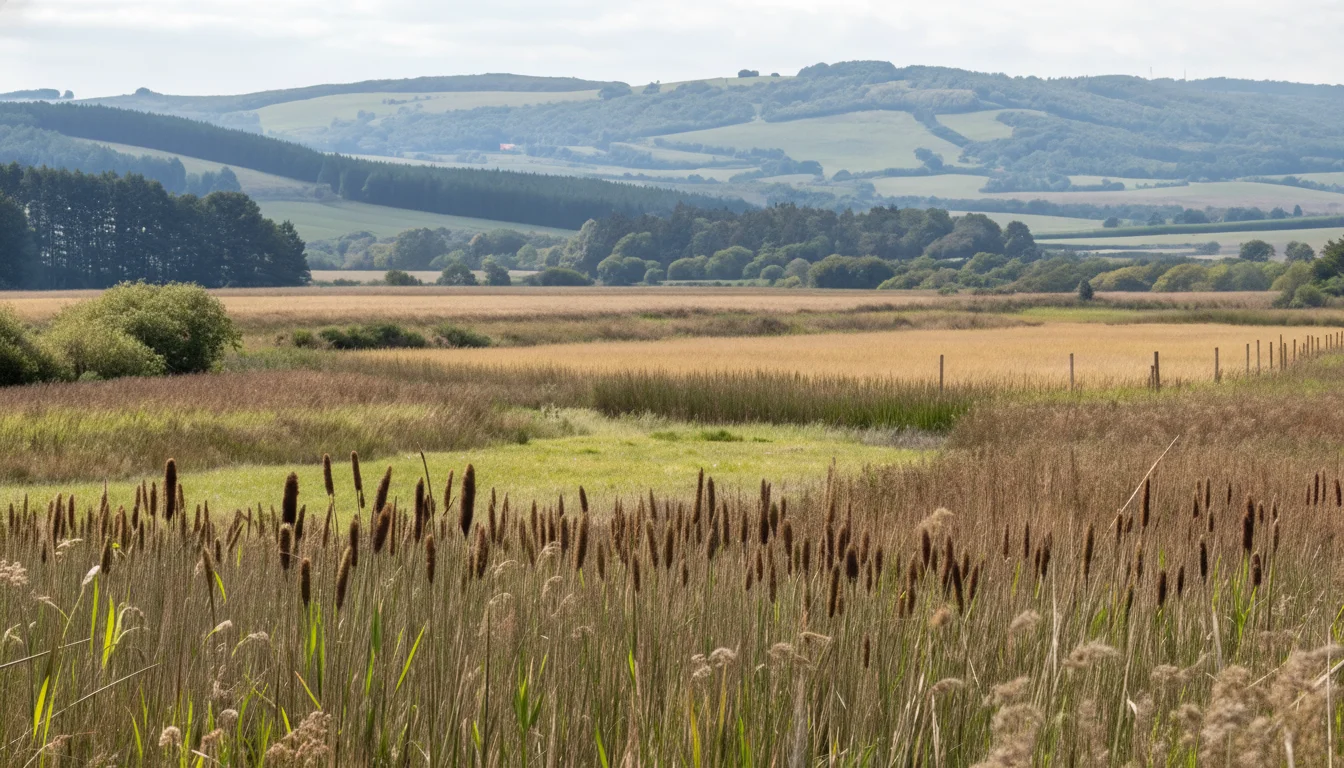
The fresh seed capital will bankroll commercial-scale BioPuff production, expand paludiculture partnerships across Europe, and support product launches slated for the AW 2026 and 2026-27 seasons. Ponda is currently running a 5-hectare Typha crop trial in the UK—charmingly dubbed "Boggy Bulrushes to BioPuff"—with the first harvest expected this autumn.
Julian Ellis-Brown, Ponda's CEO and co-founder, has ambitions beyond puffer jackets. He's eyeing sleeping bags, soft toys, upholstery, even bedding. The challenge, perhaps, is less about product versatility and more about orchestrating a fragmented network of European wetland farmers at the breakneck pace fashion supply chains demand.
Ponda faces competition from PrimaLoft Bio's biodegradable polyester, PANGAIA's wildflower-based FLWRDWN, and kapok-derived fills from companies like Flocus. What sets BioPuff apart, at least on paper, is the regenerative land-use angle—a model that theoretically rewards farmers for ecological restoration while producing a marketable crop.
Matt Isaacs, a partner at Counteract, highlighted the carbon-negative potential in the funding announcement. Whether that potential translates to reliable, scalable supply chains remains the central question. Fashion, after all, is notoriously impatient with complexity.
For now, the bulrush is having its moment. Whether it can hold it depends on what happens in the wetlands.


