

The aircraft will climb to 60,000 feet sometime this April. Not to spy, not to test weapons—just to carry a canister of reflective dust into the stratosphere and, crucially, not let it go. At least not this time.
For Stardust Solutions, a startup that's raised $75 million to commercialize what amounts to a planetary thermostat, the test represents something more symbolic than scientific. It's a bet that the world is ready—or desperate enough—to let private companies start tinkering with Earth's radiation balance. The particles themselves, whatever they are (the company won't say), will stay sealed during the flight. But the precedent won't.
This is solar geoengineering's uncomfortable coming-out party: venture-backed, profit-driven, and operating in a governance vacuum that makes cryptocurrency look over-regulated.
"Almost certainly wrong," is how David Keith, one of the field's most prominent researchers, described Stardust's central technical claim when reporters asked him about it in December 2025. Keith, now at the University of Chicago after years at Harvard, wasn't objecting to geoengineering itself—he's spent his career studying it. He just doesn't believe the startup's promise of a safer particle.
That hasn't stopped Lowercarbon Capital from leading a $60 million Series A round in October, the largest disclosed funding for any solar radiation modification company. Exor and several prominent individual investors joined. The company now employs 25 scientists, led by CEO Yanai Yedvab, who previously served as Deputy Chief Research Scientist at Israel's Atomic Energy Commission. The team insists their proprietary material is gentler on humans, ecosystems, and the ozone layer than the sulfur dioxide that dominates academic models.
Whether they're right matters less, for now, than the fact that they're trying.
When the Math Gets Seductive
The basic idea behind solar radiation modification isn't new. Dust the stratosphere with reflective particles, brighten marine clouds, maybe deploy mirrors in space—anything to bounce more sunlight away before it warms the planet. Volcanic eruptions do this naturally. Mount Pinatubo's 1991 blast temporarily cooled Earth by about half a degree Celsius.
What's changed is the urgency, and with it, the economics. A 2018 study suggested that cutting the rate of global warming in half for 15 years would cost roughly $2.25 billion annually using stratospheric sulfur dioxide. That's rounding error compared to the trillions needed for energy transition. Stardust's CEO has claimed the company's system could be "1,000 times cheaper than any alternative," though no peer-reviewed analysis backs that number.
NOAA acknowledges the concept in its own fact sheets while making clear that solar radiation modification "cannot substitute for mitigation and has significant uncertainties." That's government-speak for: this might work, but it also might make things worse in ways we haven't imagined yet.
The funding landscape reflects this tension between possibility and peril. Stardust dominates private investment with $75 million raised through November. Public money has been more cautious. NOAA's Earth Radiation Budget program, which supports baseline observation work relevant to SRM, went from $4 million in fiscal 2020 to $9.5 million in 2023. The UK's Advanced Research and Invention Agency committed over £56.8 million to its "Exploring Climate Cooling" program, but built in governance and ethics components from the start—a pointed contrast to the move-fast-and-break-things ethos of venture capital.
Open Philanthropy has scattered strategic bets: $4.92 million to the University of Chicago's Climate Systems Engineering initiative in December 2024, $2.57 million to the University of Washington's Marine Cloud Brightening program in 2023, smaller grants to nonprofits. The Heinrich Böll Foundation, which tracks these flows, estimates total SRM-related funding through 2024 approached $200 million, with annual spending topping $30 million.
Not exactly blockchain-scale capital, but enough to shift the conversation from theory to practice.
The Academic Retreat
What opened the door for startups was, ironically, the collapse of academic ambition.
Harvard's Stratospheric Controlled Perturbation Experiment—SCoPEx, in the acronym-heavy language of climate science—was supposed to be the gold standard. Modest outdoor tests, carefully controlled, thoroughly reviewed. It died in March 2024 after sustained opposition from Indigenous groups and environmental advocates who saw it as the thin edge of a very dangerous wedge.
The University of Washington's Marine Cloud Brightening team got further. They built a sea-salt aerosol sprayer, secured permission for deck tests aboard the USS Hornet museum in Alameda, California, and commissioned consultant assessments that found "no measurable health risk." The city halted the study anyway in June 2024. Local opposition, it turned out, didn't care about risk assessments.
Then there's Make Sunsets, which makes Stardust look positively cautious by comparison. A two-person operation launched weather balloons carrying sulfur dioxide and sold "cooling credits" to customers willing to pay for their share of planetary air conditioning. Mexico banned the experiments in January 2023 after press coverage. The EPA issued a demand for information in April of last year, asserting regulatory authority under existing air quality rules.
The message to academics: even small-scale, transparent research programs can be vetoed by local politics or international pressure. The message to startups: there's space to operate if you're willing to navigate—or ignore—the governance ambiguity.
Stardust positions itself as the responsible player. Well-funded, scientifically rigorous, working toward regulatory compliance rather than around it. The company hired Holland & Knight, a powerhouse lobbying firm, in early 2025. (The firm initially failed to disclose the relationship in required filings, later calling it a clerical error—the kind of Washington hiccup that happens to everyone eventually.) This April, Stardust published a 14-page white paper laying out voluntary safety and controllability requirements for SRM systems, positioning the document as a self-imposed code of conduct.
The company's website now promises peer-reviewed publications forthcoming, marking what it calls "a new phase." But the proprietary particle itself remains under wraps. Scientists like Keith remain unconvinced that any material deployed at the necessary scale—millions of tons annually—can avoid complex interactions with atmospheric chemistry.
Perhaps they're being overly cautious. Or perhaps Stardust is selling certainty it can't deliver.
The Governance Nobody Built

Solar geoengineering exists in what legal scholars politely call a "regulatory gap" and everyone else calls a mess.
The Convention on Biological Diversity established a de facto moratorium on climate-related geoengineering that might affect biodiversity back in 2010. It was reaffirmed at COP16 in Cali, Colombia, last November. The moratorium includes narrow exemptions for "small-scale, strictly controlled research," but interpretations of those boundaries differ wildly and enforcement depends on national governments actually implementing the agreement. Good luck with that.
The European Union's Group of Chief Scientific Advisors concluded in December that SRM "cannot fully address climate change" and called for responsible research alongside international governance frameworks. Media coverage emphasized calls for a moratorium on deployment and outdoor research with widespread impacts, though the actual policy language is more hedged. Typical Brussels.
In the United States, federal posture amounts to watch-and-wait. The White House released a congressionally mandated five-year research plan in June 2023, confirming a limited federal role in coordination rather than deployment authorization. The EPA has shown willingness to assert oversight authority where it exists—see Make Sunsets. The Government Accountability Office published a "Science & Tech Spotlight" brief on solar geoengineering this March, synthesizing benefits, risks, and regulatory questions without offering recommendations. That's GAO's specialty: thorough descriptions of problems it can't solve.
State-level reactions have been more visceral. Tennessee restricted geoengineering activities in April 2024. Similar measures surfaced in Florida and Louisiana through last year, though federal control of airspace limits what states can actually enforce. The patchwork reflects a deeper reality: nobody has coherent rules for something that, by its nature, doesn't respect borders.
Janos Pasztor, a former UN climate official who consulted for Stardust, published an independent governance report in September 2024 recommending transparency, external oversight, and engagement with affected communities. Then, in a December op-ed, he raised pointed questions about private ownership of "the means to manage the global atmosphere"—an elegant way of asking whether we really want climate control in the hands of venture-backed startups answerable to their cap tables.
Fair question.
The Science Nobody's Settled
Most academic modeling has focused on sulfate aerosols, essentially mimicking Mount Pinatubo at industrial scale. Recent preprints explore alternatives with varying degrees of promise. A December paper on arXiv suggested silica-based aerosols might limit ozone damage through specific chemical pathways, though it hasn't been peer-reviewed. Another preprint from September found that alumina aerosols could absorb shortwave radiation, potentially offsetting the intended cooling while warming the stratosphere more than black carbon.
Neither sounds ideal.
Regional effects get messier. A 2024 Oxford study linked tropical monsoon precipitation to the global and interhemispheric distribution of aerosol optical depth—which is science-speak for "put particles in the wrong place and you might disrupt rainfall patterns for billions of people." Research published in Earth System Dynamics the same year found most stratospheric aerosol injection strategies reduce mean precipitation, with regional responses varying significantly.
A January paper in Atmospheric Chemistry and Physics suggested injecting aerosols near the stratopause might reduce stratospheric warming compared to lower-altitude injection, while acknowledging ongoing uncertainties about regional precipitation. Notice the pattern: lots of "might," "could," and "uncertainties."
The University of Chicago's Climate Systems Engineering initiative published a benefit-risk comparison for sulfate stratospheric aerosol injection in December, carefully framed as policy analysis rather than prescription. David Keith and Daniele Visioni, writing in MIT Technology Review last November, warned that the for-profit race into SRM threatens scientific rigor and public trust. Misaligned incentives, they argued, emerge when companies need to demonstrate progress to investors rather than understand complex atmospheric dynamics.
Can any particle be truly "inert" at the scale required? The chemistry doesn't care about pitch decks.
Trust Moves Slower Than Stratospheric Winds
Shuchi Talati of the Alliance for Just Deliberation on Solar Geoengineering told the Washington Post last December that private companies operating in secrecy lack the social license necessary for technology with global consequences. The Center for International Environmental Law went further, calling Stardust's April test plans a violation of CBD norms and urging governments to establish a formal non-use agreement.
The SCoPEx cancellation demonstrated that public opposition can halt even well-funded research programs with impeccable academic credentials. Alameda's rejection of marine cloud brightening tests showed that local authorities will intervene when residents raise concerns, technical risk assessments be damned. Make Sunsets' Mexico ban illustrated how quickly governments can move when geoengineering makes headlines.
These failures created an opening for companies willing to navigate governance ambiguity. Stardust's contained stratospheric tests technically fall within research exemptions under most interpretations of international norms, though civil society groups dispute that framing. The company says it will "only work with governments having adequate regulatory frameworks," without specifying what adequate means or which governments qualify.
Other ventures are placing bets across the technological spectrum. Arctic Reflections, a Netherlands-based startup affiliated with ARIA's climate cooling program, aims to thicken winter sea ice by pumping seawater; permitting for field work this February has been documented in program updates. The Arctic Ice Project continues work on reflective materials for sea ice. Reflect Orbital raised seed funding in 2024 for deployable orbital reflector technology, with plans for a demonstration satellite called Eärendil-1.
The space is getting crowded.
What the April Tests Will Actually Test
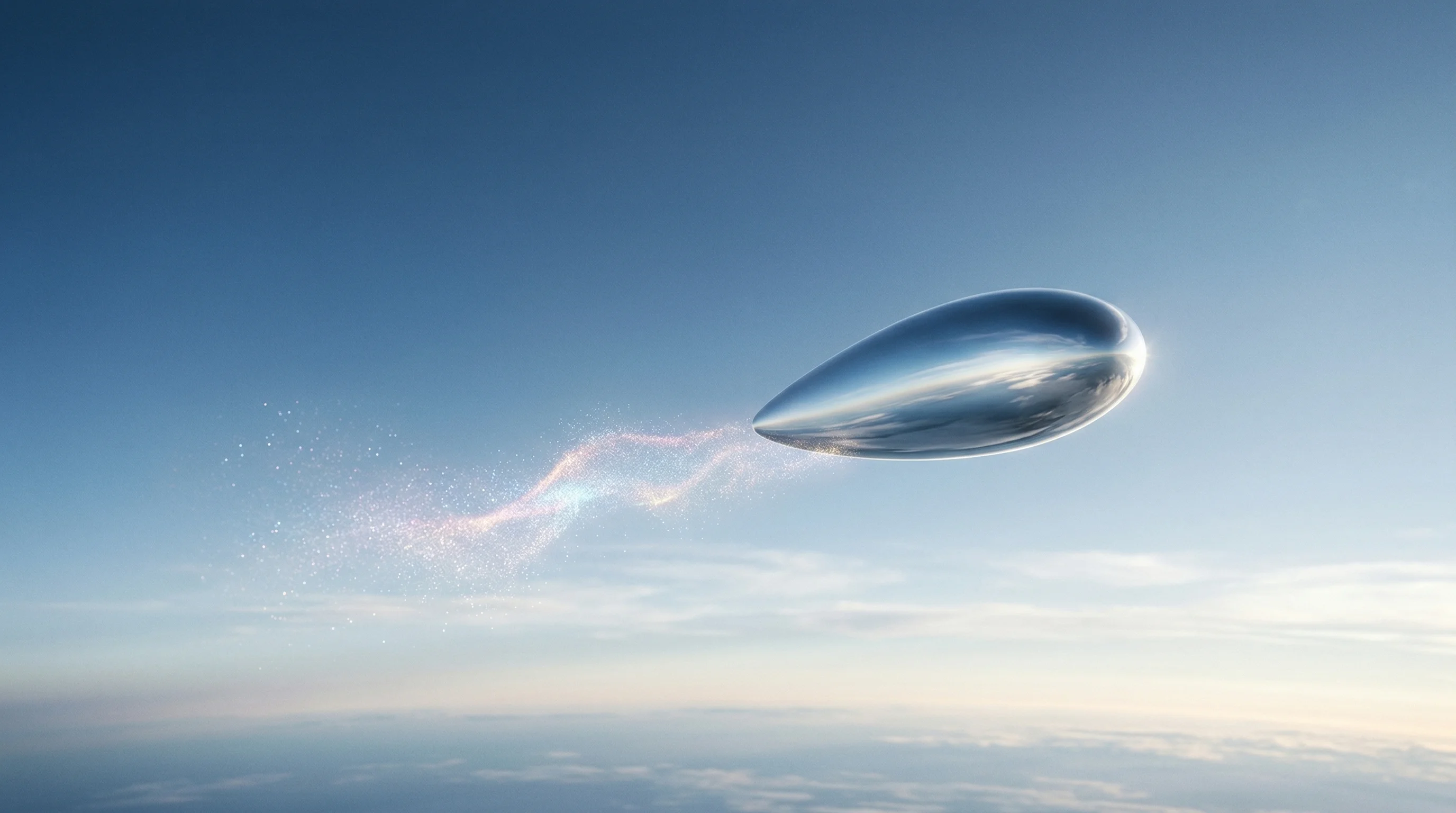
Stardust's April flight will provide the first real-world data point for how governments, scientists, and the public respond to private-sector geoengineering activity in international airspace. Whether the company discloses its particle composition and submits results for peer review will signal its actual commitment to transparency versus marketing spin. Whether its voluntary safety principles influence industry practice or remain window dressing depends entirely on what comes after.
NOAA continues building the observation and modeling infrastructure necessary to detect and attribute any SRM deployment, sanctioned or otherwise. The EPA has shown willingness to assert regulatory authority where statutory hooks exist. The GAO has put solar geoengineering on the oversight agenda. But no federal agency has authorization to approve or prohibit stratospheric tests over international waters. No international body has enforcement power.
The fundamental tension remains: the technology is cheap enough that a handful of countries—or well-funded companies—could deploy it unilaterally, yet the consequences would be distributed globally and unevenly. Regional precipitation changes, potential monsoon disruption, stratospheric warming, and the risk of termination shock if deployment stops abruptly appear consistently across scientific assessments from UNEP, the EU, and academic literature. Scientists debate materials and injection strategies. The governance question transcends chemistry.
Climate tech founders and impact investors are placing billion-dollar bets that the world will eventually accept solar geoengineering as necessary complement to emissions reduction. They may be right that the math compels consideration. Every climate model shows temperature overshoot. Every year brings more extreme weather. The political will for rapid decarbonization remains elusive.
But every canceled test, every regulatory demand, every civil society campaign suggests that getting from "technically feasible" to "socially acceptable" requires more than venture capital and proprietary particles.
It requires trust. And trust, it turns out, moves considerably slower than stratospheric winds—even when the planet is warming.


